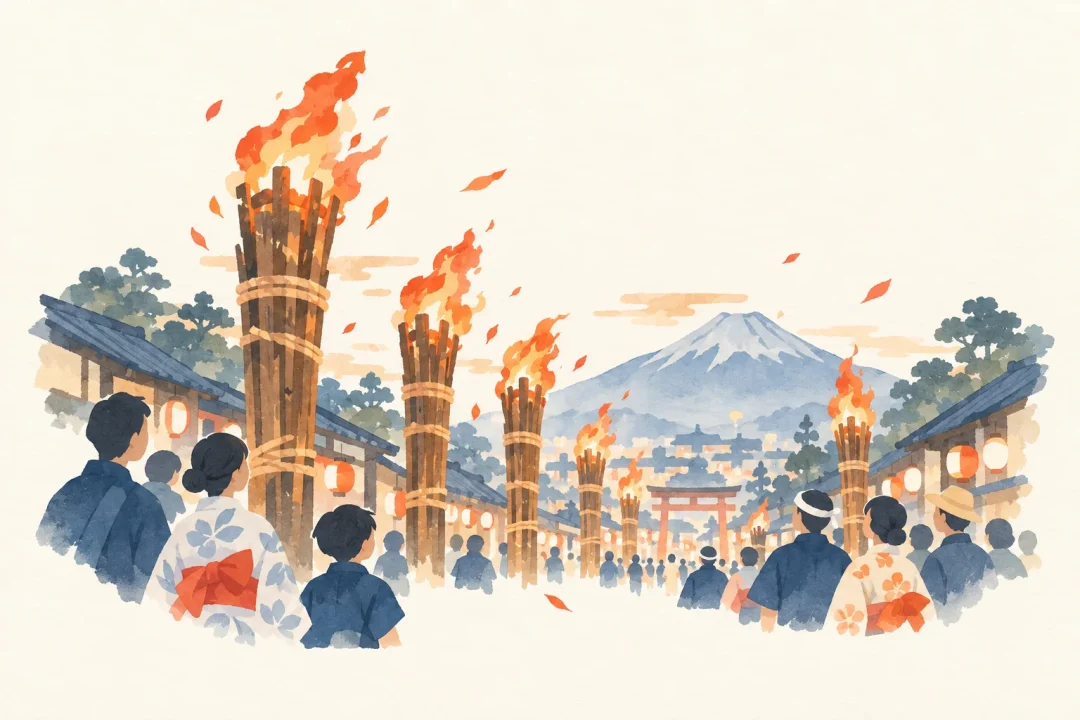
Ancient dances and flames of Niino, turning snow into a sign of a good harvest
The performing arts of the Snow Festival
Festival information
EVENT INFORMATION- Season / frequency
- Every year from January 13 to the 15th / Every year
- Location
- Izu Shrine
- Area
- Nagano Prefecture・Anan(From Tokyo: approx. 1 h 20 min–1 h 50 min · bullet train)Prefecture-level estimate to a main station or airport, not the venue. Airport access, check-in and onward travel are extra; remote areas and islands can take much longer.
- Features
- Wishes behind the festival
- Last updated
- 2026/10/19
The Snow Festival traditions passed down in Niino, Anan Town, are a winter festival where dances performed in masks, , , ta-asobi, and other arts are dedicated at a shrine. After a procession carrying the masks and the lighting of a giant torch, performances such as Saiho and Motoki continue through the night.
About The performing arts of the Snow Festival
The performing arts of the Snow Festival are folk performing arts of the dengaku tradition, handed down in Niino, Anan, Nagano Prefecture.
Dances using masks and rice-field entertainments are dedicated mainly at Izu Shrine and Suwa Shrine.
It is also connected with the custom of regarding snow as an omen of a good harvest and offering it before the deities.
The festival is introduced as an Important Intangible Folk Cultural Property of Japan, bringing together local faith and performing arts.
Source: 新野の雪祭り | 南信州民俗芸能ナビ / 雪祭 文化遺産オンライン
Festival highlights
Highlights include the many dances dedicated at the kagura hall and the large torch erected in the .
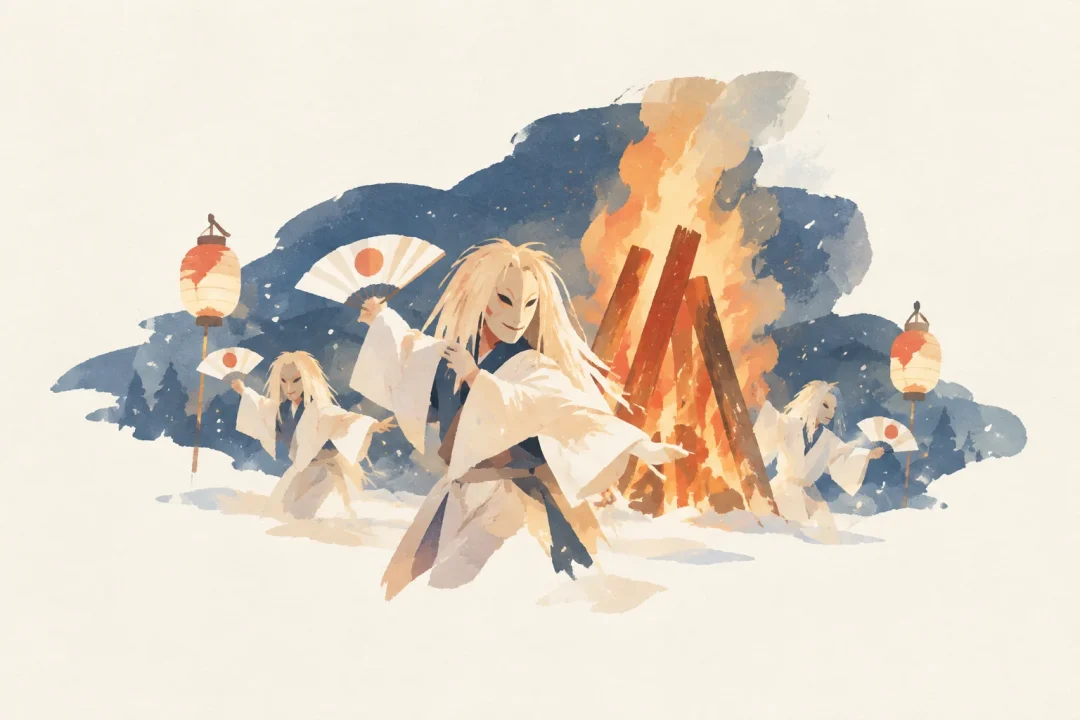
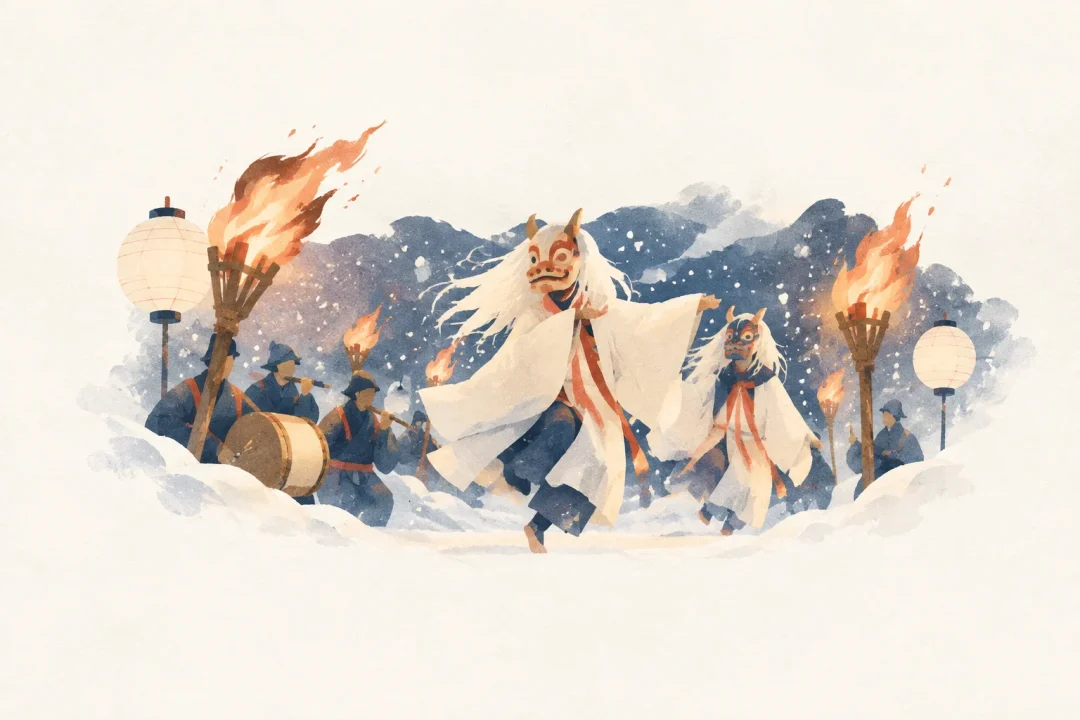
Following the boat crossing and the lighting of the torches, performances such as Saihō, Motoki, the binzasara dance, horse racing, and Tengu appear.
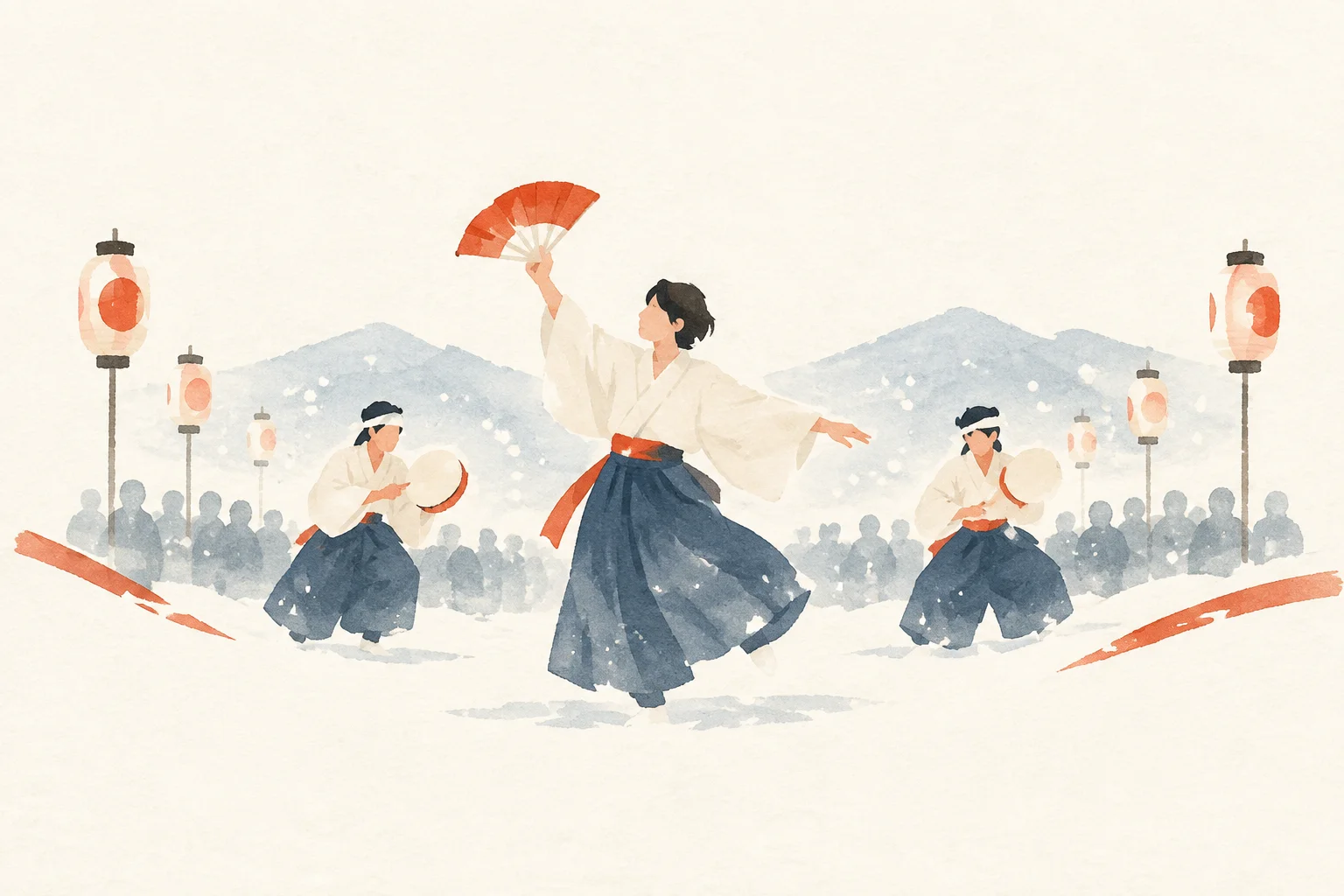
Ancient-style movements by masked performers unfold one after another in the shrine grounds at night.
Another major feature of the festival is the tradition of preserving its range of performing arts and the organizations of its performers.
Ancient dances and flames of Niino, turning snow into a sign of a good harvest
What to expect
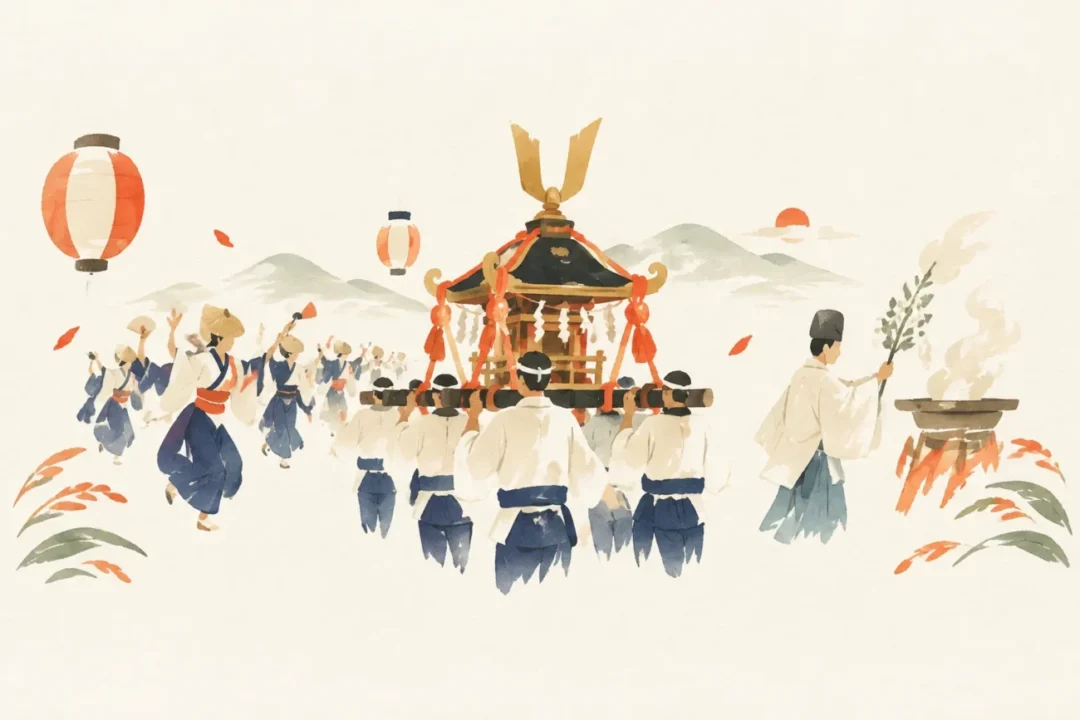
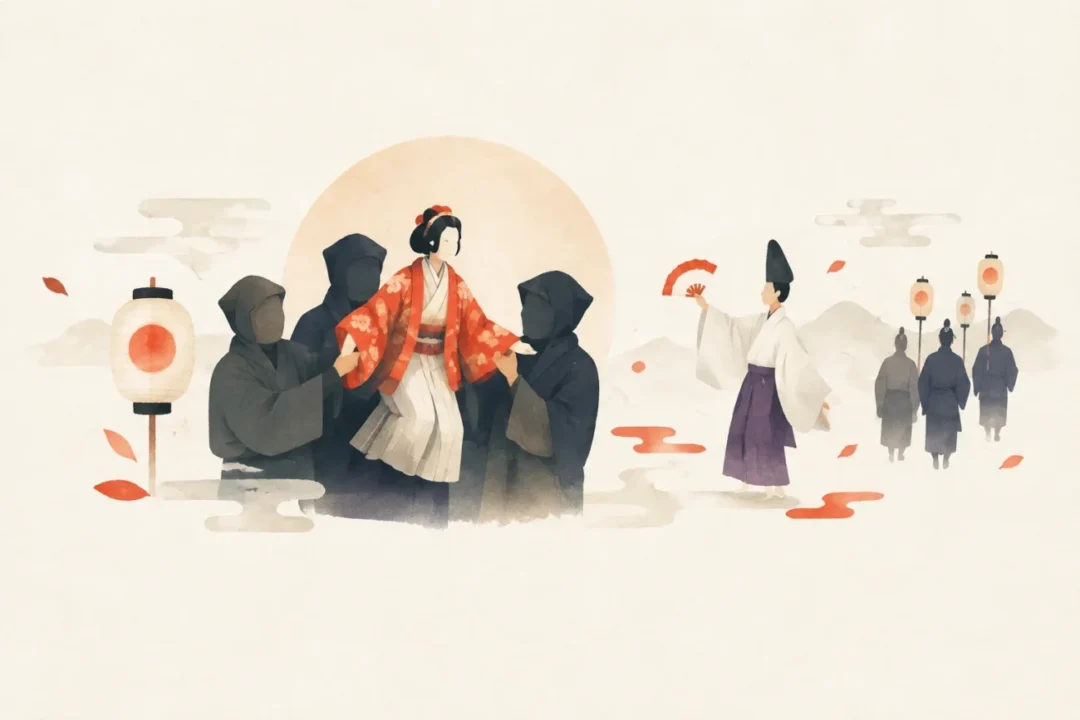
The festival begins with the “O-kudari” procession, which carries masks from Izu Shrine to Suwa Shrine, followed by mask makeup and trial dances.
The following day, the “O-nobori” procession travels from Suwa Shrine to Izu Shrine, and dances are dedicated at the kagura hall and the main shrine building.
After that, a large torch is lit and the boat crossing takes place, followed by performances such as Saihō, Motoki, and rice-field entertainments that continue through the night.
The festival invites visitors to watch as its rituals and performances unfold in stages.
Location and access
- Venue and address
Izu Shrine.
A procession also travels from Suwa Shrine to Izu Shrine.
Source: 南信州で楽しむ民俗芸能|長野の観光でふれる地域文化 | Go! NAGANO 長野県公式観光サイト
Event venue 長野県阿南町 伊豆神社
This map uses the venue name. Check the official guide for the event area and entrances.
Dates and season
It is held each year from January 13 through the 15th.
January 13 is listed as the schedule: the “O-kudari,” when mask figures are carried to Suwa Shrine, followed by the main “O-nobori” procession and dedicated performances from the evening of the 14th, continuing until the morning of the 15th.
Accommodation and hotels PR
Showing nearby accommodation.
Prices and availability are current at the time of retrieval. For multi-night stays, only the first night’s price is shown. Confirm the final price and directions to the venue with the booking provider. Select your dates again when using the area search link. Search area: within 3 km of Central Nagano Prefecture / Anan (the search is not centered on the festival venue)
Tips for your visit
As the performances continue through the night, visitors need to dress for the severe cold.
Since rituals and dances take place in the shrine grounds, it is important to watch quietly from a position that does not obstruct the performances or worshippers.
Flash photography is prohibited.
If taking photographs, please follow the designated guidelines.
Nearby attractions

安倍神像神社
長野県下伊那郡阿南町にある神社
Origins and History of The performing arts of the Snow Festival
This performing art has long been known as the “New Year’s Ritual” and the “Dengaku Festival.”
It is said to date back to around 1265.
In Taisho 15, folklorist Shinobu Orikuchi visited and introduced it nationwide, and the name “Snow Festival” is said to have spread as a result.
It is also regarded as an important festival for the study of performing arts history.
Official information
For information about the event location, the official “Niino Snow Festival” website of Anan is listed as a reference.
For the latest information on the event dates, visitors are advised to check the Google Calendar of event dates or contact the municipal office in the host area.
The performing arts of the Snow Festival at a Glance
The performing arts of the Snow Festival are folk performing arts of the dengaku tradition, handed down in Niino, Anan.
A procession carrying masks, the lighting of a large torch, the boat crossing, and dances such as Saihō and Motoki are performed in succession at the shrines.
It continues the tradition of faith that sees snow as an omen of a good harvest, as well as the lineage of long-standing New Year’s rituals and dengaku festivals.
When watching at night, be prepared for the cold and note that flash photography is prohibited.
Japanese Festivals.jp Editorial Team
Celebrating local culture and helping you discover a side of Japan you never knew.
Article updated: 2026/10/19
Submit information or a correction Submit photos of this festival