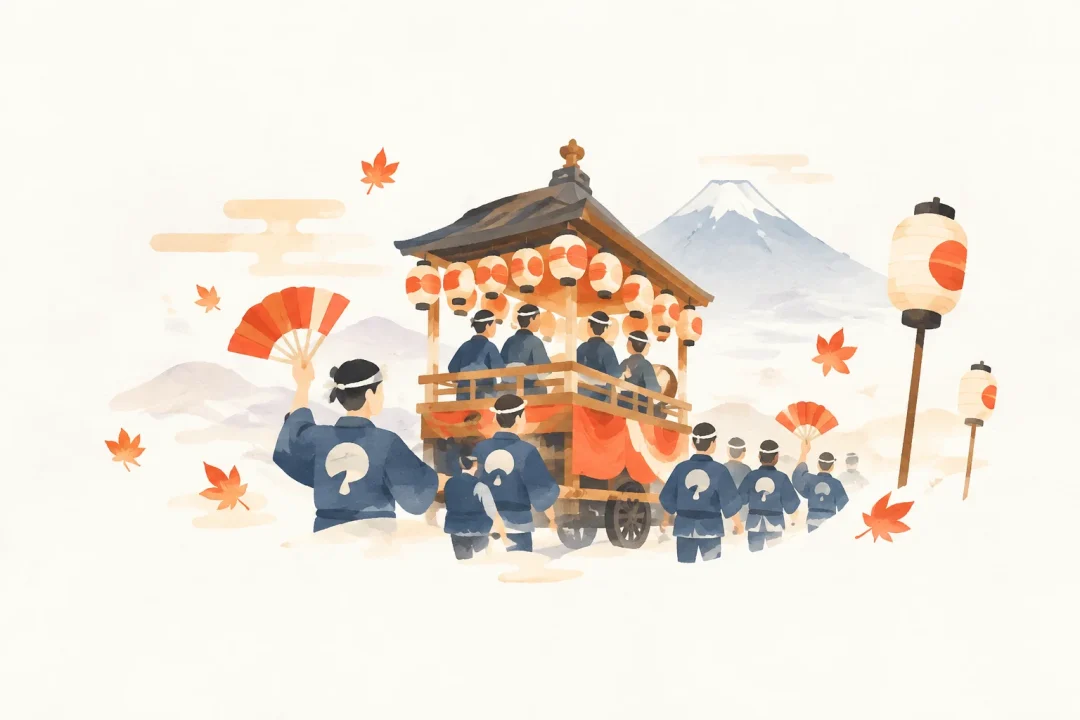
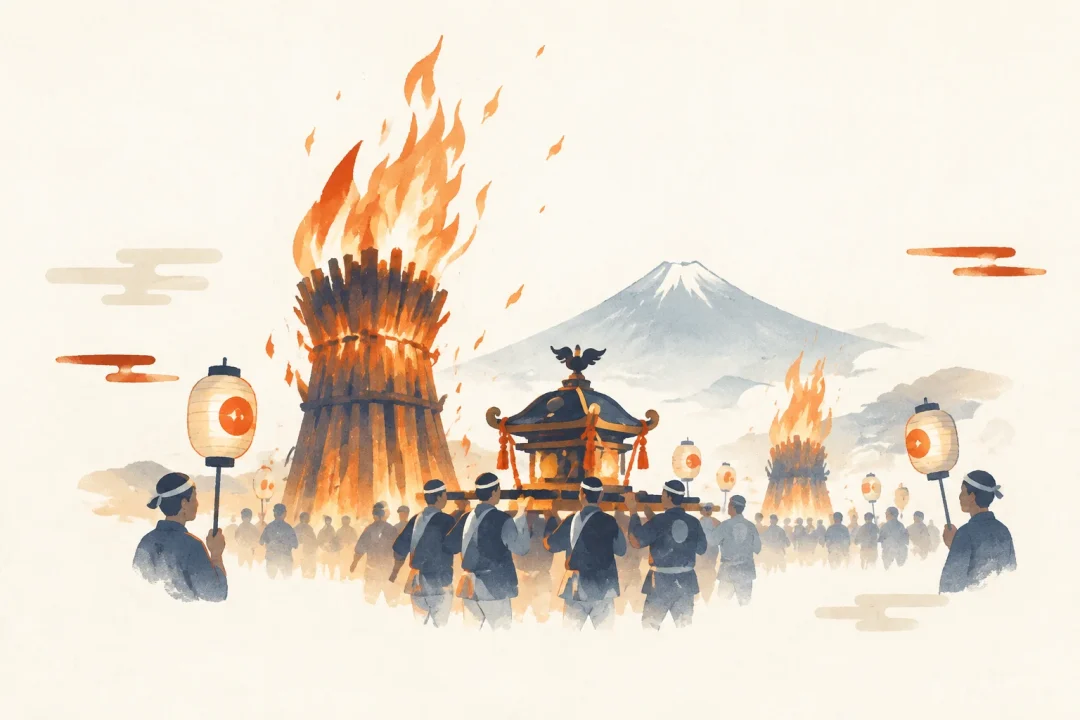
A traditional festival featuring 21 dashi and mikoshi bringing the streets of Yoshiwara to life
Yoshiwara Gion Festival
The 2026 edition of Yoshiwara Gion Festival has ended.
Festival information
EVENT INFORMATION- Dates
- 2026/06/13 〜 2026/06/14Ended
- Season / frequency
- The 2nd Saturday and Sunday of June / Every year
- Location
- Around the Yoshiwara shopping district (Yoshiwara district)
- Area
- Shizuoka Prefecture・Fuji City(From Tokyo: approx. 1 h–1 h 30 min · bullet train)Prefecture-level estimate to a main station or airport, not the venue. Airport access, check-in and onward travel are extra; remote areas and islands can take much longer.
- Features
- Highlights and activities
- Last updated
- 2026/10/19
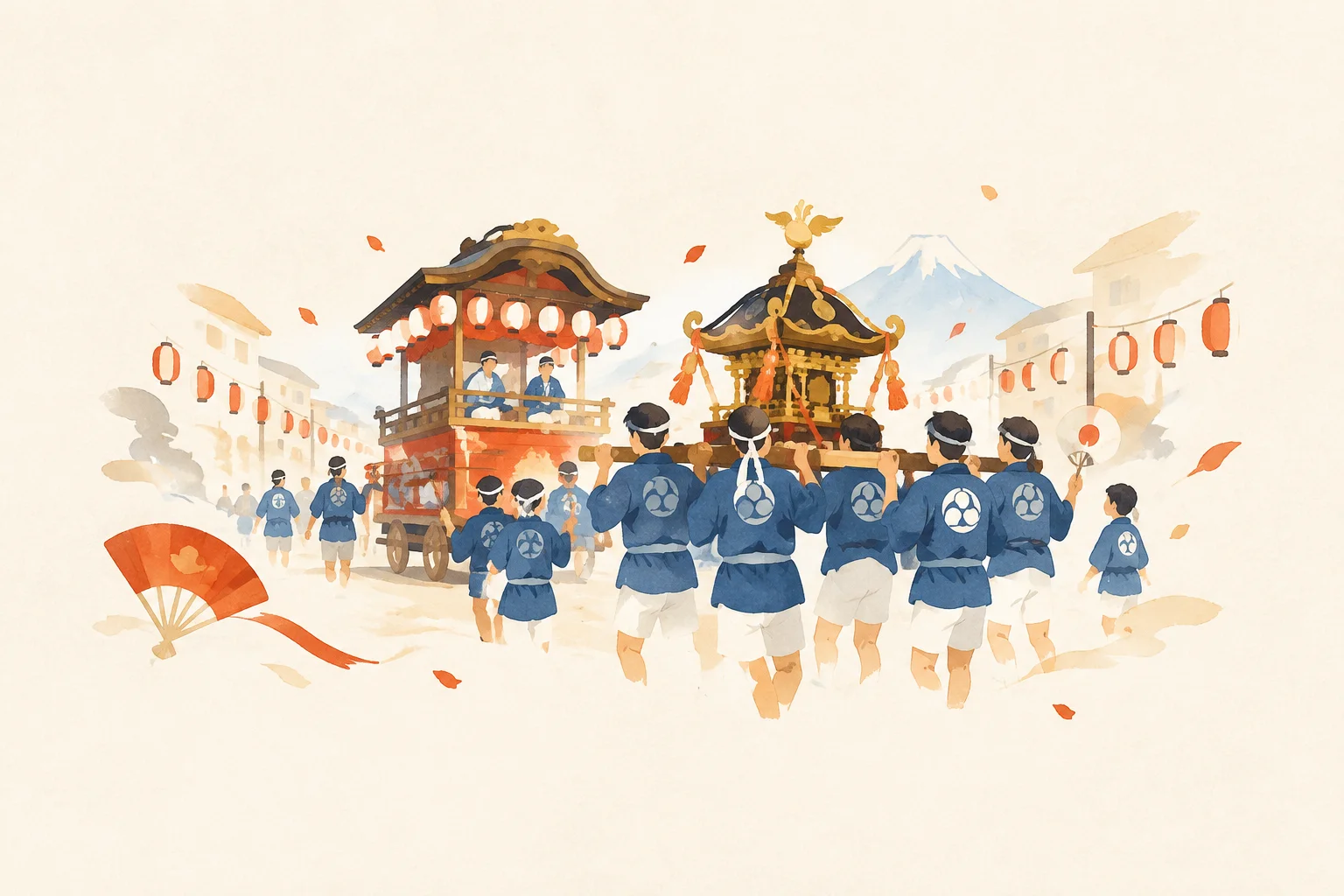
The Yoshiwara Gion Festival is a traditional festival passed down in the Yoshiwara district of Fuji City. The 25 neighborhoods of Yoshiwara and 6 shrines join together, with carried by children and young people and 21 parading around the Yoshiwara shopping district. It is also known by the locally beloved name “Otenno-san.”
About Yoshiwara Gion Festival
Photo credits and terms of use
Photographer: Sai10ukazuki File:Dashi(Higasi Hon Douri3).jpg / Wikimedia Commons / CC BY-SA 4.0 Own work by the contributorDisplay size only adjusted.May differ from the event currently featured.The Yoshiwara Gion Festival is a traditional festival jointly organized by the 25 neighborhoods of Yoshiwara and 6 shrines in the Yoshiwara district of Fuji City.
Its origins lie in the Gion Goryo-e of the Heian period, when prayers were offered to drive away evil spirits and epidemics, and local shrines and neighborhoods support the festival.
Locally, it is affectionately known as “Otenno-san.”
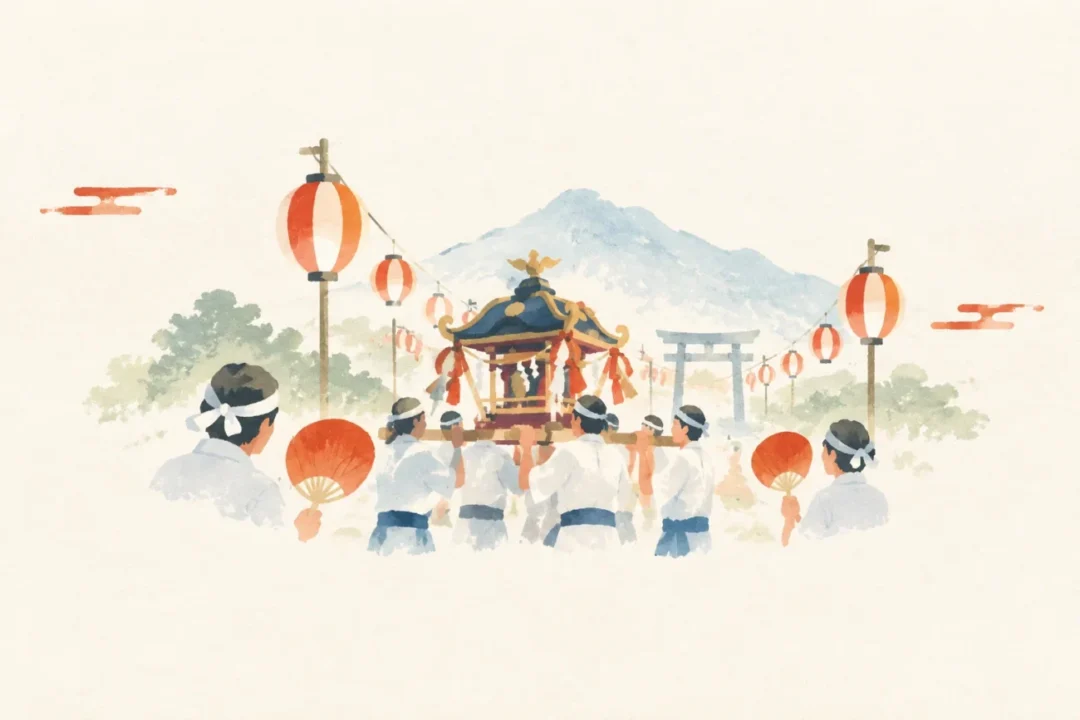
Mikoshi carried by children and young people, along with 21 dashi, bring the festival to life around the Yoshiwara shopping district.
Source: 吉原祇園祭 | 静岡県富士市 / 吉原祇園祭 - Wikipedia
Festival highlights
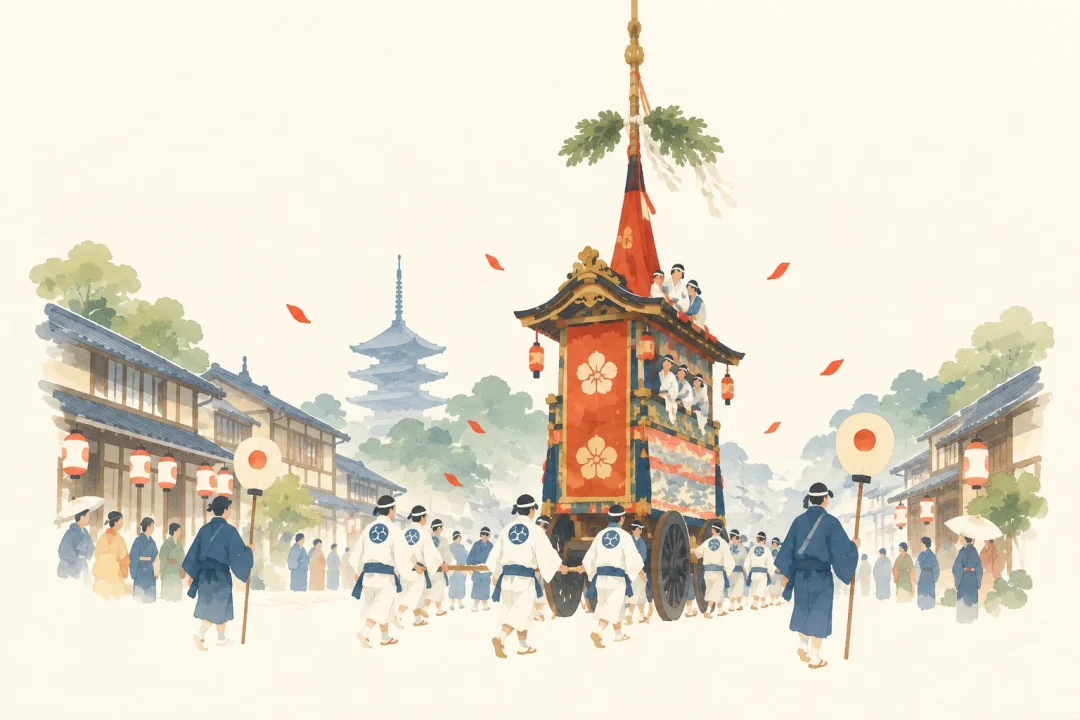
A highlight is the procession of 21 dashi from neighborhoods throughout the Yoshiwara district.
The dashi come in different styles, including dashi-style and -style floats.
The mikoshi are known as “fighting mikoshi” because they are shaken vigorously up and down and from side to side. There is also a custom of taking home bamboo leaves attached to the mikoshi and displaying them under the eaves.
A shrine drum performance competition is also held at dusk on Saturday.
A traditional festival featuring 21 dashi and mikoshi bringing the streets of Yoshiwara to life
What to expect
During the festival, dashi from each neighborhood parade through Yoshiwara, and the mikoshi visit each neighborhood in turn.
The shrine drums are played as signal drums to announce the arrival of the mikoshi, and a performance competition among neighborhood representatives is also held on Saturday.
After the mikoshi have been shaken, you may see people remove bamboo leaves from them to take home.
A stamp rally drawing is also held on Sunday.
Location and access
- Venue and address
Around Yoshiwara Shopping Street (Yoshiwara district).
- Train and bus
A short walk from Yoshiwarahoncho Station on the Gakunan Line, operated by Gakunan Railway.
A short walk from Yoshiwara Chuo Station on Fujikyu Shizuoka Bus.
In 2026, extra services operated on the day of the festival.
- By car
Some sections of the shopping street are closed to vehicles at certain times during the festival.
Use of public transportation is recommended.
Event venue 静岡県富士市 吉原商店街
This map uses the venue name. Check the official guide for the event area and entrances.
Dates and season
2026 Festival Information (the dates listed have passed)
In 2026, it was held on June 13 (Saturday) and the 14th (Sunday).
It is usually held on the 2nd Saturday and Sunday of June.
The hours are listed as 3 p.m. to 9 p.m., but the schedules for events involving the dashi, mikoshi, drums, and other activities vary.
Accommodation and hotels PR
Showing nearby accommodation.
Prices and availability are current at the time of retrieval. For multi-night stays, only the first night’s price is shown. Confirm the final price and directions to the venue with the booking provider. Select your dates again when using the area search link. Search area: within 3 km of Central Shizuoka Prefecture / Fuji City (the search is not centered on the festival venue)
Tips for your visit
Please watch without blocking the routes used by the dashi and mikoshi or obstructing the movements of those carrying or pulling them.
When taking photos, be considerate of festival participants and other visitors passing by.
Roads around the shopping district are closed to vehicles, so it is wise to allow plenty of time for getting around.
Please respect that this is a religious festival and avoid disrupting its organization by the local neighborhoods.
Source: 吉原祇園祭2026|おてんのさんの開催日 · Dashi · Traffic restrictions · Access · 屋台 完全ガイド | しずおかプレス
Nearby attractions

浮島ヶ原自然公園
静岡県富士市にある自然公園
Origins and History of Yoshiwara Gion Festival
The festival's religious origins are said to lie in the Gion Goryo-e of the Heian period, when prayers were offered to drive away evil spirits and epidemics.
The dashi are said to have originated in Manji 3 (1660), when a resident of Yodabashi paraded a boat fitted with wheels in gratitude after a prayer to Tenjin-sama was answered.
Yoshiwara's role as a post town where cultures from various places intersected is also considered part of the background to the festival's present-day form.
Official information
The host city, Fuji, provides information on the 2026 dates, venue, festival features, and public transportation for the Yoshiwara Gion Festival.
A phone number for the Fuji City Yoshiwara Shopping District Promotion Association is also listed as a contact.
Official information recommends using public transportation on the day of the festival.
Yoshiwara Gion Festival at a Glance
The Yoshiwara Gion Festival is a festival jointly organized by the 25 neighborhoods of Yoshiwara and 6 shrines in the Yoshiwara district of Fuji City.
In 2026, it was held on June 13 and the 14th around the Yoshiwara shopping district.
The festival features 21 dashi, mikoshi, and shrine drums, and is usually held on the 2nd Saturday and Sunday of June.
The Gakunan Railway and buses are convenient options for getting to the venue.
Japanese Festivals.jp Editorial Team
Celebrating local culture and helping you discover a side of Japan you never knew.
Article updated: 2026/10/19
Submit information or a correction Submit photos of this festival