Arita’s traditional ritual, entrusting the village’s hopes to a great straw rope
Tsunauchi Shinji
Festival information
EVENT INFORMATION- Season / frequency
- January, February weekday / Every year
- Location
- Itsuki Shrine
- Area
- Fukui Prefecture・Wakasa Town(From Tokyo: approx. 2 h 50 min–3 h 20 min · bullet train)Prefecture-level estimate to a main station or airport, not the venue. Airport access, check-in and onward travel are extra; remote areas and islands can take much longer.
- Highlights and activities
- Wishes behind the festival
- Last updated
- 2026/11/15
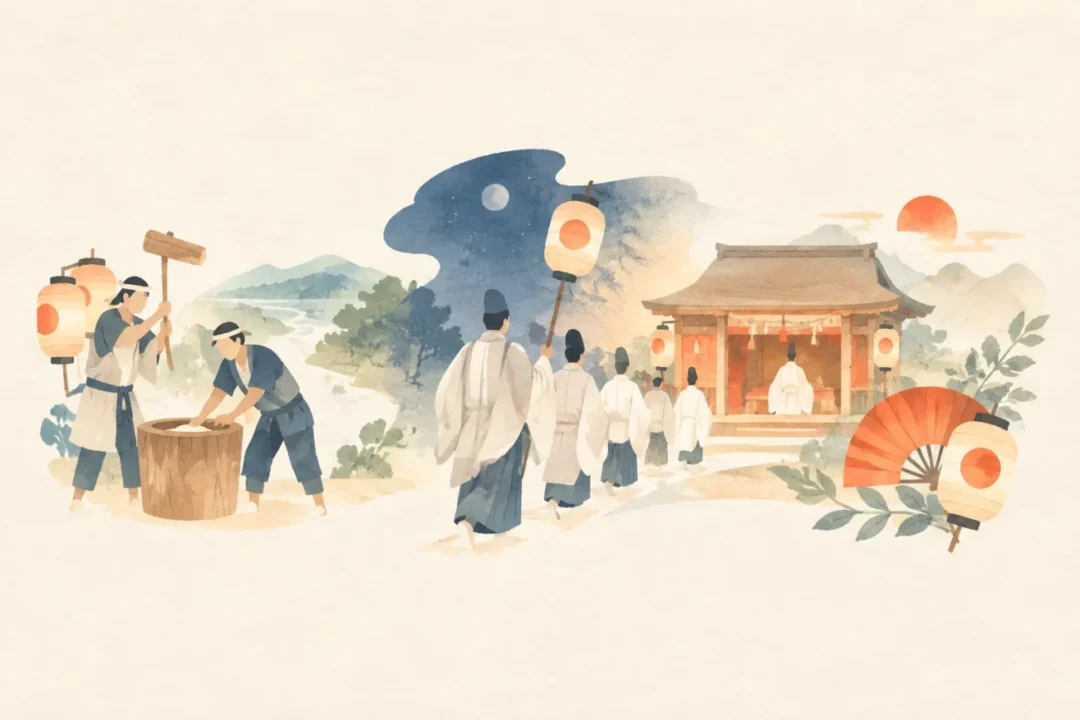
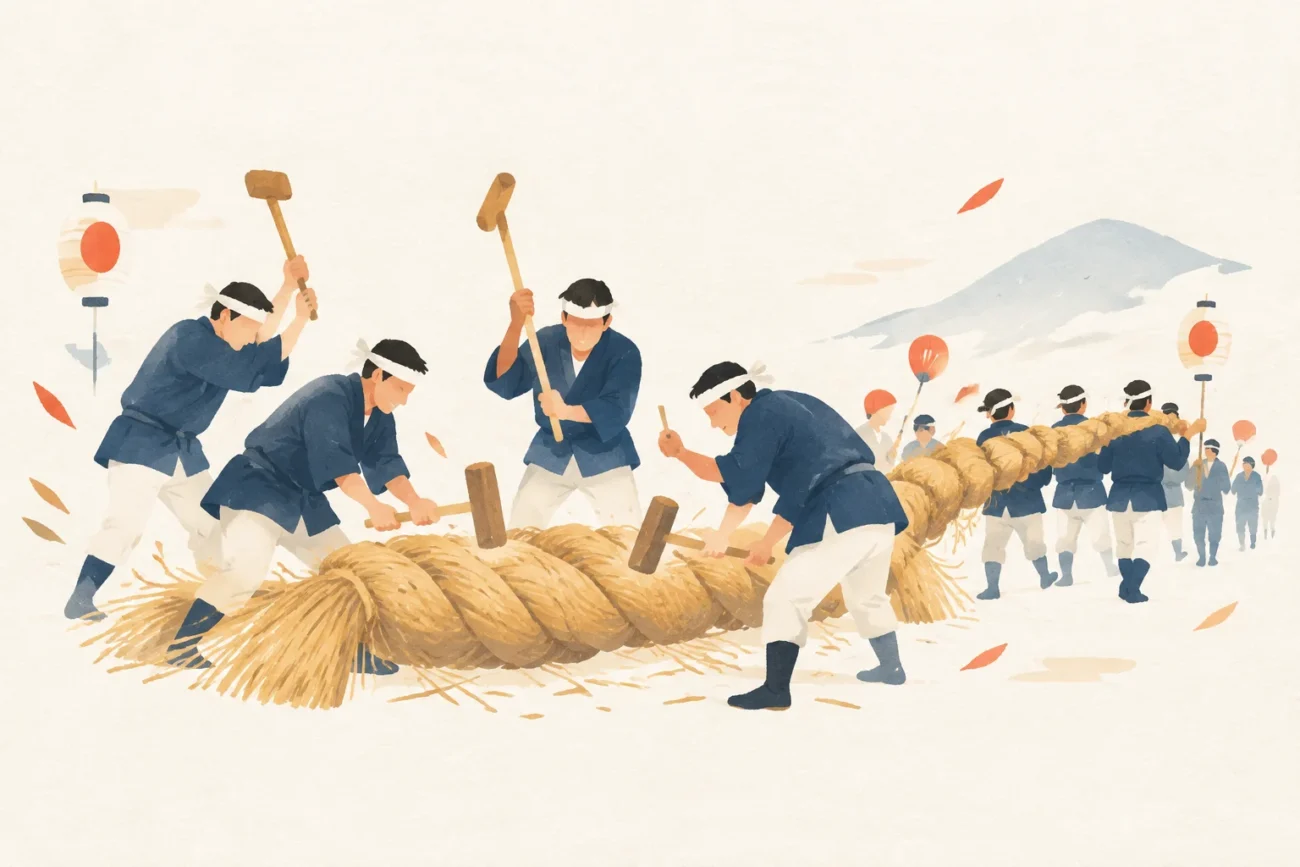
Tsunauchi is a ritual passed down at Itsuki Shrine in Arita, Wakasa Town, in which a great rope of straw is braided and presented. The village men beat the rope in time with their calls, then carry the completed great rope through the village. It is also designated a town intangible folk cultural property.
About Tsunauchi Shinji
Tsunauchi Shinji is a traditional event held at Itsuki Shrine in Arita, Wakasa Town.
They braid a great rope from straw, carry it through the village, and then present it at the .
It is designated a town intangible folk cultural property and has been passed down as an event to pray for the village’s safety and the health of its residents.
In 2011, it took about 4 hours to braid the great rope, which was 15 meters long and 30 centimeters thick.
Festival highlights
The highlight is watching the village men call out phrases such as “Kiritto sei” in unison as they twist the straw and finish the great rope.
In the 2011 ritual, they braided a great rope 15 meters long and 30 centimeters thick in about 4 hours.
Afterward, young men carried the great rope through the village and presented it at the haiden of Itsuki Shrine.
You can follow the process of community collaboration, from braiding the rope through to presenting it.
Arita’s traditional ritual, entrusting the village’s hopes to a great straw rope
What to expect
For the ritual, the village men gather at Itsuki Shrine and braid a great rope, twisting the straw as they call out in unison.
In 2011, they completed a great rope 15 meters long and 30 centimeters thick after about 4 hours of work.
Once finished, young men carry the great rope through the village.
Finally, they present the great rope at the haiden.
Location and access
- Venue and address
Itsuki Shrine, Arita, Wakasa Town
- Train and bus
JR Wakasa-Arita Station
Address Arita, Wakasa Town, Mikatakaminaka District, Fukui Prefecture
Dates and season
- Season
January, February weekday
- Frequency
Every year
Accommodation and hotels PR
Showing nearby accommodation.
Prices and availability are current at the time of retrieval. For multi-night stays, only the first night’s price is shown. Confirm the final price and directions to the venue with the booking provider. Select your dates again when using the area search link. Search area: within 3 km of Central Fukui Prefecture / Wakasa Town (the search is not centered on the festival venue)
Nearby attractions

福井県年縞博物館
福井県若狭町にある地誌学の博物館

若狭三方縄文博物館
福井県若狭町にある博物館
Origins and History of Tsunauchi Shinji
Tsunauchi Shinji is said to be based on a story from over a hundred years ago: after torrential rain swept a sacred object into a nearby river, people hauled it out with a hastily made great rope.
Another tradition says that villagers pulled a goddess who appeared in a lake long ago from the water with a straw rope about 14 meters long and 30 centimeters thick, then enshrined her at Itsuki Shrine.
The annual New Year custom of braiding a rope is described as an event that keeps these traditions alive.
It was designated a town intangible folk cultural property in Showa 39April 1.
Official information
Wakasa Town’s cultural property list identifies Tsunauchi Shinji as a town-designated intangible folk cultural property passed down in Arita.
Tsunauchi Shinji at a Glance
Tsunauchi Shinji is a ritual passed down at Itsuki Shrine in Arita, Wakasa Town, in which a great rope of straw is braided and presented.
As they call out in unison, they twist the straw to finish a great rope 15 meters long and 30 centimeters thick, which young men then carry through the village.
Against the backdrop of traditions such as the story of a sacred object swept away by torrential rain and hauled up with a great rope, the event has been passed down as a prayer for the village’s safety and the health of its residents.
Sources and references
Japanese Festivals.jp Editorial Team
Celebrating local culture and helping you discover a side of Japan you never knew.
Article updated: 2026/11/15