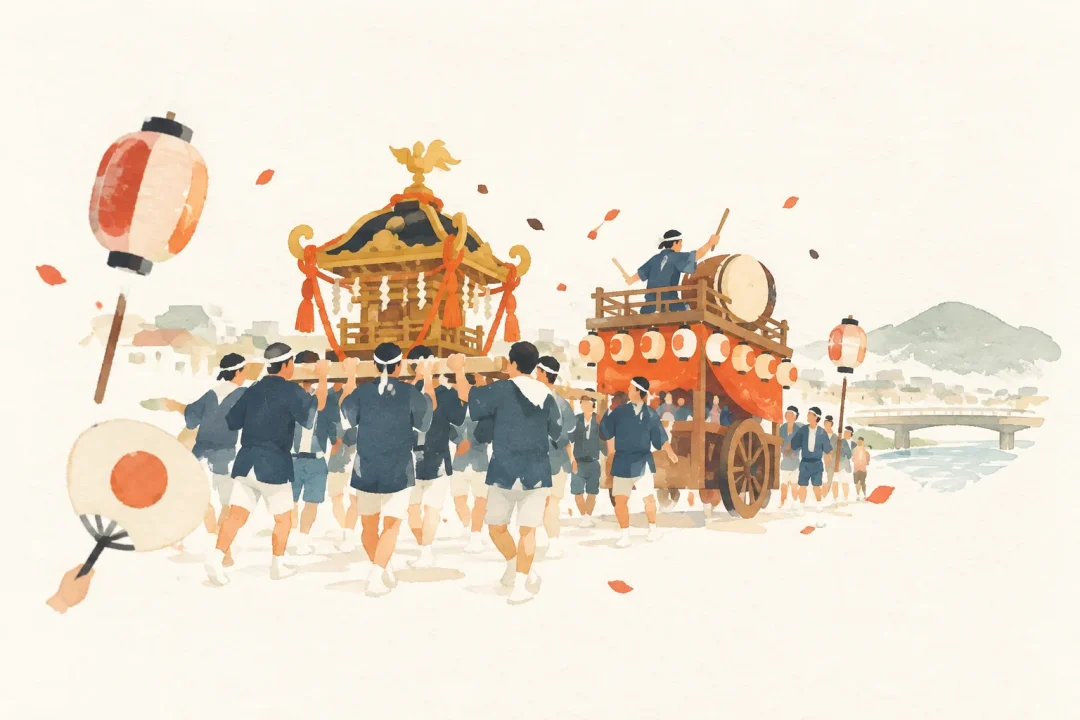
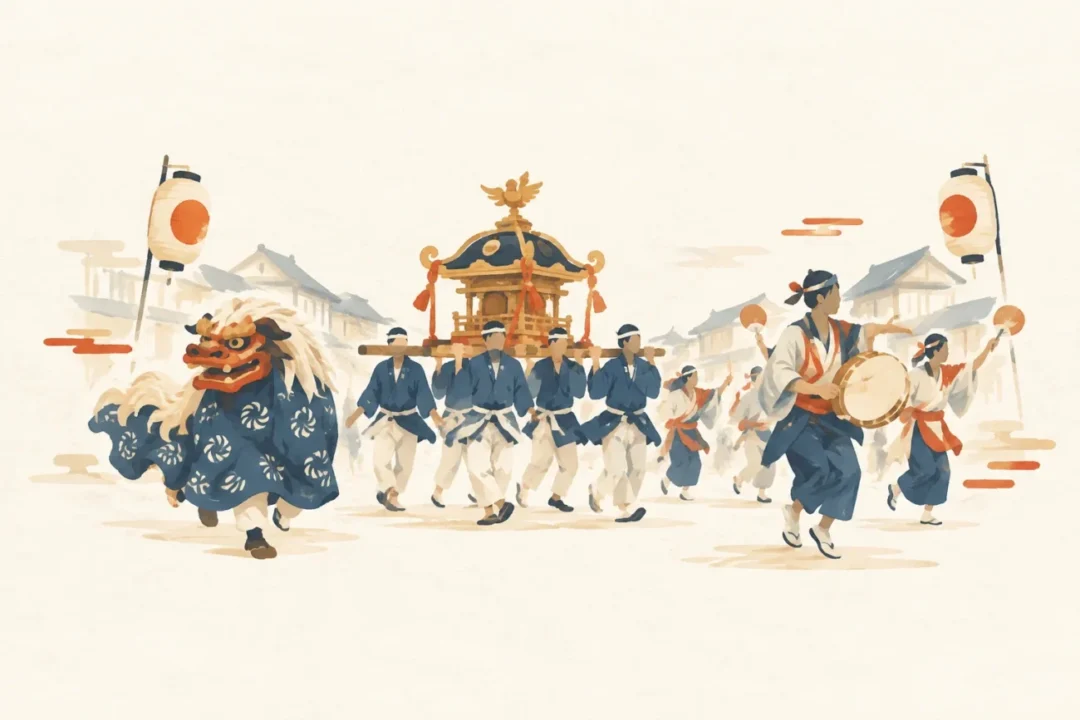
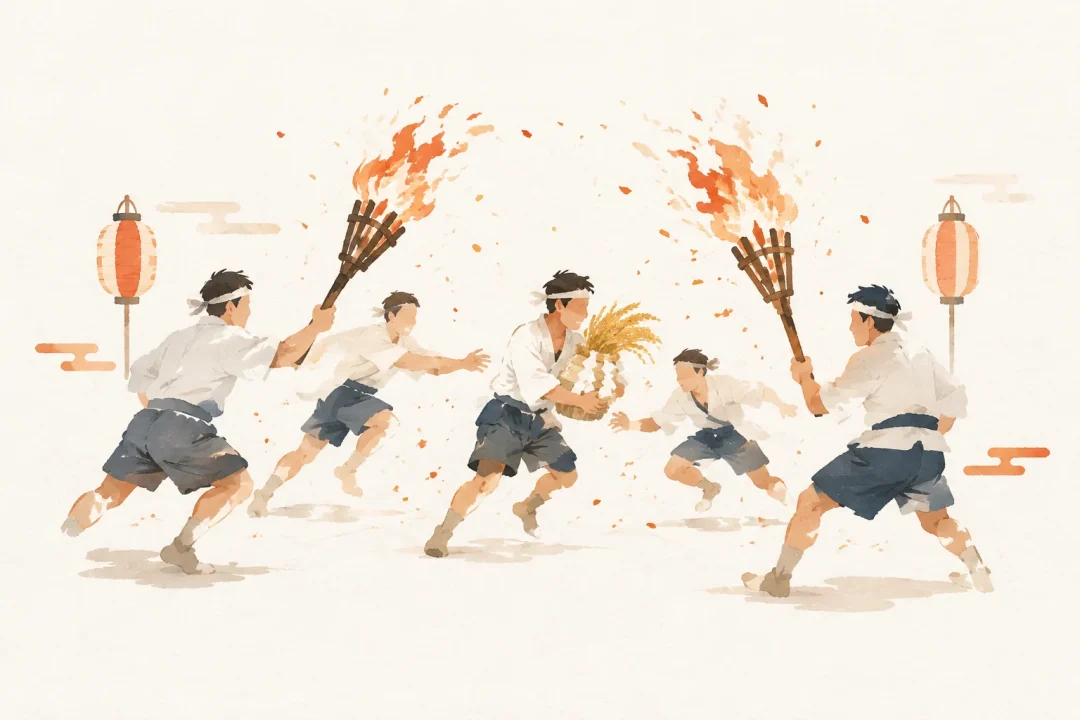
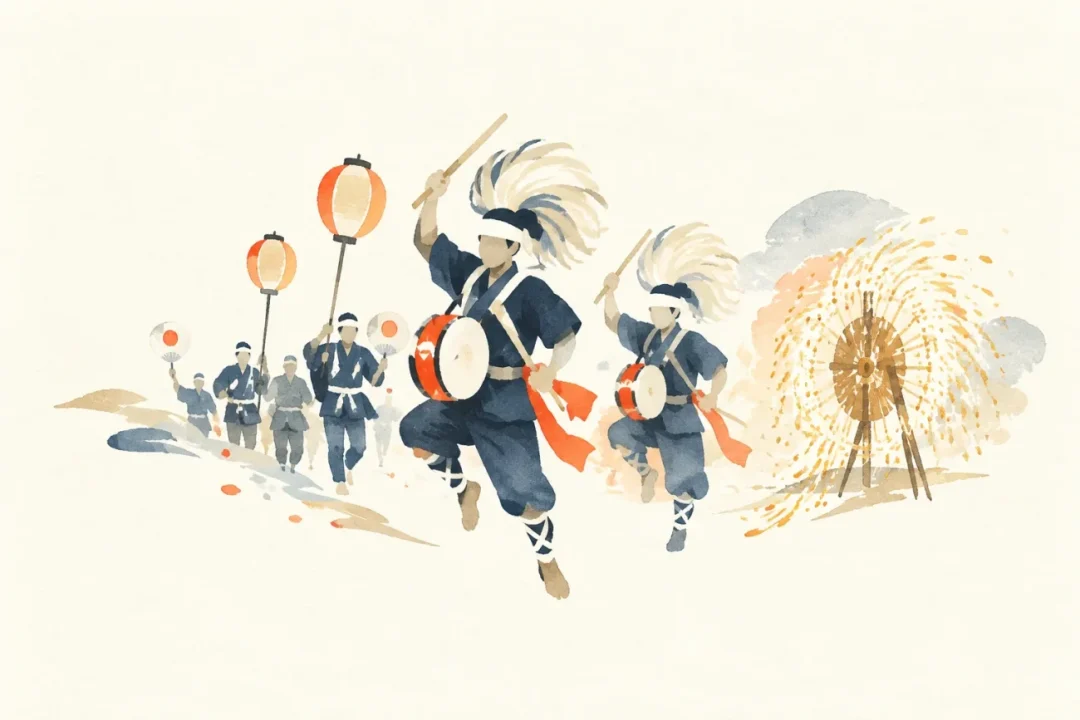
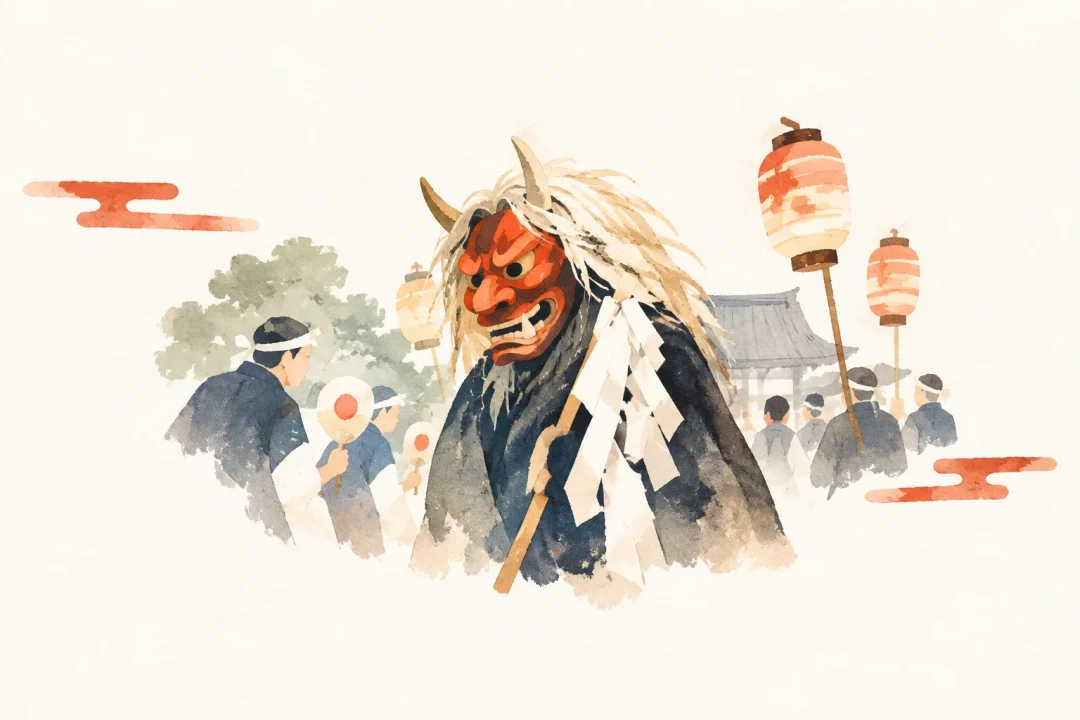
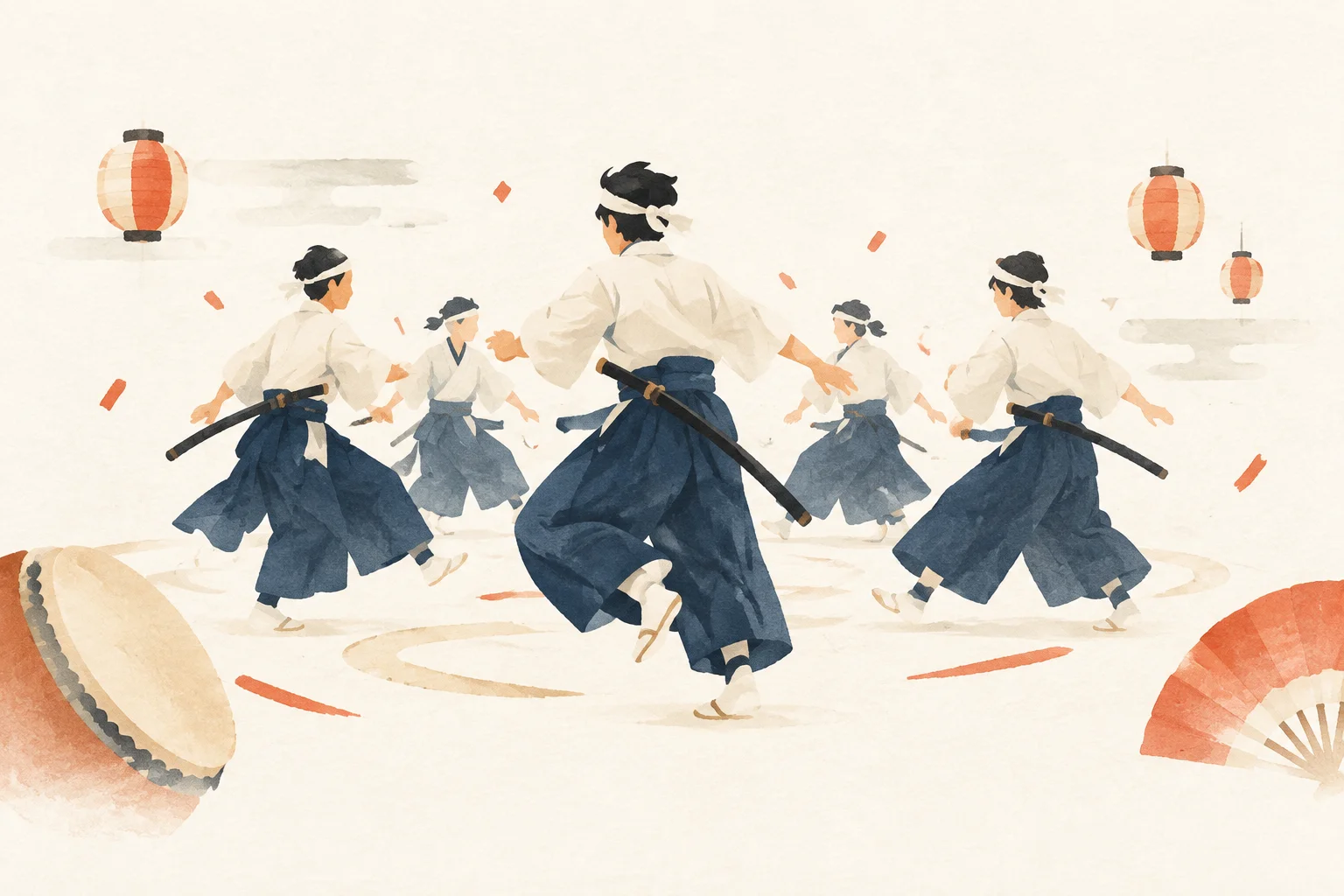
A traditional performance from Takase, with sword-wearing dancers performing in a circle
Takase no Aru Odori
The 2026 edition of Takase no Aru Odori has ended.
Festival information
EVENT INFORMATION- Dates
- 2026/09/20Ended
- Season / frequency
- Every year in September / Every year
- Location
- Matsuo Shrine
- Area
- Saga Prefecture・Takeo City(From Tokyo: approx. 1 h 50 min–2 h 10 min · flight time only)Prefecture-level estimate to a main station or airport, not the venue. Airport access, check-in and onward travel are extra; remote areas and islands can take much longer.
- Highlights and activities
- Participation / viewing
- Spectators welcome
- Last updated
- 2026/10/19
Takase no Aru Odori, passed down in the Takase district of Takeo City, is a folk performing art in which sword-wearing dancers form a circle and dance powerfully to singing and music. It is carried on locally as one of the traditions of the three districts that make up Aru Odori of Takeo.
About Takase no Aru Odori
Takase no Aru Odori is a folk performing art passed down in Takase, Nishikawanobori-cho, Takeo City, Saga Prefecture.
Aru Odori of Takeo is a performing art handed down in the Takeo domain of the Saga Domain, and Takase no Aru Odori is one of its forms.
Dancers with swords tucked into their waistbands, musicians, and singers take part, offering the performance as a local tradition.
It is also recorded as an Intangible Folk Cultural Property for which measures such as documentation should be undertaken by the national government.
Source: 国指定文化財等データベース / 第9回 佐賀県伝承芸能祭|継ぎの世代へ
Festival highlights
The highlight is watching the dancers form a circle and perform with strength and lively grace.
The dancers called kaki surround the central mosshō and dance to the singers' songs and the furyū music.
Together with Udoté no Aru Odori, Takase no Aru Odori is considered part of a tradition of simple, powerful dances reminiscent of martial arts forms.
The musicians support the dance with flutes, gongs, and other instruments.
A traditional performance from Takase, with sword-wearing dancers performing in a circle
What to expect
During the dedication, dancers, musicians, and singers each play their roles, moving through the dance to the songs and the sounds of the furyū music.
At the center of the dancers stands the mosshō, surrounded in a circle by the kaki.
Takase no Aru Odori has been handed down as a local event dedicated at a shrine, and in 2026 it is scheduled to be performed at Matsuo Shrine from around 2 p.m.
In case of rain, the venue is scheduled to move to the Takase Community Center.
How to take part
Takase no Ara-odori is a offered by members of the preservation society and local dancers. It is not presented as an event where general visitors can join as dancers.
Visitors are welcome to watch, so they observe the offering.
As local religious beliefs and everyday life continue around the shrine, please take care not to obstruct designated areas or the movement of others.
Location and access
- Venue and address
Matsuo Shrine (Takase district, Takeo City).
- By car
The roads around the shrine may be local residential roads, so please avoid parking on the street.
- Parking
No parking is provided for visitors.
Please check in advance whether you may use the parking lots at nearby community centers or public halls.
Event venue 佐賀県武雄市 松尾神社
This map uses the venue name. Check the official guide for the event area and entrances.
Dates and season
2026 event information (the listed dates have passed)
In 2026, it is scheduled to be dedicated at Matsuo Shrine from around 2 p.m. on September 20.
The Aru Odori of Takeo, including Takase no Aru Odori, is dedicated at different shrines and on different dates and times in each district.
In case of rain, the event is scheduled to be held at the Takase Community Center, but the time and venue may change depending on the weather or the shrine rites.
Accommodation and hotels PR
Showing nearby accommodation.
Prices and availability are current at the time of retrieval. For multi-night stays, only the first night’s price is shown. Confirm the final price and directions to the venue with the booking provider. Select your dates again when using the area search link. Search area: within 3 km of Central Saga Prefecture / Takeo City (the search is not centered on the festival venue)
Tips for your visit
Takase no Aru Odori is not an event staged for tourists; it is held as a religious rite for the local tutelary deity.
As it may not begin on time, it is best to allow plenty of time for your visit.
There is no dedicated parking or restroom, and please avoid parking on the street as this inconveniences local residents.
If taking photos or videos, please be considerate so as not to disrupt the dedication.
Nearby attractions

御船山楽園
佐賀県武雄市にある庭園

慧洲園
佐賀県の公園・庭園のスポットです。

武雄市図書館・歴史資料館
佐賀県武雄市の文化施設

陽光美術館
佐賀県の博物館・美術館のスポットです。
Origins and History of Takase no Aru Odori
Takase no Aru Odori has been handed down as one branch of Aru Odori of Takeo, which has been passed down in the Takeo domain of the Saga Domain.
The origin of Aru Odori of Takeo is said to date back to 1530, when foot soldiers spontaneously danced after their lord, Gotō Sumiaki, won a battle.
Takase no Aru Odori is one of the traditions passed down in three districts, alongside Nakano in Asahi-cho and Udoté in Higashikawanobori-cho, and it continues to be carried on locally.
Official information
Information about its cultural property status can be found in the Agency for Cultural Affairs' Database of Nationally Designated Cultural Properties.
Information introducing it as a traditional performing art in Saga Prefecture, as well as the 2026 dedication schedule for Takase no Aru Odori, is provided in related information from the Saga Traditional Performing Arts Festival and in dedication notices from within Takeo City.
Takase no Aru Odori at a Glance
Takase no Aru Odori is an Aru Odori passed down in the Takase district of Takeo City. Dancers called mosshō and kaki form a circle and dance powerfully to singing and music.
Aru Odori of Takeo is said to have originated in a victory during the Sengoku period and is designated an Important Intangible Folk Cultural Property of Japan.
In 2026, the dedication is scheduled for September 20 at Matsuo Shrine, but the venue may change in case of rain.
Japanese Festivals.jp Editorial Team
Celebrating local culture and helping you discover a side of Japan you never knew.
Article updated: 2026/10/19
Submit information or a correction Submit photos of this festival