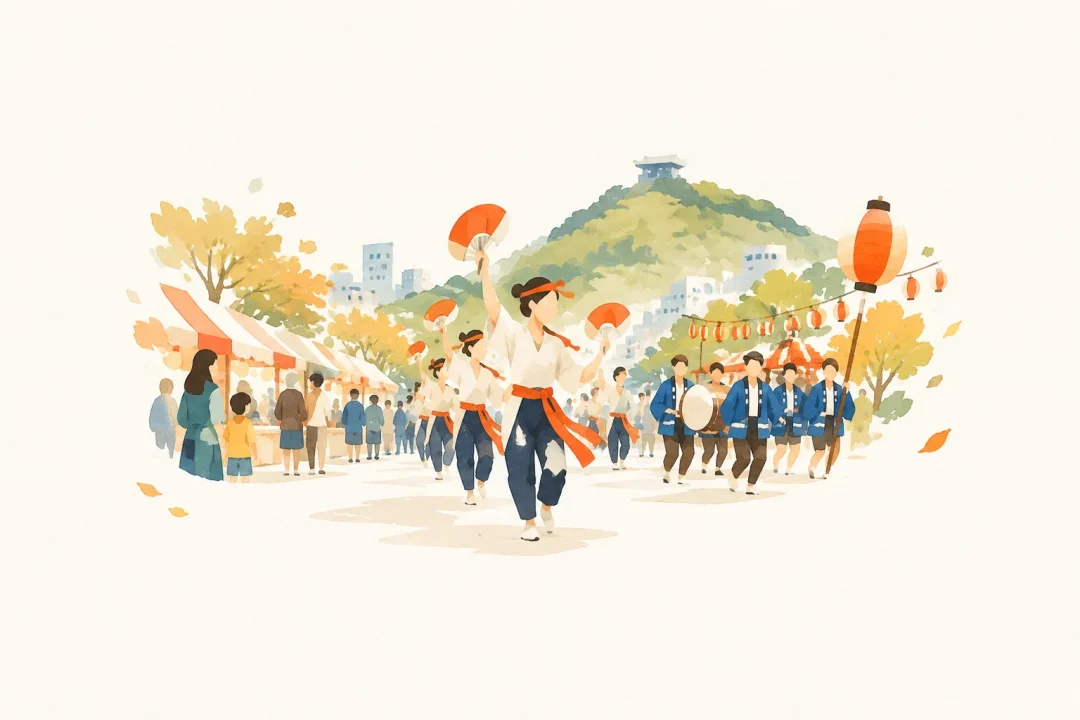
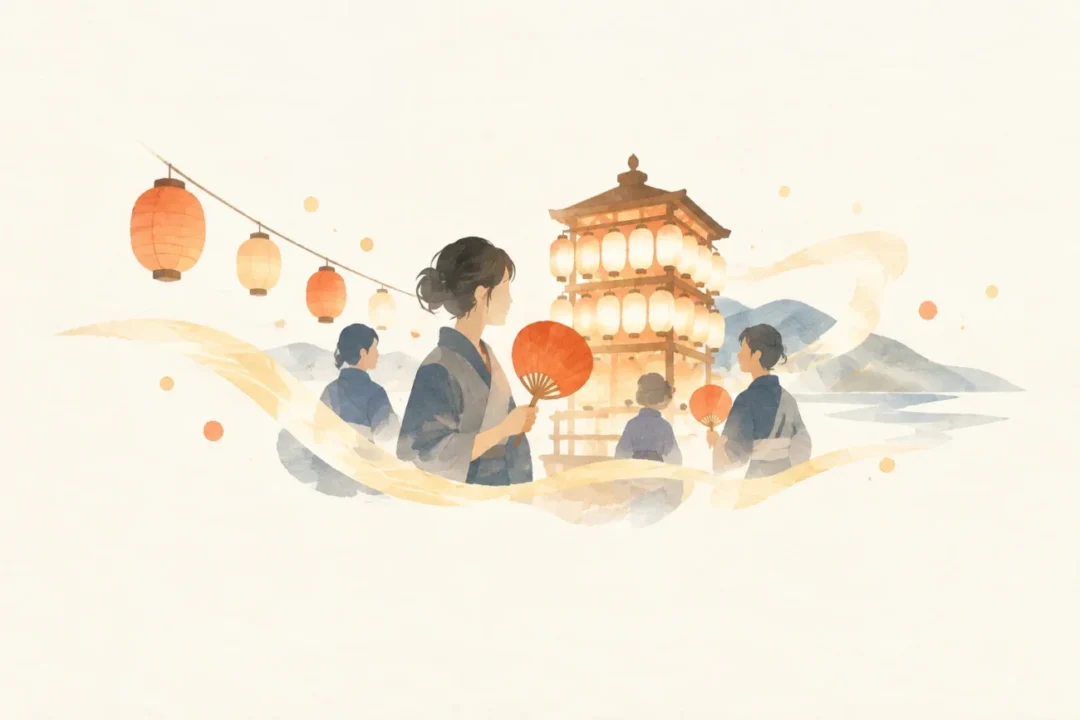
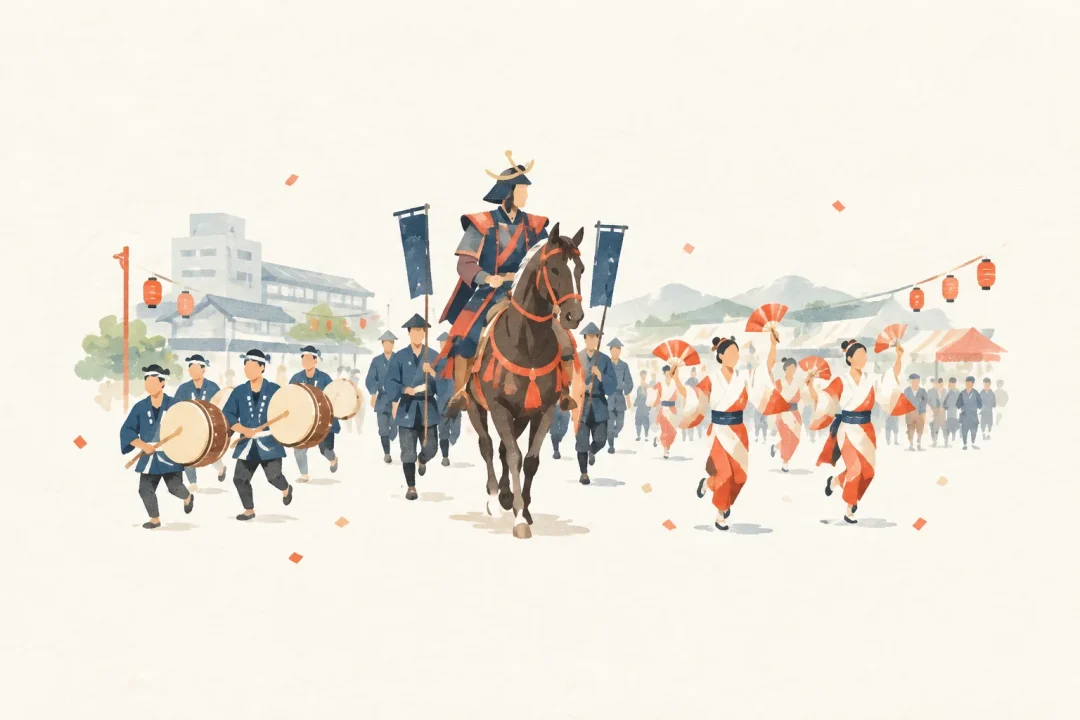
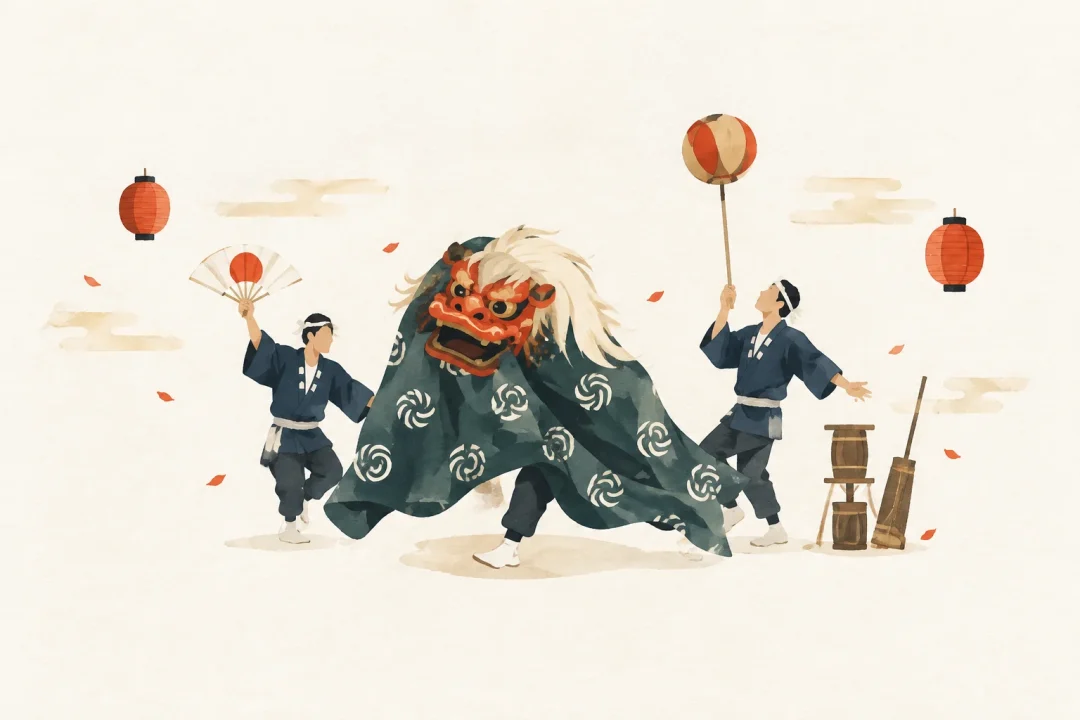
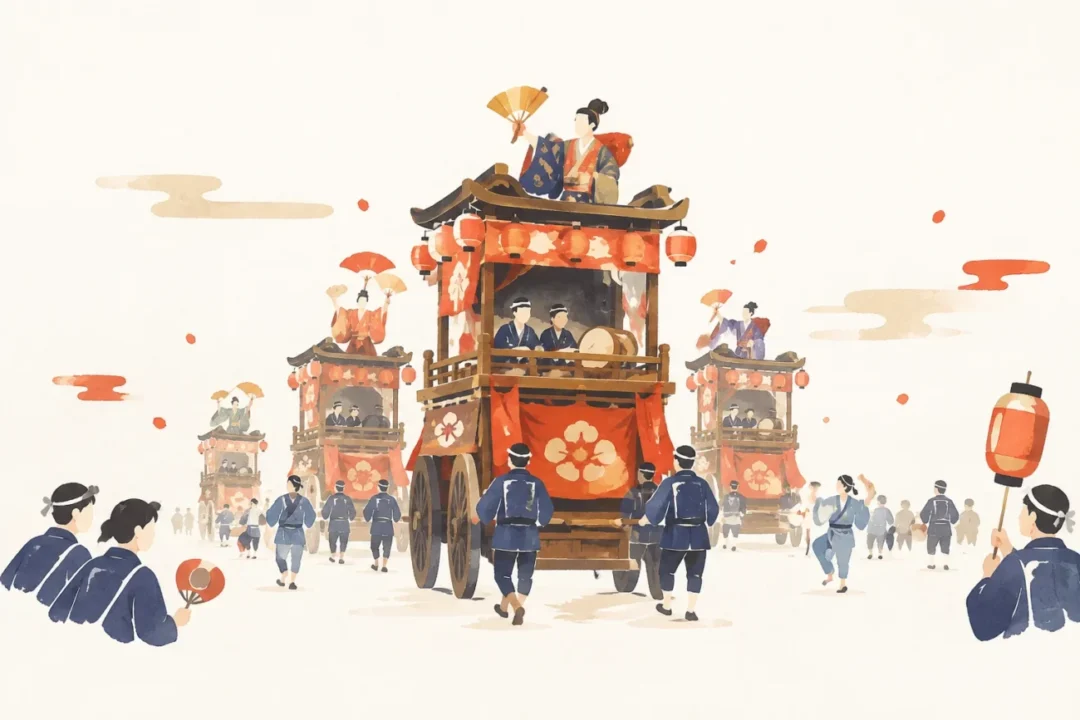
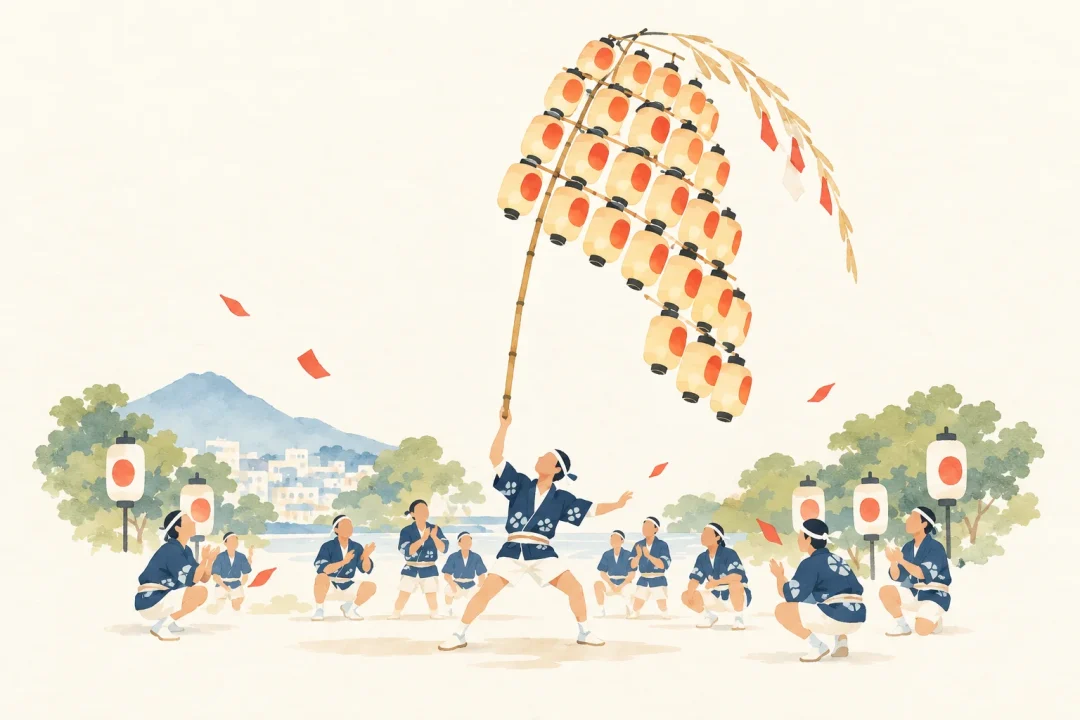
A 100-day festival featuring lantern boats and flower-decorated dashi boats traveling along the Kanie River
Sunari Festival

The 2026 edition of Sunari Festival has ended.
Festival information
EVENT INFORMATION- Dates
- 2026/08/01 〜 2026/08/02Ended
- Season / frequency
- Every year, from early July to late October. The main events are the Yoimatsuri on the 1st Saturday of August and the Asa Matsuri the following Sunday. / Every year
- Location
- Tomiyoshi Tatehayasujinja and Hachiken Shrine, and the Kanie River in the Sunari district
- Area
- Aichi Prefecture・Kanie Town(From Tokyo: approx. 1 h 40 min–2 h · bullet train)Prefecture-level estimate to a main station or airport, not the venue. Airport access, check-in and onward travel are extra; remote areas and islands can take much longer.
- Features
- Highlights and activities
- Wishes behind the festival
- Participation / viewing
- Spectators welcome
- Last updated
- 2026/10/19
The Sunari Festival, passed down in the Sunari district of Kanie Town, is a traditional event consisting of a river procession in which boats travel along the Kanie River and a rite in which misfortune is entrusted to reeds. Centered on the Yoimatsuri and Asa Matsuri, local events continue from summer into autumn.
About Sunari Festival
The Sunari Festival is the annual festival of Tomiyoshi Tatehayasujinja and Hachiken Shrine in the Sunari district of Kanie Town.
Based on the Tenno faith, which seeks to ward off epidemics, the festival consists of a river procession in which dashi boats travel along the Kanie River and the Miyoashi Rite, in which misfortune is entrusted to reeds and sent downstream.
As events continue from early July to late October, the festival is also known as the “100-Day Festival.”
This is a festival that brings together the local shrines, the river, and the role of the young men.
Source: 国指定文化財等データベース
Festival highlights
During the Yoimatsuri, the makiwara boat, decorated with numerous lanterns arranged in a hemisphere, travels up the Kanie River to the sound of festival music.
During the Asa Matsuri, dashi boats decorated with plum and cherry blossoms carry children in ceremonial dress toward Tenno Bridge.
The sight of part of Miyoashi Bridge lifting to let the boats pass is another highlight unique to the Sunari Festival.
After the Asa Matsuri, branches of the decorative flowers are also distributed in an event called “Nagebana.”
Source: 須成祭 | イベント検索 | 【公式】愛知県の観光サイトAichi Now
A 100-day festival featuring lantern boats and flower-decorated dashi boats traveling along the Kanie River
What to expect
The festival begins with events such as the selection of the children in ceremonial dress in early July, followed in order by preparations such as reed cutting, reed arranging, and boat mooring.
On the day of the Yoimatsuri, after purification and a visit to the shrine, the makiwara boat travels up the Kanie River.
The following morning, during the Asa Matsuri, the dashi boat, newly decorated, travels along the river again. After reaching Tenno Bridge, the participants perform Tenno-bayashi at the shrine.
A series of events then continues through the reed-floating rite, the raising of the shelf, and the lowering of the shelf.
How to take part
The festival is primarily carried out by local people who take on roles such as festival representative, lodging leader, float leader, dashi rider, and reed cutter.
The makeup of the festival participants, including children serving as festival pages and young men, is also prescribed.
General visitors are invited to watch the boat events and enjoy receiving flowers thrown from the boats, which are distributed on a first-come, first-served basis after the morning festival.
Location and access
- Venue and address
Around Sunari Shrine (Tomiyoshi Tatehayasujinja and Hachiken Shrine), 1363 Monoyashikiue, Sunari, Kanie Town, Ama District.
The festival boat events take place along the Kanie River between Kazari Bridge and Tenno Bridge.
- Train and bus
About a 10-minute walk from Kanie Station on the JR Kansai Main Line, or about a 25-minute walk from Kanie Station on the Kintetsu Nagoya Line.
- By car
About 5 minutes from the Kanie IC exit on the Higashi-Meihan Expressway.
- Parking
Parking is available.
Address 1363 Monoyashikiue, Sunari, Kanie Town, Ama District, Aichi 497-0031
Dates and season
2026 event information (the dates listed have passed)
In 2026, the Yoimatsuri was held on August 1 (Saturday) and the Asa Matsuri on August 2 (Sunday).
In a typical year, the Yoimatsuri is held on the 1st Saturday of August and the Asa Matsuri the following Sunday. Related events continue for about 100 days, from the selection of the children in ceremonial dress in July through to the lowering of the shelf in October.
The 2026 event listing is marked as concluded.
Accommodation and hotels PR
Showing nearby accommodation.
Prices and availability are current at the time of retrieval. For multi-night stays, only the first night’s price is shown. Confirm the final price and directions to the venue with the booking provider. Select your dates again when using the area search link. Search area: within 3 km of Central Aichi Prefecture / Kanie Town (the search is not centered on the festival venue)
Tips for your visit
The Yoimatsuri and Asa Matsuri take place at night or early in the morning, and visitors watch the boats along the river.
After the Asa Matsuri, the decorative flowers are now distributed on a first-come, first-served basis for safety reasons, rather than being thrown to the crowd as they were in the past.
Festival boats and processions move around the venue, so follow staff instructions and do not try to force your way around near the river or bridges.
Nearby attractions
Near Tomiyoshi Tatehayasujinja and Hachiken Shrine, the festival’s venue, is the Kanie Town Tourism and Exchange Center “Matsuribito.”
The center introduces the Sunari Festival and attractions of Kanie Town. On the 2nd floor, visitors can see exhibits featuring a VR experience of the Sunari Festival, which is inscribed on UNESCO’s Intangible Cultural Heritage list, and projection mapping.
The center is at 371 Kawanishiue, Sunari, Kanie Town, Ama District, and is a recommended place to stop by to learn about the festival’s background.
Source: 蟹江町観光交流センター“祭人” | スポット検索 | 【公式】愛知県の観光サイトAichi Now

蟹江町歴史民俗資料館
愛知県蟹江町の歴史民俗資料館
Origins and History of Sunari Festival
The origins of the Sunari Festival are uncertain, but one legend says it began when young people from Sunari brought back reeds from the Tsushima Tenno Festival.
A record from Tenpo 15 (1844) refers to a boat festival called the “Sunari Village Tenno Yoimatsuri,” suggesting that it was already a thriving festival in the late early modern period.
In Heisei 24 (2012), it was designated a National Important Intangible Folk Cultural Property, and in Heisei 28 (2016), it was inscribed on UNESCO’s Intangible Cultural Heritage list as part of “Yama, Hoko, , float festivals in Japan.”
Source: 「須成地区」の歴史・文化 - 愛知県蟹江町公式ホームページ
Official information
Event information is available in the Sunari Festival listing on Aichi Now, Aichi Prefecture’s tourism website.
The Agency for Cultural Affairs’ Database of Nationally Designated Cultural Properties explains the festival’s cultural heritage and its events as a whole.
The Kanie Town official website also provides information about the history and culture of the Sunari district and the Sunari Festival.
Sunari Festival at a Glance
The Sunari Festival is a traditional event in Kanie Town, held as a festival of Tomiyoshi Tatehayasujinja and Hachiken Shrine, with a river procession of dashi boats and the Miyoashi Rite taking place over about 100 days.
The main highlights are the lantern-lit makiwara boat, the flower-decorated dashi boat, and Miyoashi Bridge rising to let the boats pass.
The 2026 listing gave the Yoimatsuri on August 1 and the Asa Matsuri on the 2nd, with the venue around Sunari Shrine.
Japanese Festivals.jp Editorial Team
Celebrating local culture and helping you discover a side of Japan you never knew.
Article updated: 2026/10/19
Submit information or a correction Submit photos of this festival