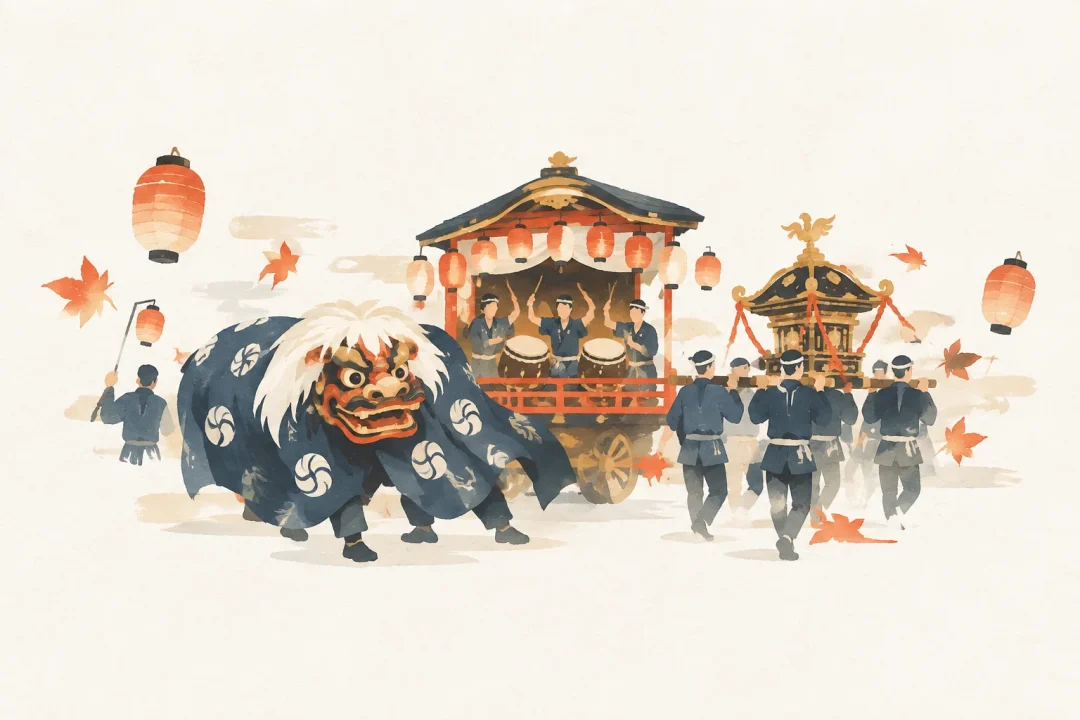
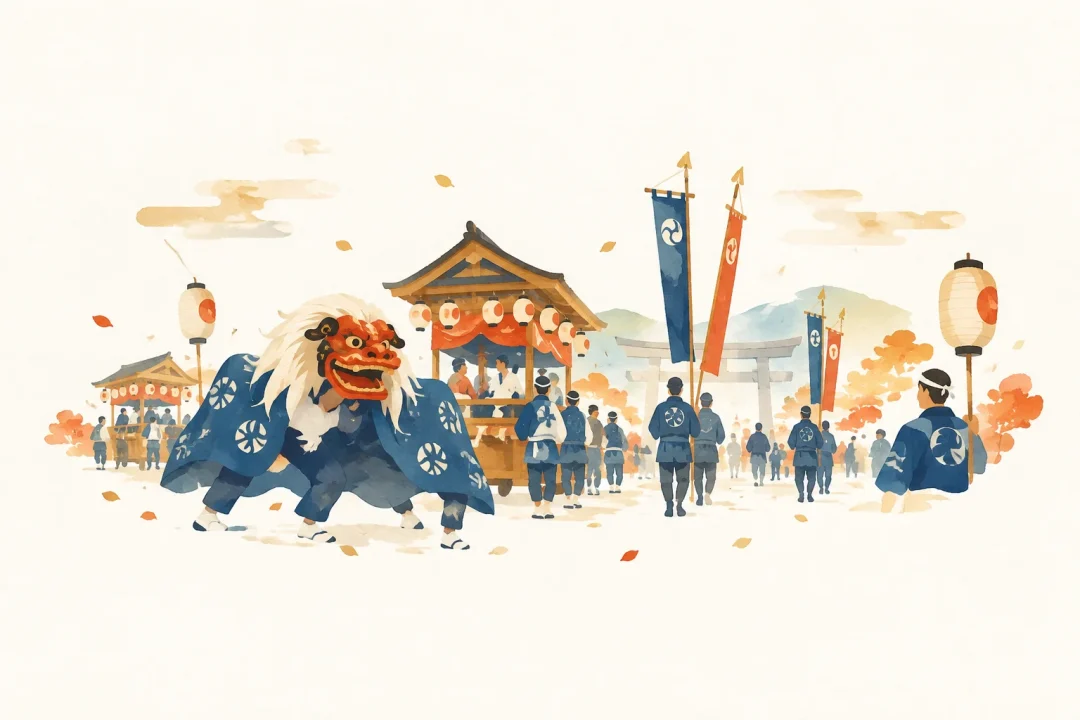
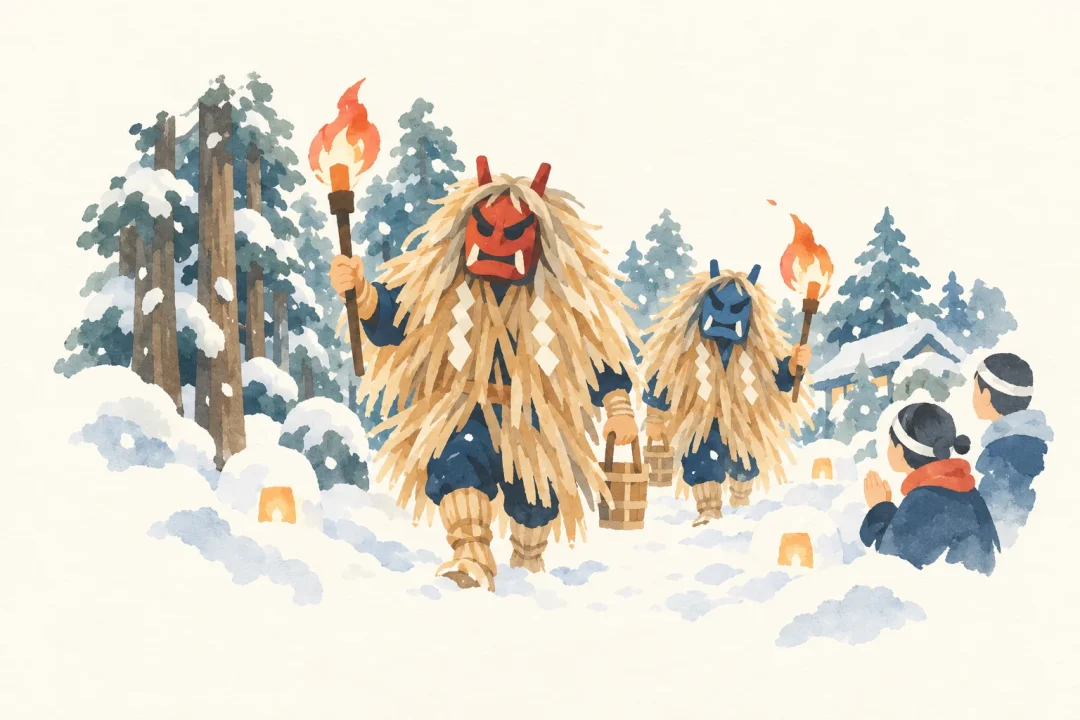
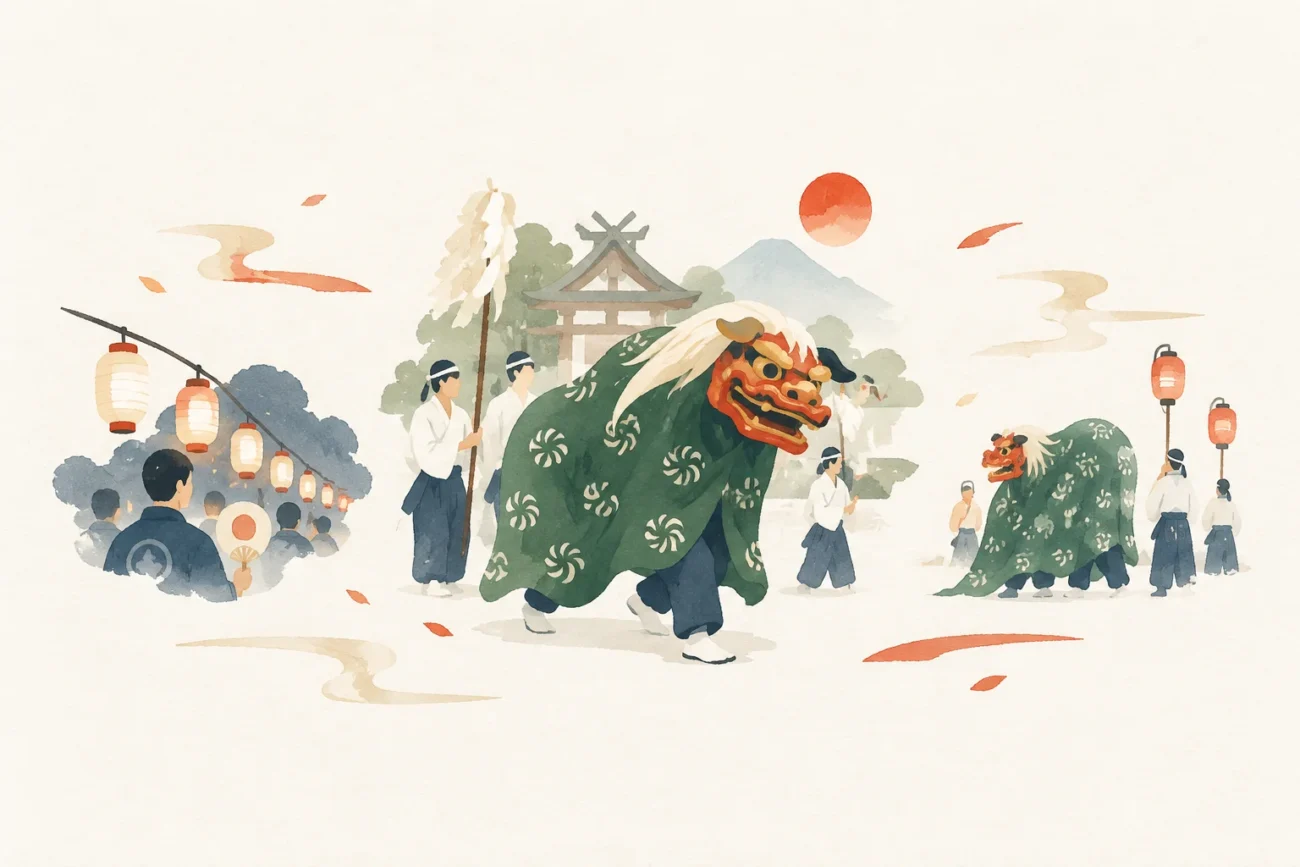
A kagura festival passed down in Samukawa, with shishi proceeding behind floral banners
Samukawa Festival
Festival information
EVENT INFORMATION- Season / frequency
- Every year on November 3 / Every year
- Location
- Samukawa Shrine
- Area
- Wakayama Prefecture・Hidakagawa Town(From Tokyo: approx. 3 h 30 min–4 h · bullet train + connecting train)Prefecture-level estimate to a main station or airport, not the venue. Airport access, check-in and onward travel are extra; remote areas and islands can take much longer.
- Highlights and activities
- Last updated
- 2026/11/11
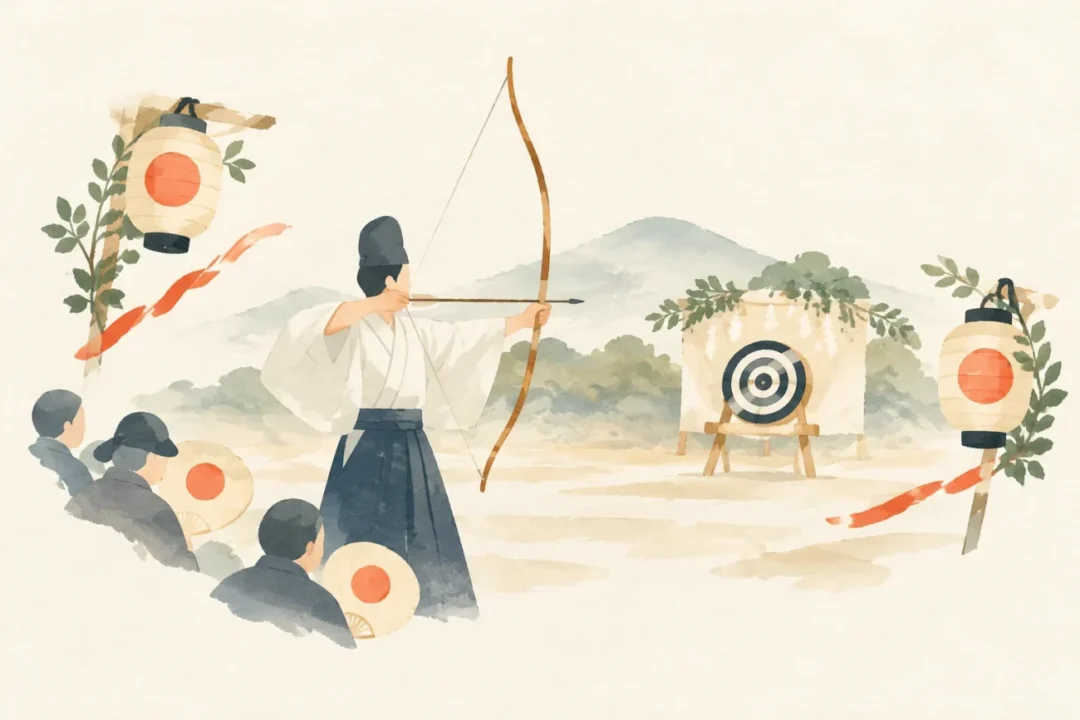
The Samukawa Festival takes place at Samukawa Shrine, where shishi proceed while offering . Across the three occasions—the eve of the festival, the main festival day, and the festival’s final day—it conveys the solemn character of a festival passed down in the community.
About Samukawa Festival
The Samukawa Festival is a time-honored celebration held mainly at Samukawa Shrine in Samukawa, Hidakagawa Town.
Shishi perform kagura as an offering, and on the main festival day a procession travels from the shrine to the .
It is also known as a solemn and dignified festival celebration in which neither performers nor ordinary worshippers consume alcohol.
Festival highlights
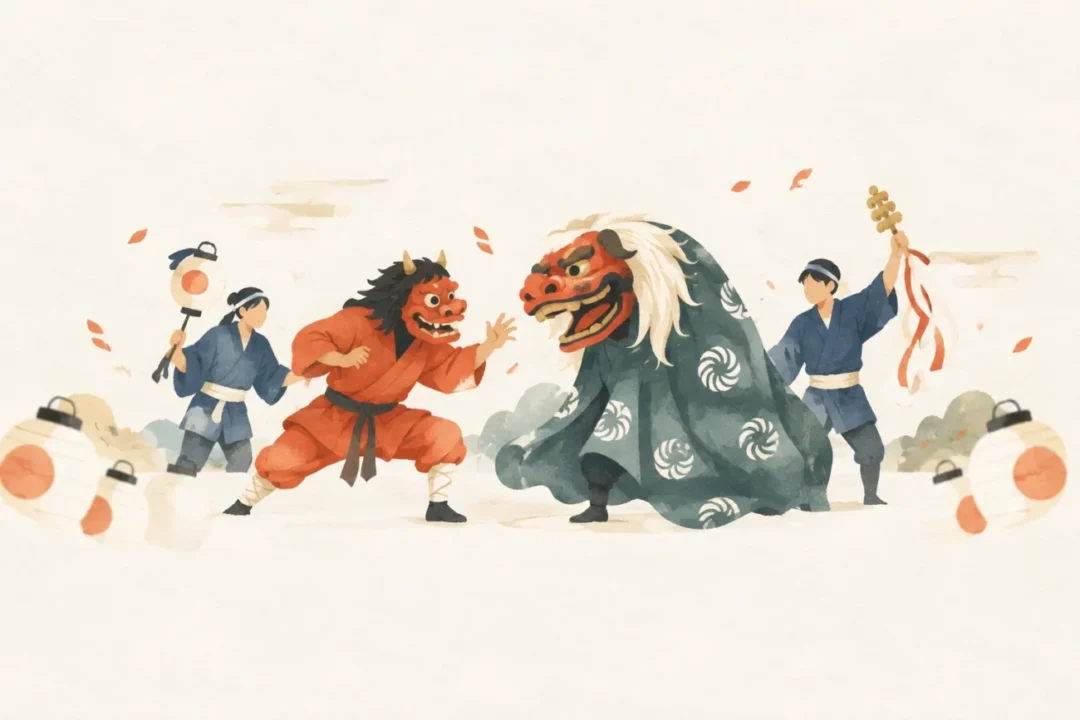
A highlight is michiyu kagura, in which a shishi performed by 4 people proceeds with Ōni and Wani guiding the way.
Led by floral banners, the procession dances its way from the shrine to the otabisho, creating a distinctive spectacle unlike a dance before the kami.
On the festival’s final day, Otafuku is escorted from the chief priest’s home to the shrine building, where she dances with the shishi.
A kagura festival passed down in Samukawa, with shishi proceeding behind floral banners
What to expect
The festival is held over 3 days: the eve of the festival, the main festival day, and the festival’s final day.
On the main festival day, a procession takes place after the ceremony before the kami. Led by floral banners, the shishi proceed to the otabisho, performing michiyu kagura along the way.
On the festival’s final day, Otafuku is escorted from the chief priest’s home to the shrine building, where she dances with the shishi, Ōni, and Wani.
Location and access
- Venue and address
Samukawa Shrine / 284 Samukawa, Hidakagawa Town, Hidaka District, Wakayama Prefecture
- By car
About 50 minutes from Arita IC
Address 284 Samukawa, Hidakagawa Town, Hidaka District, Wakayama Prefecture
Dates and season
- Season
Every year on November 3
- Frequency
Every year
Accommodation and hotels PR
Showing nearby accommodation.
Prices and availability are current at the time of retrieval. For multi-night stays, only the first night’s price is shown. Confirm the final price and directions to the venue with the booking provider. Select your dates again when using the area search link. Search area: within 3 km of Central Wakayama Prefecture / Hidakagawa Town (the search is not centered on the festival venue)
Tips for your visit
A distinctive feature of the rites is that neither performers nor ordinary worshippers consume alcohol.
The festival has maintained this discipline as a solemn observance.
Visitors, too, should respect its restrained atmosphere.
Origins and History of Samukawa Festival
Samukawa Shrine is said to have been built in 1204 by Samukawa Chōgen.
Written records say that the of the Samukawa Festival was passed down in Horeki 8 (1758).
In Showa 40 (1965), it was designated a prefectural Intangible Cultural Property.
Official information
The Samukawa Festival is featured as a festival and traditional event on the official Wakayama tourism website.
The Wakayama Cultural Properties website also describes the shishimai and the festival’s procession as a prefecturally designated Intangible Folk Cultural Property.
The festival takes place at Samukawa Shrine.
Samukawa Festival at a Glance
The Samukawa Festival is a time-honored celebration centered on shishimai, passed down at Samukawa Shrine in Hidakagawa Town.
After the ceremony before the kami, shishi proceed to the otabisho while performing michiyu kagura; on the festival’s final day, Otafuku joins the dance.
This prefecturally designated Intangible Cultural Property recounts the history of Samukawa Shrine, built in 1204, and the shishimai, said to have been passed down since Horeki 8 (1758).
Sources and references
Japanese Festivals.jp Editorial Team
Celebrating local culture and helping you discover a side of Japan you never knew.
Article updated: 2026/11/11