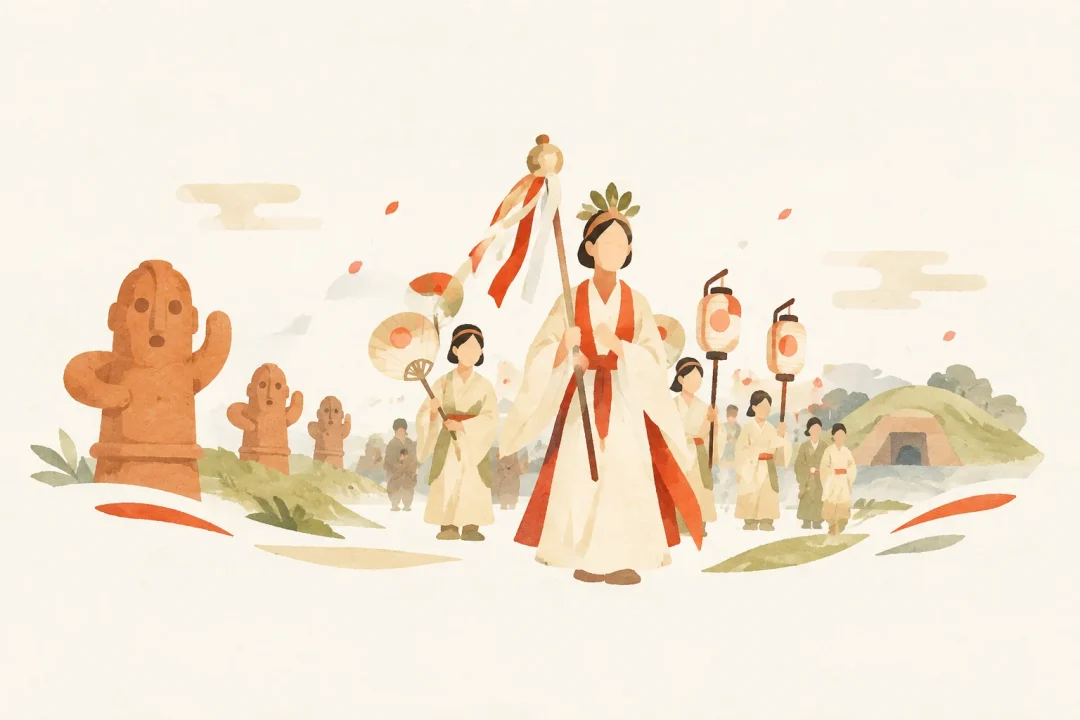
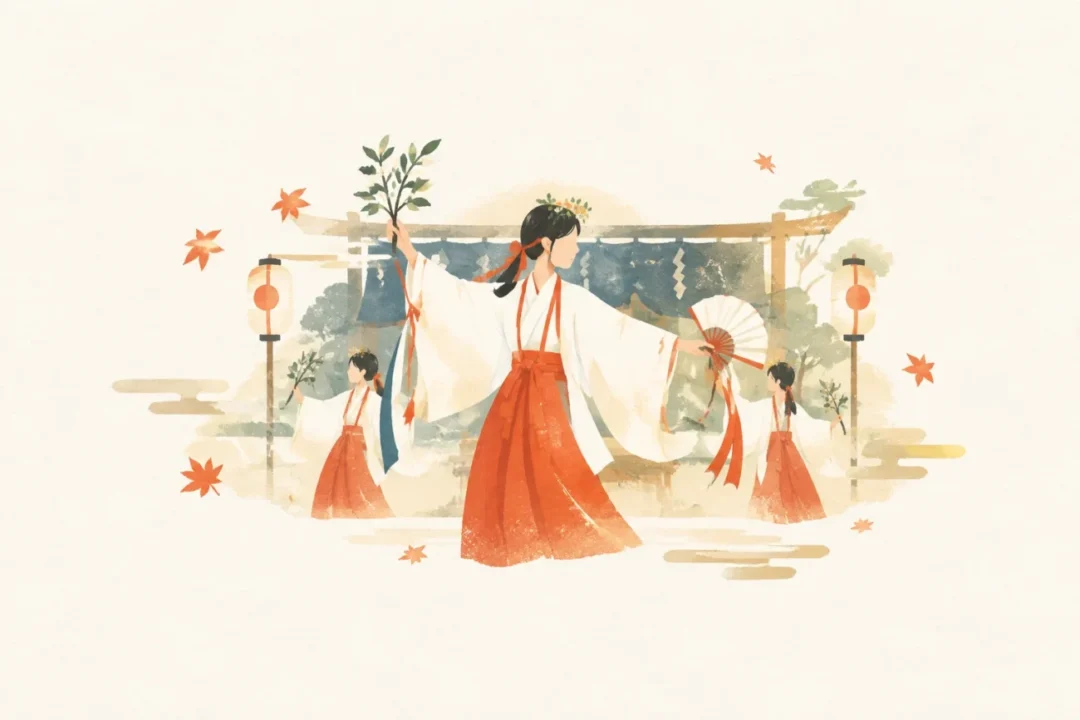
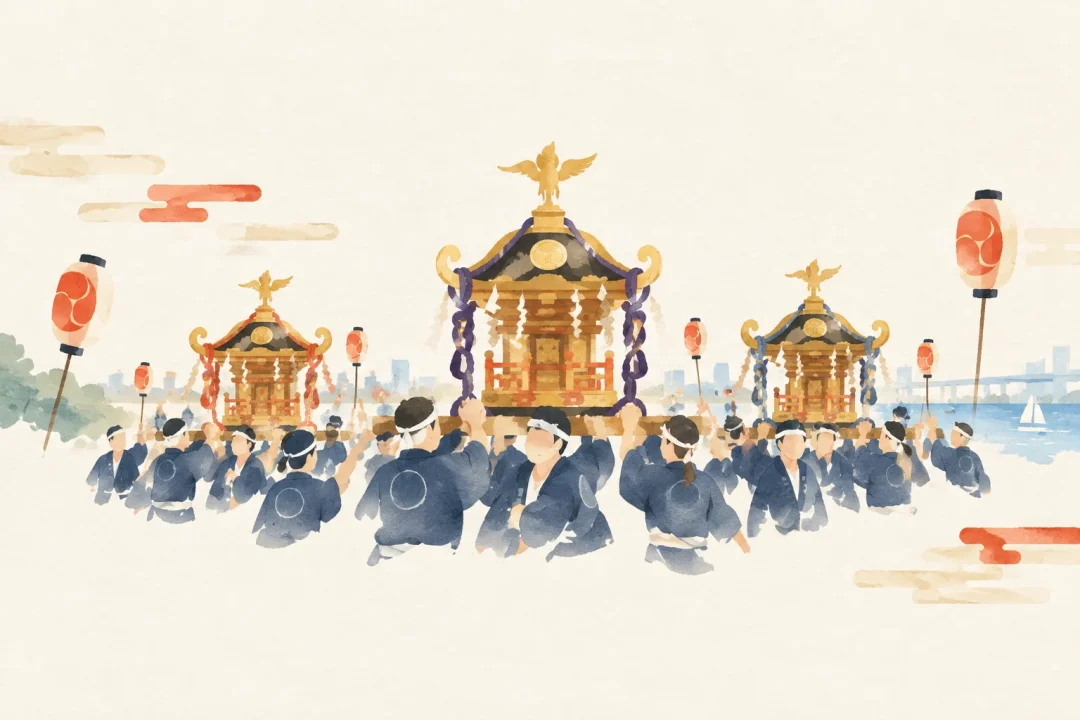
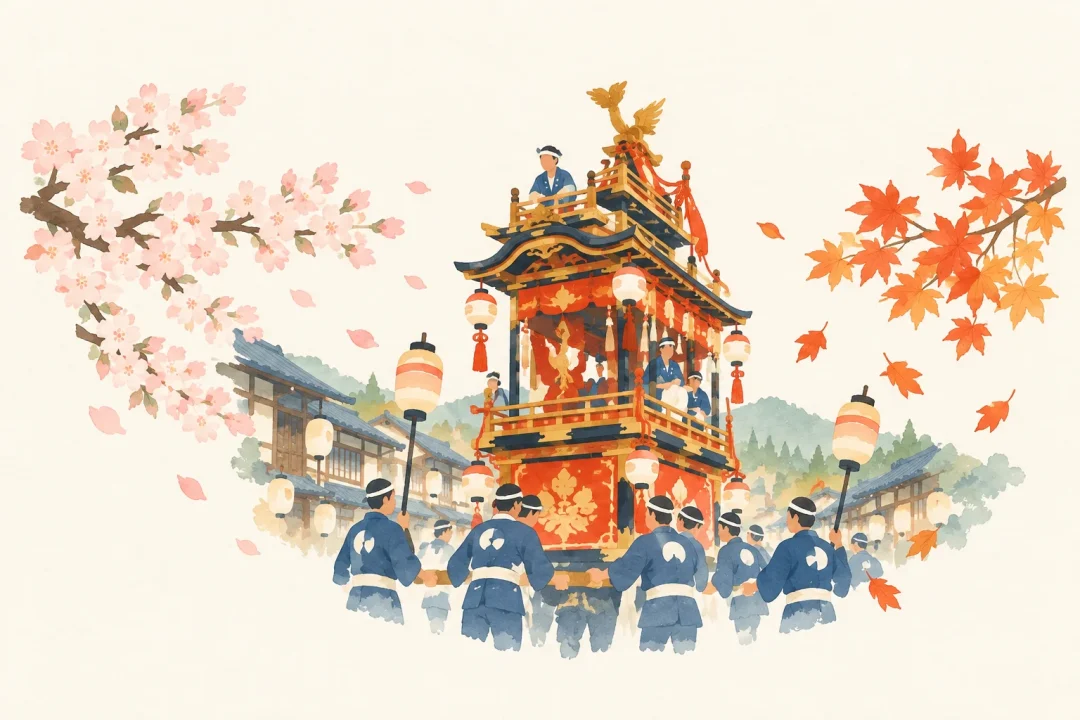
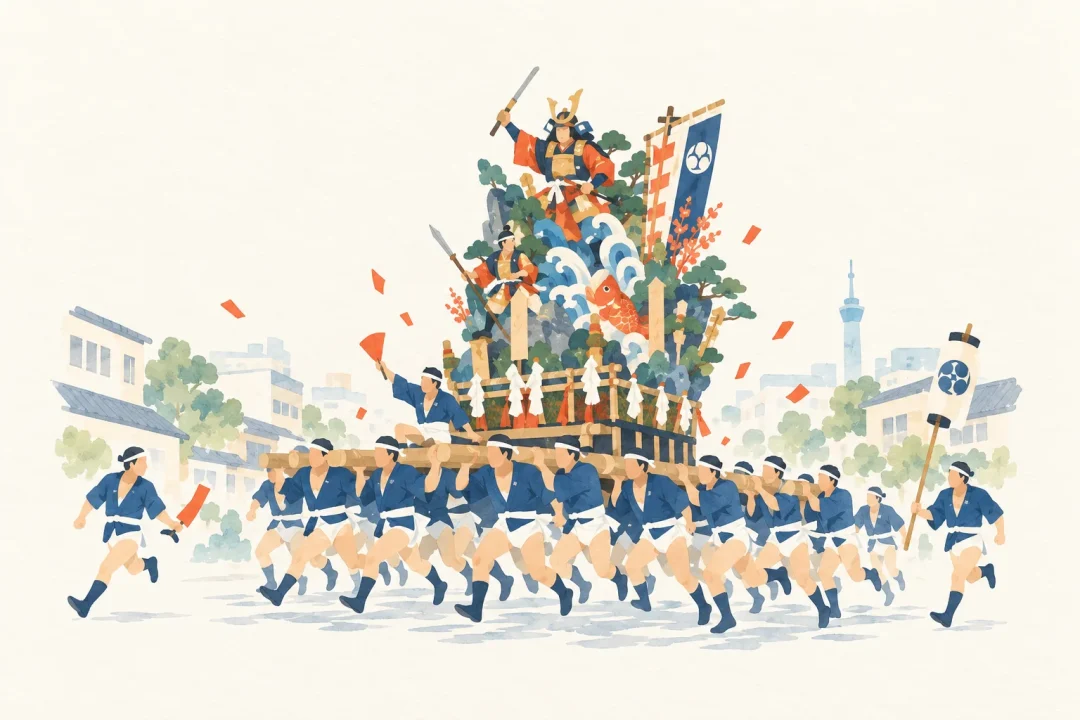
A seven-year festival for safe childbirth and child-rearing, linking mikoshi from 9 shrines across 4 cities
Shimōsa Miyama’s Seven-Year Festival
Festival information
EVENT INFORMATION- Season / frequency
- Usually September and November / Every 7 years, in the Years of the Ox and the Sheep
- Location
- Centered on Ninomiya Shrine, in Funabashi, Chiba, Yachiyo, and Narashino cities
- Area
- Chiba Prefecture・Funabashi City, Chiba City, Yachiyo City, and Narashino City(From Tokyo: approx. 40 min–1 h · train)Prefecture-level estimate to a main station or airport, not the venue. Airport access, check-in and onward travel are extra; remote areas and islands can take much longer.
- Wishes behind the festival
- Last updated
- 2026/10/19
Centered on Ninomiya Shrine in Miyama, Funabashi City, this is a representative gathering festival of the Shimōsa region, with from 9 shrines across 4 cities. Rituals praying for safe childbirth and the healthy upbringing of children take place in Miyama’s neighborhoods, at Kamisoroiba, and along Makuhari Beach.
About Shimōsa Miyama’s Seven-Year Festival
Shimōsa Miyama’s Seven-Year Festival is a gathering festival centered on Ninomiya Shrine in Miyama, Funabashi City, with 9 shrines participating from Funabashi, Chiba, Yachiyo, and Narashino cities.
The festival has been passed down as a celebration praying for safe childbirth and the healthy upbringing of children. Each shrine is associated with a role connected to childbirth and family, such as father, mother, child-carer, or midwife.
The festival is divided into a small festival in September and a grand festival in November, with mikoshi processions and rituals taking place in various locations.
It is also designated an intangible folk cultural property by the prefecture.
Festival highlights
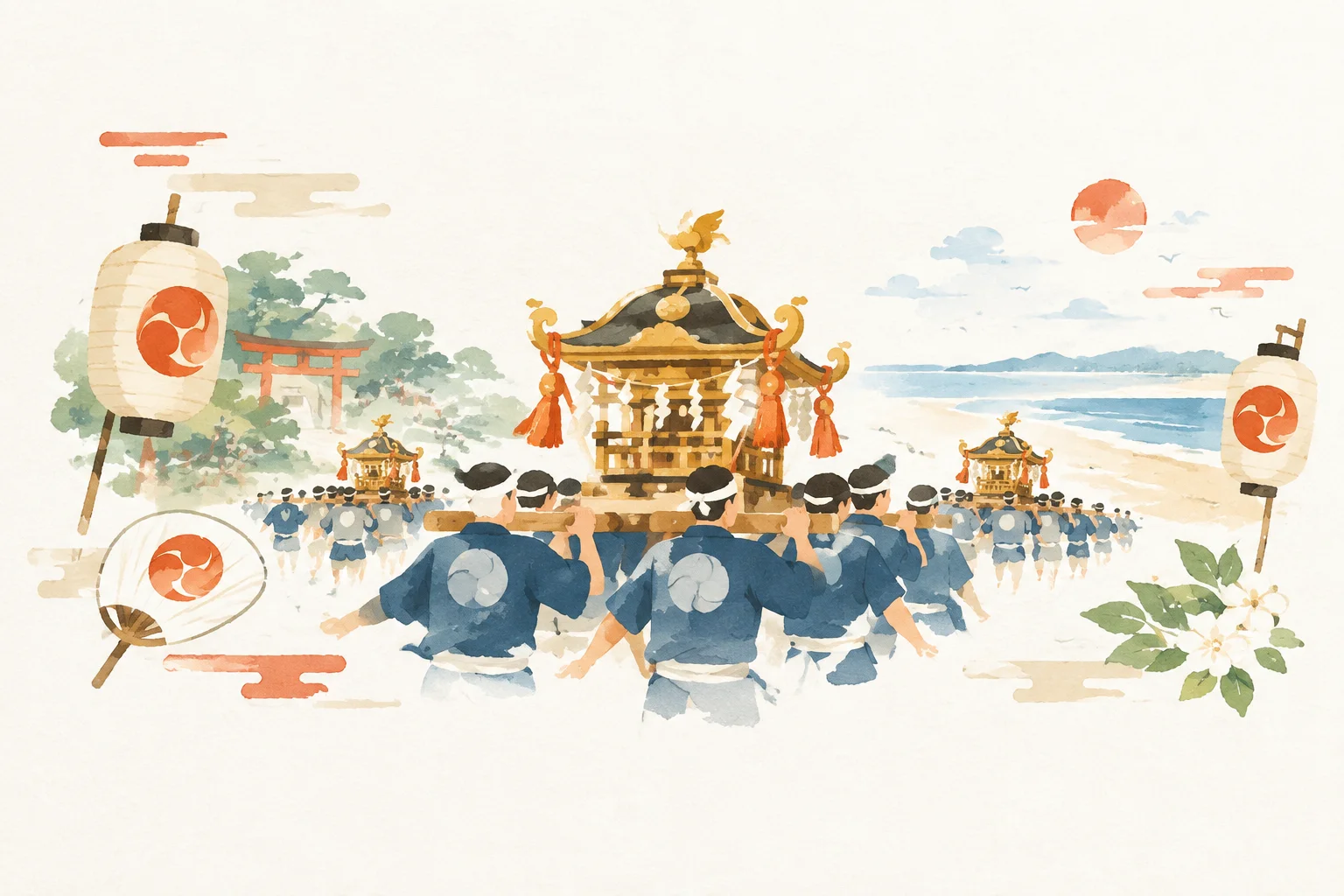
A highlight is when mikoshi from 9 shrines gather at Kamisoroiba in Miyama, Funabashi City, and head to Ninomiya Shrine along the old road known as “Nanamagari.”
At Ninomiya Shrine, the other 8 shrines enter the main hall and pay their respects in a set order.
In addition, 4 shrines representing the roles of father, mother, child-carer, and midwife hold the Isode Festival at Makuhari Beach, continuing rituals praying for safe childbirth.
Another distinctive feature is its combination of daytime mikoshi processions and rituals from midnight into the early morning.
A seven-year festival for safe childbirth and child-rearing, linking mikoshi from 9 shrines across 4 cities
What to expect
During the small festival in September, Ninomiya Shrine’s mikoshi is carried through the Miyama area, and is offered after it returns.
During the grand festival in November, the proceedings include a purification ceremony on the previous evening, transferring the shrine’s spirit into the mikoshi, offering a sacred gift at Kamisoroiba, and entering the main hall of Ninomiya Shrine to pay respects.
Afterward, mikoshi from 4 shrines perform the Isode Festival at Makuhari Beach, and each shrine also holds a Hananagashi ceremony after the grand festival.
The festival procession links multiple communities and shrines through mikoshi processions.
Location and access
- Venue and address
The festival is centered on Ninomiya Jinja in Miyama, Funabashi, and takes place across Chiba City, Funabashi, Yachiyo, and Narashino.
Ninomiya Jinja is located at 5-20-1 Miyama, Funabashi, Chiba Prefecture.
- Train and bus
From Tsudanuma Station on the JR Sobu Line, take the Keisei Bus bound for Ninomiya Jinja for about 20 minutes, or the Funabashi Shin-Keisei Bus bound for Ninomiya Jinja-mae for about 30 minutes.
From Keisei Okubo Station, it takes about 5 minutes by bus to the Ninomiya Jinja bus stop; on foot, it takes about 7 minutes to the Nihon University College of Industrial Technology bus stop.
- By car
It takes about 20 minutes from the Makuhari or Takeishi exit on the Keiyo Road, or about 30 minutes from the Hanawa exit.
Traffic restrictions are in place on nearby roads during the festival.
Source: 下総三山の七年祭り|イベント|千葉県公式観光サイト ちば観光ナビ
Address 5-20-1 Miyama, Funabashi City, Chiba Prefecture, and other locations
Dates and season
Usually, the minor festival (Yudate Festival), held only at Ninomiya Jinja in September, is followed by the major festival in November.
The minor festival is listed as lasting 1 day, and the major festival 3 days.
The major festival is divided into the Anzan Orei Taisai and the Isode Festival. The Isode Festival takes place after the Anzan Orei Taisai, from midnight until the early hours of the following morning.
Origins and History of Shimōsa Miyama’s Seven-Year Festival
There are several traditions about the festival’s origins.
One theory says it began with prayers for the safe delivery of Masuga Yasutane’s wife and an offering of thanks after the birth. Another tradition concerns descendants of Fujiwara no Tokihira.
The exact period when the festival took its current form is unclear, but it is said to have begun being held every 7 years, in the Years of the Ox and the Sheep, in Kyōhō 12 (1727).
The festival’s format and scale are thought to have developed over the late Edo period.
Official information
The Chiba Prefectural Board of Education introduces Shimōsa Miyama’s Seven-Year Festival as an intangible folk cultural property designated by the prefecture.
Narashino City also provides detailed information about the roles of the 9 participating shrines and the sequence of the small festival, grand festival, and Isode Festival.
Information about venues and transportation is also available on the official Chiba Prefecture tourism website.
Shimōsa Miyama’s Seven-Year Festival at a Glance
Shimōsa Miyama’s Seven-Year Festival is a celebration praying for safe childbirth and the healthy upbringing of children, linking 9 shrines across 4 cities through their mikoshi.
There is a small festival in September and a grand festival in November. Highlights include the mikoshi procession from Kamisoroiba to Ninomiya Shrine and the Isode Festival at Makuhari Beach.
The specific dates for 2026 are still being confirmed, but the festival is traditionally held in the Years of the Ox and the Sheep.
Japanese Festivals.jp Editorial Team
Celebrating local culture and helping you discover a side of Japan you never knew.
Article updated: 2026/10/19
Submit information or a correction Submit photos of this festival