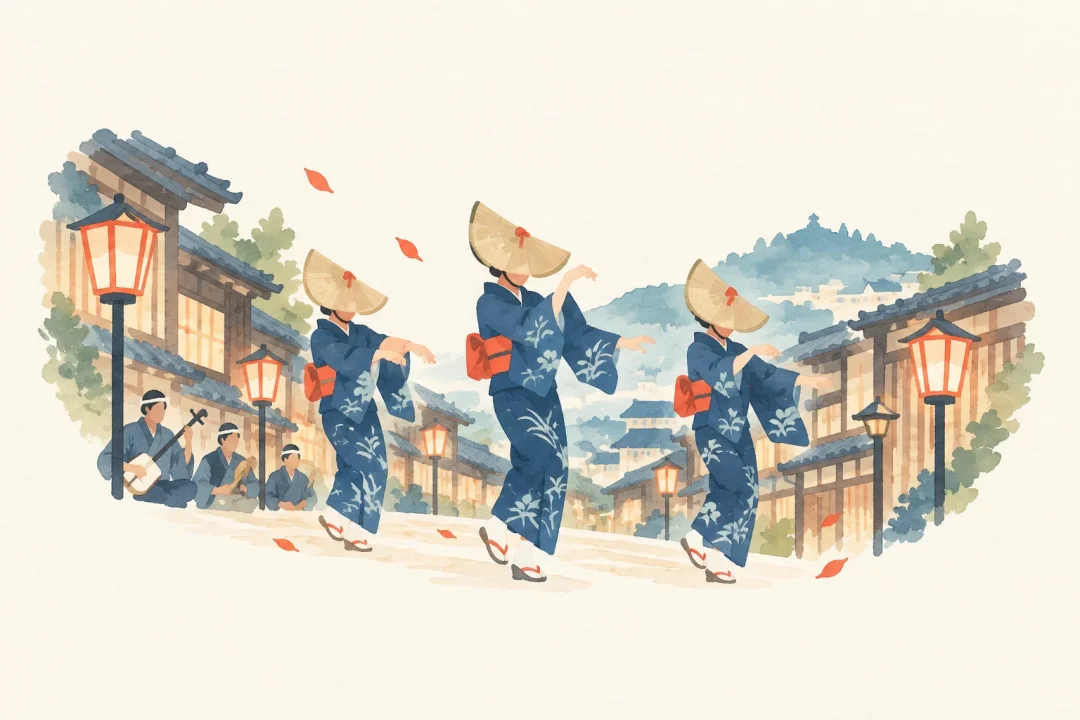
Mugiwara Ondo, passed down in Itami, where everyday gestures become dance
Sesshu Hyogo Kudoku Bon Odori
Festival information
EVENT INFORMATION- Season / frequency
- Every year on August 15 and 16 / Every year
- Location
- Minamino Higashiura Park
- Area
- Hyogo Prefecture・Itami City(From Tokyo: approx. 2 h 40 min–3 h 10 min · bullet train)Prefecture-level estimate to a main station or airport, not the venue. Airport access, check-in and onward travel are extra; remote areas and islands can take much longer.
- Highlights and activities
- Last updated
- 2026/10/21
Sesshu Hyogo Kudoku is a Bon dance passed down in the Minamino area of Itami City, where it is popularly known as “Mugiwara Ondo.” Its features include a distinctive dance incorporating movements from work, and varied music played on shamisen and .
About Sesshu Hyogo Kudoku Bon Odori
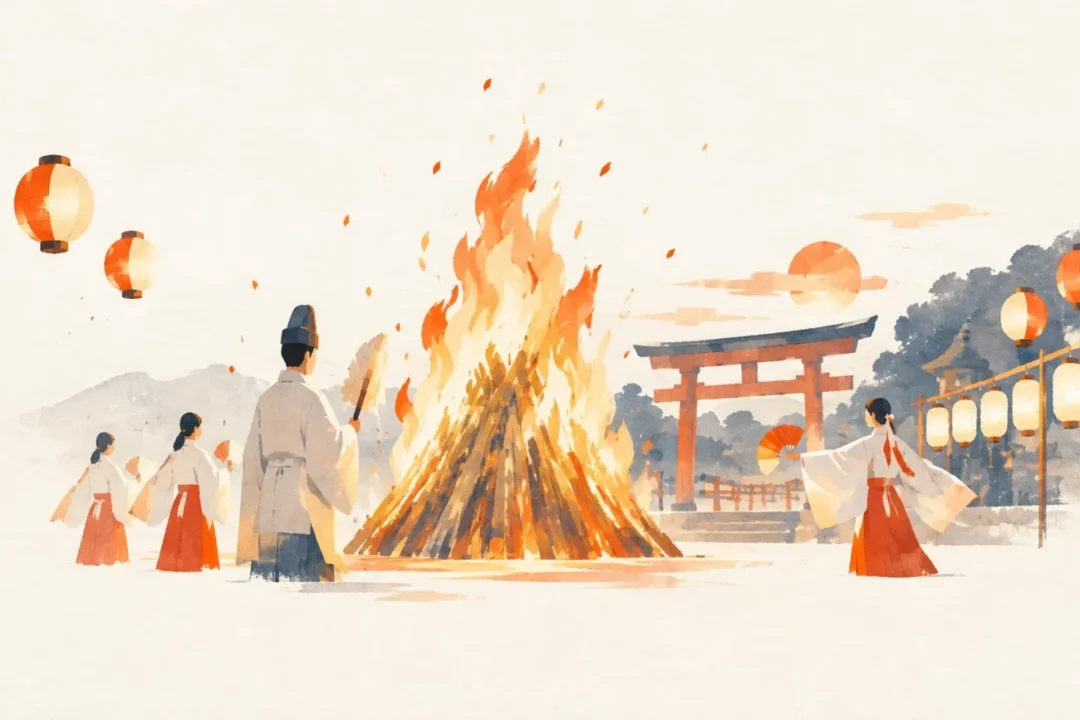
Sesshu Hyogo Kudoku Bon Odori is a Bon dance passed down in the Minamino area of Itami City, where it is popularly known as “Mugiwara Ondo.”
It belongs to a tradition of Bon dances associated with Buddhism. As for “kudoku” in its name, one view is that it refers to the virtue of the Buddha, while another theory holds that it evolved from “Hyogo Kudoki.”
Today, the Mugiwara Ondo Preservation Society works to preserve and pass it on, and it is an Intangible Folk Cultural Property designated by Hyogo Prefecture.
Source: むぎわら音頭(摂州兵庫功徳盆踊)/伊丹市 / むぎわら音頭保存会と摂津音頭保存会/伊丹市
Festival highlights
Highlights include a low stance unlike that of typical Bon dances and movements that keep the palms turned away from view.
The dance weaves in movements rooted in everyday life, such as frog jumps, praying mantis movements, net pulling, and pounding rice cakes.
The regular “Mugiwara Odori” depicts the wheat harvest. From there, the dance moves into “曲踊り” (kyoku-odori), featuring a variety of movements such as pounding rice cakes, pulling a net, waving a hand towel, sumo wrestling, and a praying mantis.
Source: 南野村 | 江戸時代の村 | I/M 市立伊丹ミュージアム
Mugiwara Ondo, passed down in Itami, where everyday gestures become dance
What to expect
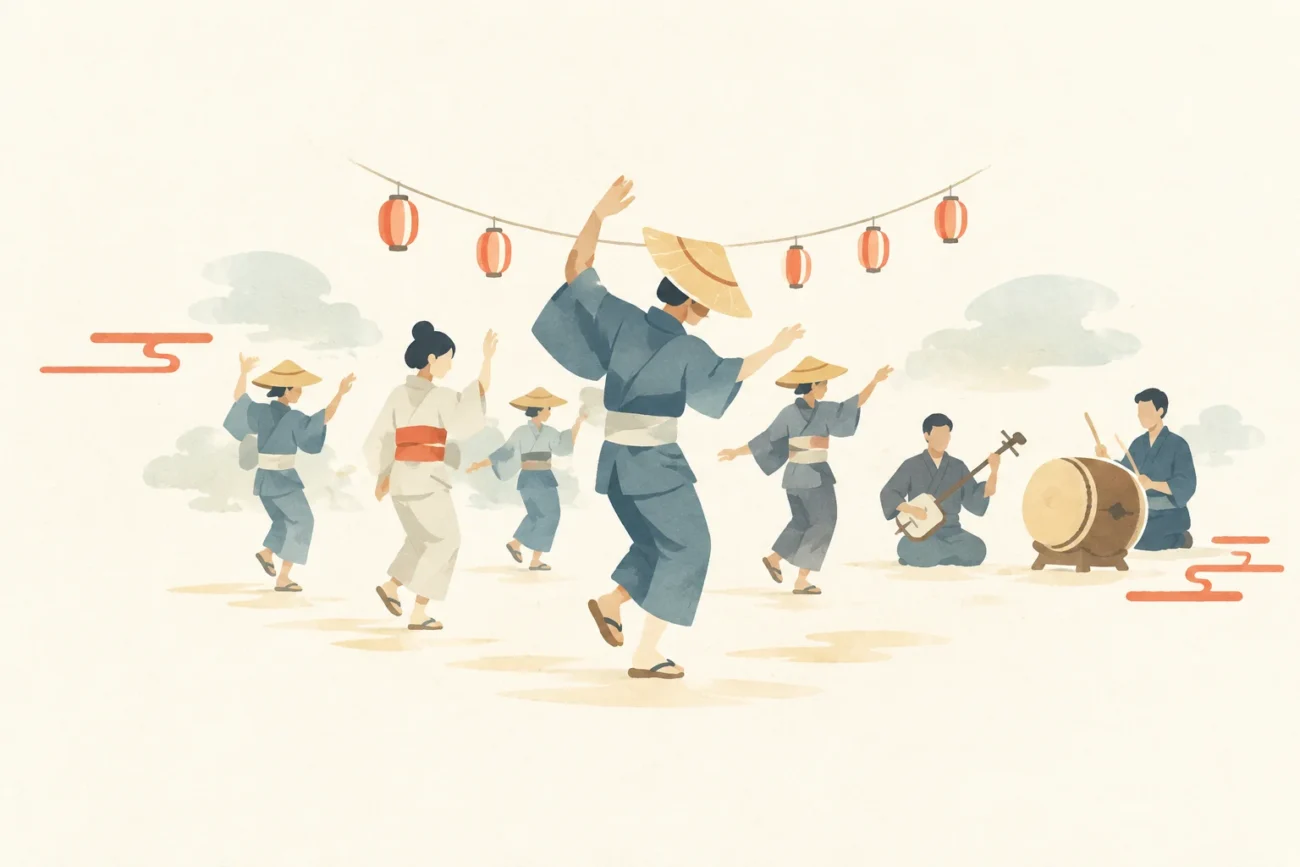
At the Bon dance festival, the preservation society performs Mugiwara Ondo, accompanied by shamisen and taiko.
The music moves at a fast tempo, with changes in rhythm as well.
Workshops and presentations for local residents are also held. The preservation society promotes the dance and nurtures successors by forming the Minamino Cultural Property Appreciation Junior Group for elementary school students and taking part in school events and various community events.
Location and access
- Venue and address
Minamino Higashiura Park, 3-3 Minamino, Itami City
- Train and bus
City bus: From platform 5 at JR Itami Station or platform 5 in front of Hankyu Itami Station, take route 37 bound for Tsukaguchi via Horiikeguchi and get off at Nanryo; walk 5 minutes southwest.
- By car
South of the Shinkansen elevated tracks
Address 3-3 Minamino, Itami City, Hyogo Prefecture
Dates and season
- Season
Every year on August 15 and 16
- Frequency
Every year
Accommodation and hotels PR
Showing nearby accommodation.
Prices and availability are current at the time of retrieval. For multi-night stays, only the first night’s price is shown. Confirm the final price and directions to the venue with the booking provider. Select your dates again when using the area search link. Search area: within 3 km of Central Hyogo Prefecture / Itami City (the search is not centered on the festival venue)
Origins and History of Sesshu Hyogo Kudoku Bon Odori
One origin tradition says that the dance began when the monk Gyoki started developing the Inano Sasahara area, as a way to entertain the laborers working there.
Meanwhile, an introduction to the Minamino area presents several theories, including that it was danced to entertain and pray for the repose of the laborers and residents involved in constructing Koyaike Pond, or to comfort people who had come from Korea.
The ondo is thought to have taken its final form in the mid-Edo period. After it ceased to be danced in many areas during the Showa 30s, the preservation society’s work helped it survive and spread, and in Showa 52 it was designated an Important Intangible Folk Cultural Property by Hyogo Prefecture.
Official information
Itami City introduces the origins, dance features, venue, and access information for “Mugiwara Ondo (Sesshu Hyogo Kudoku Bon Odori).”
Details about the preservation society’s activities and the cultural property designation can also be found in Itami City’s information on cultural properties and preservation groups.
Source: 兵庫県指定文化財/伊丹市
Sesshu Hyogo Kudoku Bon Odori at a Glance
Sesshu Hyogo Kudoku Bon Odori is the official name of “Mugiwara Ondo,” passed down in the Minamino area of Itami City. It is an Intangible Folk Cultural Property designated by Hyogo Prefecture.
Its features include a low stance, movements rooted in everyday life, and the fast rhythm of shamisen and taiko. It is performed at the Bon dance festival every year on August 15 and 16, and workshops for local residents are also held.
The venue is Minamino Higashiura Park, a 5-minute walk southwest from the Nanryo bus stop on the city bus network.
Japanese Festivals.jp Editorial Team
Celebrating local culture and helping you discover a side of Japan you never knew.
Article updated: 2026/10/21
Submit information or a correction Submit photos of this festival