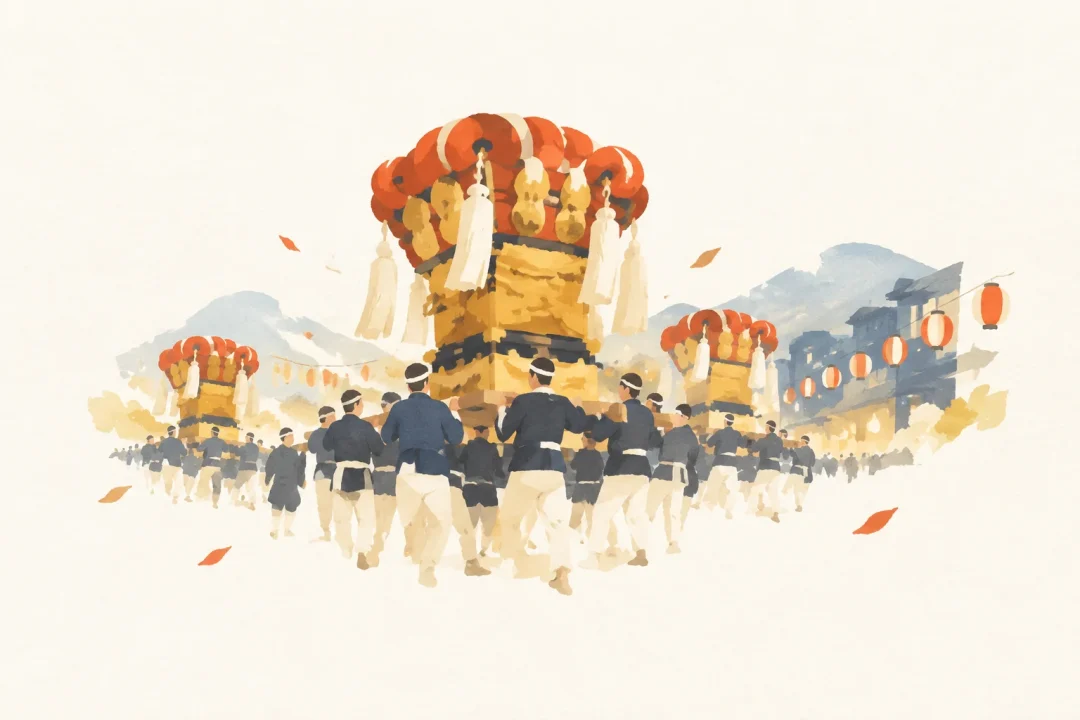
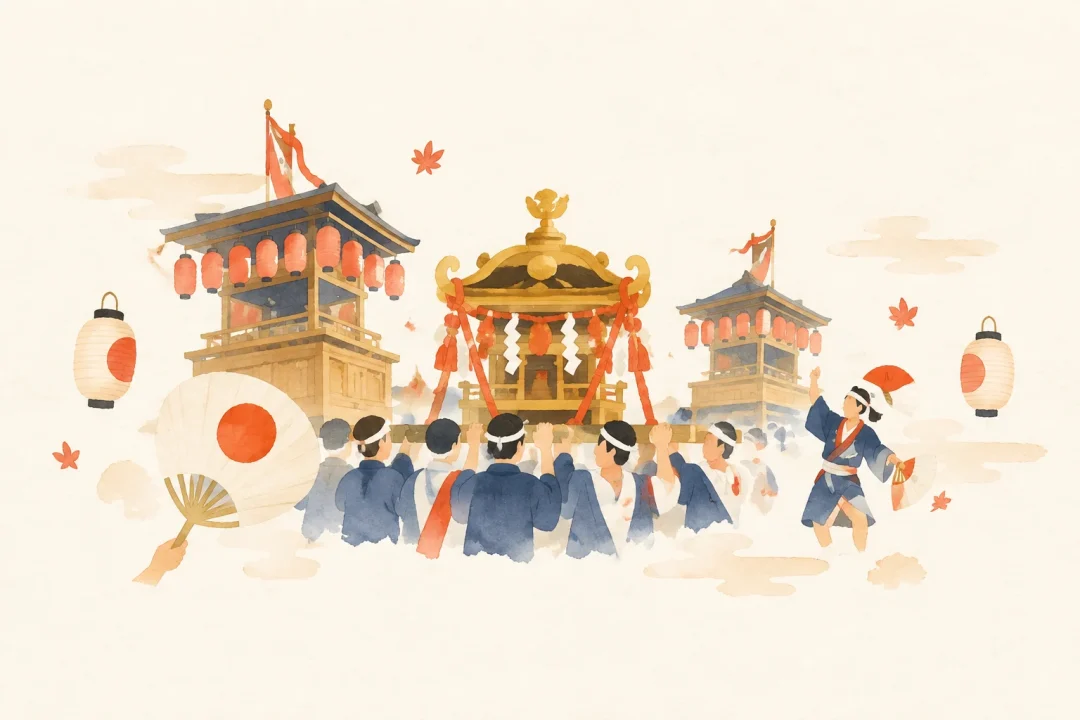
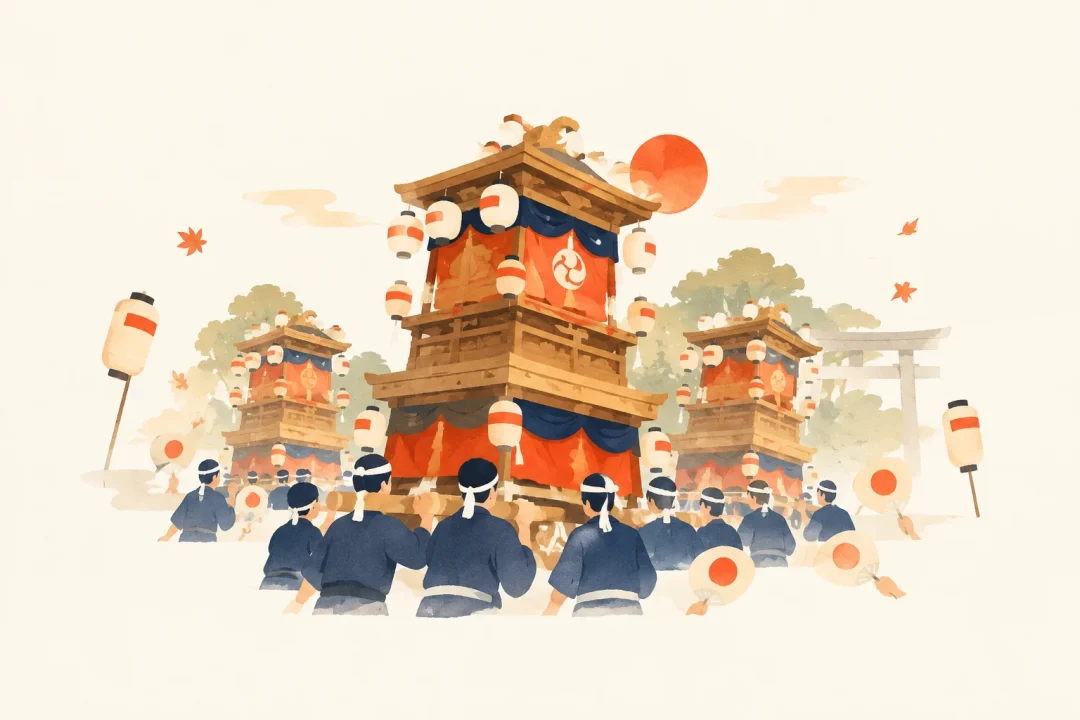
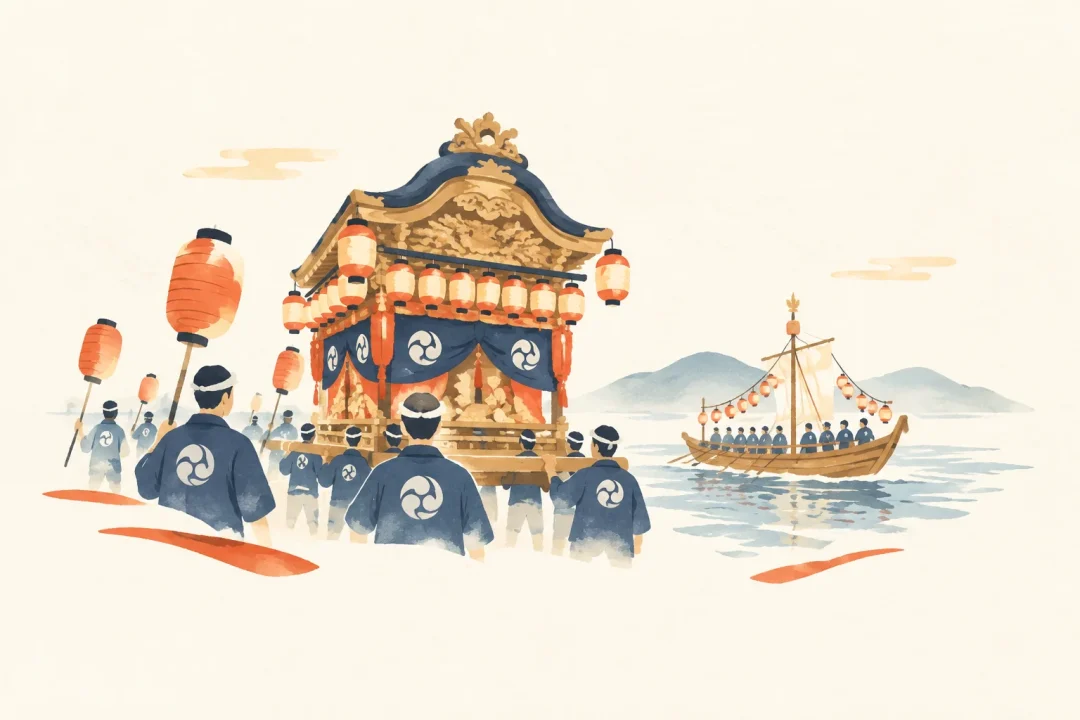
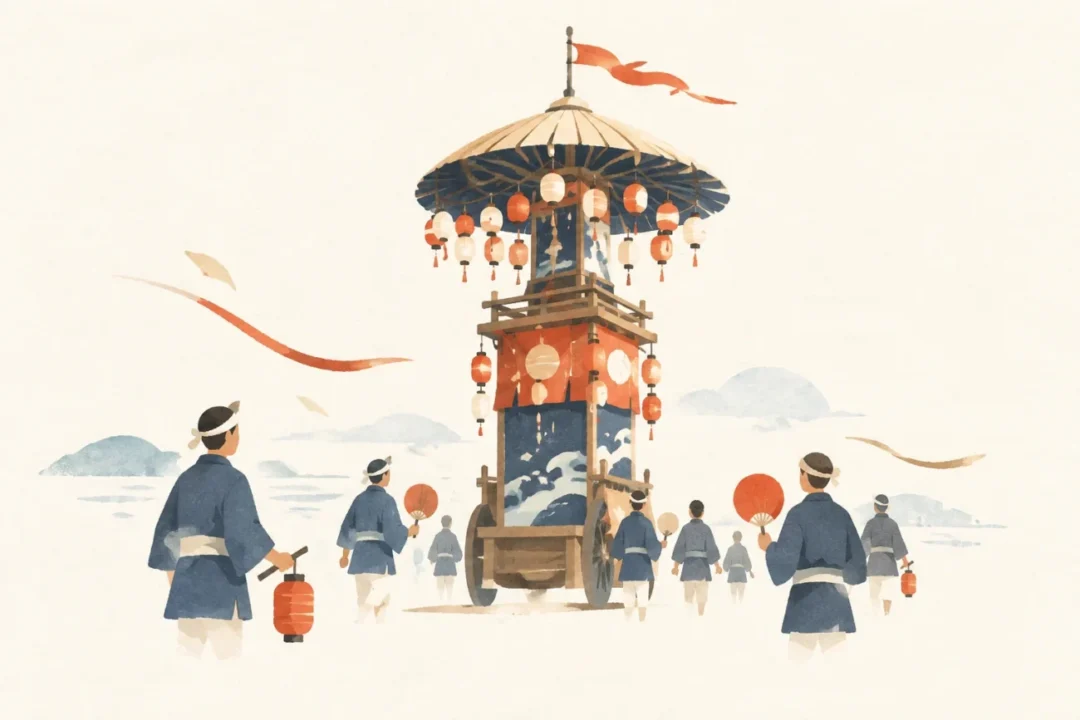
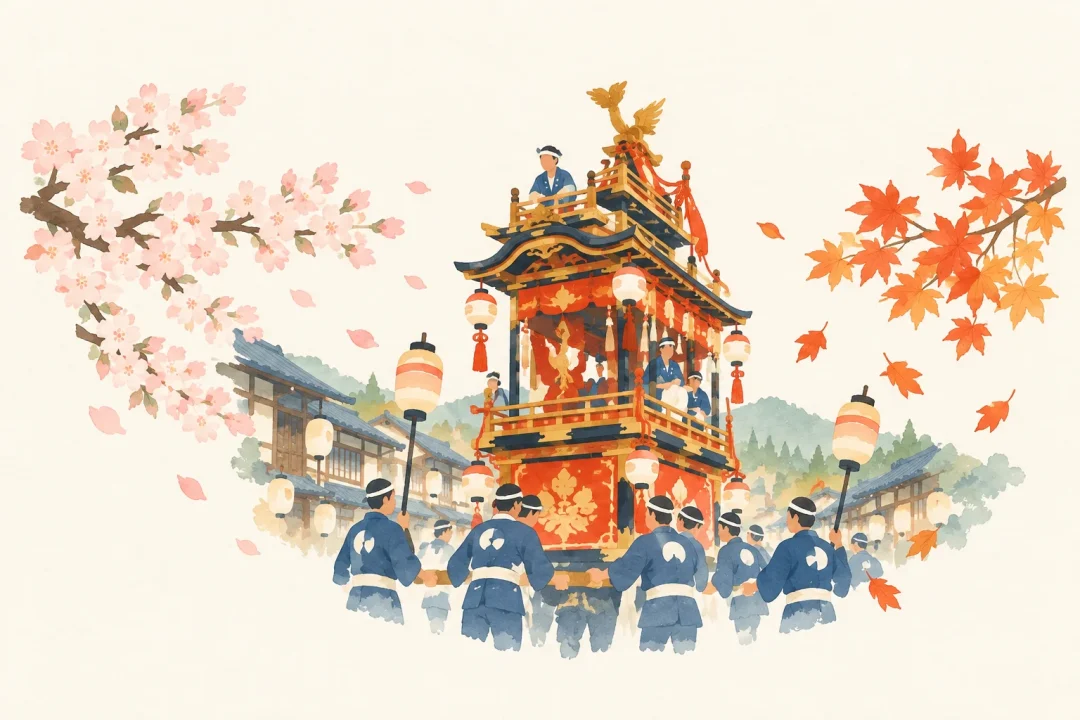
A festival of mikoshi and dashi through Saijo City’s autumn streets, aglow with lanterns and filled with the beat of drums
Saijo Festival

The 2026 edition of Saijo Festival has ended.
Festival information
EVENT INFORMATION- Dates
- 2026/10/10 〜 2026/10/17Ended
- Season / frequency
- Mid-October / Every year
- Location
- Throughout Saijo City. Festival areas for Kamo Shrine, Ishioka Shrine, Isonokami Shrine, and Iizumi Shrine
- Area
- Ehime Prefecture・Saijo City(From Tokyo: approx. 1 h 25 min–1 h 45 min · flight time only)Prefecture-level estimate to a main station or airport, not the venue. Airport access, check-in and onward travel are extra; remote areas and islands can take much longer.
- Highlights and activities
- Wishes behind the festival
- Participation / viewing
- Spectators welcome
- Last updated
- 2026/10/19
The Saijo Festival is an autumn festival in Saijo City comprising the annual festivals of four shrines. decorated with carvings and process through the city, filling the area with the sounds of drums and gongs.
About Saijo Festival
Photo credits and terms of use
Photographer: 中毒性だんぢり症候群 File:Saijo matsuri otabisyo.jpg / Wikimedia Commons / CC BY-SA 4.0 Own work by the contributorDisplay size only adjusted.May differ from the event currently featured.The Saijo Festival is a traditional autumn event that has continued in Saijo City, Ehime Prefecture. The name refers collectively to the four annual festivals at Kamo Shrine, Ishioka Shrine, Isonokami Shrine, and Iizumi Shrine.
To express gratitude for abundant harvests, parishioner neighborhoods offer , mikoshi, and taikodai.
During the festival period, dashi decorated with carvings and ornaments travel through the city, while drums, gongs, and voices singing the Ise Ondo fill the streets.
Source: 「西条まつり」のご案内 - 愛媛県西条市ホームページ
Festival highlights
Highlights include processions of danjiri and mikoshi decorated with carvings and ornaments, accompanied by lively performances to the beat of drums and gongs.
At the Isonokami Shrine festival, the early-morning departure from the shrine, the Goten-mae event at the former site of the Saijo Domain residence, and the Kawairi at the Kamo River in the evening are especially well known.
The sight of lantern-lit dashi lined along the river as they see off the mikoshi procession is also memorable.
Source: 【2026】西条まつり|愛媛のイベントを探す|愛媛県の公式観光サイト【いよ観ネット】
A festival of mikoshi and dashi through Saijo City’s autumn streets, aglow with lanterns and filled with the beat of drums
What to expect
Religious rites are held at each shrine for its festival, while dashi travel through parishioner neighborhoods and make offerings along the way.
At the Isonokami Shrine festival, dashi gather for the departure from the shrine from late at night through early morning, and perform lively displays at locations such as the and Goten-mae.
On the final day, the mikoshi processes through the city and reaches the Kawairi event at the Kamo River in the evening. The formal festival rites conclude when it returns to the shrine.
How to take part
The Saijo Festival is a local event comprising the four annual festivals of Kamo Shrine, Ishioka Shrine, Isonokami Shrine, and Iizumi Shrine.
Parishioners from neighborhoods throughout the city offer danjiri, mikoshi, and taikodai, and many residents take part in the festival.
General visitors can enjoy watching the processions, offerings, and Kawairi in each district, but requirements for participating, such as helping carry a dashi, vary by festival.
The dashi offerings at the heart of the festival are organized by parishioner neighborhoods in each district of the city.
If you plan to watch, check the festival dates at each shrine and the areas where the dashi will travel. Watch from a place where you will not obstruct the processions or offerings.
Location and access
- Venue and address
Throughout Saijo City (Saijo City, Ehime Prefecture).
Depending on the festival, events take place around Kamo Shrine, Ishioka Shrine, Isonokami Shrine, Iizumi Shrine, and other locations.
- Train and bus
Each venue is about 5–20 minutes by car from JR Iyo-Saijo Station.
- By car
Each venue is about 5–20 minutes by car from the Iyo-Saijo IC.
- Parking
A temporary parking lot is provided under the Kamo River Bridge on October 16. It is listed as having space for approximately 1,500 vehicles, with free parking.
Address Saijo City, Ehime Prefecture
Dates and season
2026 event information (the listed dates have passed)
In 2026, the schedule listed the Kamo Shrine Festival for October 10 and the 11th, the Ishioka Shrine Festival for October 14 and the 15th, the Isonojinja Shrine Festival for October 15 and the 16th, and the Iizumi Shrine Festival for October 16 and the 17th.
As the four festivals take place in succession and overlap, the yatai and events you can see vary by district.
At dusk on the 16th, the Isonojinja Shrine Festival features a river entry at the Kamo River.
Accommodation and hotels PR
Showing nearby accommodation.
Prices and availability are current at the time of retrieval. For multi-night stays, only the first night’s price is shown. Confirm the final price and directions to the venue with the booking provider. Select your dates again when using the area search link. Search area: within 3 km of Central Ehime Prefecture / Saijo City (the search is not centered on the festival venue)
Tips for your visit
There are no spectator stands, and reserving a spot in advance is not permitted.
Crowds are expected at busy locations such as the otabisho and the Kawairi venue, so follow local guidance and avoid obstructing the dashi processions or religious rites.
Many restaurants in the city also close during the festival, so it is a good idea to arrange meals in advance.
Temporary toilets are also provided.
Nearby attractions
The festival takes place throughout Saijo City. Nearby attractions listed in local tourism information include Mount Ishizuchi and the Besshi Copper Mine.
You can plan an itinerary that combines festival viewing with visits to mountains and industrial heritage sites in the Saijo City area.
Check the opening status and travel times for each location individually before your visit.

四国鉄道文化館
愛媛県西条市にある鉄道博物館

石鎚神社
愛媛県西条市にある神社
Origins and History of Saijo Festival
The Saijo Festival is said to date back to the Edo period. It is believed to have become a large-scale festival in which parishioners offer dashi during the mid-Edo period.
Records from 1750 in the Saijo City area mention dashi stewards at festivals held at Isonokami Shrine and in Himi.
There are several theories about the origins of the dashi. Few old documents survive, so aspects of how they developed remain unclear.
Source: 西条祭り - Wikipedia
Official information
Information on the 2026 festival schedule, dashi routes, traffic restrictions, and festival overview is available on Saijo City’s official website.
You can also check Saijo City’s FAQs for information on highlights at each venue, transportation, and temporary parking.
Saijo Festival at a Glance
The Saijo Festival is a local autumn event centered on the annual festivals of four shrines, with danjiri, mikoshi, and taikodai processing through Saijo City.
In 2026, the festivals continue from October 10 through the 17th. You can see moments that bring religious rites together with dashi offerings, such as the Kawairi at the Isonokami Shrine festival.
Enjoy the festival atmosphere, with lantern-lit dashi and the sounds of drums and gongs filling the town.
Japanese Festivals.jp Editorial Team
Celebrating local culture and helping you discover a side of Japan you never knew.
Article updated: 2026/10/19
Submit information or a correction Submit photos of this festival