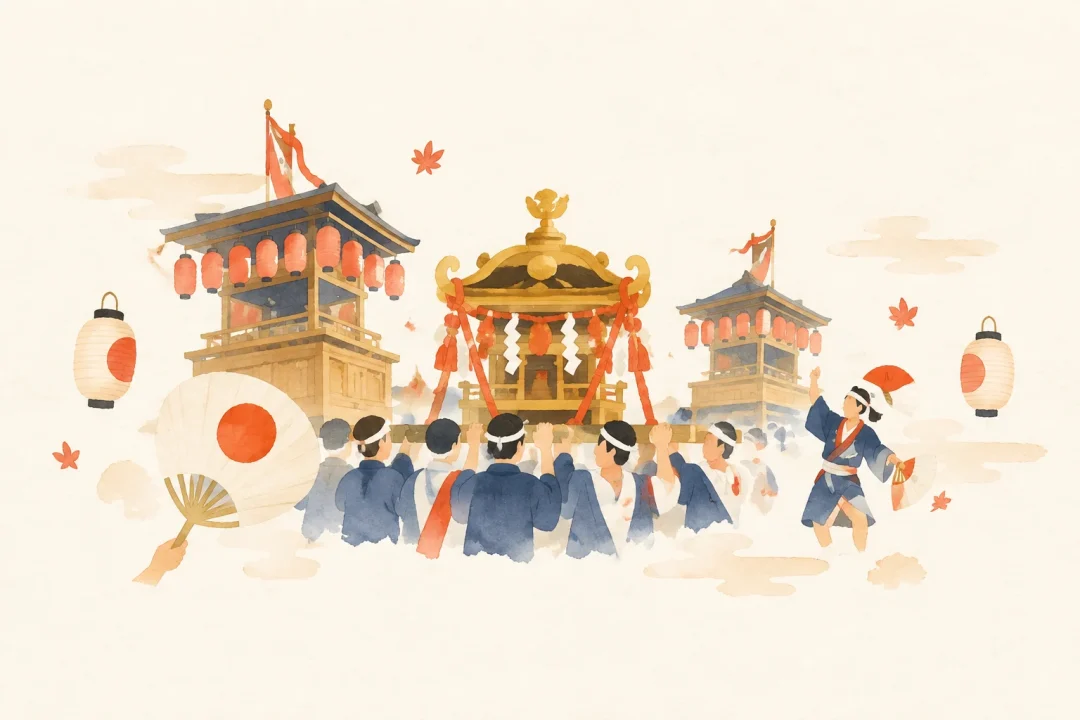
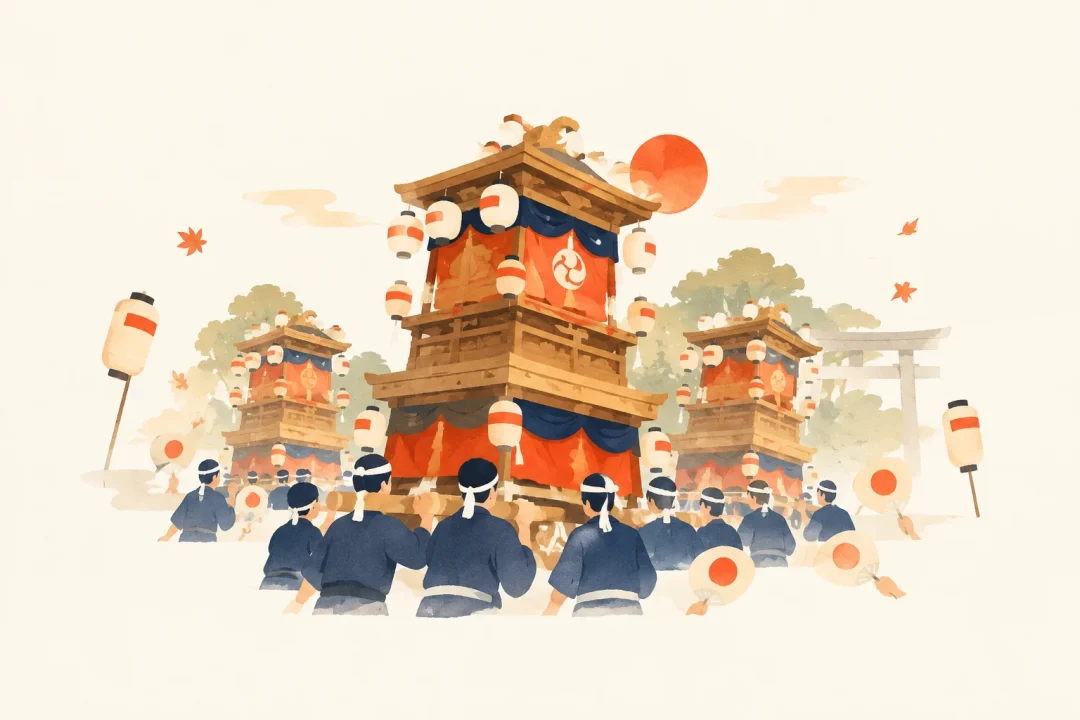
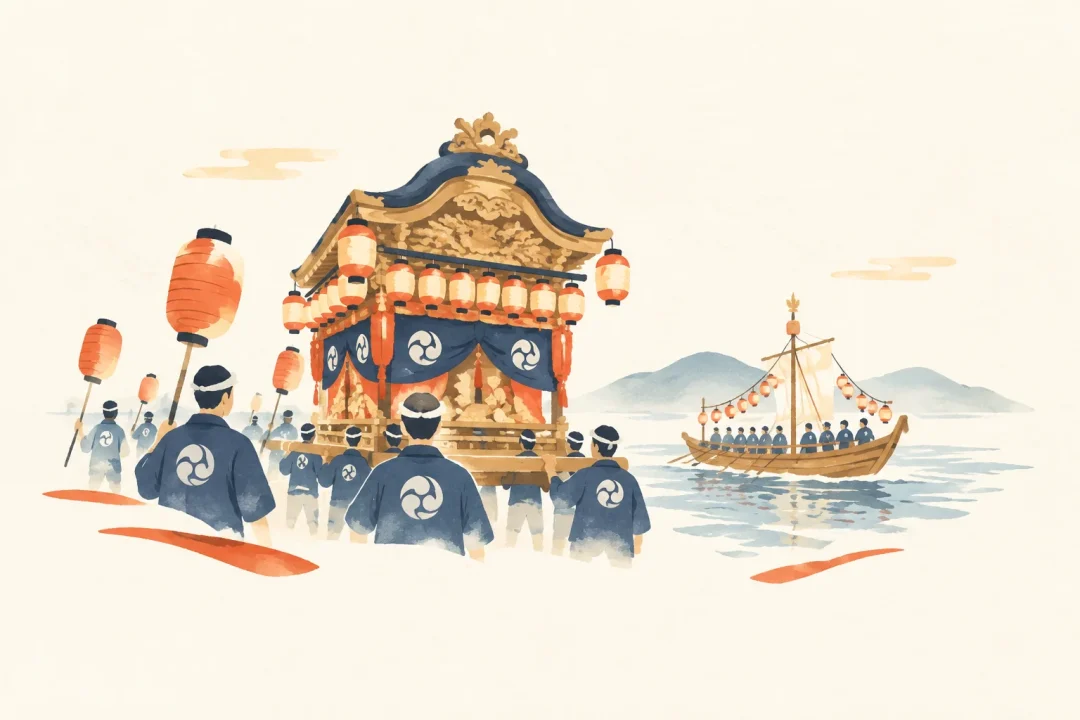
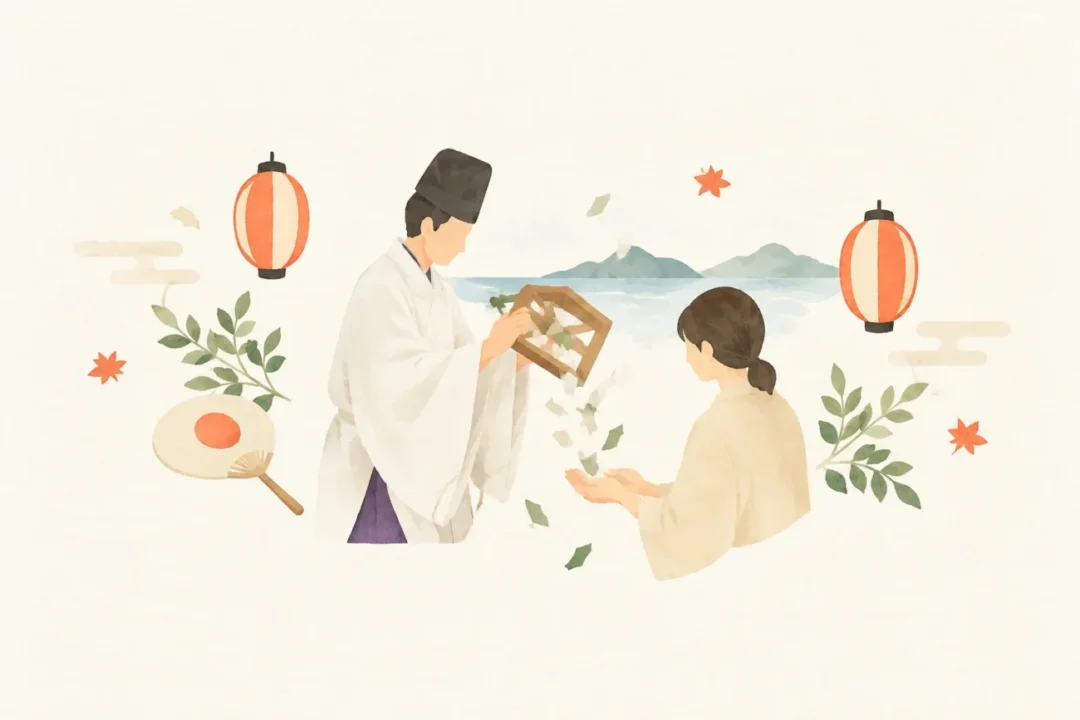
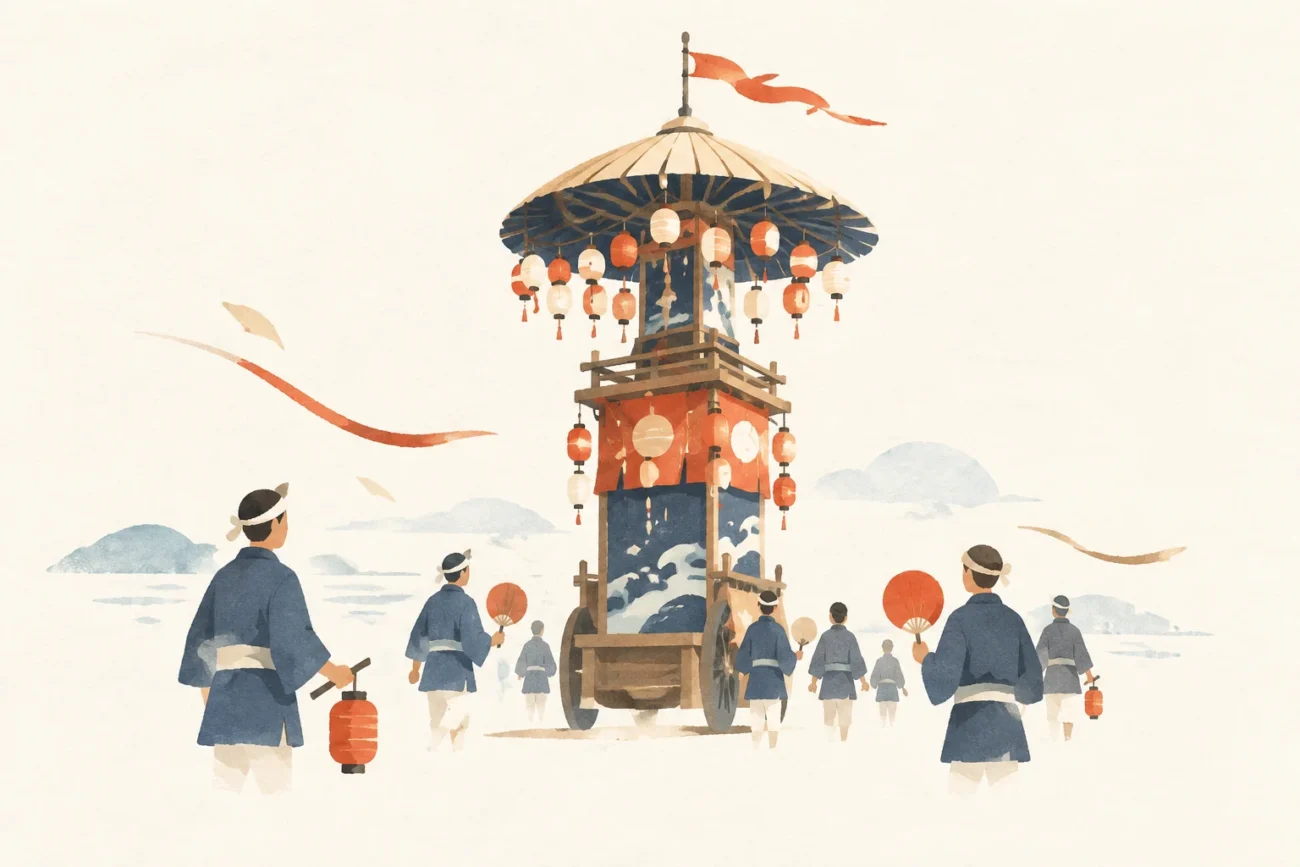
A Furudani festival where kasahoko are raised in prayer for the well-being of cattle, horses, and the community
Kasahoko Festival
Festival information
EVENT INFORMATION- Season / frequency
- Every year on May 1 / Every year
- Location
- Taki Shrine
- Area
- Ehime Prefecture・Imabari City(From Tokyo: approx. 1 h 25 min–1 h 45 min · flight time only)Prefecture-level estimate to a main station or airport, not the venue. Airport access, check-in and onward travel are extra; remote areas and islands can take much longer.
- Highlights and activities
- Wishes behind the festival
- Last updated
- 2026/10/19
The Kasahoko Festival, passed down in Furuya in the Asakura area of Imabari City, is a distinctive festival in which people carry a kasahoko made by dressing bamboo grass with a child’s clothing and circle the shrine buildings. It embodies wishes for the health and safety of cattle and horses, the health of families, and bountiful harvests.
About Kasahoko Festival
Kasahoko Festival is a traditional festival passed down in Furudani, in the Asakura area of Imabari City.
A distinctive custom has been preserved in which worshippers carry kasahoko and walk around inside and outside the shrine buildings.
The event began as a way to pray for the health of cattle and horses and protection from epidemics. Today, prayers have expanded to include family health, household safety, and good harvests.
Designated an Intangible Folk Cultural Property by the city, the festival conveys the region’s faith and way of life.
Source: 朝倉地域の文化財 | 文化財の保存と活用 | 文化振興課 | 今治市 / 多伎神社(今治市・朝倉地区) – 神仏探訪記
Festival highlights
The highlight is the kasahoko, made by dressing a bamboo branch with a child’s clothing.
Worshippers carry kasahoko and recite invocations as they circle the shrine interior 3 times, then circle the shrine buildings 1 time.
Invocations for the prosperity of cattle and horses are a distinctive feature of the festival, offering a sense of the region’s prayers, closely tied to agriculture.
The dressed kasahoko and the procession give the festival a distinctive feel compared with more typical shrine festivals.
A Furudani festival where kasahoko are raised in prayer for the well-being of cattle, horses, and the community
What to expect
The festival uses kasahoko made by dressing bamboo grass with a child’s clothing.
Worshippers carry the kasahoko and circle the interior of the shrine building 3 times, then make 1 circuit around the building.
As they do so, they recite a chant wishing for the prosperity of cattle and horses.
Throughout the event, prayers express wishes for the cattle and horses that once supported farm work, as well as a desire to protect the lives of the local community.
How to take part
During the festival, worshippers carry kasahoko as they take part in a procession.
As this is a local religious festival, please be considerate during the ceremony and when worshipping around the shrine buildings.
If you wish to participate, follow the guidance provided on the day.
Location and access
- Venue and address
Taki Shrine (Furudani, in the Asakura area of Imabari City).
Event venue 愛媛県今治市 多伎神社
This map uses the venue name. Check the official guide for the event area and entrances.
Dates and season
- Season
Every year on May 1
- Frequency
Every year
Accommodation and hotels PR
Showing nearby accommodation.
Prices and availability are current at the time of retrieval. For multi-night stays, only the first night’s price is shown. Confirm the final price and directions to the venue with the booking provider. Select your dates again when using the area search link. Search area: within 3 km of Central Ehime Prefecture / Imabari City (the search is not centered on the festival venue)
Tips for your visit
The festival centers on rituals that proceed through the shrine building and its surrounding grounds.
When watching, it is important to observe quietly from a place that does not obstruct worshippers carrying the kasahoko or the progress of the festival.
Please check in advance whether members of the general public may take part in the ritual.
For on-the-day arrangements such as parking and traffic restrictions, please follow local guidance.
Nearby attractions
The Asakura area, associated with the Kasahoko Festival venue, has attractions related to ancient burial mounds and cultural properties.
Finds from the Negiya-yashiki and Taki-no-miya burial mound groups near Taki Shrine are displayed at the Asakura Furusato Art and Burial Mound Museum.
If you plan to visit alongside the festival, check each facility’s opening status and visitor information.

かわら館
愛媛県今治市にある博物館

ところミュージアム大三島
愛媛県今治市大三島にある現代彫刻の美術館
写真:-- 地方の田舎もの ( 会話 ) 2022年9月3日 (土) 13:14 (UTC) / CC BY 3.0
Photo source ·
タオル美術館ICHIHIRO
愛媛県今治市にある美術館

今治市伊東豊雄建築ミュージアム
愛媛県今治市大三島にある建築美術館

今治市大三島美術館
愛媛県今治市大三島にある美術館

今治市大西藤山歴史資料館
愛媛県今治市に所在する考古学博物館

今治市岩田健母と子のミュージアム
愛媛県今治市大三島にある美術館

今治市河野美術館
愛知県今治市にある美術館

今治市玉川近代美術館
愛媛県今治市にある美術館

Kamo Shrine
愛媛県今治市にある神社

Ōyamazumi Shrine
愛媛県今治市大三島にある神社

愛媛文華館
愛媛県の博物館・美術館のスポットです。
Origins and History of Kasahoko Festival
Kasahoko Festival is said to be an event with a history of more than 300 years.
It is said to have begun as a prayer for the health of cattle and horses and protection from epidemics. At a time when agriculture was central to daily life, the health of cattle and horses was linked to abundant harvests and the stability of the community.
Over time, prayers expanded to include family health, household safety, and good harvests.
In Showa 48, it was designated an Intangible Folk Cultural Property by Imabari City.
Official information
The Kasahoko Festival is a city-designated intangible folk cultural property listed in Imabari City’s published inventory of cultural properties in the Asakura area.
The listed location is Furuya, and the event is regarded as a folk tradition passed down in the region.
For basic information about its cultural heritage designation, the guidance from Imabari City’s Cultural Promotion Division is a useful reference.
Kasahoko Festival at a Glance
Kasahoko Festival is an Intangible Folk Cultural Property designated by the city and passed down in Furudani, in the Asakura area of Imabari City.
Carrying a kasahoko made by dressing a bamboo branch with a child’s clothing, participants walk inside the shrine and around the shrine buildings, praying for the prosperity of cattle and horses, among other things.
The festival is said to have a history of more than 300 years. It has been passed down from prayers for the cattle and horses that supported agriculture to prayers for family health and good harvests.
Japanese Festivals.jp Editorial Team
Celebrating local culture and helping you discover a side of Japan you never knew.
Article updated: 2026/10/19
Submit information or a correction Submit photos of this festival