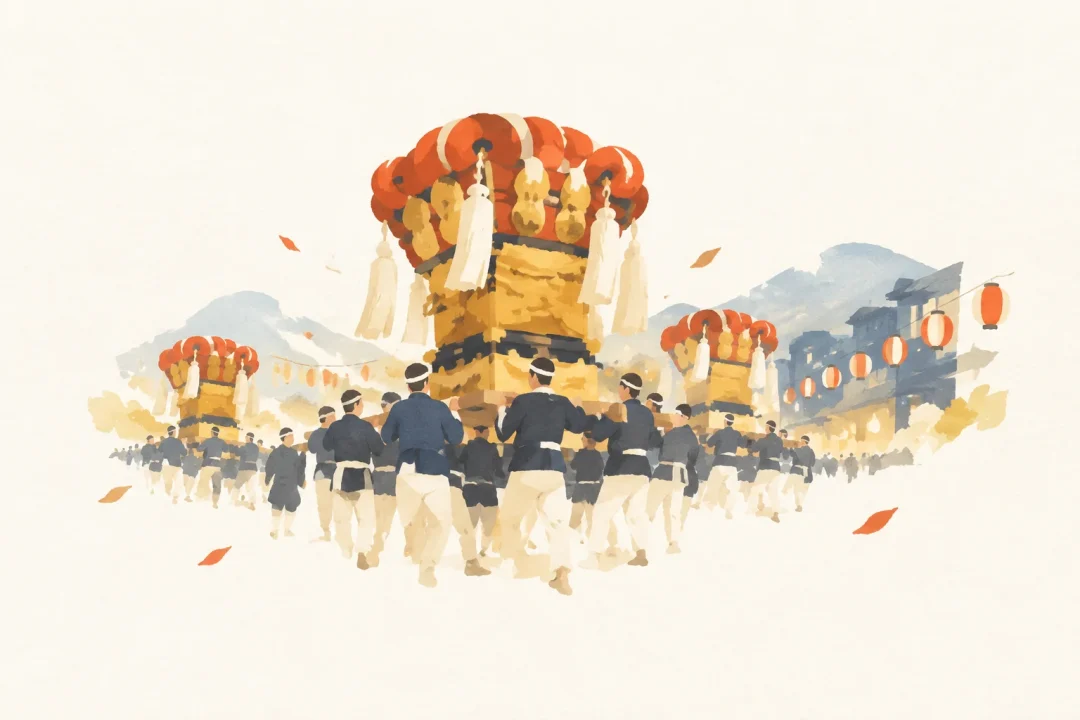
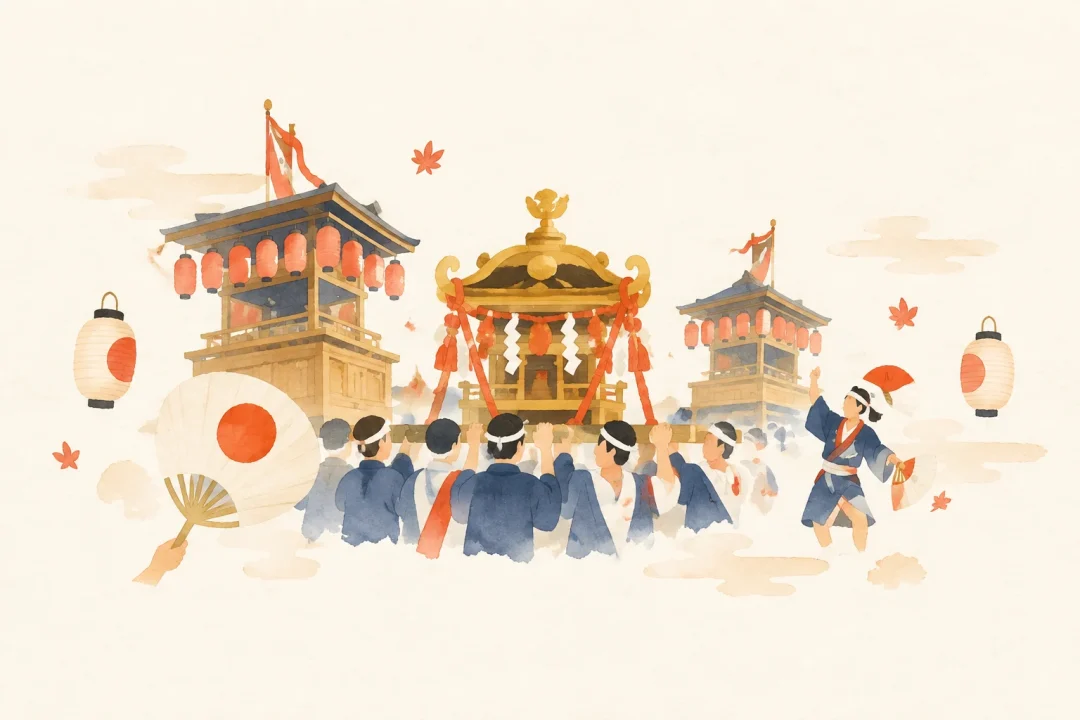
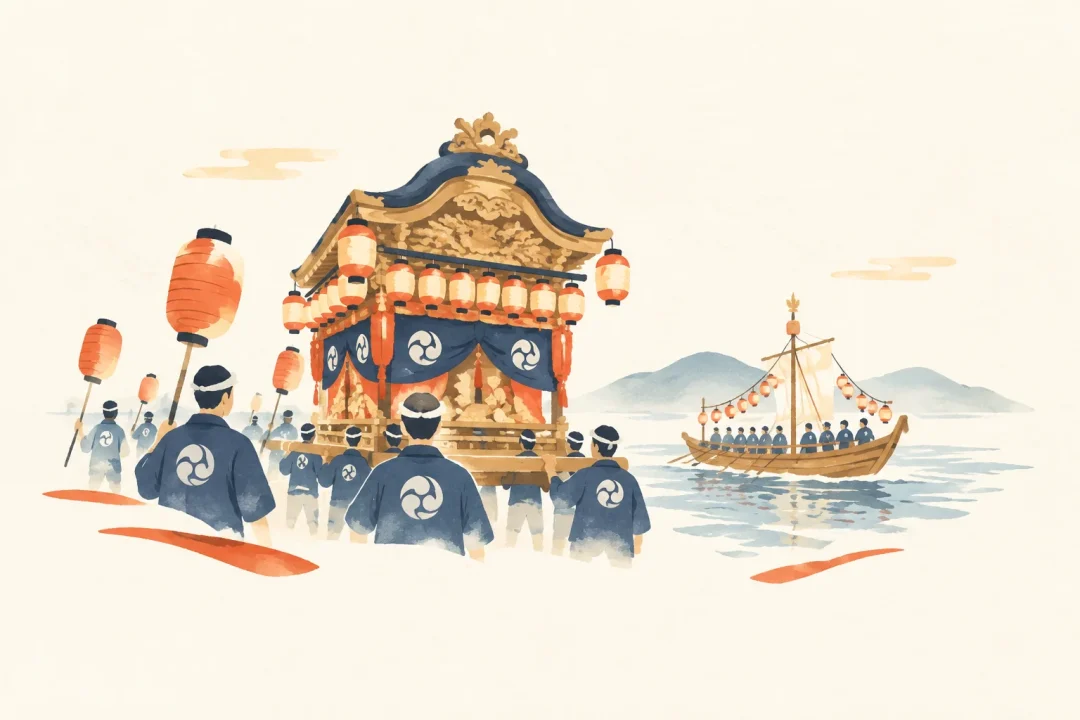
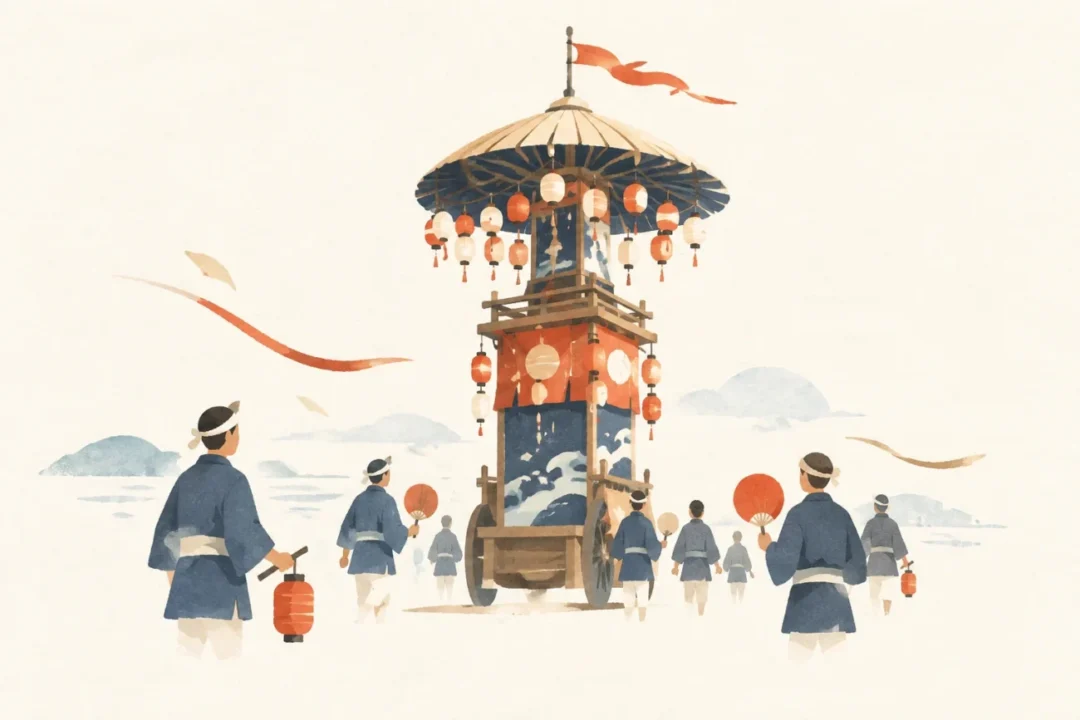
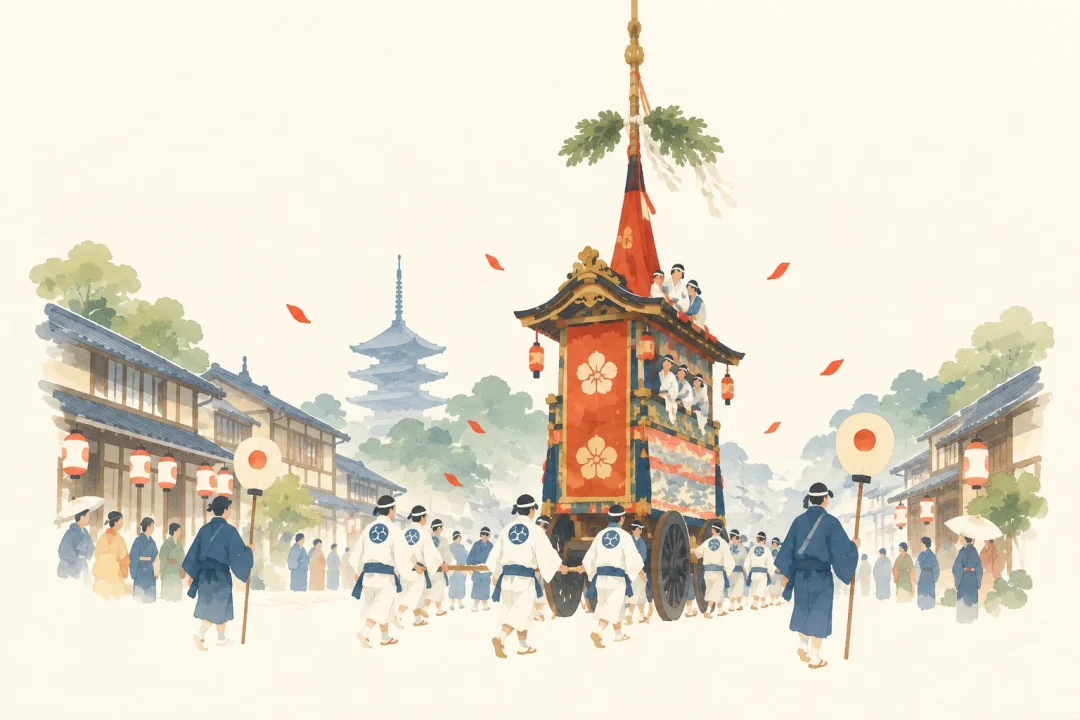
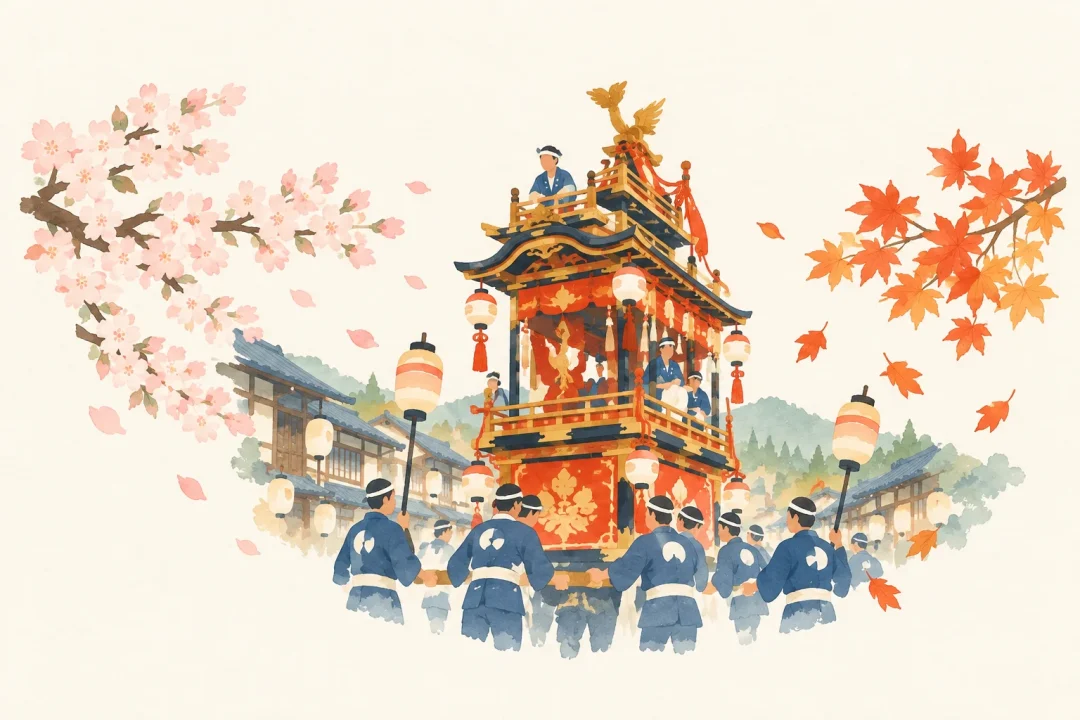
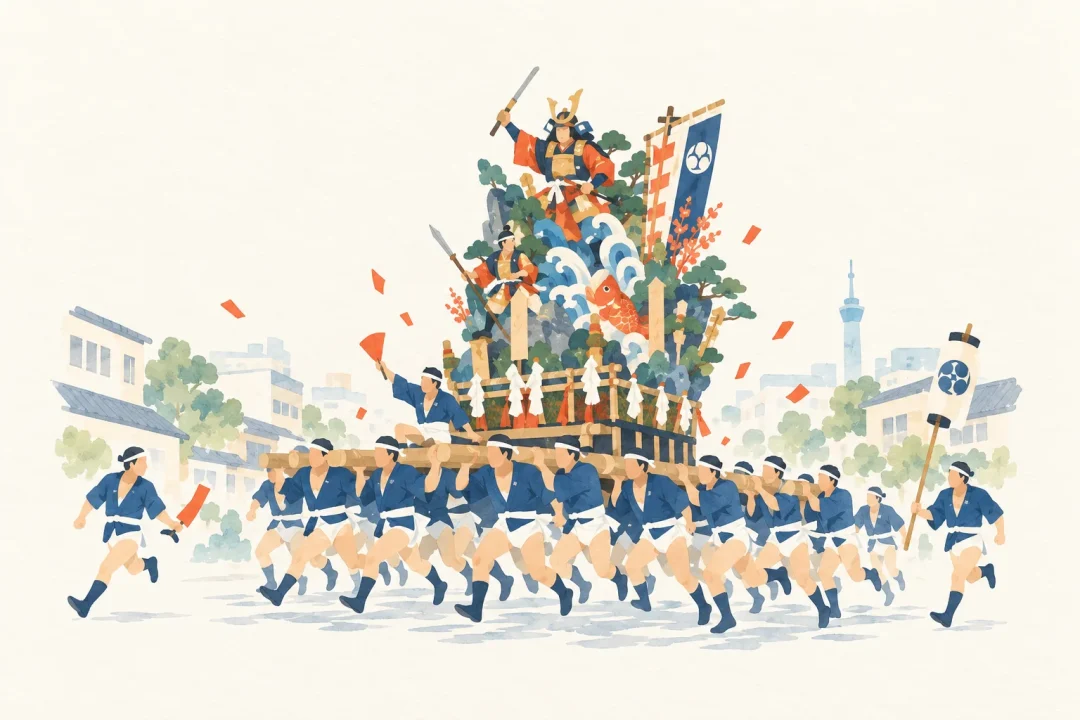
An autumn in Komatsu, bound together by dashi; community festival traditions echo across the stone steps
Komatsu Festival
Festival information
EVENT INFORMATION- Season / frequency
- Held annually around October 16 and the 17th. / Every year
- Location
- Mishima Shrine and other locations in the Komatsu district, Saijo City
- Area
- Ehime Prefecture・Saijo City(From Tokyo: approx. 1 h 25 min–1 h 45 min · flight time only)Prefecture-level estimate to a main station or airport, not the venue. Airport access, check-in and onward travel are extra; remote areas and islands can take much longer.
- Highlights and activities
- Last updated
- 2026/10/19
An autumn festival in the Komatsu district of Saijo City, Ehime Prefecture, where the dedication of and shrine festivals have been handed down through generations. Enjoy the culture preserved by each community through the unified kachikurabe and the ’s return to Mishima Shrine.
About Komatsu Festival
Photo credits and terms of use
Photographer: 不二101516 File:Komatsu Matsuri Oo Torii Kaidan.JPG / Wikimedia Commons / CC BY-SA 3.0 Own work by the contributorDisplay size only adjusted.May differ from the event currently featured.Photo credits and terms of use
Photographer: 不二101516 File:KOMATSU Matsuri Kaidan Age01.jpg / Wikimedia Commons / CC BY-SA 3.0 Own work by the contributorDisplay size only adjusted.May differ from the event currently featured.Komatsu Festival is an autumn festival handed down in the former Komatsu Town area of Saijo City, Ehime Prefecture.
Local dashi are dedicated at annual festivals held at shrines such as Mishima Shrine.
Yatai offerings are said to have begun in the mid-Edo period, when Komatsu flourished as a castle town of the Komatsu Domain, and the festival continues today as a community event in the Komatsu district.
Source: 小松祭り - Wikipedia
Festival highlights
Highlights include the unified kachikurabe, where dashi from across the town gather, and the mikoshi’s departure from and return to Mishima Shrine.
As the dashi is lifted and carried up the stone steps, the carriers and spectators join in the excitement.
The yatai in each district vary in style, including natural wood, black lacquer, and vermilion finishes. You can also compare the designs of their carvings, curtains, and costumes.
Source: 「いよ小松まつり」の紹介 - 愛媛県西条市ホームページ
An autumn in Komatsu, bound together by dashi; community festival traditions echo across the stone steps
What to expect
During the festival period, dashi travel through the Komatsu district, and the mikoshi departs from and returns to Mishima Shrine.
On October 16, several dashi gather for the unified kachikurabe, and the festival concludes with the mikoshi’s return the following day, the 17th.
Events at the Ishizuchi Shrine festival also include children dressed as shrine maidens performing the Urayasu dance.
How to take part
The danjiri procession and dedication are part of a festival carried out by the local communities and .
If you plan to watch, please respect the festival and view it from a place that does not obstruct the procession or entry into the shrine.
Location and access
- Venue and address
Mishima Shrine and other locations in the Komatsu district, Saijo City.
Mishima Shrine is located in Shinyashiki, Komatsu-cho, Saijo City.
- Train and bus
Get off at JR Iyo-Komatsu Station.
Source: いよ小松まつり | OMATSURI NAVI|英語対応、日本のお祭り検索サイト「お祭りナビ」
Event venue 愛媛県西条市 三嶋神社
This map uses the venue name. Check the official guide for the event area and entrances.
Dates and season
- Season
Held annually around October 16 and the 17th.
- Frequency
Every year
Accommodation and hotels PR
Showing nearby accommodation.
Prices and availability are current at the time of retrieval. For multi-night stays, only the first night’s price is shown. Confirm the final price and directions to the venue with the booking provider. Select your dates again when using the area search link. Search area: within 3 km of Central Ehime Prefecture / Saijo City (the search is not centered on the festival venue)
Tips for your visit
The festival takes place across several neighborhoods and at multiple shrines, so check where to go depending on which events you want to see.
At Mishima Shrine, events include the mikoshi’s departure and return, as well as a dashi procession up the stone steps.
Along the dashi routes and around the shrine, stay in designated viewing areas and do not obstruct the paths used by bearers or festival staff.
Nearby attractions
Roadside Station Komatsu Oasis is listed as a facility associated with the festival.
Even outside the festival period, you can see dashi on display here, along with lanterns from the former Okamura yatai and the various yatai of the Komatsu district.
A related spot for experiencing Komatsu’s dashi culture outside festival days.

四国鉄道文化館
愛媛県西条市にある鉄道博物館

石鎚神社
愛媛県西条市にある神社
Origins and History of Komatsu Festival
Yatai offerings in Komatsu are thought to have begun in or after the mid-Edo period.
A record from Takagamo Shrine in 1803 mentions a “gakusha” float, and the Higashimachi yatai is documented in 1832, followed by the Nakamachi Higashigumi yatai in 1848.
After yatai offerings declined for a time following the war, communities began commissioning new yatai and resuming offerings from the late Showa 50s onward. In 2019, the Minamikawa yatai returned after an absence of about 100 years.
Official information
For the schedule and events in each district, see the “Iyo Komatsu Festival” information on the official Saijo City website.
The 2026 schedule is listed separately for at Ishizuchi Shrine, the Daigo event in the Ishine district, and Mishima Shrine in the Komatsu district.
Source: 「西条まつり」のご案内 - 愛媛県西条市ホームページ
Komatsu Festival at a Glance
Komatsu Festival is an autumn festival featuring dashi offerings in the Komatsu district of Saijo City.
The main highlights are the unified kachikurabe, the mikoshi’s departure from and return to Mishima Shrine, and the dashi climbing the stone steps.
You can experience the history of yatai offerings, which dates back to the mid-Edo period, and the festival culture that each community has preserved and nurtured.
Japanese Festivals.jp Editorial Team
Celebrating local culture and helping you discover a side of Japan you never knew.
Article updated: 2026/10/19
Submit information or a correction Submit photos of this festival