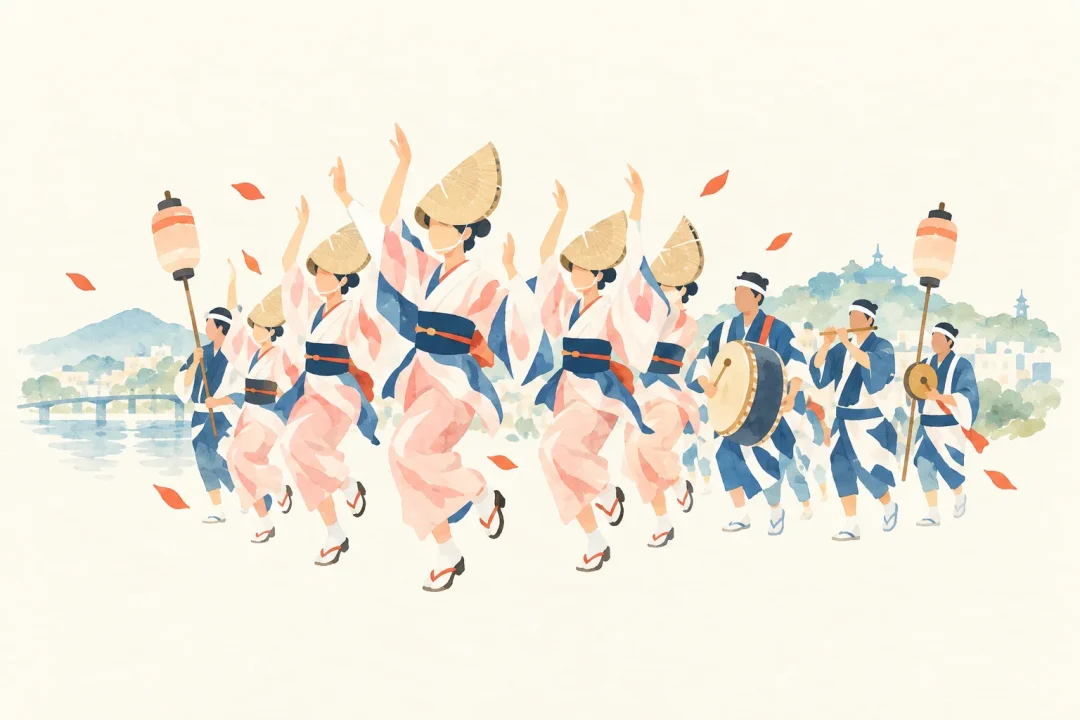
A New Year’s offering dance from Okada, accompanied by the sound of levers, fans, and kiyari work songs
Okada Hachiman Shrine New Year Festival
Festival information
EVENT INFORMATION- Season / frequency
- New Year
- Location
- Hachiman Shrine
- Area
- Tokyo Metropolis・Oshima Town(Within Tokyo: approx. 15 min–1 h by train (central areas))Prefecture-level estimate to a main station or airport, not the venue. Airport access, check-in and onward travel are extra; remote areas and islands can take much longer.
- Highlights and activities
- Required number of participants
- 14, 18, or 22 people, etc.
- Last updated
- 2026/10/26
The Okada Hachiman Shrine New Year Festival is a traditional event in Miyanosawa, Okada, featuring the Teko-mai and a hand dance by young men performed as offerings.
About Okada Hachiman Shrine New Year Festival
The Okada Hachiman Shrine New Year Festival is a festival at Hachiman Shrine, designated an intangible folk cultural property of Tokyo.
The shrine is in Miyanosawa, Okada. From the large first , a stone-walled leads to the festival square and beyond the second torii.
At New Year, circular decorations, , and pine sprigs are offered, and the Teko-mai and young men’s hand dance are performed as offerings.
Festival highlights
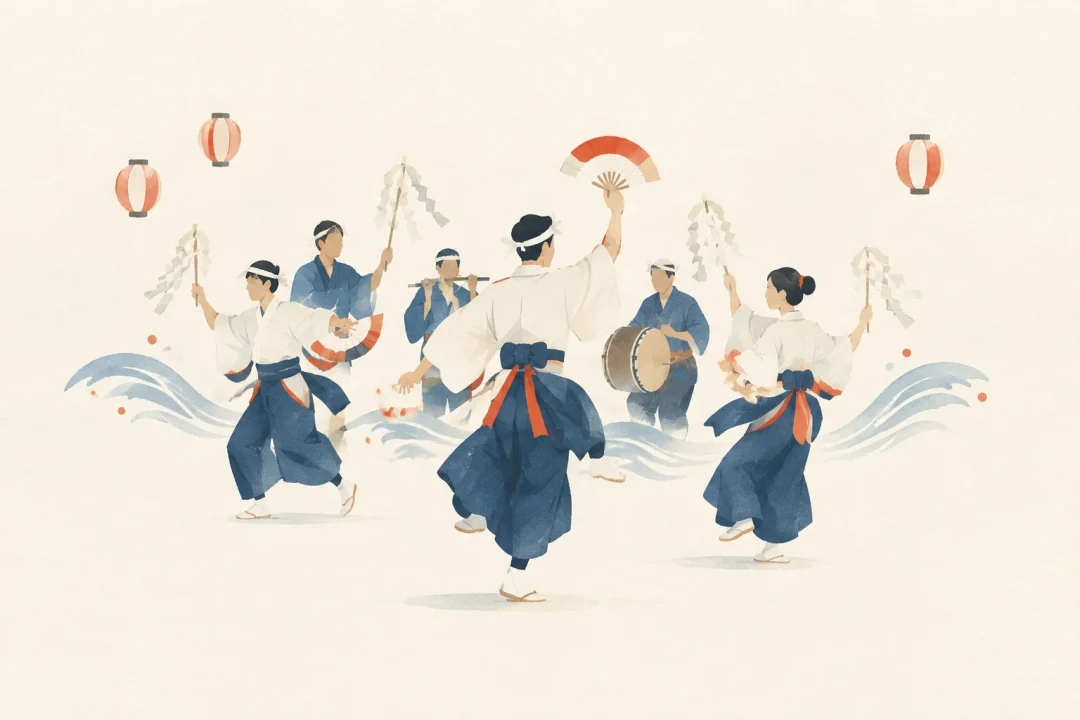
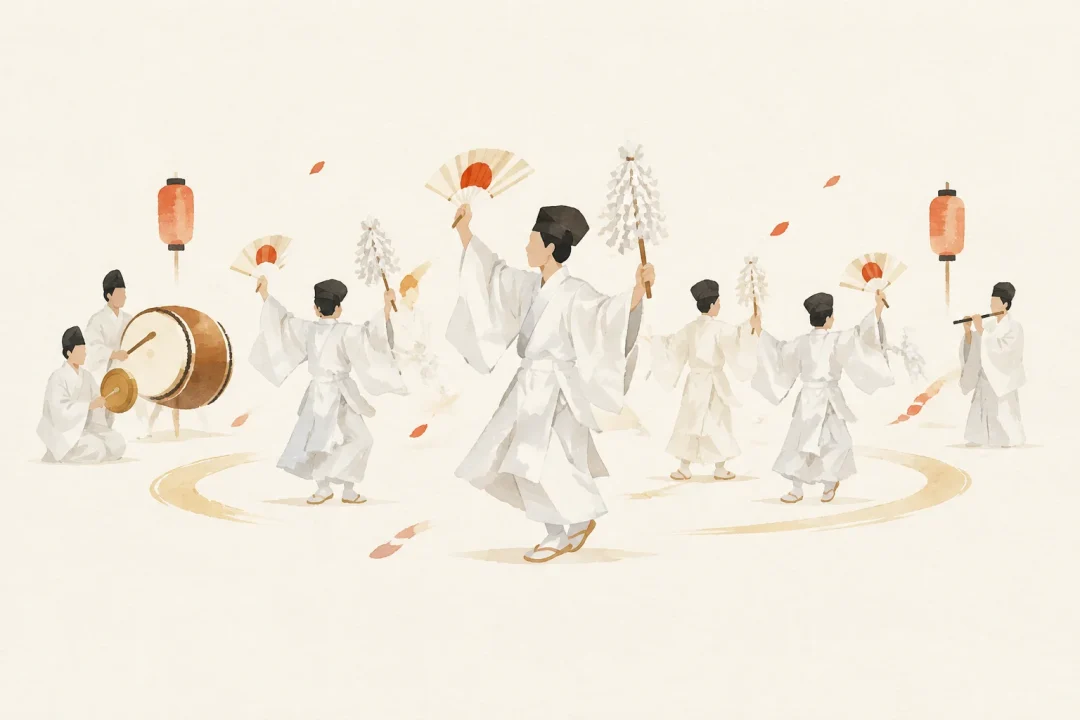
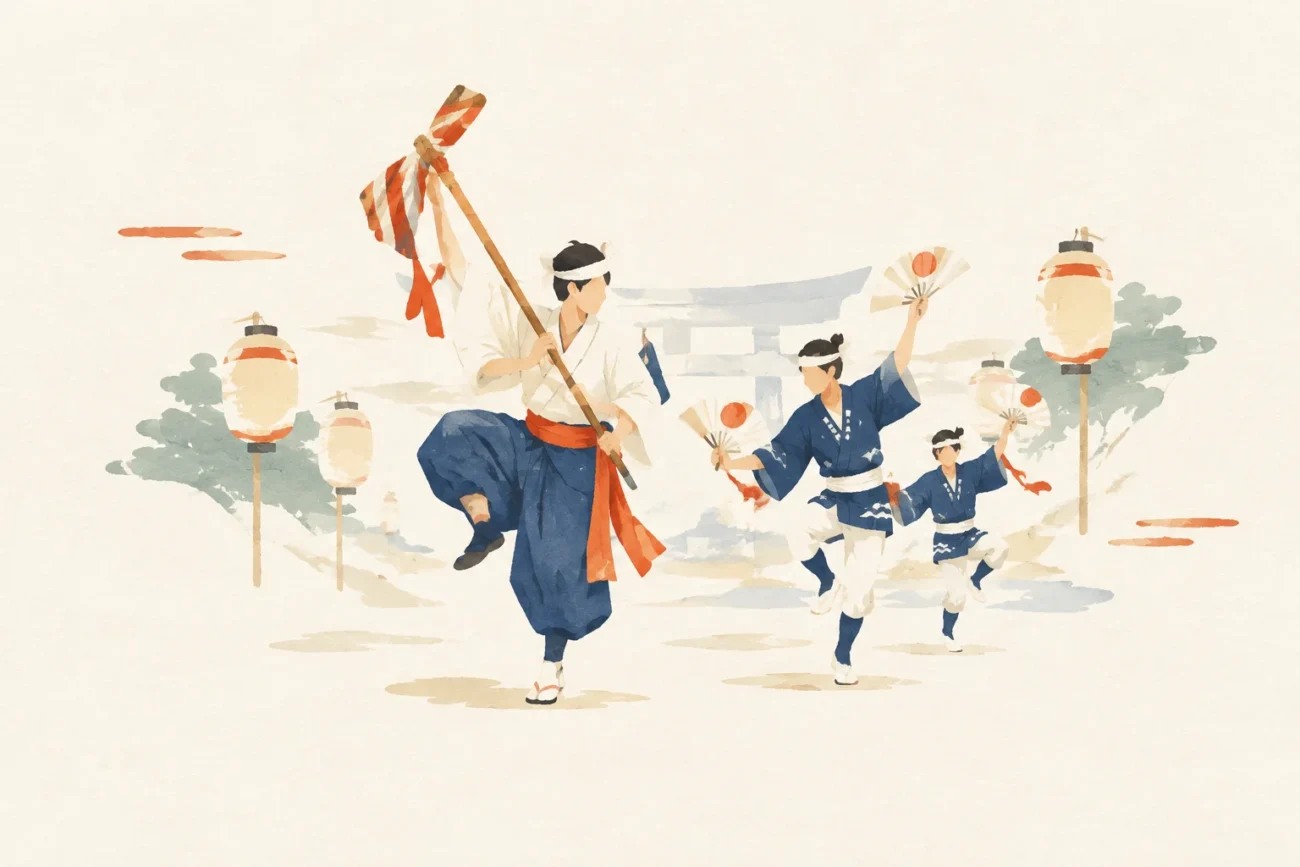
The highlight is the Teko-mai, in which young men dance with levers and fans.
The number of performers varies, including 14, 18, or 22. The young men dance in pairs, wearing , momohiki trousers, and iron wraps, to the accompaniment of kiyari work songs.
A hand dance by the young men is also performed as an offering, giving visitors a chance to see a range of performing arts passed down at the shrine for New Year.
A New Year’s offering dance from Okada, accompanied by the sound of levers, fans, and kiyari work songs
What to expect
At the festival, the young men perform the Teko-mai and a hand dance as offerings before the kami.
The Teko-mai is performed by pairs, who dance to kiyari work songs while using levers and fans.
According to legend, when Minamoto no Tametomo was exiled to Oshima, he used a lever to clear away lava and rallied the workers by singing a kiyari work song. This story is said to lie behind these offerings.
How to take part
必要人数:14人、18人、または22人等
Location and access
- Venue and address
Hachiman Shrine (Miyanosawa, Okada, Oshima Town)
Address Miyanosawa, Okada, Oshima Town
Dates and season
- Season
New Year
Accommodation and hotels PR
Showing nearby accommodation.
Prices and availability are current at the time of retrieval. For multi-night stays, only the first night’s price is shown. Confirm the final price and directions to the venue with the booking provider. Select your dates again when using the area search link. Search area: within 3 km of Central Tokyo Metropolis / Oshima Town (the search is not centered on the festival venue)
Nearby attractions
Origins and History of Okada Hachiman Shrine New Year Festival
The Okada Hachiman Shrine New Year Festival was designated an intangible folk cultural property of Tokyo on October 7, 1958.
According to a legend about the origins of the Teko-mai, Minamoto no Tametomo was defeated in the Hogen Rebellion and exiled to Oshima. When he used a lever to clear away lava, he reportedly rallied the workers by singing a kiyari work song.
The shrine’s is said to be the “Kokonoe Scroll,” which Minamoto no Tametomo brought with him when he was exiled to Oshima.
Official information
The “List of Cultural Properties on the Island,” published by the Oshima Branch Office of the Tokyo Metropolitan Board of Education, includes Hachiman Shrine and the Okada Hachiman Shrine New Year Festival.
Okada Hachiman Shrine New Year Festival at a Glance
The Okada Hachiman Shrine New Year Festival is an intangible folk cultural property of Tokyo, passed down at Hachiman Shrine in Miyanosawa, Okada.
At New Year, circular decorations, gohei, and pine sprigs are offered, and the Teko-mai and young men’s hand dance are performed as offerings.
The Teko-mai, which uses levers and fans, is associated with a legend that Minamoto no Tametomo cleared away lava, linking the festival performance to the shrine’s history.
Japanese Festivals.jp Editorial Team
Celebrating local culture and helping you discover a side of Japan you never knew.
Article updated: 2026/10/26
Submit information or a correction Submit photos of this festival