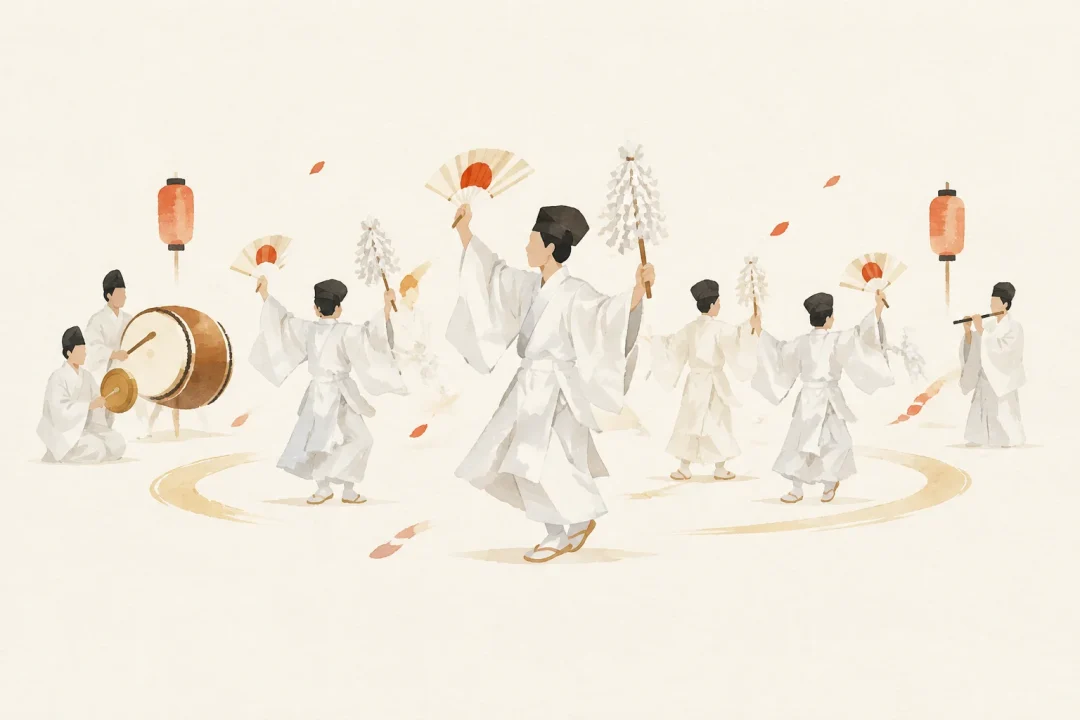
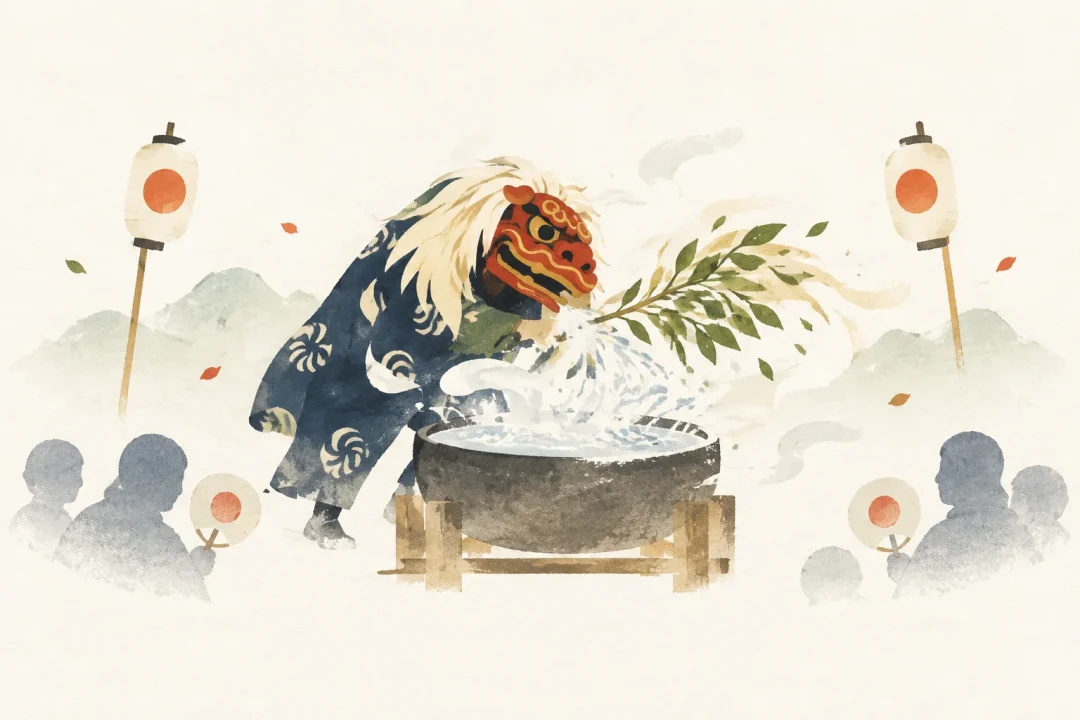
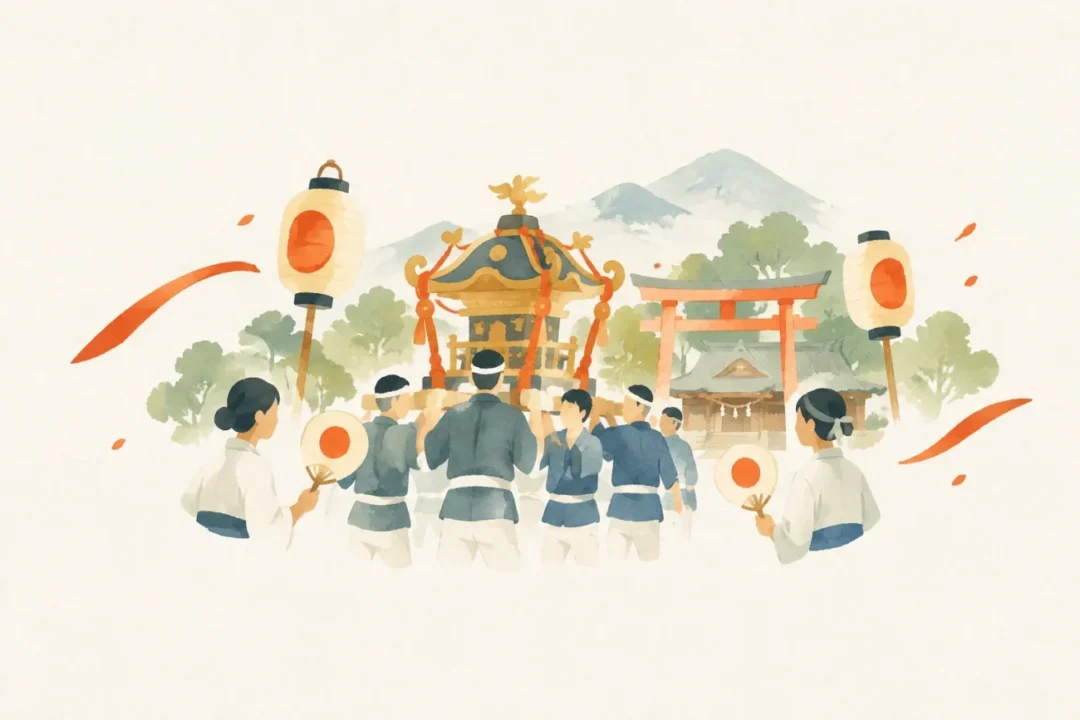
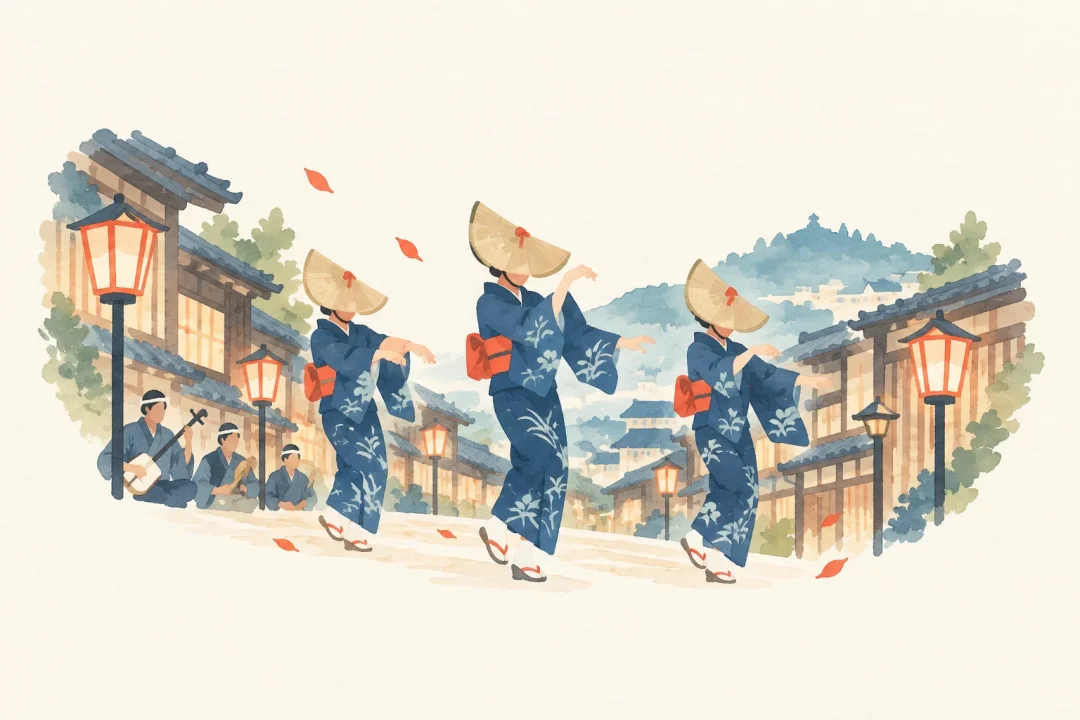
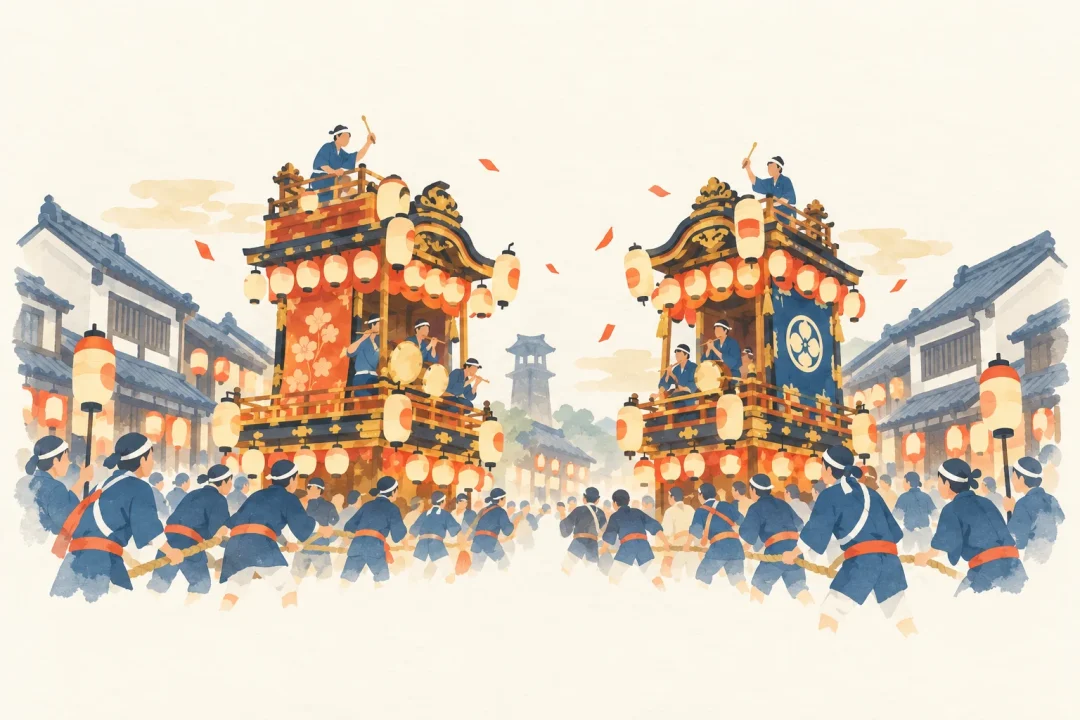
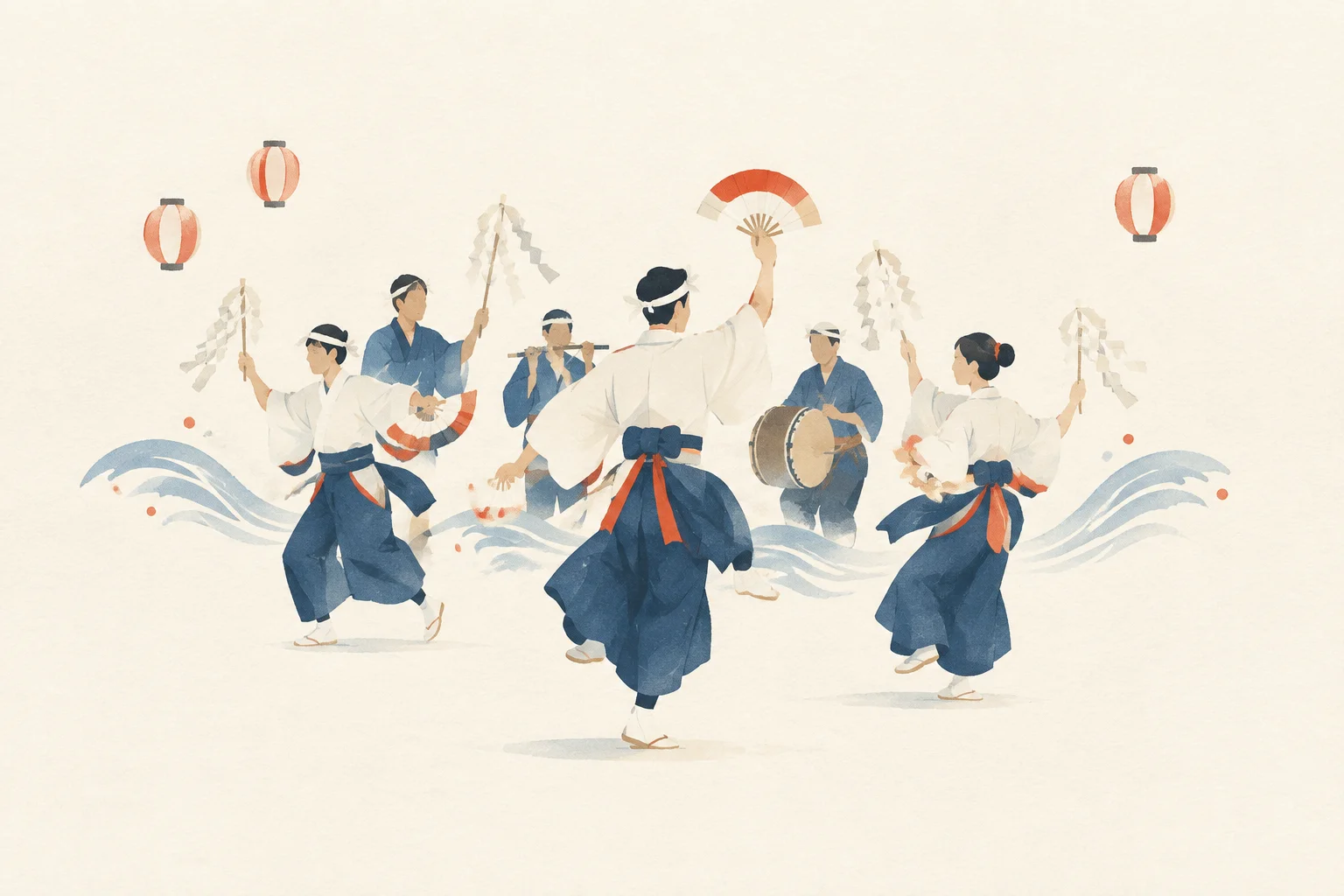
A dedication performance from Higashi-Izu, brought together by gohei wands, fans, song, and drums
Kashima Odori in the Higashi-Izu region
Festival information
EVENT INFORMATION- Season / frequency
- From summer through autumn
- Area
- Shizuoka Prefecture・Atami City, Ito City, and Higashi-Izu Town(From Tokyo: approx. 1 h–1 h 30 min · bullet train)Prefecture-level estimate to a main station or airport, not the venue. Airport access, check-in and onward travel are extra; remote areas and islands can take much longer.
- Features
- Highlights and activities
- Wishes behind the festival
- Required number of participants
- Around 10 to just over 20 people
- Last updated
- 2026/10/19
Kashima Odori in the Higashi-Izu region is a traditional performing art combining song, dance, and instruments, dedicated at shrine festivals in coastal areas. Dancers holding wands or fans form circles and squares, performing movements passed down in each community.
About Kashima Odori in the Higashi-Izu region
Kashima Odori in the Higashi-Izu region is a folk performing art passed down in the coastal areas of eastern Shizuoka Prefecture and dedicated at shrine festivals throughout the area.
Dancers wear eboshi hats with white ceremonial robes or , and dance holding fans, uchiwa fans, or gohei wands.
This tradition has been passed down mainly in Atami City, Ito City, and Higashi-Izu Town, with each community preserving its own form.
Source: 国指定文化財等データベース
Festival highlights
One highlight is the scene in which the dancers first form a circle, then change from a line into a square formation as they dance.
Dancers holding gohei wands decorated with the sun, moon, ladles, and other ornaments stand at the center and lead the songs and dance.
Small pieces of colored paper flutter from gohei wands topped with ladles, blending with the light movements of fans and uchiwa fans and the sounds of drums and gongs.
A dedication performance from Higashi-Izu, brought together by gohei wands, fans, song, and drums
What to expect
The dance begins when a leader, such as the person playing the role of the sun, recites verses and moves into song.
The dancers repeat circular and square formations, sometimes raising gohei wands as they wave fans and uchiwa fans.
The musical arrangement also varies by community, with singers or dancers chanting verses and drums and gongs joining in.
How to take part
必要人数:10〜20数名程度
Location and access
- Address
Atami City, Ito City, and Higashi-Izu Town
Host municipality 静岡県熱海市、伊東市、東伊豆町
This map shows the surrounding area, not the exact venue location.
Dates and season
- Season
From summer through autumn
Origins and History of Kashima Odori in the Higashi-Izu region
Kashima Odori has been passed down widely along the Sagami Bay coast north of Higashi-Izu Town, with its form changing slightly from community to community.
Within Ito City, it has been passed down in places including Usami Hachiman, Usami Hatsutsu, Yukawa, Arai, Futo, and Kawana, and is still maintained in several districts.
In 2005, it was selected as an intangible folk cultural property requiring measures such as the creation of a record, as a folk performing art found across multiple cities and towns.
Source: 東伊豆地方に伝わる伝統芸能「鹿島踊」/伊東市
Official information
The Agency for Cultural Affairs’ “Database of Nationally Designated Cultural Properties” provides information on the name, distribution, and content of Kashima Odori in the Higashi-Izu region.
Ito City also introduces it as a traditional performing art passed down in the Higashi-Izu region.
Kashima Odori in the Higashi-Izu region at a Glance
Kashima Odori in the Higashi-Izu region is a folk performing art dedicated at shrines in places such as Atami City, Ito City, and Higashi-Izu Town.
Circular and square formations, movements with gohei wands and fans, and the sounds of singing, drums, and gongs come together to shape each community’s tradition.
It has been passed down in connection with the beliefs of coastal settlements, including prayers for safety at sea and memorial services.
Source: 伊東の鹿島踊り(市指定無形民俗文化財)/伊東市
Japanese Festivals.jp Editorial Team
Celebrating local culture and helping you discover a side of Japan you never knew.
Article updated: 2026/10/19
Submit information or a correction Submit photos of this festival