The 25 bodhisattvas crossing the Raigo Bridge and a procession of prayers passed down through generations
Nijugo Bosatsu Onneri Kuyo
Festival information
EVENT INFORMATION- Season / frequency
- Every year on the third Sunday of April / Every year
- Location
- Rengeji Temple
- Area
- Aichi Prefecture・Ama City(From Tokyo: approx. 1 h 40 min–2 h · bullet train)Prefecture-level estimate to a main station or airport, not the venue. Airport access, check-in and onward travel are extra; remote areas and islands can take much longer.
- Highlights and activities
- Wishes behind the festival
- Last updated
- 2026/11/11
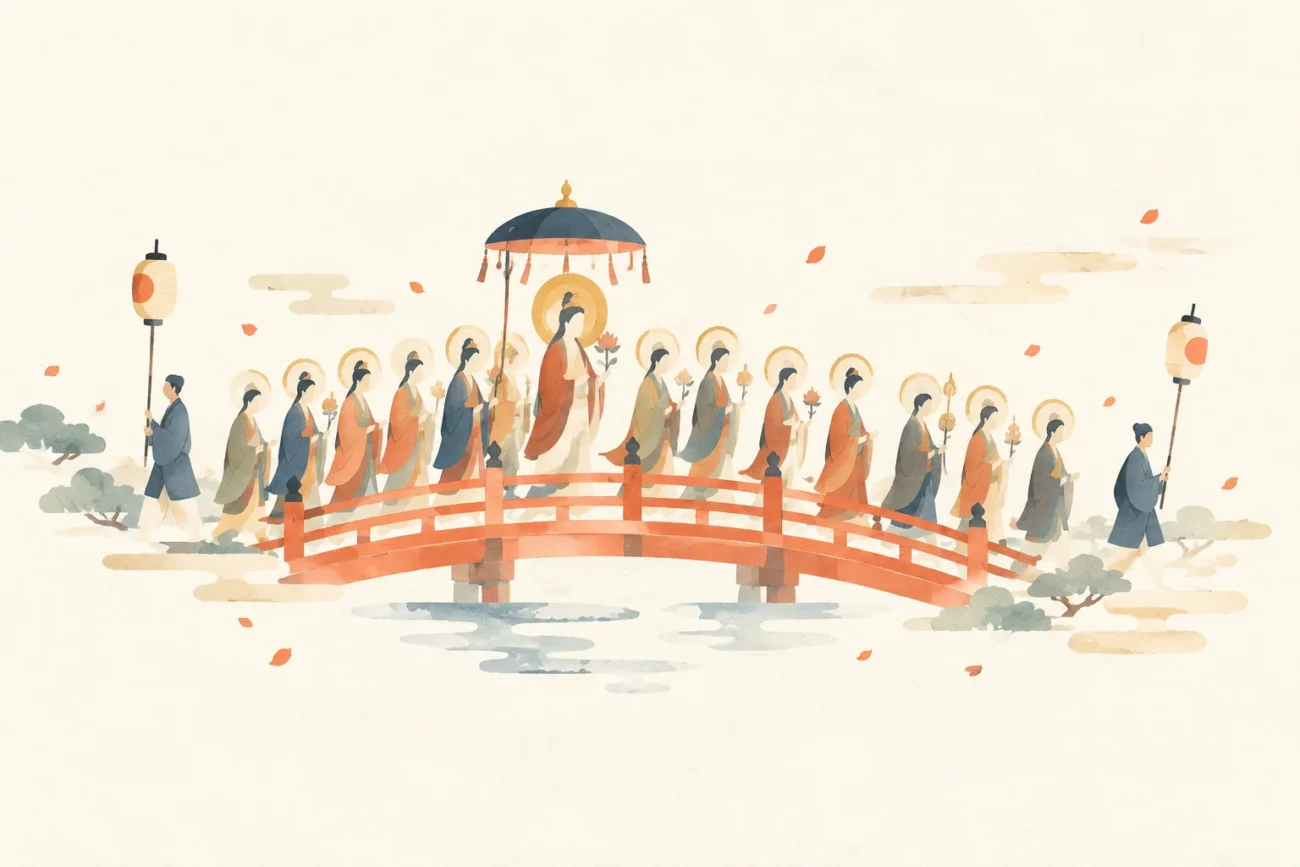
A traditional event passed down at Rengeji Temple in Hachisuka, Ama City, in which 25 bodhisattvas cross the Raigo Bridge and appear in this world. The event shares the area’s history alongside beliefs about warding off misfortune and Awa Odori.
About Nijugo Bosatsu Onneri Kuyo
The Nijugo Bosatsu Onneri Kuyo is a traditional event held every year on the third Sunday of April at Rengeji Temple in Hachisuka, Ama City.
The event recreates 25 bodhisattvas appearing in this world and guiding the people to the Pure Land.
Held as a commemorative Buddhist service for the Hachisuka Kobo Kaicho, it is also designated an intangible folk cultural property of Ama City.
Festival highlights
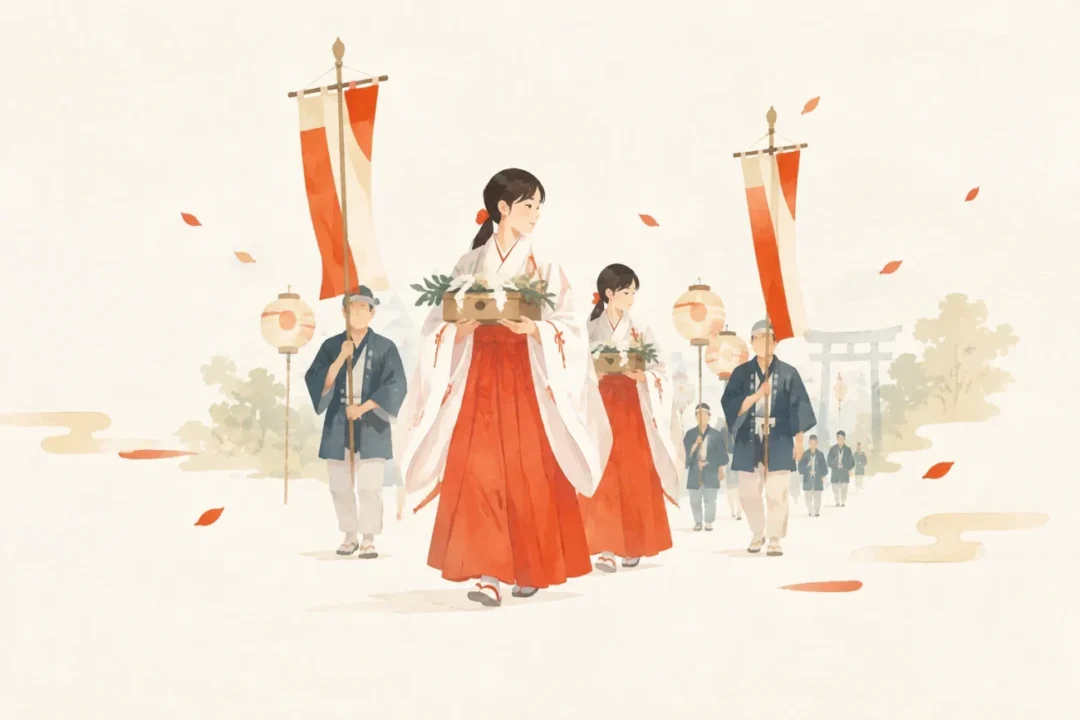
The highlight is the scene of 25 bodhisattvas crossing the Raigo Bridge and appearing in this world.
It is said that having a bodhisattva pat your head wards off misfortune, and the grounds are lively, with worshippers calling out and raising their hands.
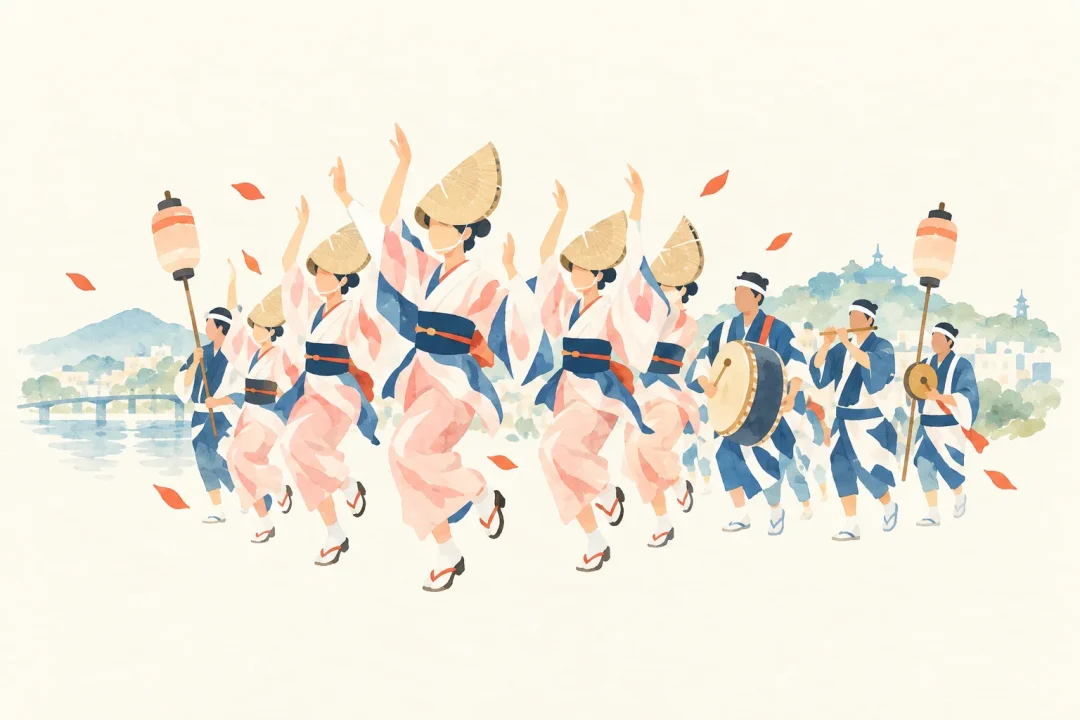
Awa Odori performed by Nagoya -ren, associated with the Hachisuka family, is also presented.
The 25 bodhisattvas crossing the Raigo Bridge and a procession of prayers passed down through generations
What to expect
The event recreates 25 bodhisattvas crossing the Raigo Bridge, appearing in this world, and guiding the people to the Pure Land.
It is said that having a bodhisattva pat your head wards off misfortune, and the grounds are lively, with worshippers calling out to them.
Awa Odori performed by Nagoya Taiko-ren is also presented at the commemorative Buddhist service.
Location and access
- Venue and address
Rengeji Temple — 1352 Otera, Hachisuka, Ama City
- Parking
Yes (10 vehicles)
Address 1352 Otera, Hachisuka, Ama City, Aichi Prefecture
Dates and season
- Season
Every year on the third Sunday of April
- Frequency
Every year
Accommodation and hotels PR
Showing nearby accommodation.
Prices and availability are current at the time of retrieval. For multi-night stays, only the first night’s price is shown. Confirm the final price and directions to the venue with the booking provider. Select your dates again when using the area search link. Search area: within 3 km of Central Aichi Prefecture / Ama City (the search is not centered on the festival venue)
Origins and History of Nijugo Bosatsu Onneri Kuyo
The Nijugo Bosatsu Onneri Kuyo is said to have been held every year at Rengeji Temple in Hachisuka since Keicho 13 (1608).
It has been passed down as an event recreating 25 bodhisattvas guiding people to the Pure Land.
In Heisei 28 (2016)February 25, it was designated an intangible folk cultural property of Ama City.
Official information
あま市公式ウェブサイトの「あま市指定文化財:無形民俗」ページで、行事の由来や開催時期、文化財指定が案内されています。
The Ama City Tourism Association’s event listing describes the program at Rengeji Temple, including Awa Odori, as well as the location and parking.
Nijugo Bosatsu Onneri Kuyo at a Glance
The Nijugo Bosatsu Onneri Kuyo is a traditional event passed down at Rengeji Temple in Hachisuka, Ama City.
The event recreates the 25 bodhisattvas crossing the Raigo Bridge and appearing in this world. It is said that having one of them pat your head wards off misfortune.
Awa Odori associated with the Hachisuka family is also presented, sharing the area’s faith and a history said to date back to Keicho 13 (1608).
Sources and references
Japanese Festivals.jp Editorial Team
Celebrating local culture and helping you discover a side of Japan you never knew.
Article updated: 2026/11/11