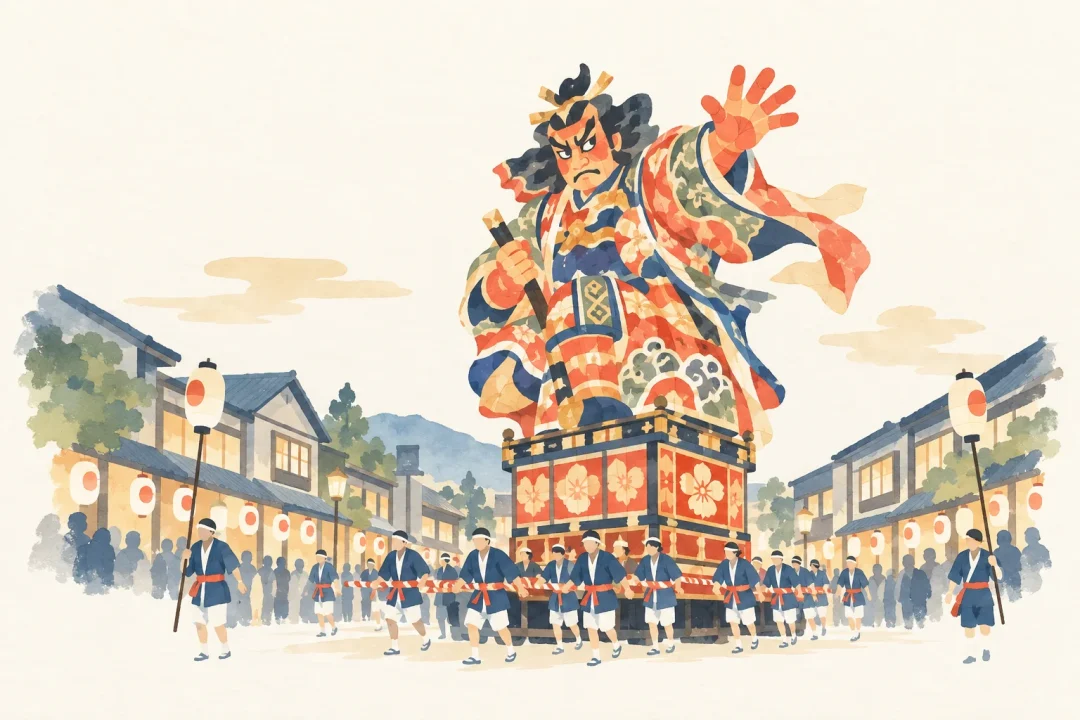
A traditional castle-town festival featuring mikoshi and 19 oshagiri
Murakami Grand Festival

Festival information
EVENT INFORMATION- Season / frequency
- Every year on July 6 and 7 / Every year
- Area
- Niigata Prefecture・Murakami City(From Tokyo: approx. 1 h 40 min–2 h 10 min · bullet train)Prefecture-level estimate to a main station or airport, not the venue. Airport access, check-in and onward travel are extra; remote areas and islands can take much longer.
- Highlights and activities
- Wishes behind the festival
- Official website / social media
- Official website
- Last updated
- 2026/10/19
Murakami Grand Festival sees , arauma, a children’s procession, and 19 oshagiri parade through Murakami City’s castle town. Highlights include the elaborately carved and lacquered floats and the different displays from each neighborhood.
About Murakami Grand Festival
Murakami Grand Festival is the annual grand festival held at Senami Haguro Shrine in Murakami City, Niigata Prefecture.
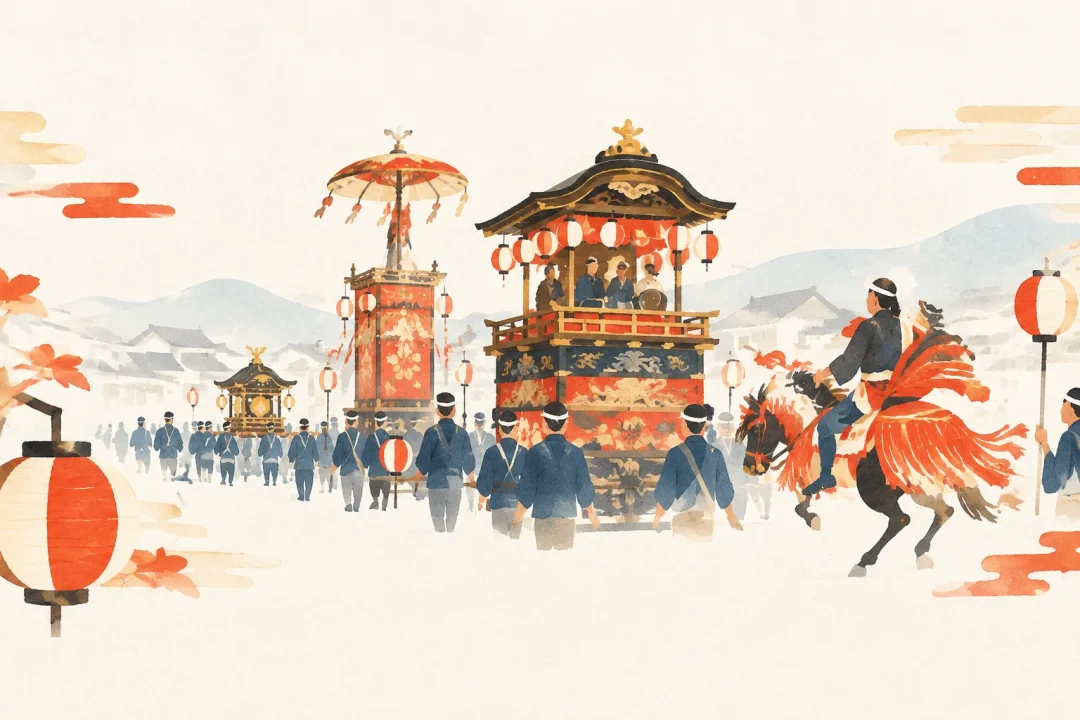
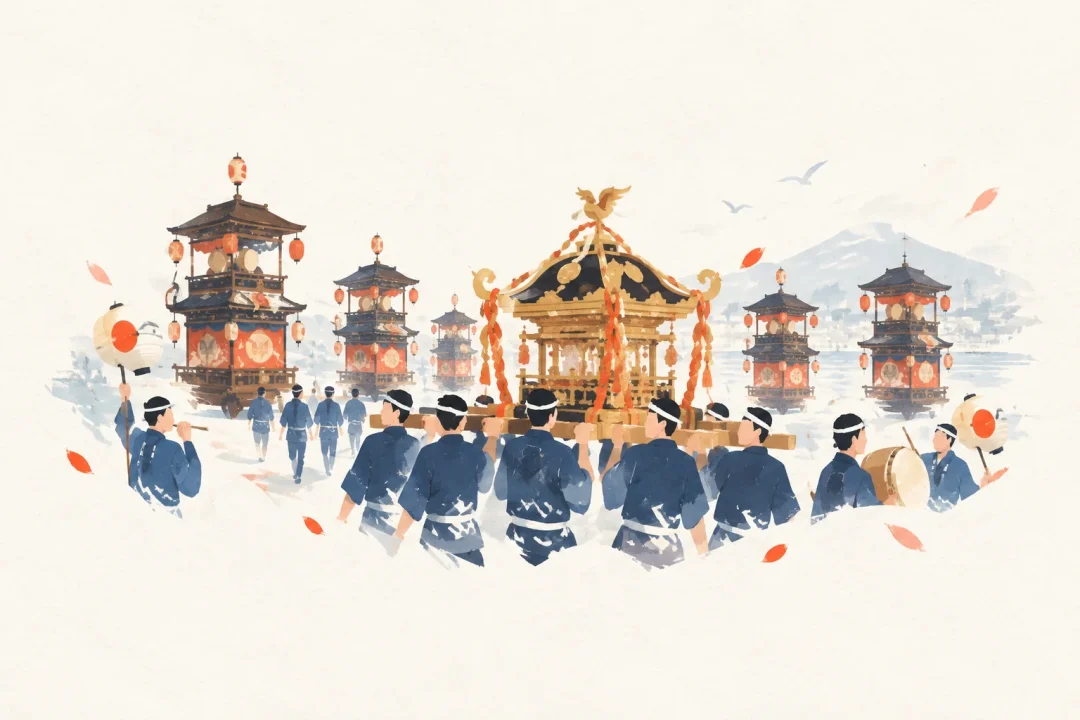
The sacred spirits are transferred to 3 mikoshi, which make a procession around the neighborhoods, led by arauma and a children’s procession.
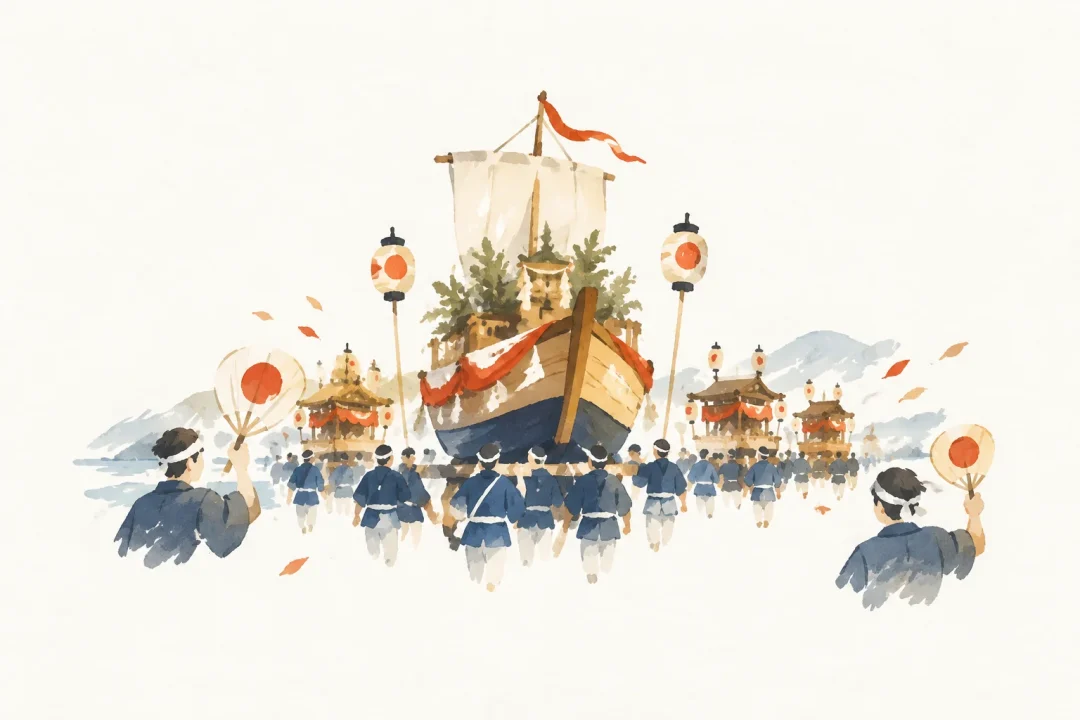
Behind them come 19 floats, commonly known as “oshagiri,” conveying the festival traditions passed down in Murakami’s castle town.
The festival was designated a National Important Intangible Folk Cultural Property in 2018 and inscribed in UNESCO’s Intangible Cultural Heritage list as part of “Yama, Hoko, , float festivals in Japan” in 2025.
Source: 令和8年 村上大祭|村上市観光協会 -鮭・酒・人情 むらかみ- / 村上大祭 公式ホームページ
Festival highlights
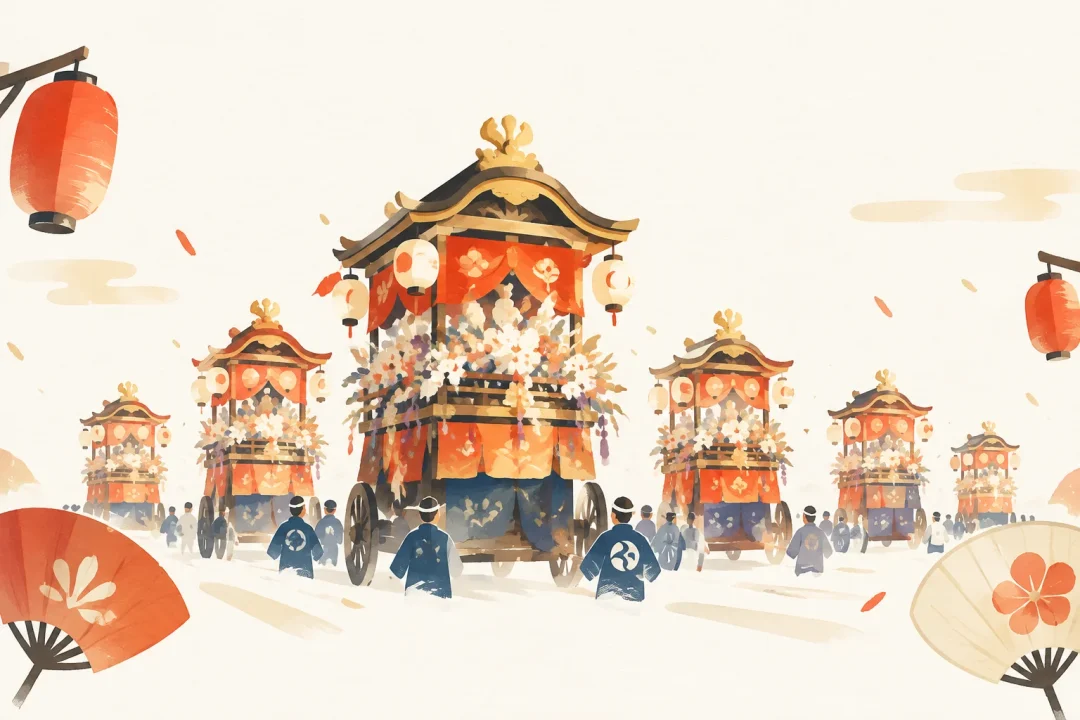
A highlight is seeing 19 shagyari floats, decorated with carvings, lacquerwork, and gold and silver ornaments, parade through the city center.
The floats sway up and down and weave from side to side as they move, each decorated with a display that its neighborhood is proud of.
Some displays include mechanical features, letting visitors compare the designs of each float.
Another distinctive feature is the long procession, led by drums and followed by mikoshi, arauma, and a children’s procession.
Source: 村上大祭の見どころ - 村上市公式ウェブサイト
A traditional castle-town festival featuring mikoshi and 19 oshagiri
What to expect
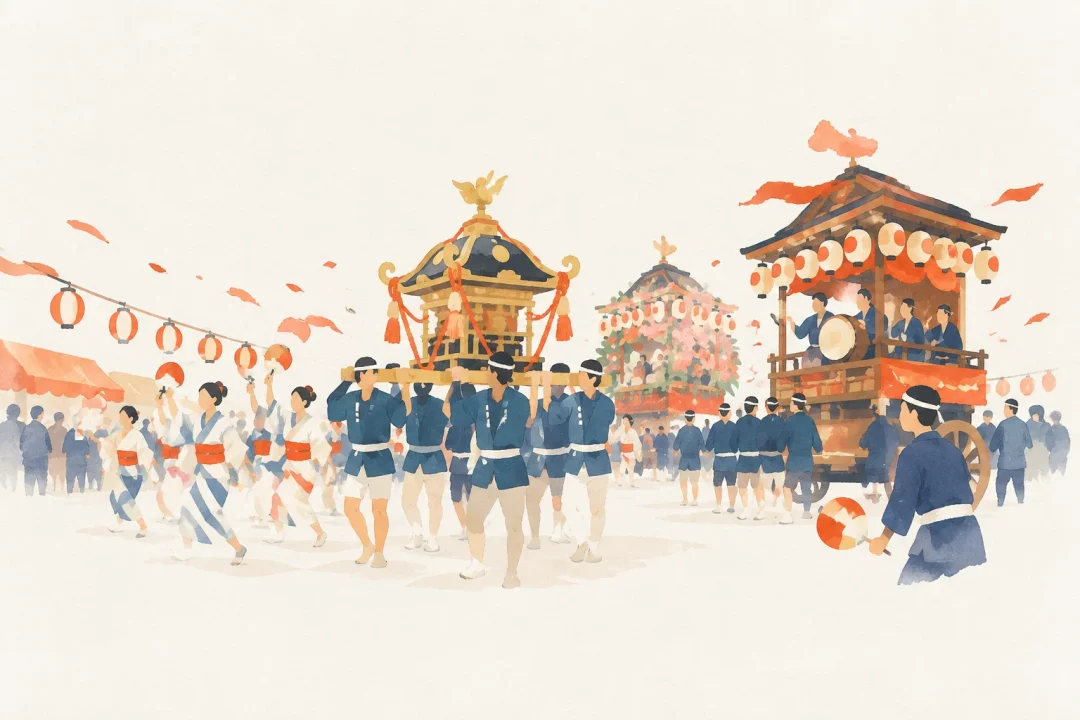
The festival procession includes a lead taiko drum, a children’s procession, mikoshi, arauma, and other participants, followed by floats from each neighborhood.
The main festival is described as beginning with drums announcing the start in the middle of the night, followed by floats gathering in front of the shrine early in the morning, then the mikoshi setting off at the signal of fireworks.
Along the route, visitors can enjoy the arauma advancing to shouts and the different displays on the floats from each neighborhood.
Location and access
- Venue and address
Senami Haguro Shrine and Murakami City
Event venue 新潟県村上市 西奈彌羽黒神社
This map uses the venue name. Check the official guide for the event area and entrances.
Dates and season
- Season
Every year on July 6 and 7
- Frequency
Every year
Accommodation and hotels PR
Showing nearby accommodation.
Prices and availability are current at the time of retrieval. For multi-night stays, only the first night’s price is shown. Confirm the final price and directions to the venue with the booking provider. Select your dates again when using the area search link. Search area: within 3 km of Central Niigata Prefecture / Murakami City (the search is not centered on the festival venue)
Nearby attractions
Oshagiri Kaikan (Murakami City Local History Museum) is recommended as a place to learn about the floats of Murakami Grand Festival.
The museum displays 4 “oshagiri” floats that are pulled in the festival year-round, and also exhibits materials on successive lords of the Murakami domain, swords, armor, and more.
Senami Haguro Shrine is the center of the festival, and its history includes its transfer to its present location in Kan’ei 10.

イヨボヤ会館
新潟県村上市の博物館
Origins and History of Murakami Grand Festival
Murakami Grand Festival is said to have originated in Kan’ei 10 (1633), when, to celebrate the Murakami domain lord’s relocation of Senami Haguro Shrine to its present site, people from Omachi loaded a taiko drum onto a handcart and paraded through town.
During the Edo period, it was held on day 6 of lunar month 6 and the 7th; from the Meiji period onward, it shifted to the 6th and 7th of July 6 on the Gregorian calendar.
The 14 arauma are associated with a story about the triumphant return of Honjo Shigenaga, the Murakami Castle lord during the Warring States period.
Source: 村上大祭の由来 - 村上市公式ウェブサイト
Official information
The official Murakami Grand Festival website is managed by the Murakami Festival Preservation Society.
Murakami Grand Festival at a Glance
Murakami Grand Festival is a traditional event held as the annual grand festival of Senami Haguro Shrine, with mikoshi, arauma (decorated horses), a children’s procession, and 19 oshagiri parading through the castle town.
Floats featuring elaborate carvings, lacquerwork, and displays have been passed down in each neighborhood, offering a sense of the festival’s history and the skill of its artisans.
Its origins date back to a celebration of the shrine’s relocation in 1633, and it has been designated a National Important Intangible Folk Cultural Property and inscribed on UNESCO’s Intangible Cultural Heritage list.
Japanese Festivals.jp Editorial Team
Celebrating local culture and helping you discover a side of Japan you never knew.
Article updated: 2026/10/19
Submit information or a correction Submit photos of this festival