A festival that traces Murakami’s prayers through dashi and festival music that bring the castle town to life
Murakami Festival Dashi Event
The 2026 edition of Murakami Festival Event has ended.
Festival information
EVENT INFORMATION- Dates
- 2026/07/06 〜 2026/07/07Ended
- Season / frequency
- Every year on July 6 and the 7th / Every year
- Location
- Throughout central Murakami City (procession route starting at Nishinaya Haguro Shrine)
- Area
- Niigata Prefecture・Murakami City(From Tokyo: approx. 1 h 40 min–2 h 10 min · bullet train)Prefecture-level estimate to a main station or airport, not the venue. Airport access, check-in and onward travel are extra; remote areas and islands can take much longer.
- Highlights and activities
- Wishes behind the festival
- Participation / viewing
- Spectators welcome
- Last updated
- 2026/10/19
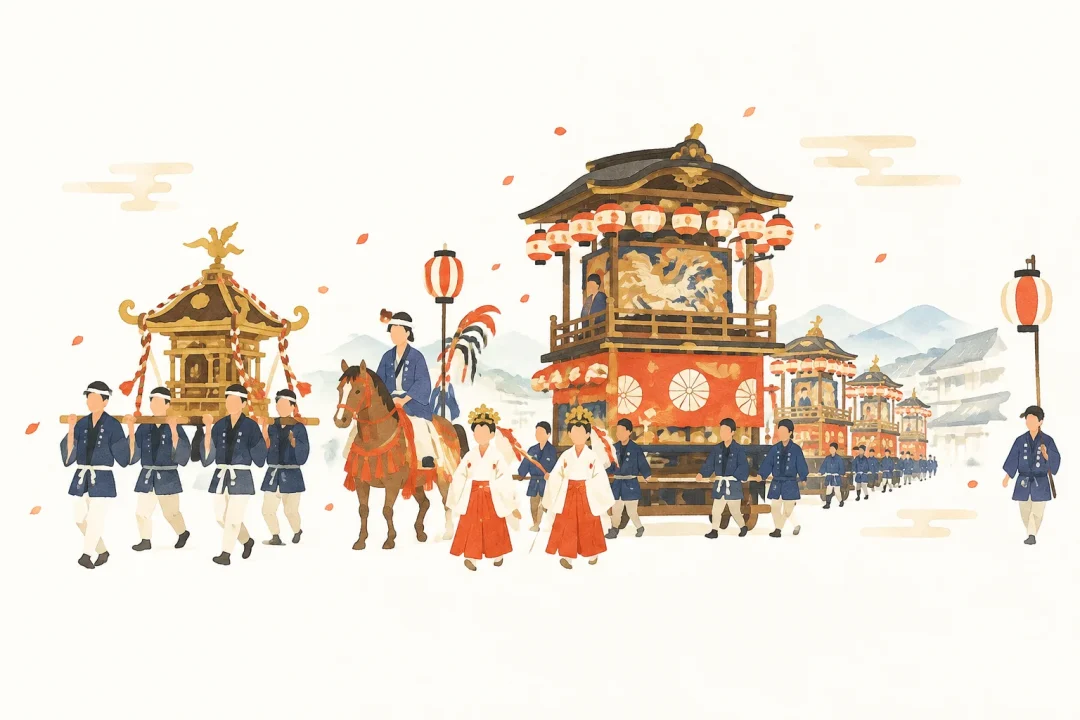
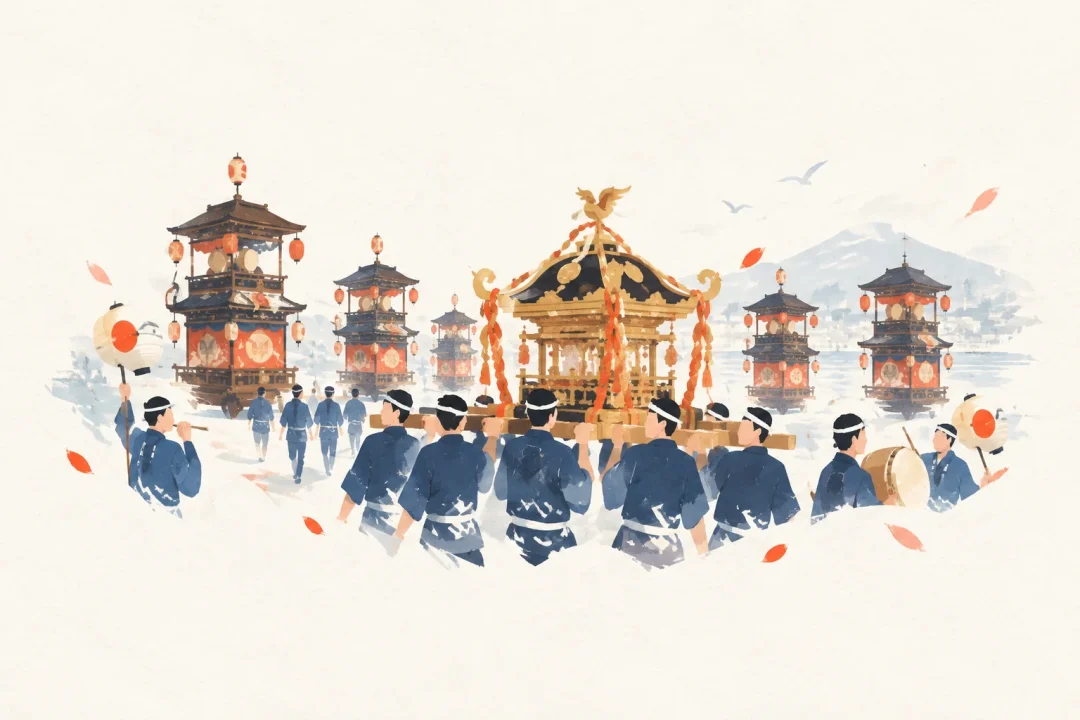
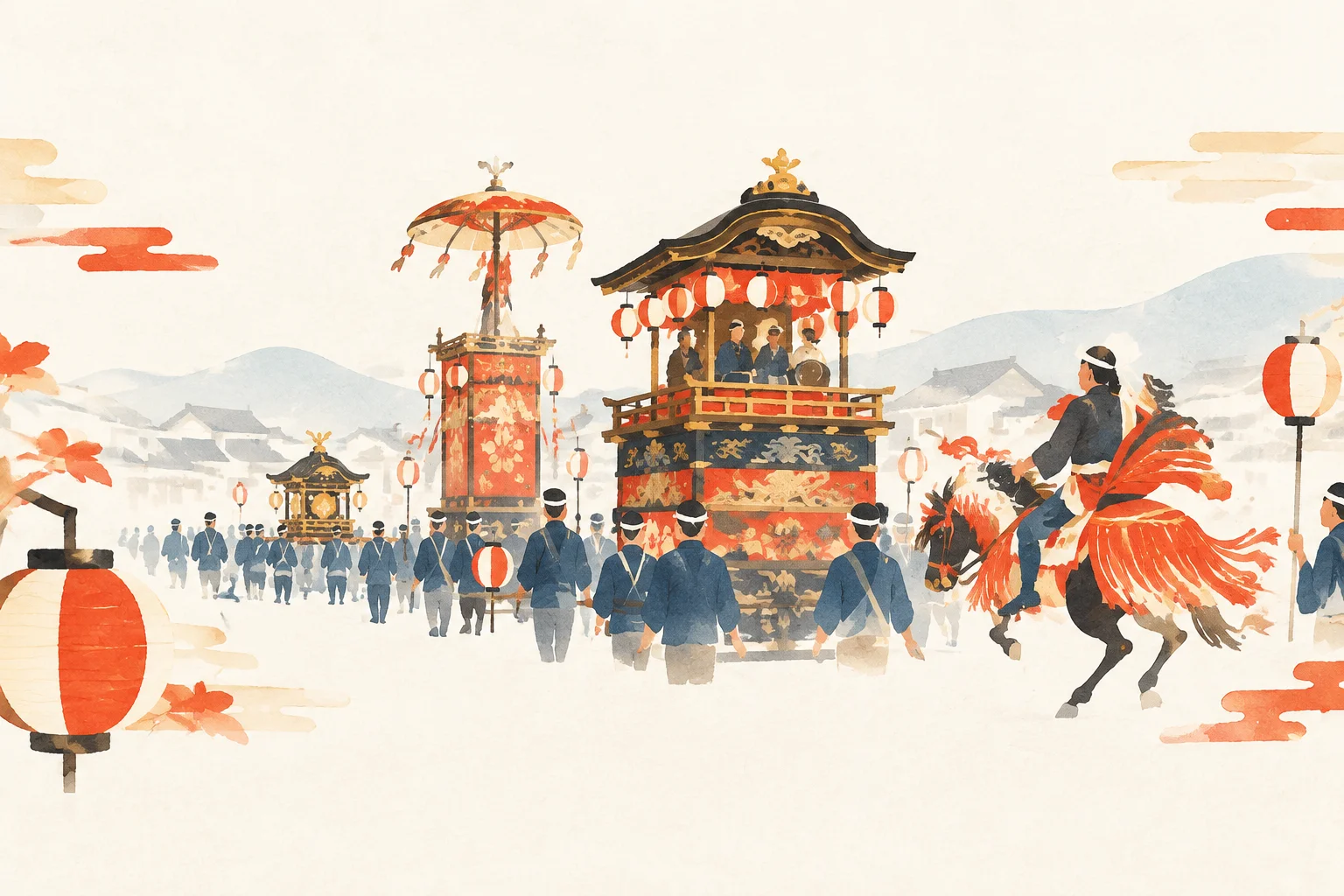
The Murakami Festival Dashi Event sees dashi, kasaboko, and arauma accompanying the through the castle town of Murakami. Dashi with carvings and lacquerwork passed down through each neighborhood, festival music, and the glow of lanterns bring color to a day of this historic festival.
About Murakami Festival Dashi Event
The Murakami Festival Dashi Event is a traditional festival held as the grand annual festival of Nishinaya Haguro Shrine in Murakami City, Niigata Prefecture.
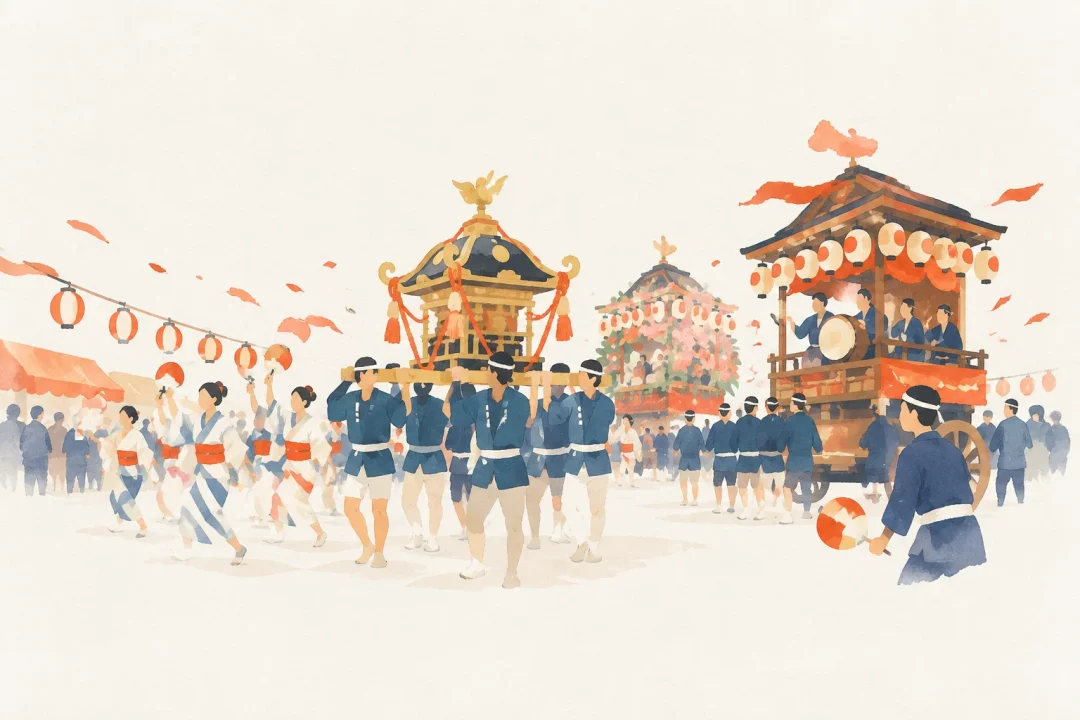
Set in the former castle town of Murakami, the mikoshi, dashi, kasaboko, and arauma travel through the town in procession.
Some of the 19 dashi feature carvings and lacquerwork, preserving the history of the castle town and the culture of its neighborhoods.
The event also includes prayers for a good harvest and household safety.
Source: 国指定文化財等データベース
Festival highlights
A highlight is the long procession of 19 dashi traveling through the former castle town alongside the mikoshi and arauma.
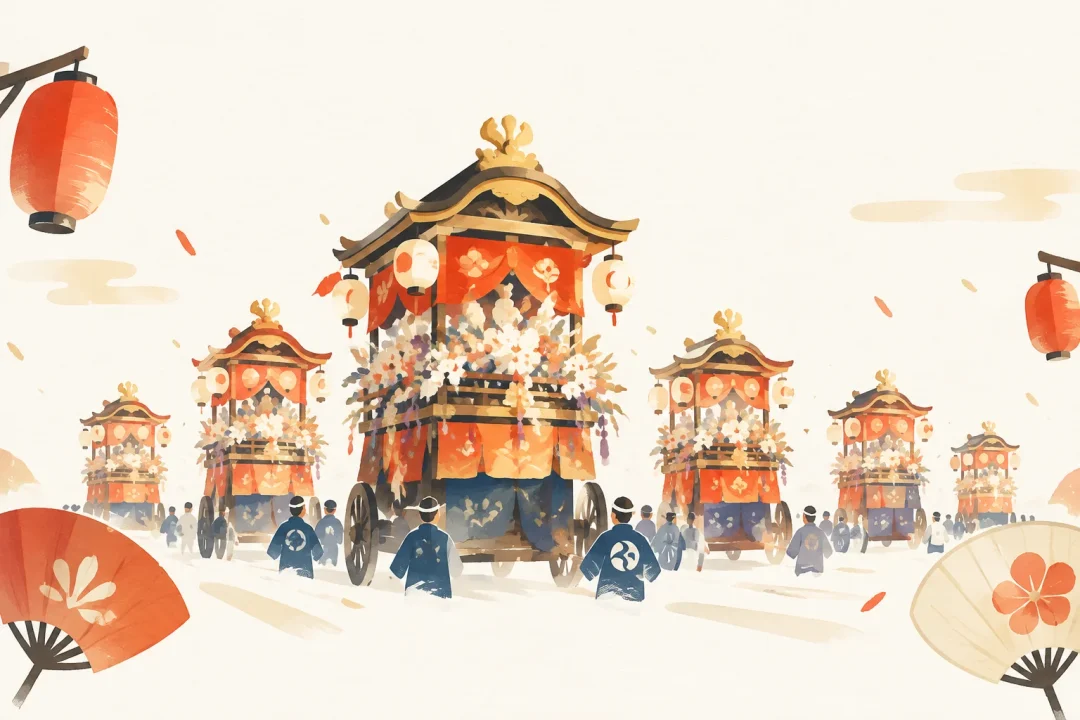
The dashi have two tiers and two wheels. The upper tier carries figures and other ornaments, while the musicians ride on the lower tier.
You can compare dashi with intricate carvings, lacquerwork, and gold and silver decorations, as well as the different ornaments carried by each neighborhood.
In the evening, the dashi return to their neighborhoods with lanterns lit, creating a different scene from the daytime.
Source: 村上大祭の見どころ - 村上市公式ウェブサイト
A festival that traces Murakami’s prayers through dashi and festival music that bring the castle town to life
What to expect
During the eve festival, each neighborhood assembles its dashi and kasaboko, then parades through its area.
The main festival begins with the signal of the lead drum. The mikoshi, arauma, kasaboko, and dashi gather in front of the shrine before proceeding through the former castle town.
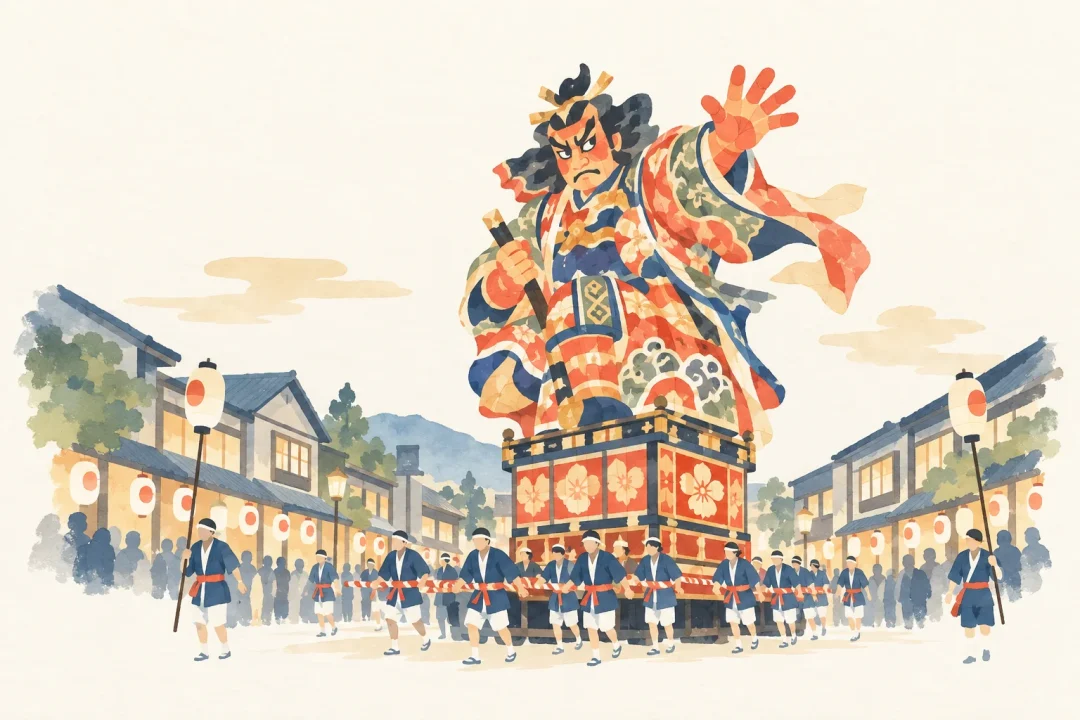
The dashi are pulled in a zigzag from side to side by ropes, while festival music and Murakami Jinku songs ring out along the route.
After the mikoshi returns to the shrine, the dashi head back to their respective neighborhoods with their lanterns lit.
How to take part
Visitors can watch the event.
Location and access
- Venue and address
The Murakami city area.
The main starting point and venue is Senami Haguro Shrine.
- Train and bus
It is about a 20-minute walk from Murakami Station on the JR Uetsu Main Line to Senami Haguro Shrine.
- By car
It is about 3 minutes from the Murakami-Senami Onsen IC on the Nihonkai-Tohoku Expressway to Senami Haguro Shrine.
- Parking
You can use the tourist and temporary parking lots around the city.
For 2026, the listed parking areas are Iyoboya Kaikan, the Education and Information Center, Manabote Murakami, the Murakami Regional Promotion Bureau, the temporary parking lot beside Fujimoto Shrine, and the temporary parking lot at the former Jusco site in front of Murakami Station.
Source: 村上大祭 公式ホームページ
Address Throughout central Murakami City
Dates and season
2026 Festival Information (the dates listed have passed)
In 2026, July 6 was listed as the eve festival and July 7 as the main festival.
Neighborhood processions took place during the eve festival, while the mikoshi, dashi, and other floats paraded through the former castle town during the main festival.
The official guide also lists a commemorative event procession on July 5, but the main dates for the Murakami Festival Dashi Event are the 6th and 7th.
The street market is held on separate dates, so it is best to check it separately from the festival itself.
Source: 村上大祭 | 村上市観光協会 -鮭・酒・人情 むらかみ-
Accommodation and hotels PR
Showing nearby accommodation.
Prices and availability are current at the time of retrieval. For multi-night stays, only the first night’s price is shown. Confirm the final price and directions to the venue with the booking provider. Select your dates again when using the area search link. Search area: within 3 km of Central Niigata Prefecture / Murakami City (the search is not centered on the festival venue)
Tips for your visit
The main festival’s dashi procession covers a long route and takes a long time, and it does not stay in one place for long, so it is best to arrive early at the spot you want to see.
Gathering in front of the shrine and the procession begin early in the morning, and at night you can see the dashi returning with their lanterns lit.
In 2026, pedestrian-only traffic restrictions associated with the street market were in effect from July 5 through the 8th.
If you are driving, check the designated temporary parking lots and their hours of use.
Source: 村上大祭 公式ホームページ / 令和8年度村上大祭臨時露店市場の開設について - 村上市公式ウェブサイト
Nearby attractions
The festival’s official guide lists Oshagiri Museum, Iyoboya Museum, the Honjo Shigenaga-kou no Kai, and the Murakami City Tourism Association as related facilities.
Oshagiri Museum is introduced as a related facility for visitors interested in the dashi and Murakami’s festival culture.
Iyoboya Museum was also designated as a temporary parking lot in 2026, and is mentioned in the guidance for festival visitors.
Please check each facility’s opening status and exhibits individually before visiting.

イヨボヤ会館
新潟県村上市の博物館
Origins and History of Murakami Festival Dashi Event
The Murakami Festival is said to have begun with a shrine relocation festival in 1633, when Naozumi Hori, lord of Murakami Castle, moved Haguro Shrine to its present location.
The people of Omachi are said to have borrowed a handcart from the castle, placed a taiko drum on it, and paraded through the town; this is believed to be the origin of the dashi event.
The dashi developed throughout the Edo period, and by the Kyoho era they had taken on a lavish form with piled red and black lacquer, among other decorations.
It was held on day 7 of lunar month 6, and shifted to the Gregorian calendar in Meiji 6, to July 7.
Source: 村上大祭の屋台の紹介と法被 - 村上市公式ウェブサイト
Official information
Official information is available on the Murakami Grand Festival official website.
It provides details such as dates, highlights of the dashi procession, access, parking, and shuttle buses.
Explanations of the festival’s cultural heritage status and its history are also available in the Agency for Cultural Affairs’ Database of Nationally Designated Cultural Properties, etc.
The Murakami City official website and the Murakami City Tourism Association’s guide are also useful sources for learning about the festival period and highlights.
Murakami Festival Dashi Event at a Glance
The Murakami Festival Dashi Event is a traditional festival in which the mikoshi, arauma, kasaboko, and 19 dashi parade through the castle town of Murakami.
Highlights include dashi decorated with carvings and lacquerwork, the different ornaments carried by each neighborhood, festival music, and Murakami Jinku songs.
The main dates in 2026 were the eve festival on July 6 and the main festival on July 7.
The procession continues from early morning until night, so it is important to plan where to go based on what you want to see and prepare for traffic restrictions.
Japanese Festivals.jp Editorial Team
Celebrating local culture and helping you discover a side of Japan you never knew.
Article updated: 2026/10/19
Submit information or a correction Submit photos of this festival