A festival in Mona that entrusts a bountiful harvest and a healthy year to a mound of taro
Mona Taro Festival

Festival information
EVENT INFORMATION- Season / frequency
- Every year from February 19 to the 21st / Every year
- Location
- The household in charge, determined by the order of houses in the Mona district, and Junisho Shrine, among other locations
- Area
- Chiba Prefecture・Tateyama City(From Tokyo: approx. 40 min–1 h · train)Prefecture-level estimate to a main station or airport, not the venue. Airport access, check-in and onward travel are extra; remote areas and islands can take much longer.
- Highlights and activities
- Wishes behind the festival
- Last updated
- 2026/10/19
This festival is held in the Mona district of Tateyama City, Chiba, where shinsen offerings made by stacking taro into a mound shape are presented to Junisho Shrine. The households of prepare the taro and pray for a good harvest and a year free of illness and misfortune.
About Mona Taro Festival
The Mona Taro Festival is an agricultural ritual featuring taro, held as the annual festival of Junisho Shrine, the local guardian shrine of the Mona district in Tateyama City.
A pair of large shinsen offerings is made by stacking taro into mound shapes and presented to the local guardian deity to pray for a good harvest and a year free of illness and misfortune.
The close ties to the community are also evident in the way households of shrine parishioners grow and contribute the taro and support the event through their ritual organization.
In 2005, it was designated an Important Intangible Folk Cultural Property of Japan.
Source: 国指定文化財等データベース / 【国指定重要無形民俗文化財】茂名の里芋祭 | 館山市役所
Festival highlights
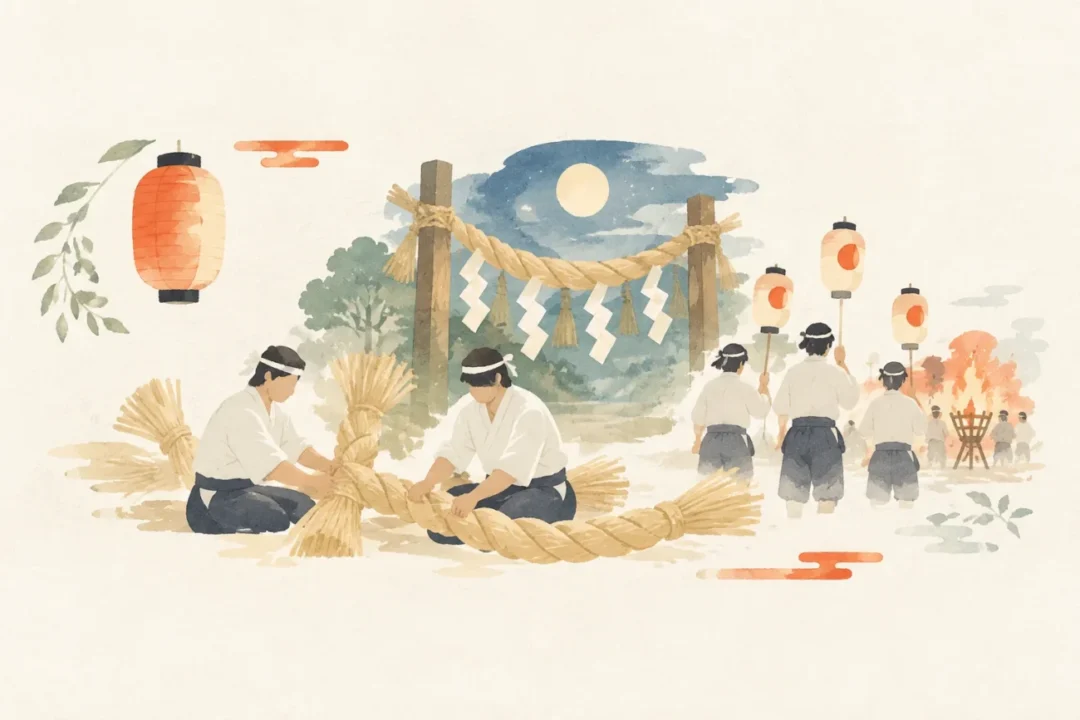
The main highlight is the shinsen offering, made by skewering taro one by one with branches and stacking them into a mound about 80 centimeters high, then decorating the top with taro and a small plum branch.
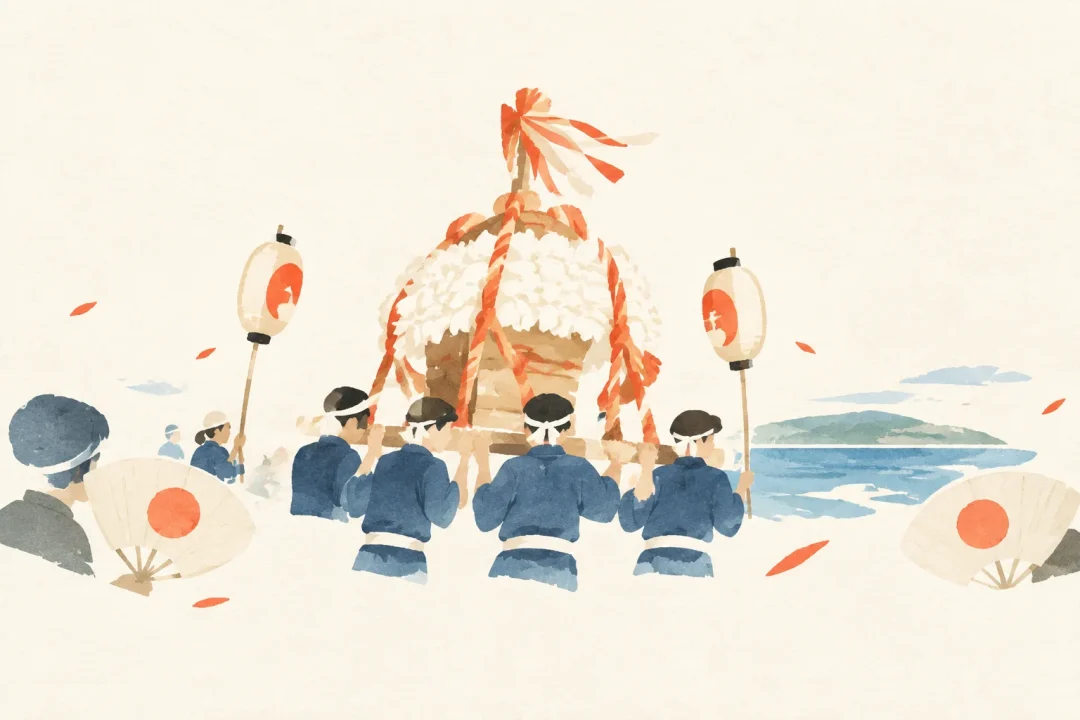
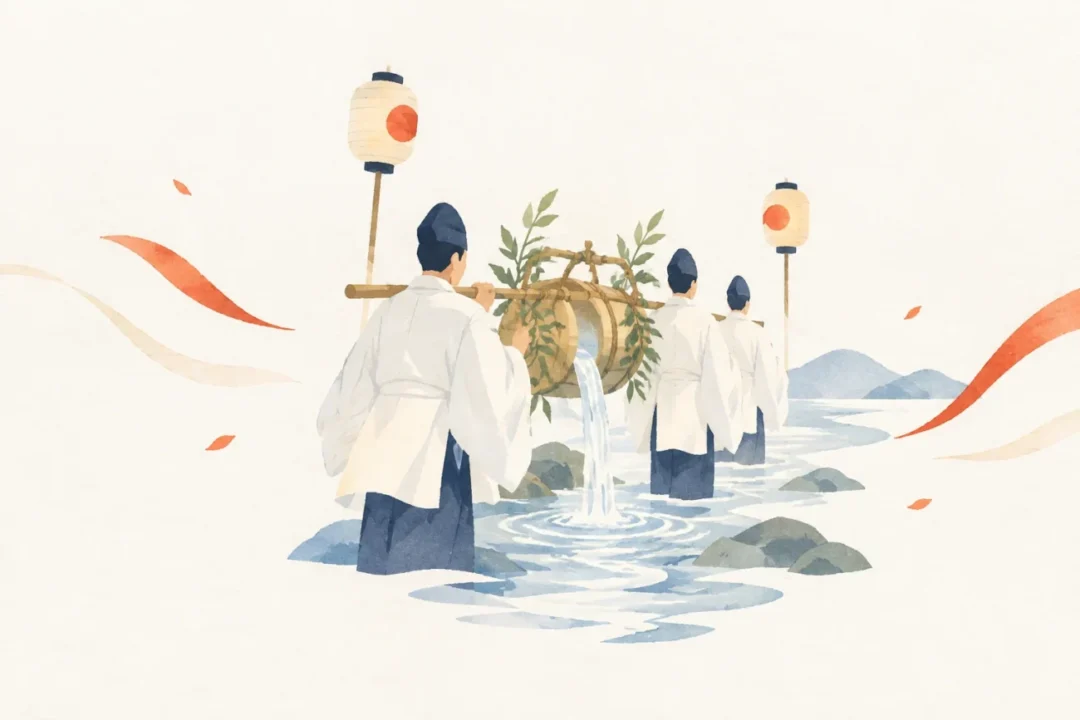
The completed offering is placed in a bamboo basket and carried on a shoulder pole to Junisho Shrine.
After it is presented, the shinsen offering is dismantled, and taro and rice cakes are distributed to each household along with talismans.
As a distinctive communal rite involving taro, this event is considered rare in eastern Japan.
A festival in Mona that entrusts a bountiful harvest and a healthy year to a mound of taro
What to expect
The festival begins when each neighborhood group brings the taro it has prepared to the household in charge, where it is sorted and made into shinsen offerings.
The following day, offerings including shinsen, rice cakes, and fish are carried to Junisho Shrine. After they are presented, the ceremony includes the recitation of prayers.
The taro and rice cakes are then distributed to the households of shrine parishioners, and participants hold a naorai communal meal.
On the final day, the women who supported the festival gather at the household in charge, share a meal, and bring the event to a close.
Location and access
- Venue and address
The household in charge, determined by the order of houses in the Mona district, and Junisho Shrine, among other locations.
The address is 238 Mona, Tateyama, Chiba (294-0222).
- Train and bus
Take a bus bound for Awa-Shirahama from JR Tateyama Station for about 20 minutes, get off at Sunomiya, then walk about 15 minutes.
Source: 茂名の里芋祭 / 千葉県 -【JAPAN 47 GO】
Address 238 Mona, Tateyama, Chiba 294-0222
Dates and season
- Season
Every year from February 19 to the 21st
- Frequency
Every year
Accommodation and hotels PR
Showing nearby accommodation.
Prices and availability are current at the time of retrieval. For multi-night stays, only the first night’s price is shown. Confirm the final price and directions to the venue with the booking provider. Select your dates again when using the area search link. Search area: within 3 km of Central Chiba Prefecture / Tateyama City (the search is not centered on the festival venue)
Tips for your visit
The heart of the festival is the preparation of shinsen, supported by ujiko households, and its offering at the shrine.
Events take place at several locations, including the homes assigned to prepare the shinsen and Junisho Shrine. Please take care not to obstruct the movements of those involved or the progress of the ceremonies.
As the distribution of shinsen and the naorai are events for ujiko, we recommend checking in advance whether visitors may observe or participate.
As the 2026 schedule is listed in several different ways, please confirm the festival dates before your visit.
Nearby attractions

安房神社
千葉県館山市にある神社

洲埼灯台
千葉県館山市の洲崎に立つ灯台
Origins and History of Mona Taro Festival
The Mona Taro Festival is said to have been passed down as an Obisha held before agricultural work begins in early spring, and to have become part of the annual festival of Junisho Shrine after the war.
The practice of offering taro to the local guardian deity to pray for a good harvest, then distributing it among shrine parishioners and sharing it in a communal meal, has been passed down in connection with the Mona district’s way of life, which centers on field cultivation.
The Tsumi-ban-nakama, in which households of shrine parishioners are paired in twos, is also maintained as a traditional organization supporting the festival.
In 2005, it was designated an Important Intangible Folk Cultural Property.
Official information
Tateyama City Hall’s guide to the “Mona Taro Festival, a Nationally Designated Important Intangible Folk Cultural Property” provides an overview of the festival, its cultural-property designation, and explanatory materials and videos.
The Database of National Cultural Properties also lists its name, designation details, and descriptions of the event.
Mona Taro Festival at a Glance
The Mona Taro Festival is an event in the Mona district of Tateyama City in which shinsen offerings piled high like a mountain with taro are presented to Junisho Shrine to pray for a good harvest and a year free of illness and misfortune.
The households of shrine parishioners have passed down the entire tradition: growing and contributing taro, making the shinsen offerings at the household in charge, and distributing taro after it has been presented.
Its distinctive offerings and form of communal ritual have earned it designation as an Important Intangible Folk Cultural Property of Japan.
Japanese Festivals.jp Editorial Team
Celebrating local culture and helping you discover a side of Japan you never knew.
Article updated: 2026/10/19
Submit information or a correction Submit photos of this festival