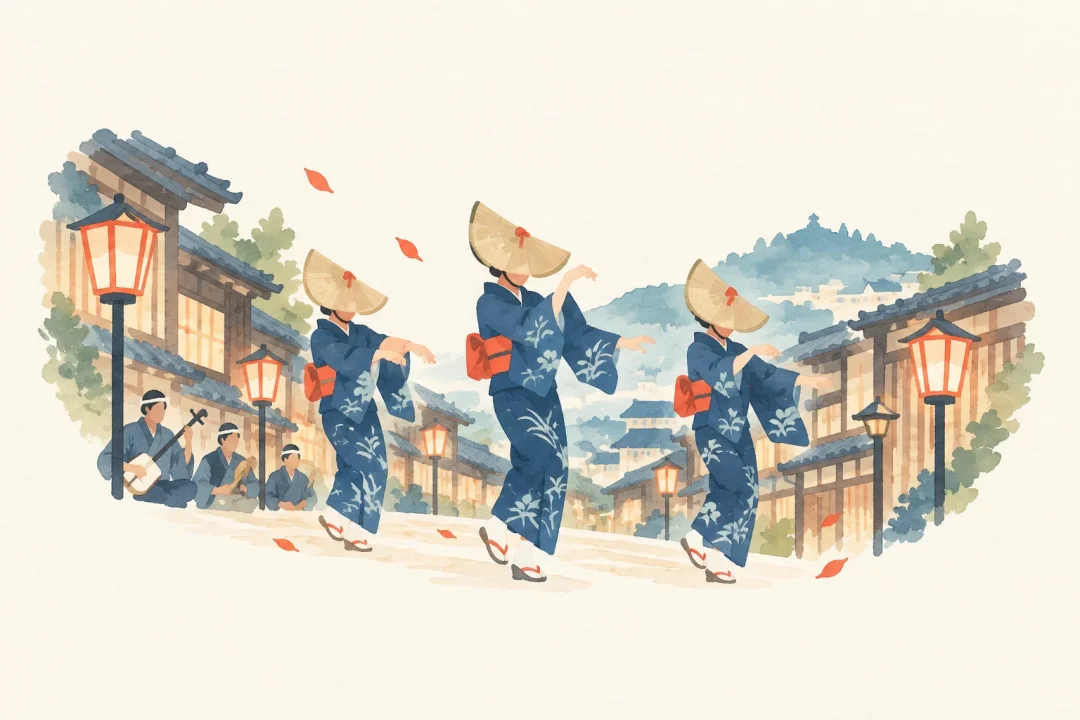
A circular dance at Suzaki Shrine shaped by fans and drums, a prayer dance passed down through generations
Suzaki Odori
Festival information
EVENT INFORMATION- Season / frequency
- Every year in August (Suzaki Shrine's annual festival runs from August 20 to 22) / Every year
- Location
- Suzaki Shrine
- Area
- Chiba Prefecture・Tateyama City(From Tokyo: approx. 40 min–1 h · train)Prefecture-level estimate to a main station or airport, not the venue. Airport access, check-in and onward travel are extra; remote areas and islands can take much longer.
- Highlights and activities
- Wishes behind the festival
- Last updated
- 2026/10/19
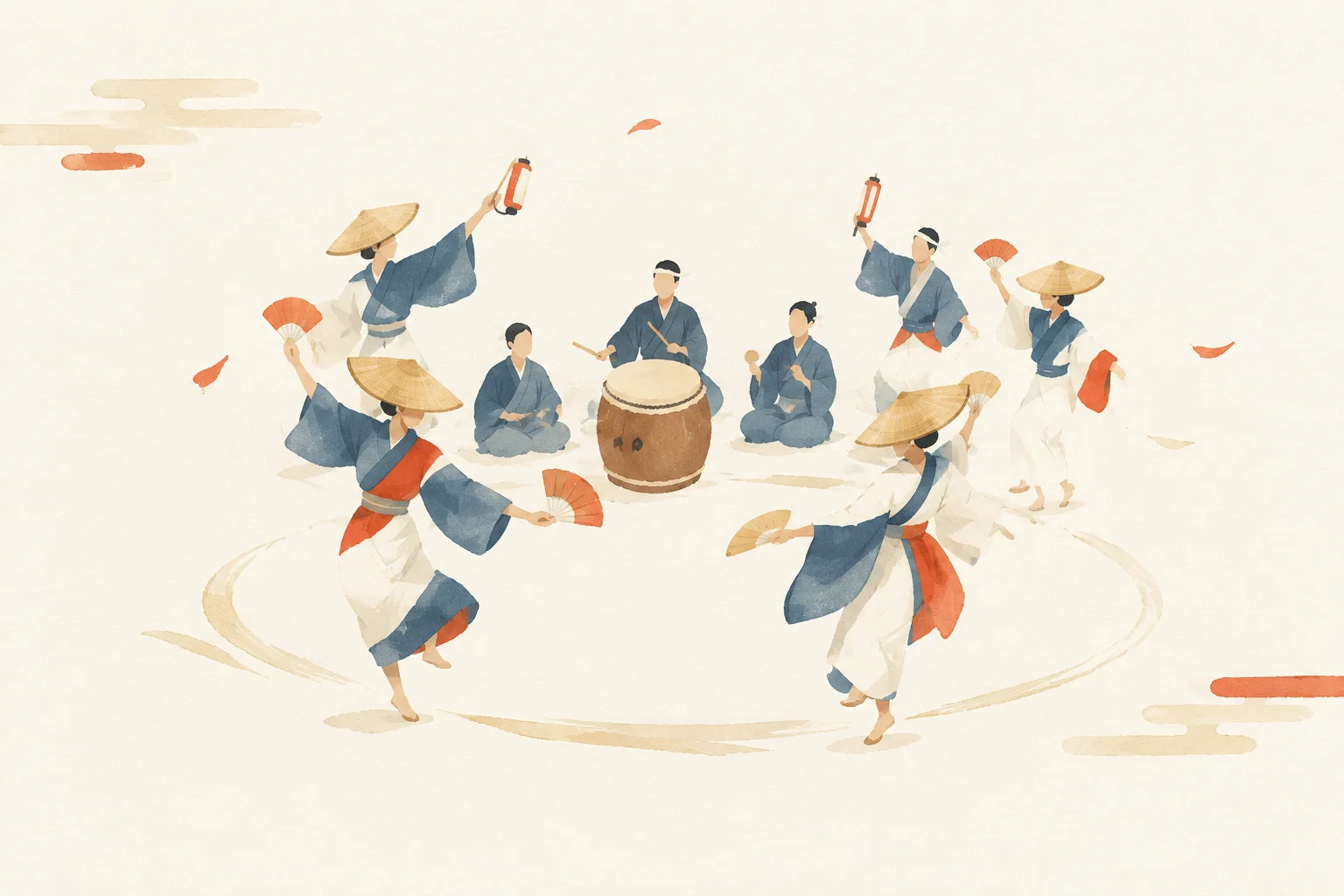
Suzaki Odori, passed down at Suzaki Shrine in Suzaki, Tateyama City, is a folk performing art consisting of Miroku Odori and Kashima Odori. The circle dance around the songs and drums is joined by movements using fans, onbe staffs, and braided hats.
About Suzaki Odori
Suzaki Odori is a folk performing art passed down at Suzaki Shrine in Suzaki, Tateyama City.
It consists of two types of dances, Miroku Odori and Kashima Odori, performed around the songs of the lead singer and the sound of a shime-daiko drum.
The art is linked to Kashima worship, which is associated with safety at sea, and has been dedicated at local festivals.
Source: 【県指定無形民俗文化財】洲崎のミノコオドリ | 館山市役所
Festival highlights
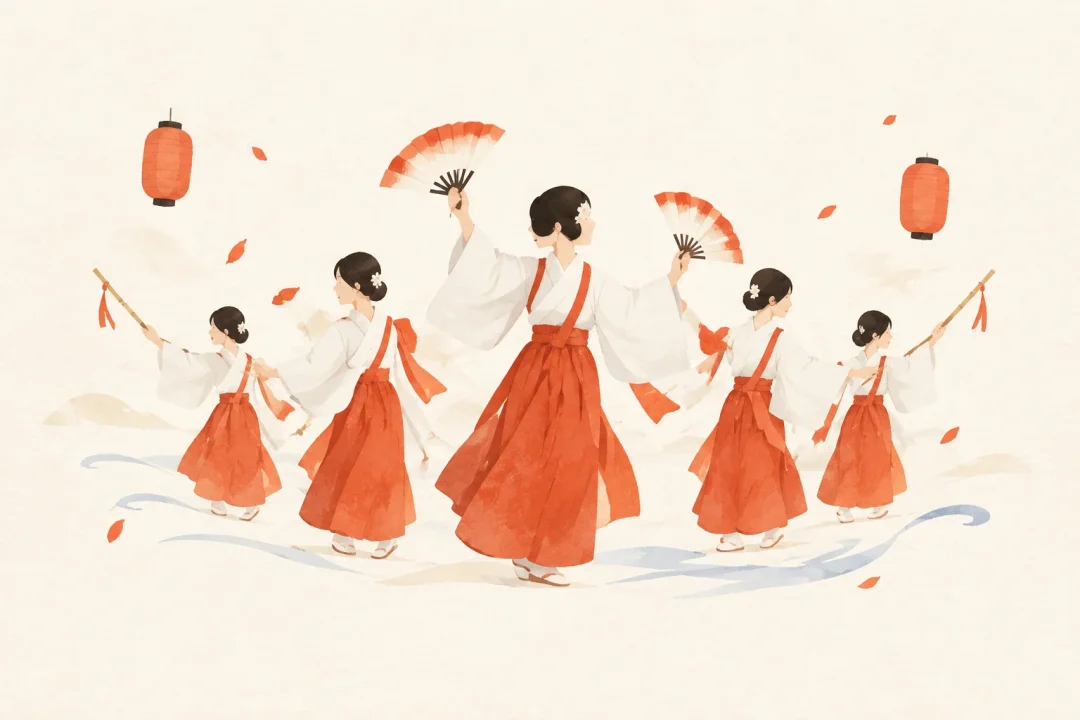
One highlight is watching the dancers form a circle around the lead singer and drummer positioned in the center.
In Miroku Odori, fans and onbe staffs are used, with expressive movements that intertwine the arms and legs.
Kashima Odori uses braided hats and fans, and repeats movements with relatively little motion.
Source: 国指定文化財等データベース
A circular dance at Suzaki Shrine shaped by fans and drums, a prayer dance passed down through generations
What to expect
During the offering, the drummers and singers are positioned in the center, while the dancers form a circle around them.
In Miroku Odori, dancers carry an onbe staff on the left shoulder and dance with a fan in the right hand.
In Kashima Odori, dancers hold a fan and wear a braided hat, repeating calm, simple movements.
Location and access
- Venue and address
Suzaki Shrine (1344 Suzaki, Tateyama City, Chiba Prefecture)
- By car
It is about 25 minutes from Tomiura IC on the Futtsu-Tateyama Expressway.
- Parking
Free parking is available.
Source: 【市指定有形文化財】洲崎大明神縁起 | 館山市役所 / 洲崎神社|スポット・体験|千葉県公式観光サイト ちば観光ナビ
Address 1344 Suzaki, Tateyama City, Chiba Prefecture
Dates and season
- Season
Every year in August (Suzaki Shrine's annual festival runs from August 20 to 22)
- Frequency
Every year
Accommodation and hotels PR
Showing nearby accommodation.
Prices and availability are current at the time of retrieval. For multi-night stays, only the first night’s price is shown. Confirm the final price and directions to the venue with the booking provider. Select your dates again when using the area search link. Search area: within 3 km of Central Chiba Prefecture / Tateyama City (the search is not centered on the festival venue)
Nearby attractions

安房神社
千葉県館山市にある神社

洲埼灯台
千葉県館山市の洲崎に立つ灯台
Origins and History of Suzaki Odori
It is not known in detail when the tradition of Suzaki Odori began.
Miroku Odori is explained as being linked to the tradition of nenbutsu dances, in which Miroku comes from across the sea to bring wealth and abundant harvests. Kashima Odori is said to derive from the kotozute, or proclamations, by Kashima shrine attendants announcing whether the harvest would be good or poor.
In 1973, Suzaki Odori was selected as an intangible folk cultural property requiring measures such as documentation.
Official information
Tateyama City Hall's guide to “Suzaki no Minoko Odori” provides information on its traditional location, offering period, dance structure, and origins.
Suzaki Odori at a Glance
Suzaki Odori is a folk performing art consisting of Miroku Odori and Kashima Odori, dedicated at festivals held at Suzaki Shrine.
Its features include a circular dance around drums and songs, and distinct movements using fans, onbe staffs, and braided hats.
It carries on traditions linked to Kashima worship, associated with safety at sea, and to performing arts that pray for wealth and abundant harvests.
Japanese Festivals.jp Editorial Team
Celebrating local culture and helping you discover a side of Japan you never knew.
Article updated: 2026/10/19
Submit information or a correction Submit photos of this festival