An autumn festival of carrying floats and dashi, where the traditions of 7 shrines come together in Kamogawa
Kamogawa Joint Festival
Festival information
EVENT INFORMATION- Season / frequency
- The Saturday and Sunday of the second week of September / Every year
- Location
- The 7 shrines of the Kamogawa district, as well as Miryoku Taiken Hiroba and Awa-Kamogawa Station
- Area
- Chiba Prefecture・Kamogawa City(From Tokyo: approx. 40 min–1 h · train)Prefecture-level estimate to a main station or airport, not the venue. Airport access, check-in and onward travel are extra; remote areas and islands can take much longer.
- Highlights and activities
- Participation / viewing
- Spectators welcome
- Last updated
- 2026/10/19
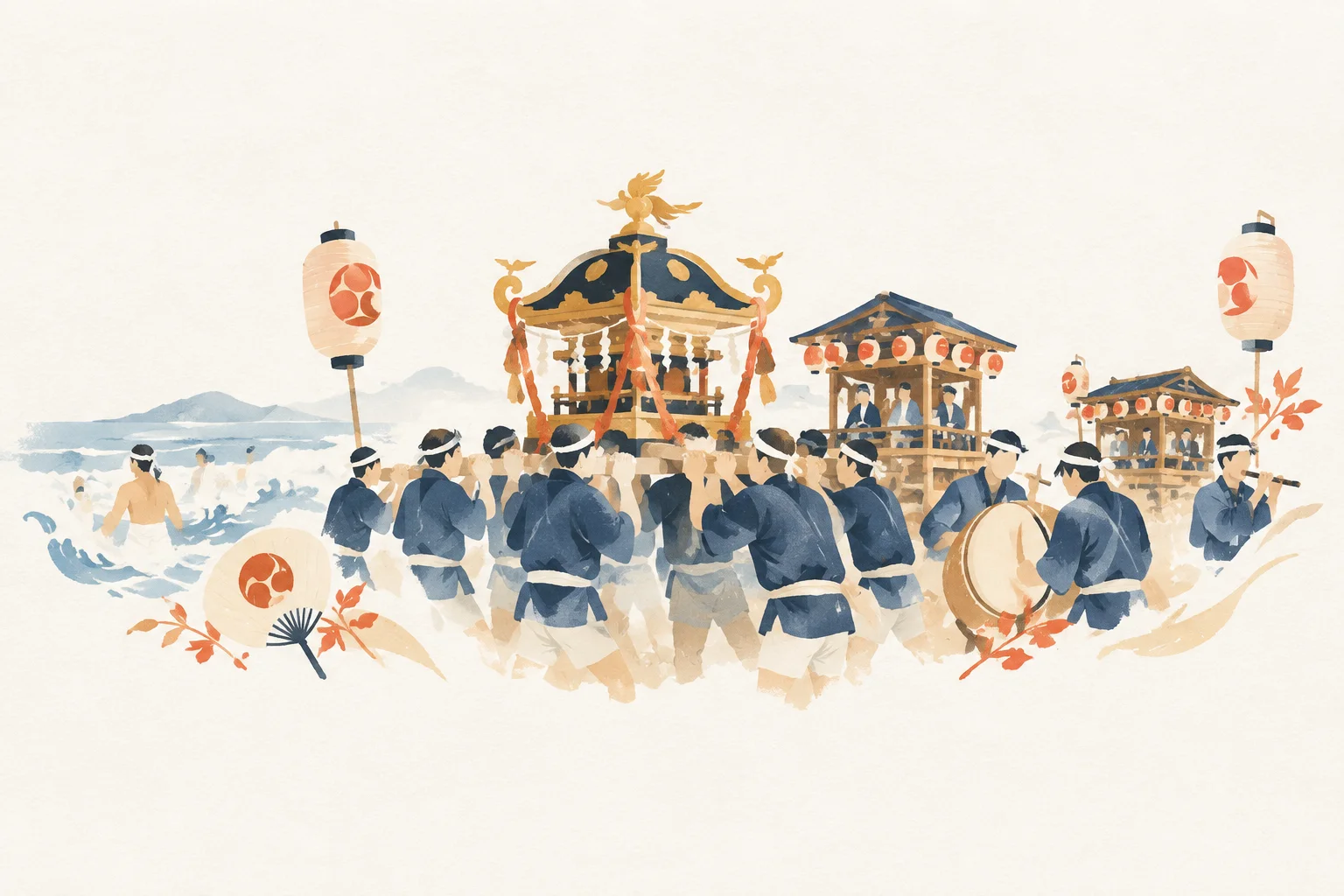
An autumn festival jointly held by the 7 shrines of the Kamogawa district, featuring , , and floats, an approximately 1-ton carrying float, shio-gori, and joint performances of festival music.
About Kamogawa Joint Festival
The Kamogawa Joint Festival is an autumn festival formally named the “Kamogawa District Joint Festival Rite.”
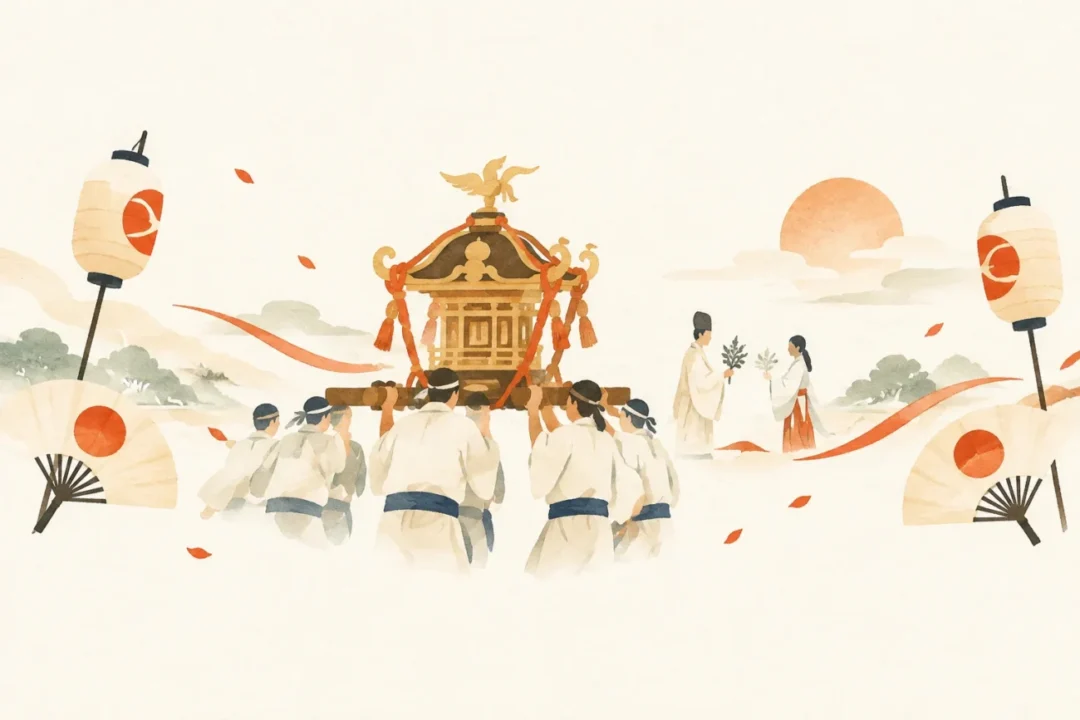
The 7 shrines of the Kamogawa district hold the festival jointly, with dashi, floats, mikoshi, and carrying floats parading through the district.
A distinctive feature is that festival traditions passed down at each shrine come together in one event, including the carrying float at Oura Yakumo Shrine and the dashi at Hie Shrine and Suwa Shrine.
The festival continues as an opportunity to experience local traditions and culture up close.
Source: 祭囃子が響いた2日間 鴨川地区合同祭(令和7年9月) - 鴨川市公式ホームページ / 鴨川合同祭 - Wikipedia
Festival highlights
The main highlight is the Oura carrying float, considered rare even by national standards.
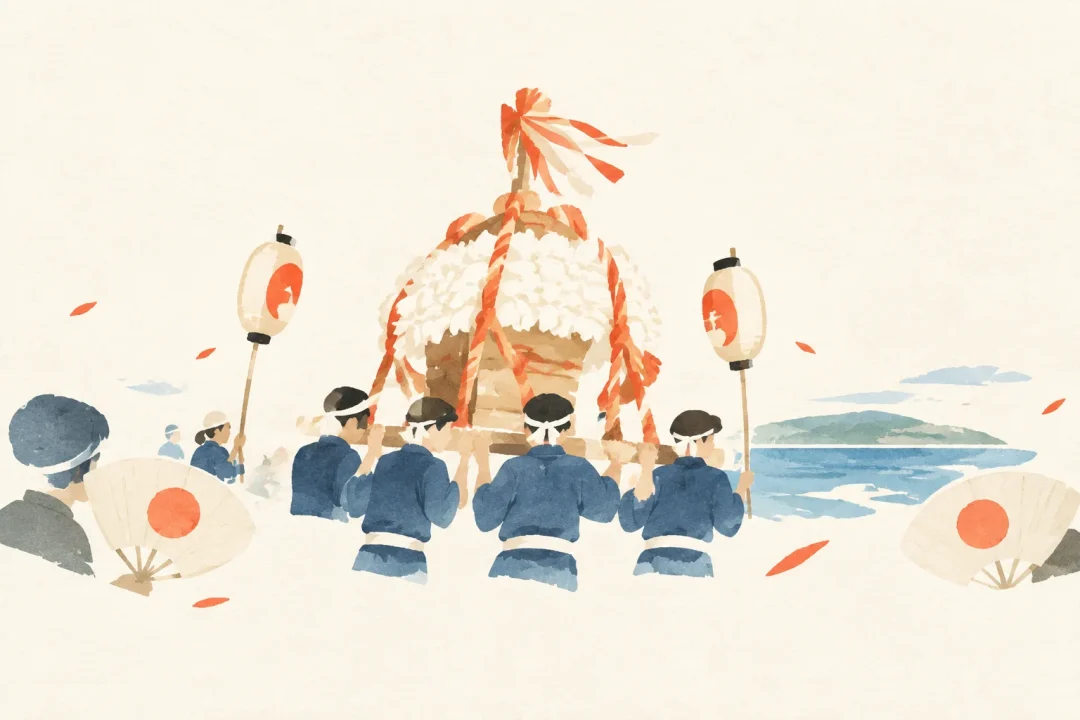
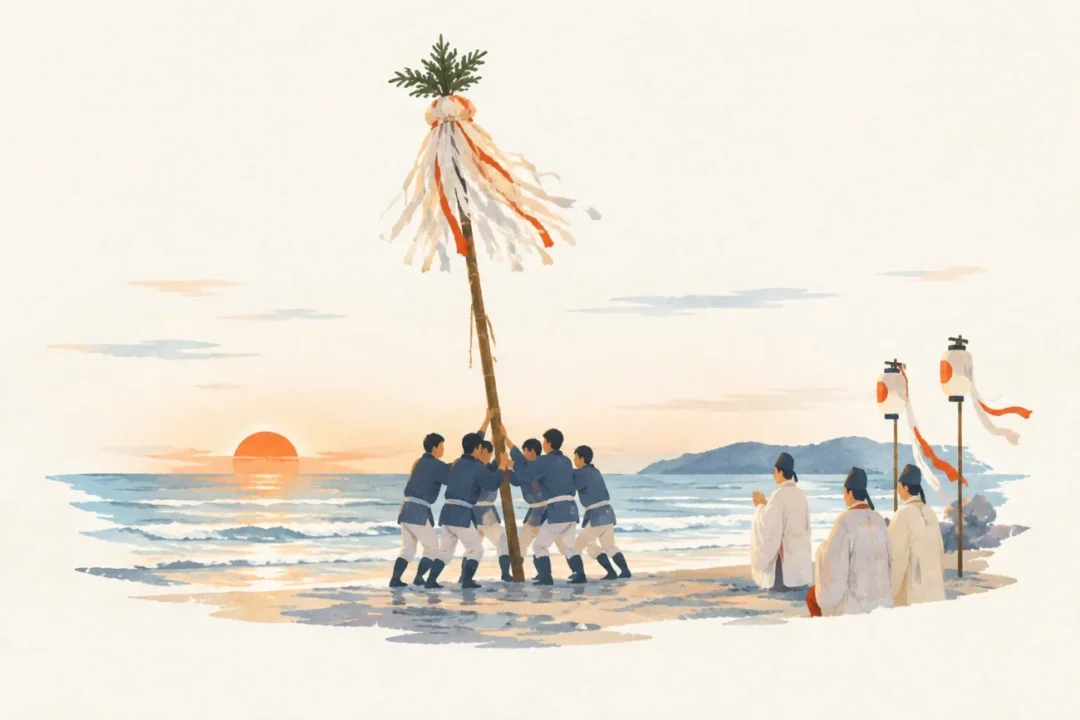
Around 50–60 bearers carry the approximately 1-ton float through town amid spirited shouts, drums, and flutes.
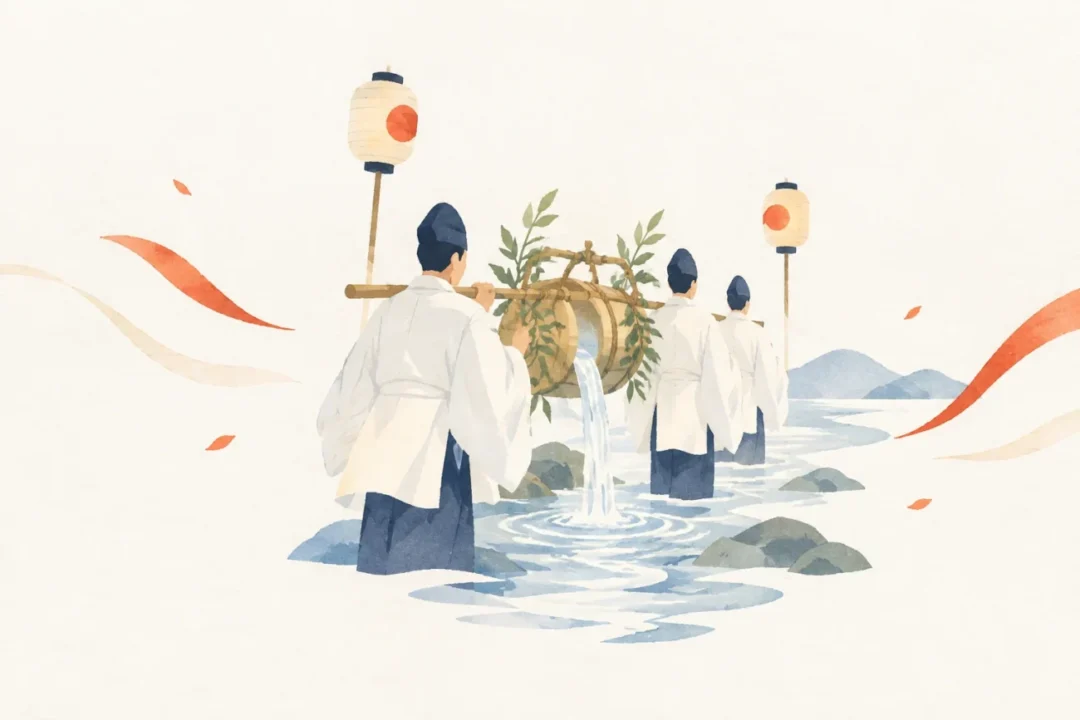
Don’t miss the shio-gori purification ritual, in which seawater is splashed over mikoshi and dashi, or the procession of dashi and figures designated as municipal cultural properties.
Enjoy a uniquely Kamogawa scene, with festival equipment and music from several shrines gathered in the same district.
An autumn festival of carrying floats and dashi, where the traditions of 7 shrines come together in Kamogawa
What to expect
During the festival, mikoshi, dashi, and floats from each shrine set out from their respective areas and make their way through the Kamogawa district.
Before setting out, shio-gori is performed at the beach, where seawater is splashed over the mikoshi and dashi to purify them.
During the festival, the carrying float is brought out from its shrine and paraded through the district, while mikoshi, floats, and dashi gather at the Miryoku Taiken Hiroba and Awa-Kamogawa Station.
The gathering venues also feature joint performances of drums and flutes, as well as kiyari chants by representatives of each shrine.
How to take part
Visitors can watch the event.
Location and access
- Venue and address
The festival takes place across the Kamogawa district, including Oura Yakumo Shrine, Shirahata Shrine, Kumano Shrine, Hie Shrine, Suwa Shrine, Yokosuka Yakumo Shrine, and Hachiman Shrine.
The Miryoku Taiken Hiroba and Awa-Kamogawa Station are listed as gathering venues.
- Train and bus
The nearest station is Awa-Kamogawa Station on the JR Sotobo and Uchibo Lines.
Source: 千葉の夏祭り・イベント特集【2026年】|特集|千葉県公式観光サイト ちば観光ナビ
Event venue 千葉県鴨川市 鴨川地区の7社の神社および魅力体験広場
This map uses the venue name. Check the official guide for the event area and entrances.
Dates and season
It is usually held on the Saturday and Sunday of the second week of September.
The official Chiba Prefecture tourism website lists 7 shrines as venues for the Kamogawa Joint Festival in 2026.
Accommodation and hotels PR
Showing nearby accommodation.
Prices and availability are current at the time of retrieval. For multi-night stays, only the first night’s price is shown. Confirm the final price and directions to the venue with the booking provider. Select your dates again when using the area search link. Search area: within 3 km of Central Chiba Prefecture / Kamogawa City (the search is not centered on the festival venue)
Tips for your visit
Mikoshi, dashi, and portable floats travel through the city, so please watch from a place that does not obstruct their progress.
The portable floats weigh about 1 ton, and scenes of them carefully descending stairs and slopes are also featured.
This festival resounds with the sounds of taiko drums and flutes, and crowds may gather at the assembly venue and around the station.
Details of traffic restrictions and parking for 2026 must be checked before visiting.
Nearby attractions

鴨川シーワールド
千葉県鴨川市にある総合海洋レジャーセンター
Origins and History of Kamogawa Joint Festival
The Kamogawa Joint Festival is believed to date back to around the Edo period.
In the past, each district held its own festival, but because they took place around the same time, the schedules were unified and the first Kamogawa Joint Festival was held in 1982.
Since 2000, the festival has been held on the Saturday and Sunday of the second week of September.
The Oura carrying float is said to have first been presented in 1833, and it was designated an Intangible Folk Cultural Property of Kamogawa City in 1992.
Official information
The Kamogawa City official website introduces records of the Kamogawa District Joint Festival, shio-gori, the carrying float, dashi and figures designated as cultural properties, and scenes from the gathering venues.
The city’s event listings also include the Kamogawa District Joint Festival under “Local Performing Arts and Festivals.”
Check the latest announcements from Kamogawa City for the specific dates and transportation information for 2026.
Source: イベント - 鴨川市公式ホームページ
Kamogawa Joint Festival at a Glance
The Kamogawa Joint Festival is a joint autumn festival in which the 7 shrines of the Kamogawa district bring out mikoshi, dashi, floats, and carrying floats.
The main highlights are the approximately 1-ton Oura carrying float, shio-gori purification with seawater, and dashi and figures designated as cultural properties.
At the gatherings at Miryoku Taiken Hiroba and Awa-Kamogawa Station, you can also enjoy joint performances of drums, flutes, and kiyari chants.
Japanese Festivals.jp Editorial Team
Celebrating local culture and helping you discover a side of Japan you never knew.
Article updated: 2026/10/19
Submit information or a correction Submit photos of this festival