Miyakuni’s old lunar-calendar Obon traditions, carried on through a rope woven from island vines, songs, and dance
Miyakuni Great Tug-of-War
Festival information
EVENT INFORMATION- Season / frequency
- lunar calendar: July, the 13th, 14th, and 15th—the 3 days of the old lunar-calendar period / An event held during the old lunar-calendar Obon period
- Location
- The main street in front of Miyakuni Community Center
- Area
- Okinawa Prefecture・Miyakojima City(From Tokyo: approx. 2 h 30 min–3 h · flight time only)Prefecture-level estimate to a main station or airport, not the venue. Airport access, check-in and onward travel are extra; remote areas and islands can take much longer.
- Features
- Wishes behind the festival
- Participation / viewing
- Spectators welcome
- Participation fee
- Free to watch
- Last updated
- 2026/11/11
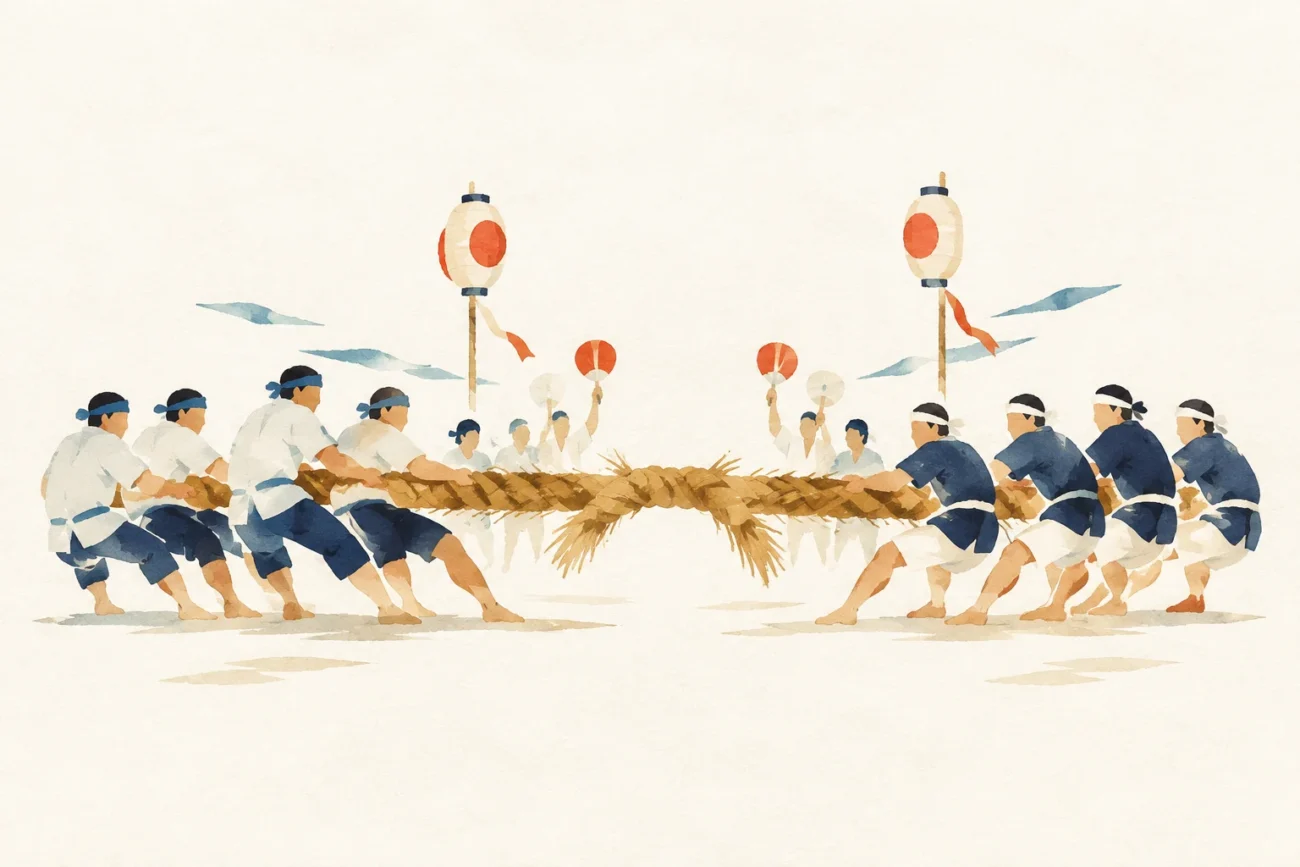
The Miyakuni Great Tug-of-War is a traditional event held in front of Miyakuni Community Center during the old lunar-calendar Obon period. The Higashizato and Nishizato groups pull against each other using a rope made from kyaan, followed by Deiroi and Miyakuni Kuicha.
About Miyakuni Great Tug-of-War
The Miyakuni Great Tug-of-War is a local event held during the old lunar-calendar Obon period in Miyakuni, Ueno, Miyakojima City.
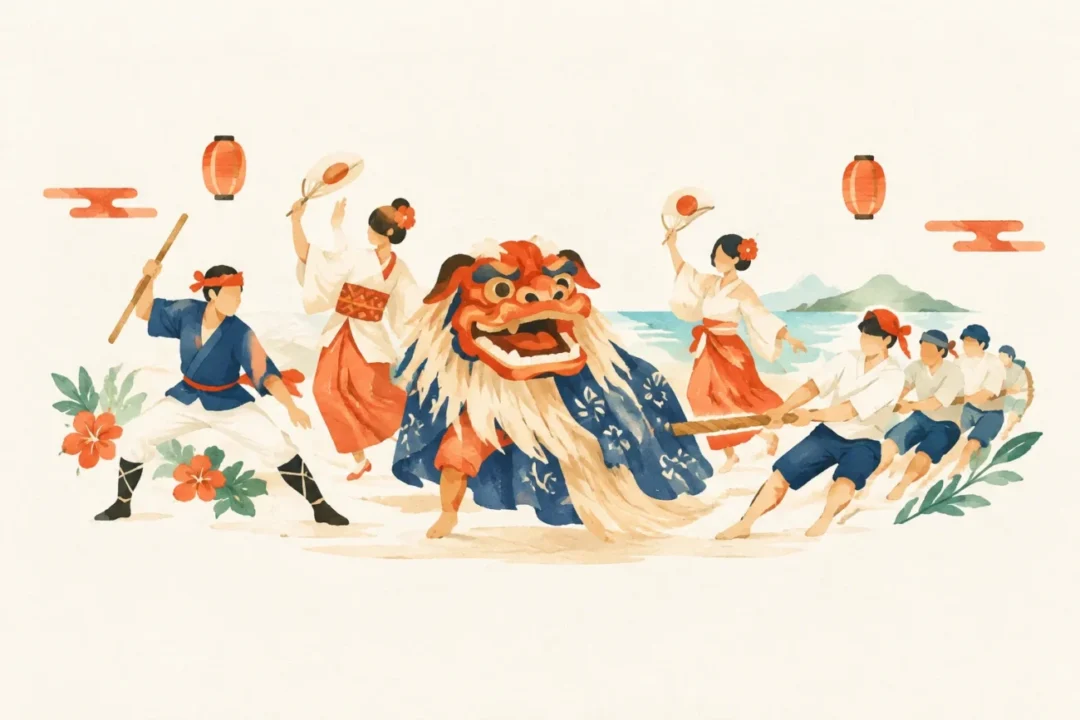
Using a rope made from kyaan (a type of climbing plant), participants divide into the Nishizato and Higashizato groups and pull against each other on the main street in front of Miyakuni Community Center.
After the tug-of-war, young people take part in Deiroi, a pushing contest, and people of all ages form a circle to dance the Miyakuni Kuicha.
A festival praying for abundant harvests, it is a city-designated Intangible Folk Cultural Property that carries on local ties and folk performing arts.
Festival highlights
The highlight is the forceful tug-of-war between the Higashizato and Nishizato groups using a rope made from kyaan vines.
After the tug-of-war, at the intersection in front of the community center, young people take part in a pushing contest called Deiroi.
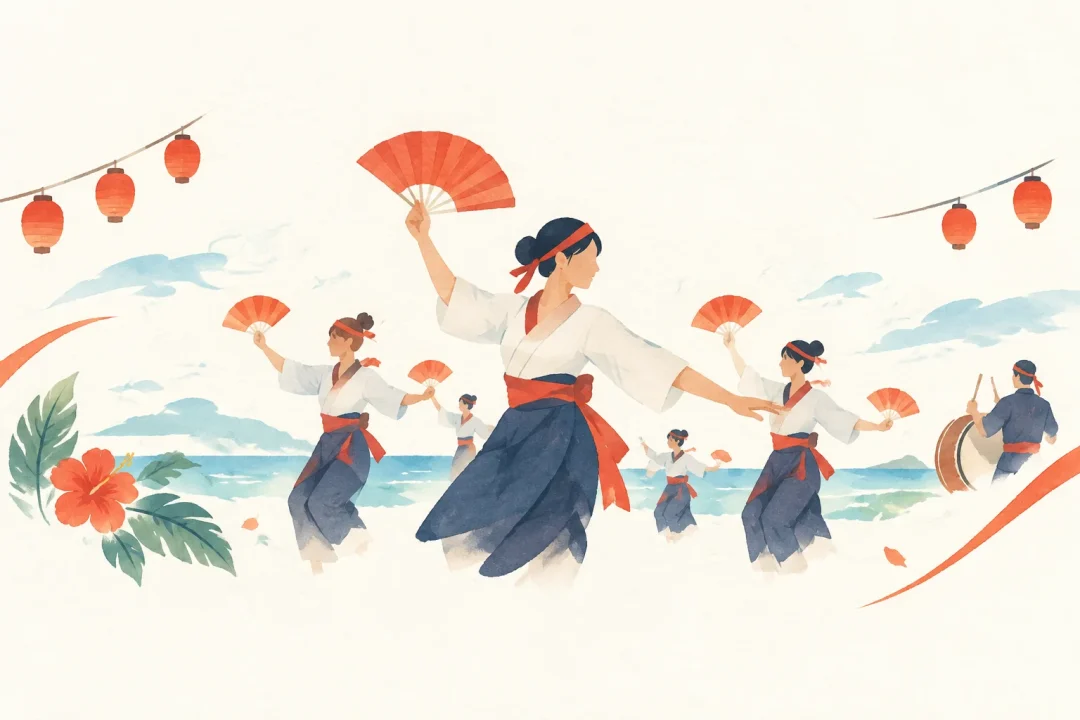
In the Miyakuni Kuicha that follows, the men and women dance in a distinctive alternating pattern: the men dance to the women’s songs, and the women to the men’s.
The transition from the strength and competition of the tug-of-war to a folk performance in which people of all ages dance in a circle is another distinctive feature.
Miyakuni’s old lunar-calendar Obon traditions, carried on through a rope woven from island vines, songs, and dance
What to expect
The event begins with a rope made from kyaan being brought out onto the main street in front of Miyakuni Community Center. Participants divide into the Nishizato and Higashizato groups and pull against each other.
Afterward, at the intersection in front of the community center, young people take part in a pushing contest called Deiroi.
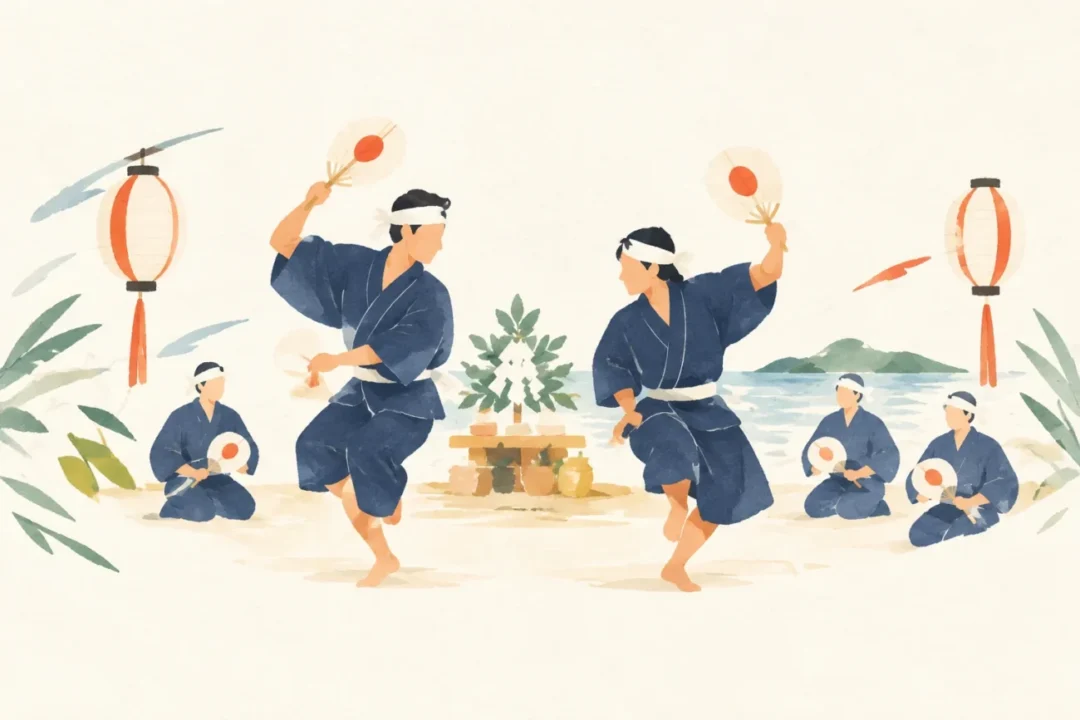
Finally, people of all ages form a circle and dance the Miyakuni Kuicha until late at night.
Kuicha is distinctive in that men and women take turns singing and dancing.
How to take part
Visitors can watch the event.
参加費:見学無料
Location and access
- Venue and address
The main street in front of Miyakuni Community Center / Miyakuni, Ueno, Miyakojima City
- By car
About 15 minutes from Miyako Airport
- Parking
No dedicated parking
Address Miyakuni, Ueno, Miyakojima City
Dates and season
- Season
lunar calendar: July, the 13th, 14th, and 15th—the 3 days of the old lunar-calendar Obon period
- Frequency
An event held during the old lunar-calendar Obon period
Accommodation and hotels PR
Showing nearby accommodation.
Prices and availability are current at the time of retrieval. For multi-night stays, only the first night’s price is shown. Confirm the final price and directions to the venue with the booking provider. Select your dates again when using the area search link. Search area: within 3 km of Central Okinawa Prefecture / Miyakojima City (the search is not centered on the festival venue)
Tips for your visit
As this is a village festival, please watch from the edge of the street so as not to disrupt the event, and ask before taking photos.
Please refrain from using flash photography or filming from very close up.
Nights during the old lunar-calendar Obon period can still be hot and humid, so light clothing and insect repellent are recommended.
There is no dedicated parking, so please park in a way that does not inconvenience local residents.
Nearby attractions

うえのドイツ文化村
沖縄県宮古島市上野にあるテーマパーク
写真:Uzumaki~jawiki at Japanese Wikipedia / CC BY-SA 3.0
Photo source ·
宮古島市熱帯植物園
沖縄県宮古島市にある植物園

宮古島市総合博物館
沖縄県宮古島市にある博物館
Origins and History of Miyakuni Great Tug-of-War
The origins of the Miyakuni Great Tug-of-War are unclear.
It is said to have been held as an offering-rope ceremony to celebrate the harvest and pray for a good crop, as well as to ward off misfortune during epidemics, pray for rain during prolonged droughts, and divine whether crops would be plentiful or poor.
In 1995, it was designated an Intangible Folk Cultural Property of the former Ueno Village, and it is now designated an Intangible Folk Cultural Property by Miyakojima City.
Miyakuni Kuicha is also considered a folk performing art through whose lyrics and dance one can learn about the customs and way of life of earlier times.
Official information
Miyakojima City, “Miyakuni Great Tug-of-War [City-Designated Intangible Folk Cultural Property]”
Miyakuni Great Tug-of-War at a Glance
The Miyakuni Great Tug-of-War is a local event during the old lunar-calendar Obon period, in which the Higashizato and Nishizato groups pull against each other using a rope made from kyaan.
After the tug-of-war, young people take part in Deiroi, and finally, people of all ages form a circle and dance the Miyakuni Kuicha.
The event is associated with prayers for abundant harvests, warding off misfortune, rainmaking, and divining whether crops will be plentiful or poor. It is also designated an Intangible Folk Cultural Property by Miyakojima City.
Although its origins are unclear, the event brings together the community’s traditions, from making the rope to singing and dancing.
Japanese Festivals.jp Editorial Team
Celebrating local culture and helping you discover a side of Japan you never knew.
Article updated: 2026/11/11