Misaku Kagura: welcoming the deities of 7 shrines and carrying prayers forward through ancient dances
Misaku Kagura
Festival information
EVENT INFORMATION- Season / frequency
- November 21–23, for 3 days / A once-every-7-years ritual festival
- Location
- The grounds of Kawachi Shrine
- Area
- Yamaguchi Prefecture・Shunan City(From Tokyo: approx. 1 h 35 min–1 h 55 min · flight time only)Prefecture-level estimate to a main station or airport, not the venue. Airport access, check-in and onward travel are extra; remote areas and islands can take much longer.
- Features
- Highlights and activities
- Wishes behind the festival
- Participation / viewing
- Spectators welcome
- Last updated
- 2026/10/19
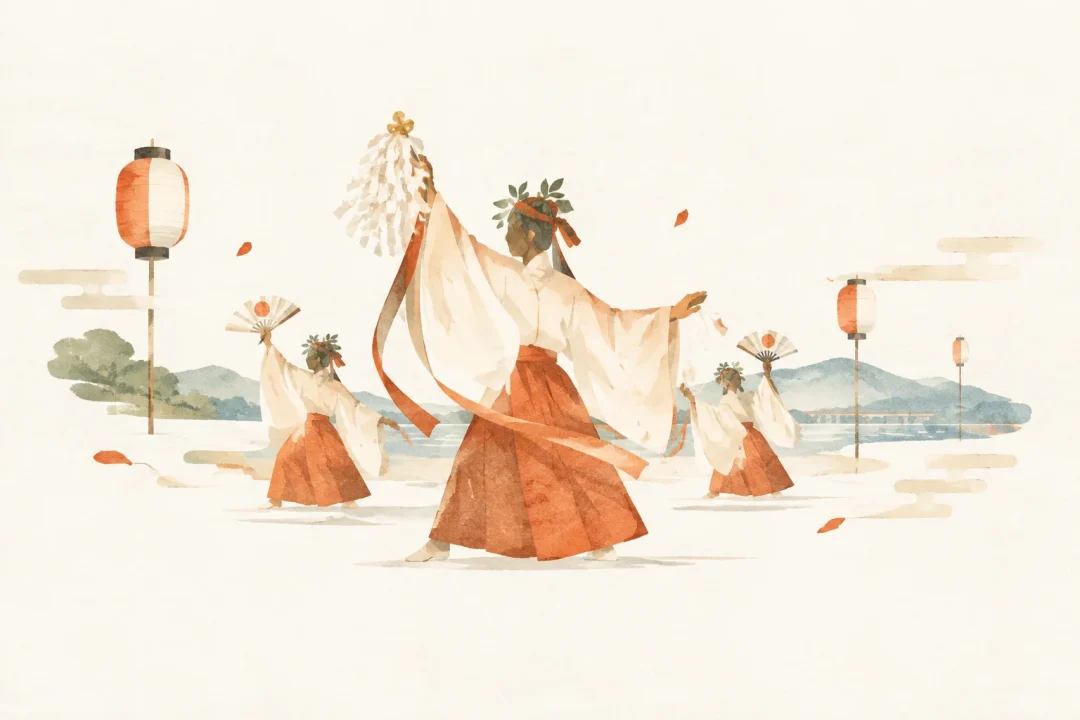
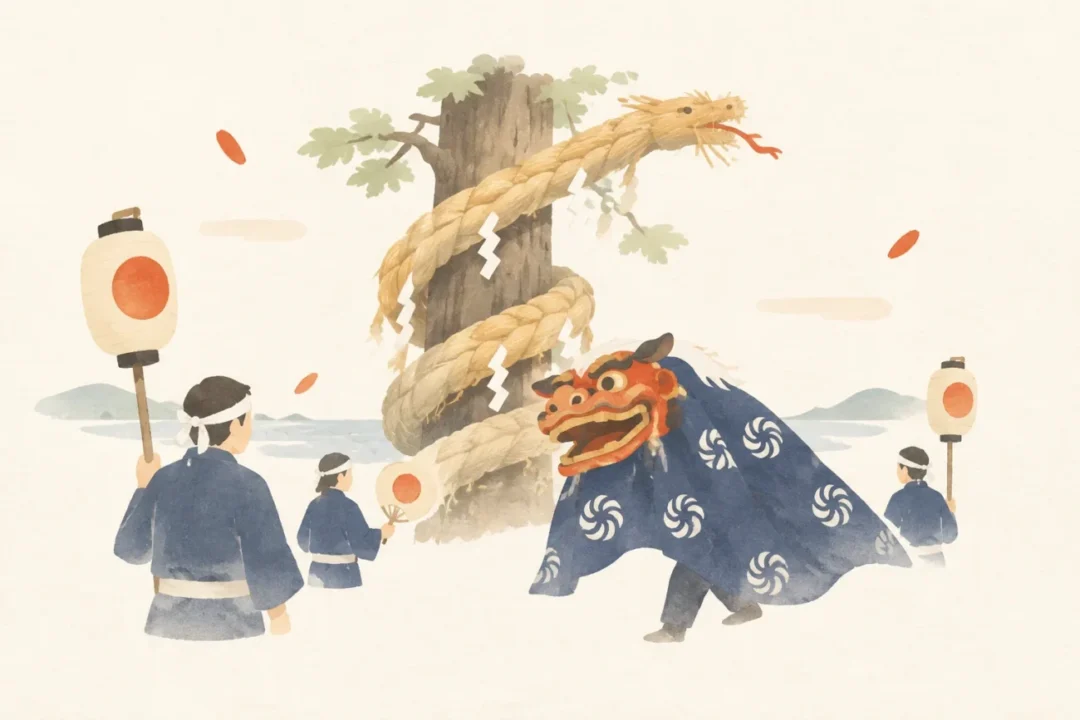
A traditional performing art of the Wada district in Shunan, where welcoming the deities from 7 shrines, dedicating 23 dances, and sending the deities back again are all performed as one rite.
About Misaku Kagura
Sansaku Kagura is a kagura tradition passed down in , Nakamura, and Haraaka in the Wada district of Shūnan, Yamaguchi Prefecture. It is a sequence of festival rites in which the kami of seven are welcomed, honored with dances, and sent back.
A temporary sacred hall is erected on the grounds of Kawachi Shrine, where rites and dances are performed.
In Heisei 12, it was designated a National Important Intangible Folk Cultural Property and is carefully preserved as a festival that brings together the region’s faith and performing arts.
Festival highlights
A highlight is that the entire sequence unfolds as one continuous event: welcoming the deities of the 7 shrines, dedicating 23 kagura dances, and returning the deities to their shrines.
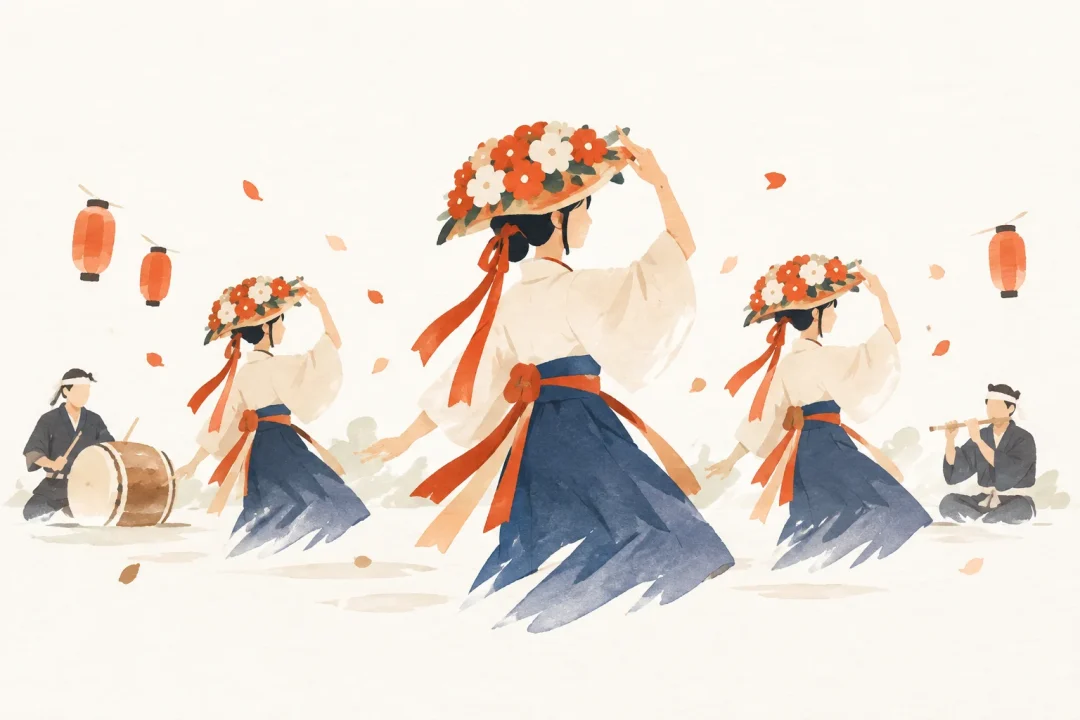
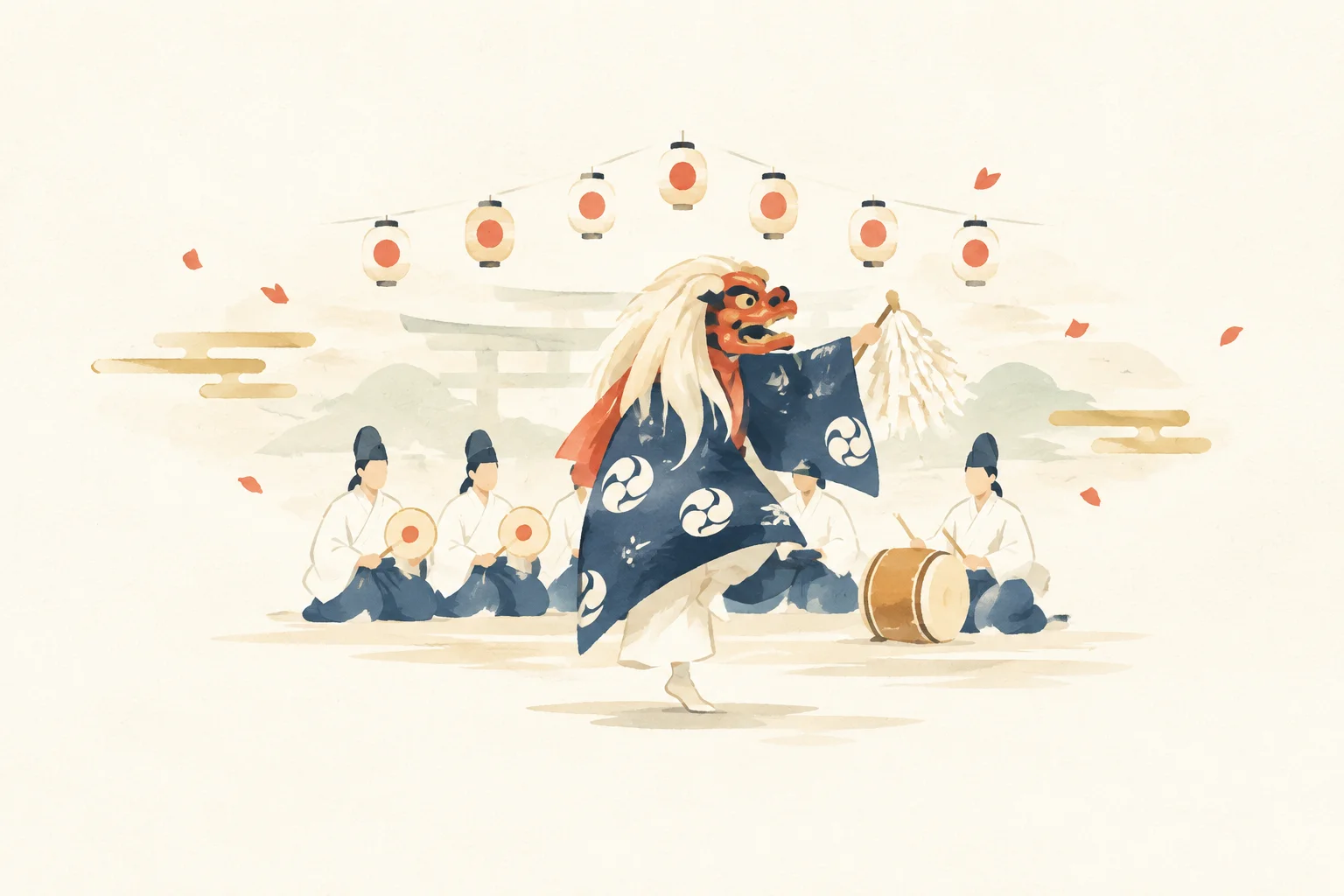
Dances accompanied by drums, shinobue flutes, and bells feature traditional pieces using ritual objects such as swords and bows.
In the final “Hana-shizume no Mai” (Flower-Calming Dance), five-colored paper streamers flutter down from the canopy, bringing together ancient movements and vivid pageantry.
Source: 国指定文化財等データベース / 三作神楽保存会
Misaku Kagura: welcoming the deities of 7 shrines and carrying prayers forward through ancient dances
What to expect
The festival begins several days in advance with the construction of the sacred pavilion.
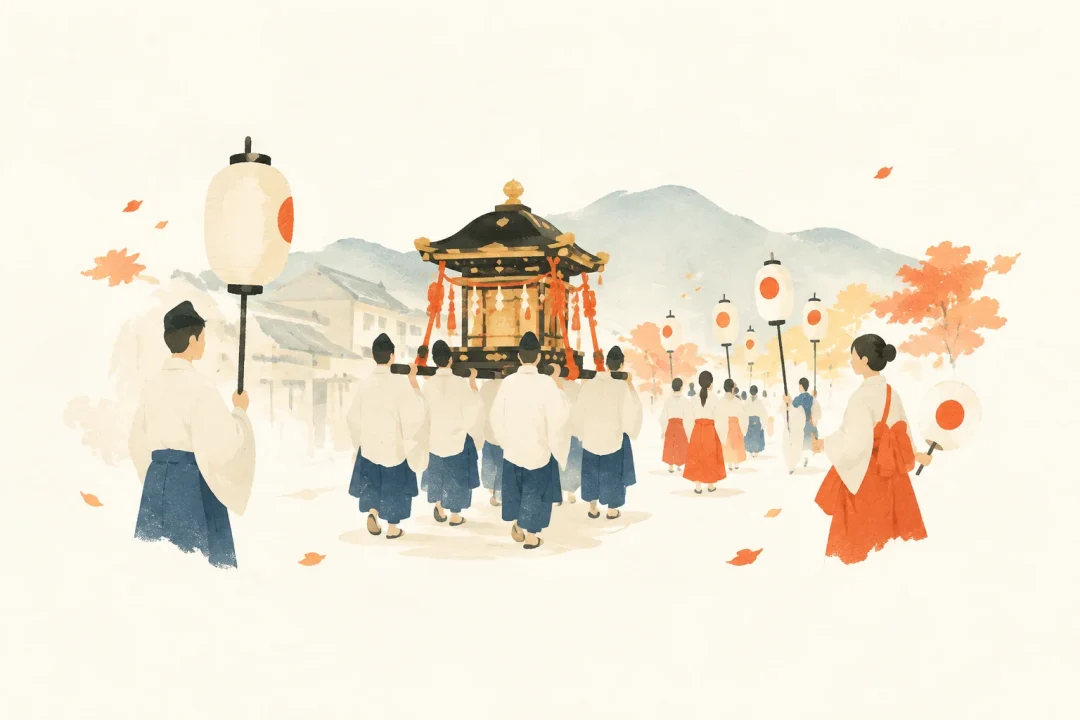
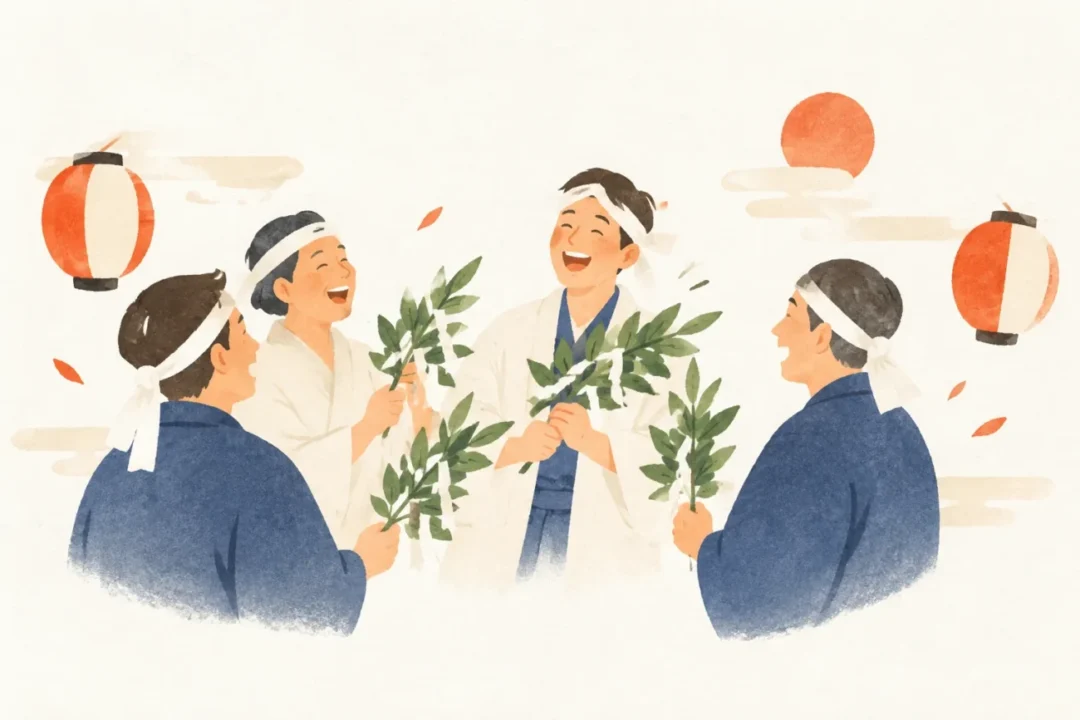
On the first day, decorations are put up, dances are performed at the host’s home, followed by a procession and boiling-water rites. On the second day, after welcoming the deities from the 7 shrines into the sacred pavilion, 23 kagura dances are dedicated into the night.
On the third day, the sacred wands are returned to each shrine and the sacred pavilion is dismantled, bringing the festival to a close.
How to take part
Visitors can watch the event.
Location and access
- Venue and address
The grounds of Kawachi Shrine (Natsugiri, Shunan, Yamaguchi Prefecture 746-0102).
- Train and bus
It is a 30-minute drive from JR Shin-Nanyo Station. The nearest bus stop is Wada Nokyo-mae.
- By car
The drive from JR Shin-Nanyo Station to the area around the venue is listed as 30 minutes.
- Parking
Information is available about parking at Wada Community Center.
Source: 三作神楽|観光スポット|【公式】山口県観光/旅行サイト おいでませ山口へ / 健康やまぐちサポートステーション / 和田コース (神楽舞の里コース)
Address 746-0102 Natsugiri, Shunan, Yamaguchi Prefecture
Dates and season
It is usually held over 3 days—November 21, the 22nd, and the 23rd—and is known as a once-every-seven-years shikinen festival.
The festival proceeds in order through the construction of the sacred hall, welcoming the kami, offering kagura, sending the kami back, and dismantling the sacred hall.
Accommodation and hotels PR
Showing nearby accommodation.
Prices and availability are current at the time of retrieval. For multi-night stays, only the first night’s price is shown. Confirm the final price and directions to the venue with the booking provider. Select your dates again when using the area search link. Search area: within 3 km of Central Yamaguchi Prefecture / Shunan City (the search is not centered on the festival venue)
Tips for your visit
The meaning lies not only in the kagura but in the whole sequence of the festival, including building the sacred pavilion, welcoming the deities, and returning them.
On the second day, 23 kagura dances are dedicated into the night, so if you plan to watch for a long time, prepare for the cold and take breaks.
The sacred pavilion is a special space set up for the festival; visitors are encouraged to watch quietly so as not to disrupt the progress of the rites.
Nearby attractions

万葉の森
山口県周南市

周南市美術博物館
山口県周南市にある美術博物館

回天記念館
山口県の博物館・美術館のスポットです。
Origins and History of Misaku Kagura
One account of Misaku Kagura's origins says that villagers suffering from famine and disease prayed at Kawachi Shrine, while other accounts say its origins are unknown.
Inscriptions on a kagura mask dated Meiwa 1 (1764) and the “Annual Festival Kagura Catalogue” dated Kansei 4 (1792) document traditions dating back at least to the 18th century.
It was designated by Yamaguchi Prefecture in Showa 62 (1987) and became a nationally designated Important Intangible Folk Cultural Property in Heisei 12 (2000).
Official information
The Misaku Kagura Preservation Society’s official information introduces the sequence of the ritual festival, the sacred pavilion, the dances, and the history and cultural property designation.
The National Database of Designated Cultural Properties provides details about Misaku Kagura’s designation and the festival.
For the latest information about dates and visiting, check announcements from the Misaku Kagura Preservation Society.
Misaku Kagura at a Glance
Misaku Kagura is a local festival in which welcoming the deities from 7 shrines, dedicating 23 dances, and sending the deities back again are all performed as one rite.
From building the sacred pavilion and the procession to boiling-water rites, dances accompanied by drums and flutes, and the return of the deities, the performing arts are closely tied to community life.
Traditions dating back to the 18th century have been documented, and the festival is now carried on as a nationally designated Important Intangible Folk Cultural Property.
Japanese Festivals.jp Editorial Team
Celebrating local culture and helping you discover a side of Japan you never knew.
Article updated: 2026/10/19
Submit information or a correction Submit photos of this festival