Minamisawa’s autumn festival, where three lions and a variety of performing arts are passed down
Minamisawa Shishimai
Festival information
EVENT INFORMATION- Season / frequency
- mid-October / Once every 4 years
- Area
- Tokyo Metropolis・Higashikurume City(Within Tokyo: approx. 15 min–1 h by train (central areas))Prefecture-level estimate to a main station or airport, not the venue. Airport access, check-in and onward travel are extra; remote areas and islands can take much longer.
- Highlights and activities
- Wishes behind the festival
- Last updated
- 2026/10/19
Minamisawa is a local performing art handed down in Minamisawa, Higashikurume. The three-lion dance, performed to pray for a bountiful harvest and the warding off of epidemics, is joined by performances such as the sword dance, Serifu, , and Manzai. Staged at Minamisawa Hikawa Shrine and Tamonji Temple, it carries on a tradition preserved by the local community.
About Minamisawa Shishimai
Minamisawa Shishimai is a local performing art handed down in Minamisawa, Higashikurume, Tokyo.
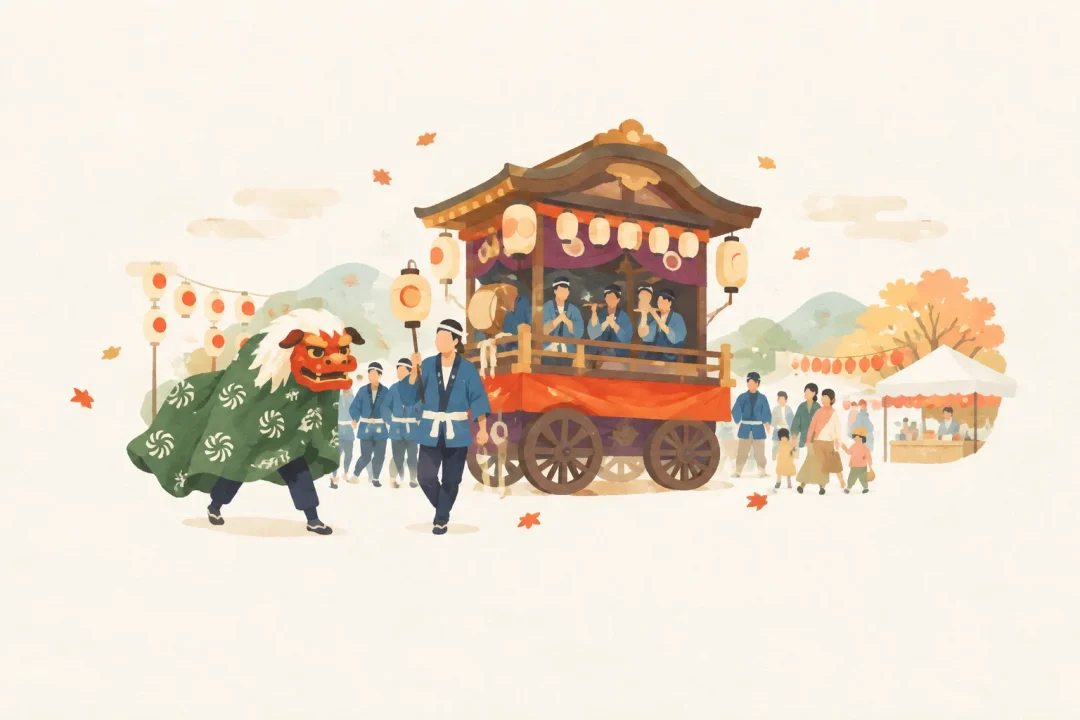
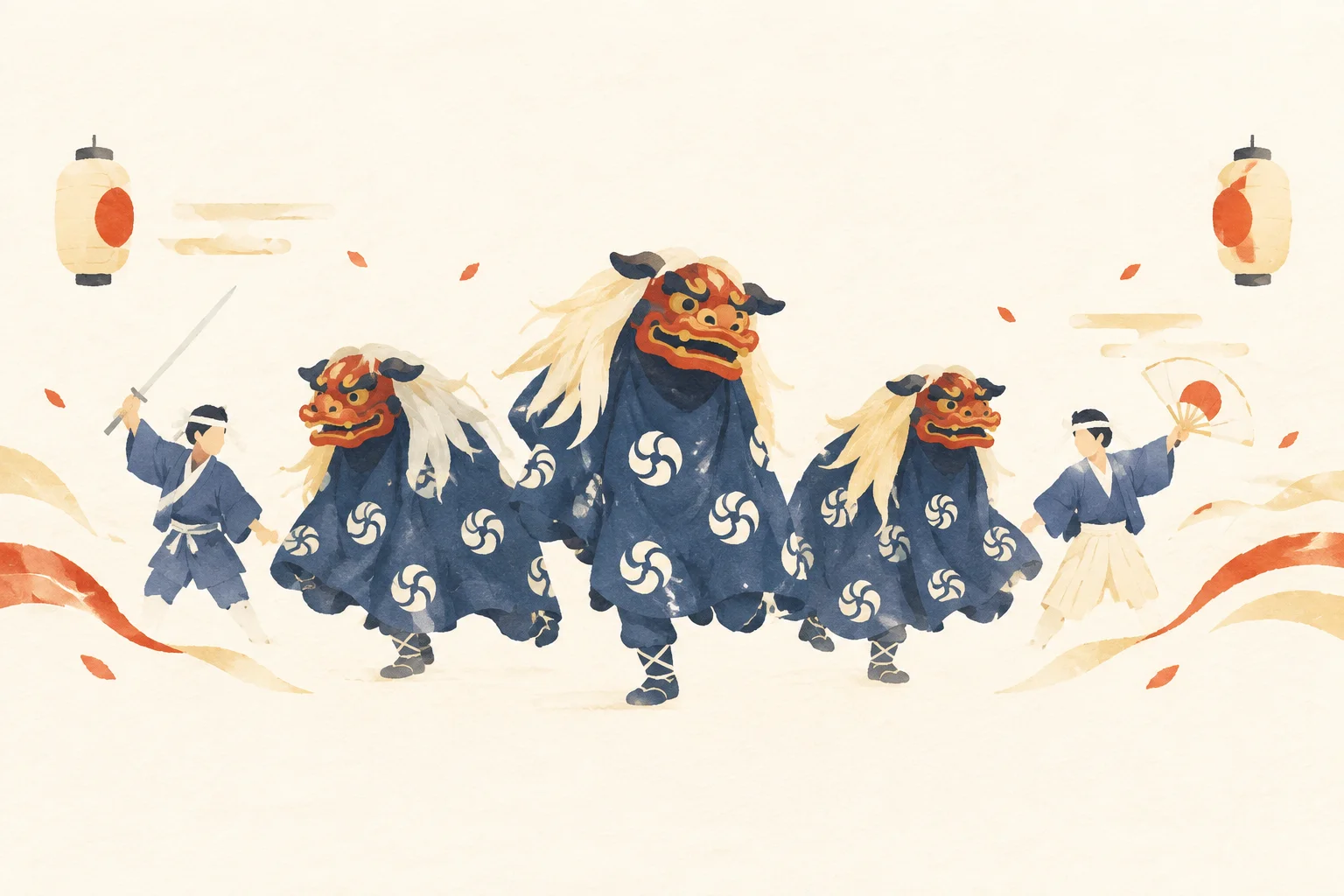
It is dedicated at the autumn festival in prayers for a bountiful harvest and the warding off of epidemics, with three lions dancing while wearing drums on their bellies.
The program combines the lion dance with other performing arts, including the sword dance, Serifu, kagura, and Manzai.
This intangible folk cultural property, passed down at Minamisawa Hikawa Shrine and Tamonji Temple, is deeply rooted in the local community.
Source: 無形民俗文化財|東久留米市ホームページ
Festival highlights
A highlight is the lion dance, in which three independent dancers each perform while playing a drum.
The female lion wears red, while the middle and great lions wear navy; each also has distinctive horns.
Don’t miss the performance featuring a large sword, Serifu, which imitates the kabuki play “Shibaraku,” and kagura featuring Okame and Hyottoko.
Manzai performed by a tayu and saizo is also presented at Tamonji Temple.
Minamisawa’s autumn festival, where three lions and a variety of performing arts are passed down
What to expect
The program begins with a procession and dance, followed by the sword dance, Serifu, kagura, and the lion dance.
The procession heads from Tamonji Temple to Minamisawa Hikawa Shrine, accompanied by flute and drum music, banners, and conch shells. Upon arrival, a purification rite is performed.
In the sword dance, 2 performers face each other and clash staffs or swords. In the kagura, Okame and Hyottoko dance to flute music.
At the end, a Manzai exchange is also performed at Tamonji Temple.
Source: 南沢獅子舞 - Wikipedia
Location and access
- Venue and address
In the afternoon, performances take place at Minamisawa Hikawa Shrine (3-5-8 Minamisawa, Higashikurume); in the evening, they take place at Tamonji Temple (4-13-16 Honcho, Higashikurume).
- By car
Parking is not available at Minamisawa Hikawa Shrine, including its grounds and surrounding area.
- Parking
Parking in the city is limited, and the parking lot at Minamisawa Hikawa Shrine is unavailable.
Source: 東京の静かなエリア、東久留米を歩く:竹林、歴史ある神社、名水のリトリート/東京の観光公式サイトGO TOKYO
Event venue 東京都東久留米市 午後は南沢氷川神社
This map uses the venue name. Check the official guide for the event area and entrances.
Dates and season
- Season
mid-October
- Frequency
Once every 4 years
Accommodation and hotels PR
Showing nearby accommodation.
Prices and availability are current at the time of retrieval. For multi-night stays, only the first night’s price is shown. Confirm the final price and directions to the venue with the booking provider. Select your dates again when using the area search link. Search area: within 3 km of Central Tokyo Metropolis / Higashikurume City (the search is not centered on the festival venue)
Nearby attractions
Near Minamisawa Hikawa Shrine are Chikurin Park and the Ochiai River and Minamisawa Springs.
At Chikurin Park, you can walk among towering moso bamboo, while the Ochiai River and Minamisawa Springs offer clear waterside scenery and a chance to experience the nature of the Minamisawa Green Space Conservation Area.
All are located in Minamisawa, Higashikurume, and together with Minamisawa Hikawa Shrine, they offer a way to experience the area’s nature and culture.
Please check each facility’s information for current operating status, fees, and other details.

竹林公園
東京都東久留米市の公園・庭園のスポットです。
写真:Mikhail Kotykhov from Tokyo, Japan / CC BY 2.0
Photo source ·Origins and History of Minamisawa Shishimai
Minamizawa Shishimai is a local performing art said to have been passed down in the former village of Minamizawa since the early Edo period.
According to tradition, it was brought from Ise during the Enpō era, but there are no historical records confirming its route of transmission. Inscriptions in ink on the lion heads suggest that it had arrived by Bunka 9.
After being interrupted once during wartime, it was revived and designated an Intangible Folk Cultural Property of Kurume Town in 1967 and Higashikurume City in 1977.
Since 2000, it has been held once every 4 years.
Official information
The official Higashikurume City page provides information on the origins, performances, and venues of Minamisawa Shishimai.
It also describes the lion dances held at Minamisawa Hikawa Shrine and Tamonji Temple, as well as the features of the sword dance, Serifu, and Manzai.
The event is listed as taking place in mid-October every 4 years.
Minamisawa Shishimai at a Glance
Minamisawa Shishimai is a traditional performing art from Minamisawa, Higashikurume, in which three lions dance wearing drums.
Alongside the sword dance, Serifu, and kagura, the program brings together a variety of performances, including Manzai at Tamonji Temple.
Handed down since the early Edo period, it has been preserved by the local community as an intangible folk cultural property.
Japanese Festivals.jp Editorial Team
Celebrating local culture and helping you discover a side of Japan you never knew.
Article updated: 2026/10/19
Submit information or a correction Submit photos of this festival