Festival rites in Shimokuchi, Sado, preserved in medieval records
Kuchi Hachimangu Shrine Festival Rites
Festival information
EVENT INFORMATION- Season / frequency
- Main festival on a Sunday close to September 15
- Location
- Kuchi Hachimangu Shrine
- Area
- Niigata Prefecture・Sado City(From Tokyo: approx. 1 h 40 min–2 h 10 min · bullet train)Prefecture-level estimate to a main station or airport, not the venue. Airport access, check-in and onward travel are extra; remote areas and islands can take much longer.
- Features
- Highlights and activities
- Last updated
- 2026/10/19
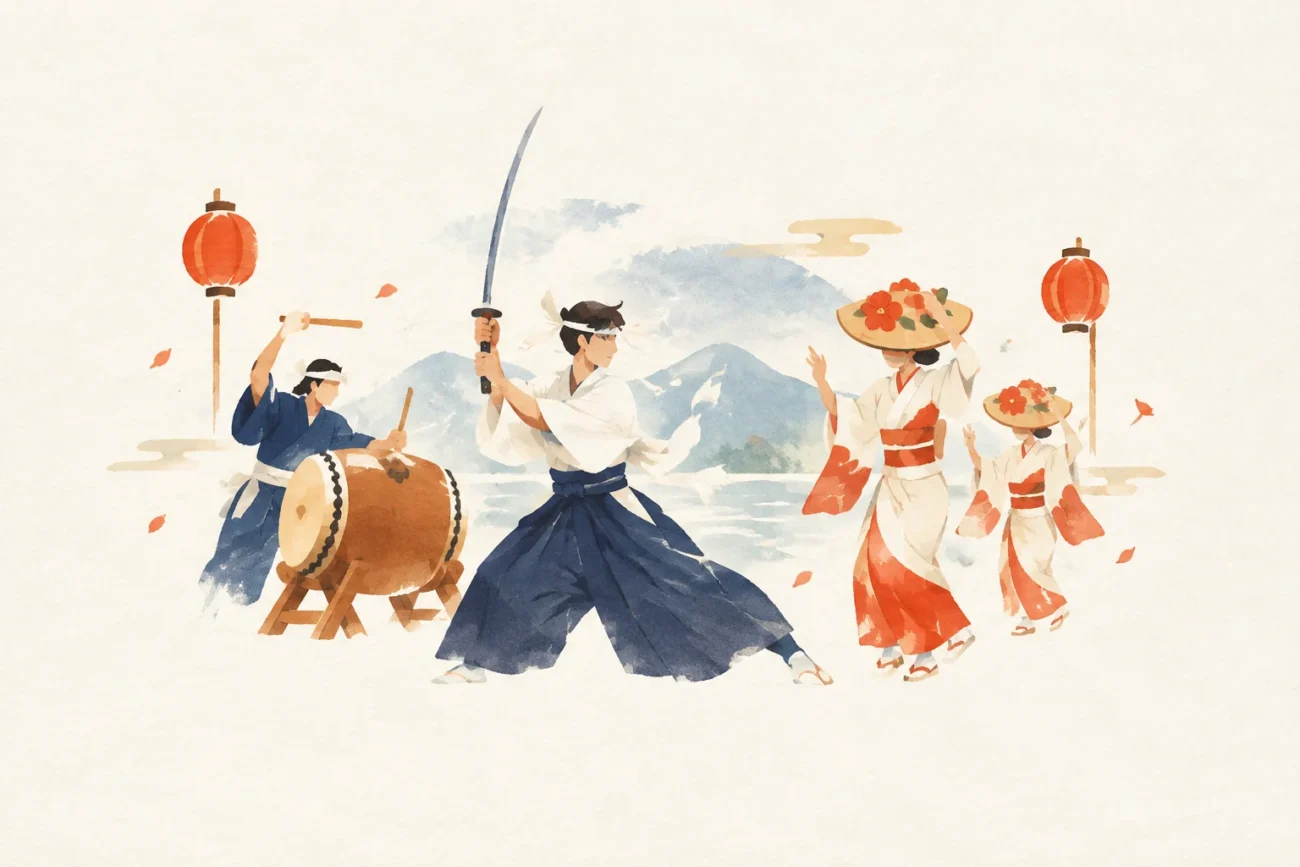
These festival rites are handed down at Kuchi Hachimangu Shrine in Shimokuchi, Sado City. Local traditions are carried on through performances offered by each community, including the sword dance, Onidaiko, and the flower-hat dance.
About Kuchi Hachimangu Shrine Festival Rites
The Kuchi Hachimangu Shrine Festival Rites are a festival handed down at Kuchi Hachimangu Shrine in Shimokuchi, Sado City.
The sword dance from Nozaki Hamlet, Onidaiko from Shimokuchi Hamlet, and the flower-hat dance from Jōkoshi Hamlet are each offered, with several hamlets supporting the festival.
The rites are a Sado City-designated intangible folk cultural property that retains the form of festival rites passed down in medieval Kuchi-go.
Festival highlights
A highlight is the performances offered by the hamlets of Nozaki, Shimokuchi, and Jōkoshi.
The sword dance is offered by Nozaki Hamlet, Onidaiko by Shimokuchi Hamlet, and the flower-hat dance by Jōkoshi Hamlet.
The sword dance performed by elementary school students is also featured, showing how the local festival is passed down across generations.
Festival rites in Shimokuchi, Sado, preserved in medieval records
What to expect
In the past, the festival began with the attendants and archers staying overnight at the shrine on September 13. On the 14th, nighttime festival events included salt-water gathering, , and shrine rites.
The main festival on the 15th featured shrine rites, salt-water gathering, a procession, rites at the , and yabusame.
Today, the main festival is held on a Sunday close to September 15, with performances from each hamlet offered.
Location and access
- Venue and address
Kuchi Hachimangu Shrine / Shimokuchi, Sado City
Address Shimokuchi, Sado City
Dates and season
- Season
Main festival on a Sunday close to September 15
Accommodation and hotels PR
Showing nearby accommodation.
Prices and availability are current at the time of retrieval. For multi-night stays, only the first night’s price is shown. Confirm the final price and directions to the venue with the booking provider. Select your dates again when using the area search link. Search area: within 3 km of Central Niigata Prefecture / Sado City (the search is not centered on the festival venue)
Nearby attractions

佐渡博物館
新潟県佐渡市にある博物館

佐渡島の金山
新潟県佐渡市にある世界遺産
Origins and History of Kuchi Hachimangu Shrine Festival Rites
The Kuchi Hachimangu Shrine Festival Rites retain the form of festival rites held in medieval Kuchi-go.
The rites are also recorded in the “Kuchi Kyūbun-chō” from Oei 12 (1405), confirming a long history of transmission.
They were designated an intangible folk cultural property of Sado City in Heisei 16 March 1 and are carried on by a preservation association.
Official information
佐渡市公式ホームページ「佐渡市指定 民俗文化財:久知八幡宮祭礼神事」
Kuchi Hachimangu Shrine Festival Rites at a Glance
The Kuchi Hachimangu Shrine Festival Rites are an intangible folk cultural property handed down in Shimokuchi, Sado City.
Today, the main festival is held on a Sunday close to September 15, when the sword dance from Nozaki, Onidaiko from Shimokuchi, and the flower-hat dance from Jōkoshi are offered.
This local traditional event retains medieval forms and is also mentioned in records from Oei 12 (1405).
Japanese Festivals.jp Editorial Team
Celebrating local culture and helping you discover a side of Japan you never knew.
Article updated: 2026/10/19
Submit information or a correction Submit photos of this festival