A Sado ritual that acts out rice planting with yuzuriha leaves and prays for a good harvest
Ta-asobi Ritual at Hakusan Shrine
Festival information
EVENT INFORMATION- Season / frequency
- Every year on January 3 / Every year
- Location
- Hakusan Shrine
- Area
- Niigata Prefecture・Sado City(From Tokyo: approx. 1 h 40 min–2 h 10 min · bullet train)Prefecture-level estimate to a main station or airport, not the venue. Airport access, check-in and onward travel are extra; remote areas and islands can take much longer.
- Features
- Highlights and activities
- Wishes behind the festival
- Last updated
- 2026/10/19
At Hakusan Shrine in Okubo, Sado City, the Ta-asobi Ritual has been passed down, with participants symbolically acting out farm work as they pray for a good harvest.
About Ta-asobi Ritual at Hakusan Shrine
The Ta-asobi Ritual at Hakusan Shrine is a ceremonial rite passed down at Hakusan Shrine in Okubo, Sado City, to pray for a good harvest by symbolically celebrating it in advance.
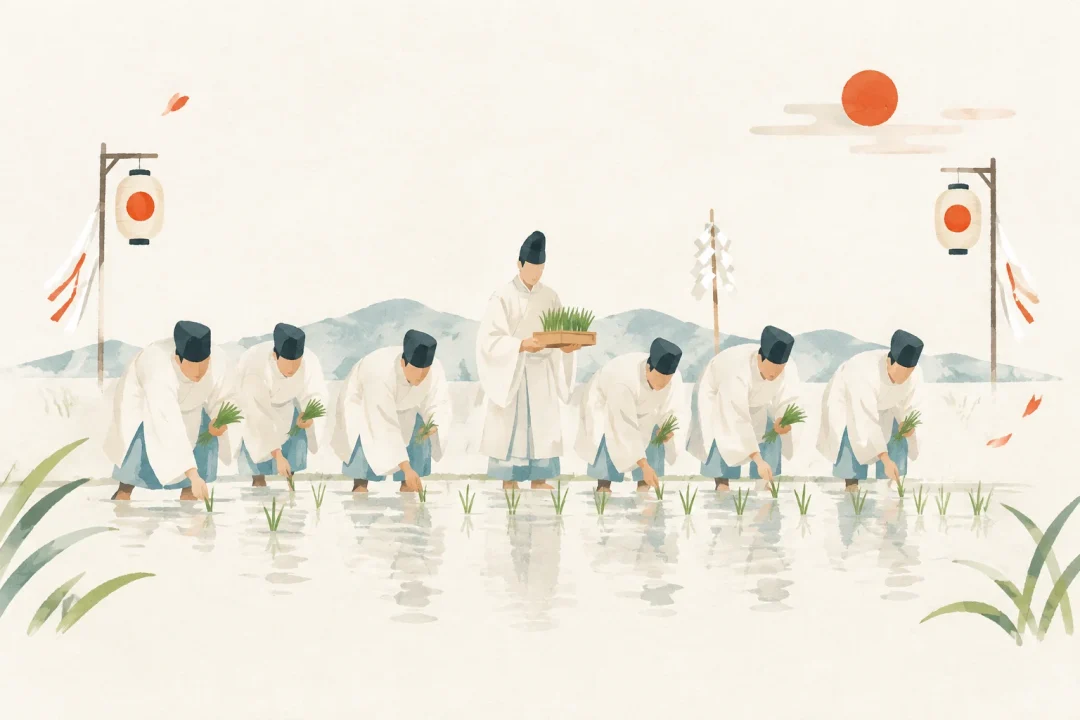
From the start of farm work through to rice planting, the tasks are symbolically performed before the deities to pray for a bountiful year.
Designated an Intangible Folk Cultural Property of Niigata Prefecture, this ritual is a folk performance that conveys local beliefs and agricultural culture.
Festival highlights
A highlight is the distinctive gestures that recreate farm work as part of the ritual.
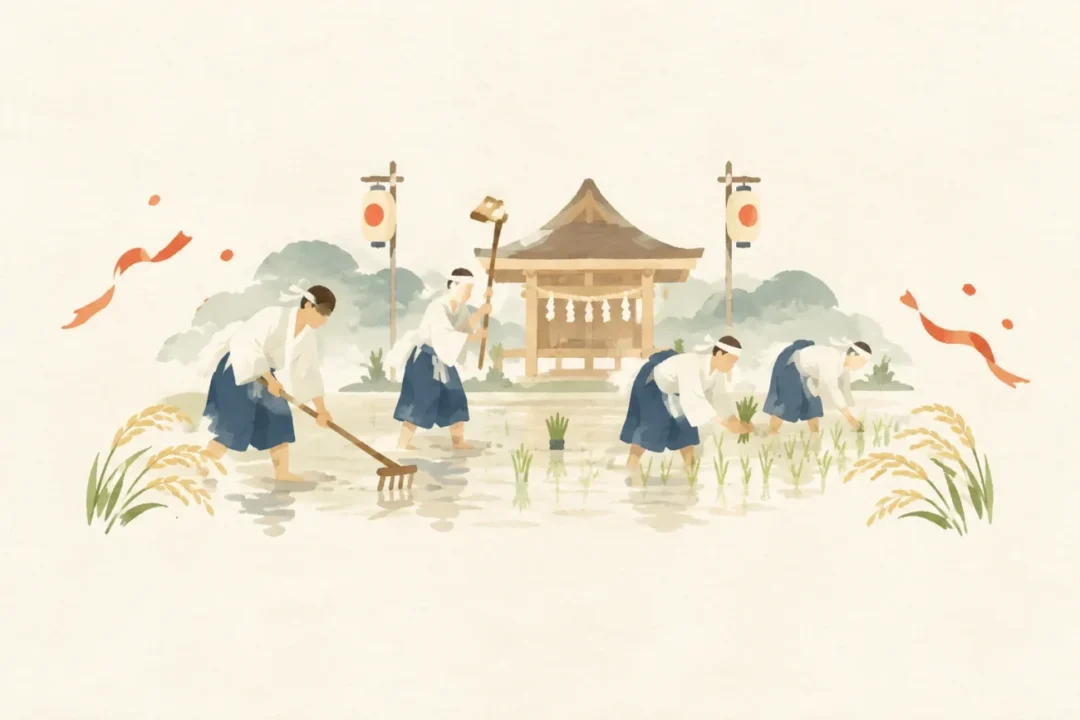
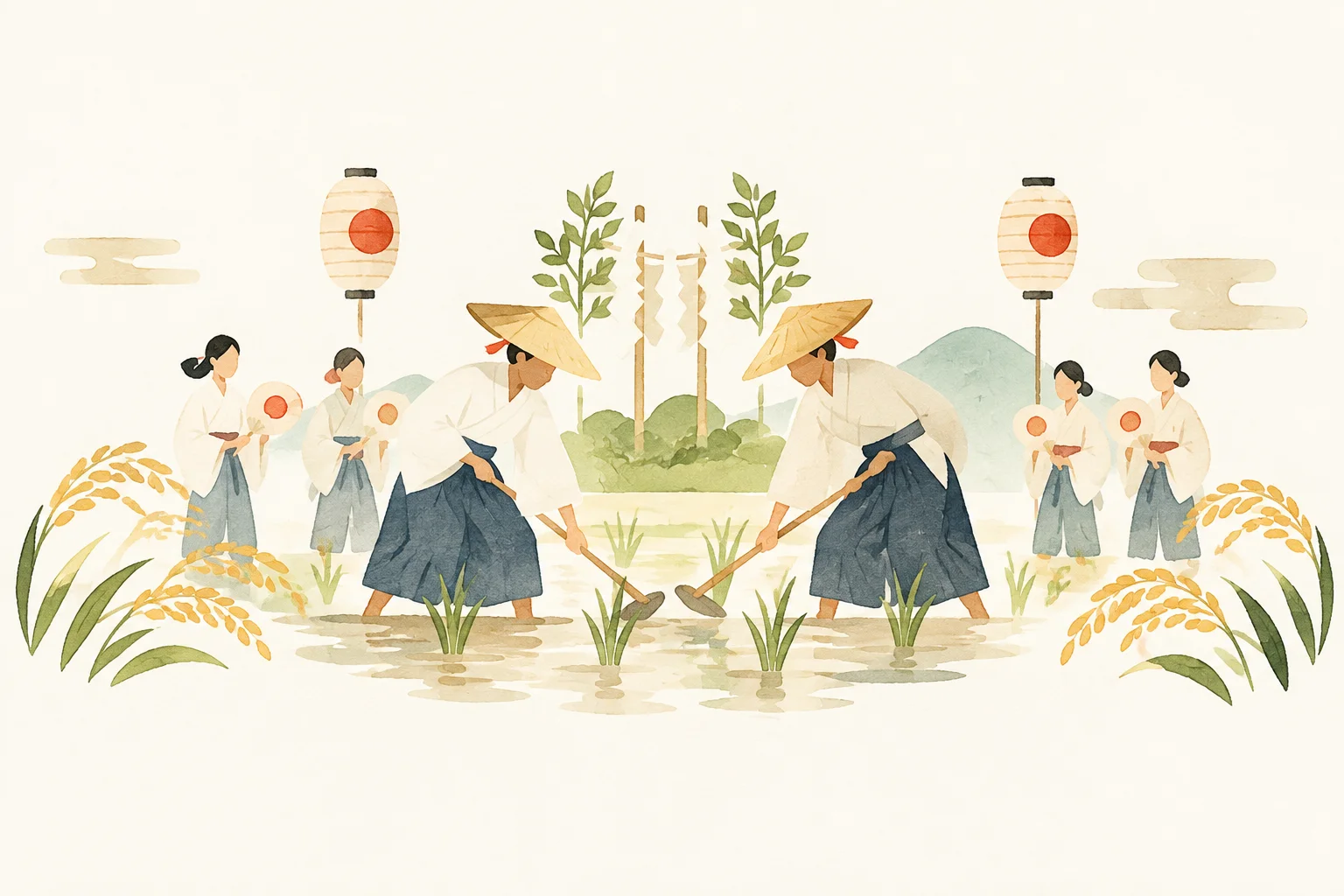
After carrying a mochi hoe and heating the blade, participants act out the farming process from “Nokusa-hanashi,” the preparation of the rice nursery, through to rice planting.
The ritual’s distinctive features include using yuzuriha leaves in place of seedlings and “meguri-ue,” planting while stepping backward, as well as the participants’ final performance of Noh music and other songs.
A Sado ritual that acts out rice planting with yuzuriha leaves and prays for a good harvest
What to expect
The ritual begins at dusk on the 3rd, and those serving in it purify themselves at Shinzenji, the shrine’s bettoji temple.
Afterward, they carry the mochi hoe to Hakusan Shrine and heat its blade at the “Mochiyaki-ishi” stone to the left of the , then symbolically perform farming tasks such as Nokusa-hanashi and rice planting.
After the planting, all the participants sing 200 or more pieces of Noh music and other songs to conclude the ritual.
Location and access
- Venue and address
Hakusan Shrine (Okubo, Sado City).
Address Okubo, Sado City, Niigata Prefecture
Dates and season
It is held every year on January 3.
It used to be held on February 3, but it is now held on January 3.
Accommodation and hotels PR
Showing nearby accommodation.
Prices and availability are current at the time of retrieval. For multi-night stays, only the first night’s price is shown. Confirm the final price and directions to the venue with the booking provider. Select your dates again when using the area search link. Search area: within 3 km of Central Niigata Prefecture / Sado City (the search is not centered on the festival venue)
Nearby attractions

佐渡博物館
新潟県佐渡市にある博物館

佐渡島の金山
新潟県佐渡市にある世界遺産

Official information
The Sado City official website’s cultural property guide provides information on the designation, location, and details of the Ta-asobi Ritual at Hakusan Shrine.
Ta-asobi Ritual at Hakusan Shrine at a Glance
The Ta-asobi Ritual at Hakusan Shrine is a ceremonial rite held every year on January 3 in Okubo, Sado City, to pray for a good harvest by symbolically celebrating it in advance.
They heat the blade of a mochi hoe and use yuzuriha leaves as seedlings while acting out farm work and rice planting.
This folk performance conveys agricultural culture and religious beliefs and concludes with Noh music sung by the participants.
Japanese Festivals.jp Editorial Team
Celebrating local culture and helping you discover a side of Japan you never knew.
Article updated: 2026/10/19
Submit information or a correction Submit photos of this festival