Two summer days of ringing gongs and drums as Kuwana’s dasha parade through town
Kuwana Ishidori Festival
The 2026 edition of Kuwana Ishidori Festival has ended.
Festival information
EVENT INFORMATION- Dates
- 2026/08/01 〜 2026/08/02Ended
- Season / frequency
- Held each year primarily around Hongaku on the first Sunday of August and Shigaku on the preceding day / Every year
- Location
- Around Kasuga Shrine
- Area
- Mie Prefecture・Kuwana City(From Tokyo: approx. 2 h 30 min–3 h · bullet train + connecting train)Prefecture-level estimate to a main station or airport, not the venue. Airport access, check-in and onward travel are extra; remote areas and islands can take much longer.
- Features
- Highlights and activities
- Participation / viewing
- Spectators welcome
- Official website / social media
- Official website
- Last updated
- 2026/10/19
Centered around Kasuga Shrine in Kuwana, this traditional festival fills the city streets with splendid dasha and the powerful sounds of gongs and drums.
About Kuwana Ishidori Festival
The Kuwana Ishidori Festival is held primarily around Kasuga Shrine (Kuwana Sosha) in Kuwana City.
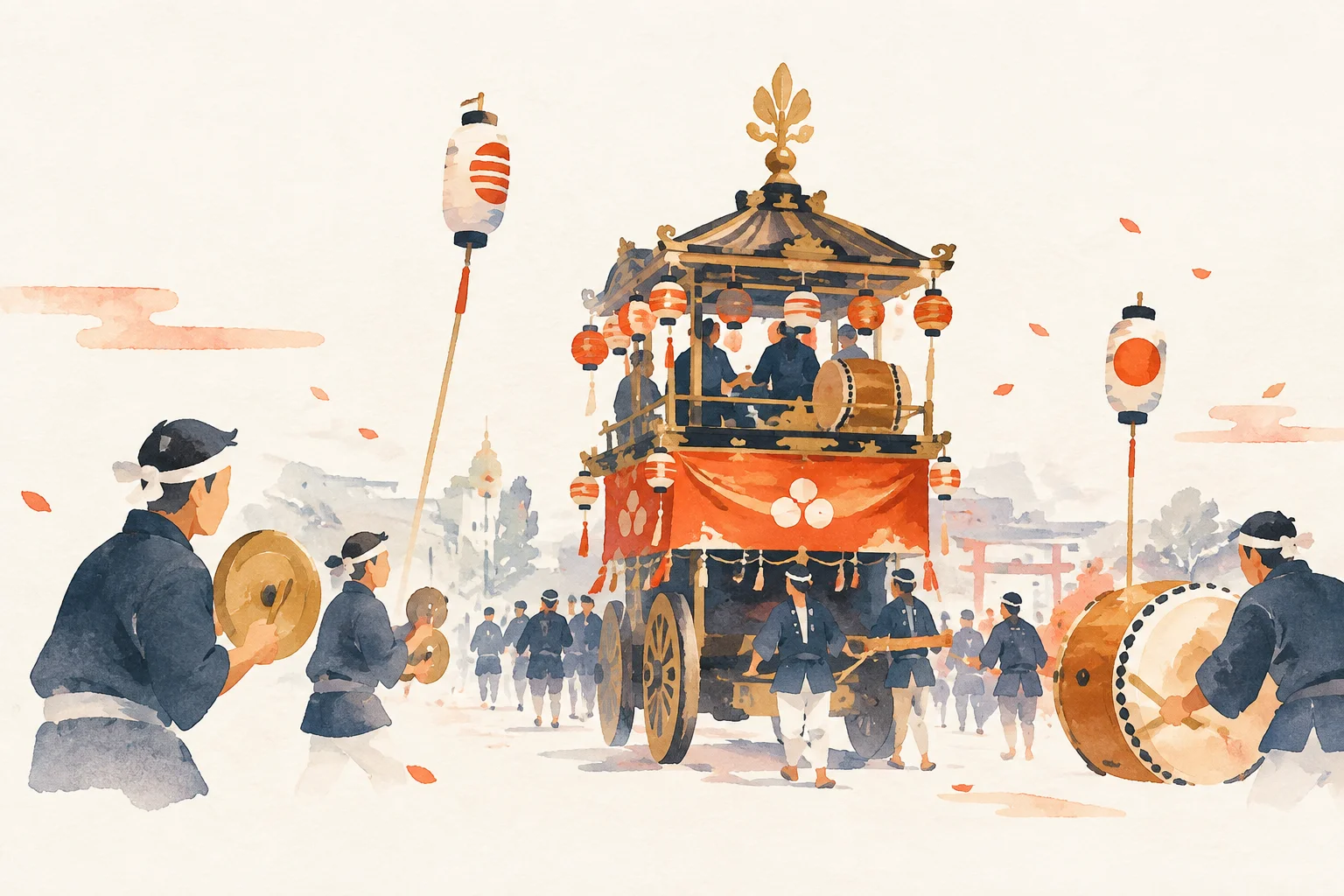
Up to 40 dasha strike gongs and drums all at once as they parade along routes including the old Tokaido.
A beloved feature of summer in Kuwana, the festival brings together residents from every district.
It was designated a National Important Intangible Folk Cultural Property in 2007 and inscribed on UNESCO’s Representative List of the Intangible Cultural Heritage of Humanity in 2016.
Source: 桑名石取祭 | イベント | 観光三重(かんこうみえ)
Festival highlights
The biggest highlight is the powerful festival music of gongs and drums ringing out from the dasha.
At the tataki-, which begins late at night on Shigaku, dasha from each neighborhood start playing all at once. On Hongaku, the dasha line up and make their procession toward Kasuga Shrine for the Watari-sai.
The dasha are adorned with carvings, banners, metal fittings, and lacquerwork, allowing visitors to appreciate their historic designs up close.
At the final Hikibiki-wakare, the dasha line up at an intersection and perform their festival music.
Source: 石取祭・石取御神事(ユネスコ無形文化遺産) | 桑名宗社(俗称:春日神社)
Two summer days of ringing gongs and drums as Kuwana’s dasha parade through town
What to expect
The festival centers on the two days of Shigaku and Hongaku.
On Shigaku, following the late-night opening performance, each group’s festival floats parade through the city from dusk.
On Hongaku, the floats line up at their designated positions, and from dusk the Watari-sai procession to Kasuga Shrine begins, led by the flower float.
After the procession, the floats return to their respective neighborhoods in a farewell procession, with their hayashi performed along the way.
How to take part
Visitors can watch the event.
Location and access
- Venue and address
Around Kasuga Shrine (Kuwana City, Mie Prefecture).
- Train and bus
It is a 20-minute walk from Kuwana Station on the JR, Kintetsu, and Yoro Railway lines.
- By car
It is about 15 minutes from both the Kuwana IC and Kuwana-higashi IC exits on the Higashi-Meihan Expressway.
Traffic restrictions apply around the venue.
- Parking
Parking is available at the City Hall North, East, and South parking lots; Kakiyasu City Hall parking lot; Kakiyasu Community Park parking lot; Rokkaen No. 1 and No. 2 parking lots; D Parking Sunfare Kuwana; and Rikkyo Elementary School.
Hours of operation and whether parking is paid or free vary by lot.
Source: 2026年の桑名石取祭はどんなお祭り?お祭りの見どころを地元民目線で解説します🏮屋台の出店情報や駐車場案内も! | 取材レポート | 観光三重(かんこうみえ)
Address Kuwana City, Mie Prefecture
Dates and season
2026 Festival Information (The listed dates have passed)
The main events in 2026 are Shigaku on August 1 (Saturday) and Hongaku on August 2 (Sunday).
Shigaku is scheduled to include the tataki-dashi at midnight and a procession through the city from around 6 p.m. Hongaku is scheduled to include the tataki-dashi at 2 a.m., the lining up and pulling out of the dasha, and the Hanaguruma Watari-sai from 6:30 p.m.
The official information lists a tataki-dashi on July 31 (Friday), so check the schedule, including related events, before setting out.
Source: 祭礼行事│石取祭【公式】
Accommodation and hotels PR
Showing nearby accommodation.
Prices and availability are current at the time of retrieval. For multi-night stays, only the first night’s price is shown. Confirm the final price and directions to the venue with the booking provider. Select your dates again when using the area search link. Search area: within 3 km of Central Mie Prefecture / Kuwana City (the search is not centered on the festival venue)
Tips for your visit
The area around the venue gets congested due to the festival floats’ procession and traffic restrictions, so the use of public transportation is recommended.
The festival is held in summer, when extreme heat is expected, so be prepared for the heat when you visit.
Do not touch the festival floats or get too close to them; watch the festival while following instructions from the police, festival organizers, the Youth Federation, and others.
The Watari-sai procession and farewell procession may continue late into the night, so it’s a good idea to check the times of your return transport.
Nearby attractions
Near the festival site is Ishidori Hall, which introduces the Ishidori Festival.
The hall features dasha displays, information about the festival’s history and events, and a hands-on experience playing the gongs and drums used in the festival music.
Kuwana Sosha (Kasuga Shrine) is the shrine at the heart of the festival; nearby attractions also include Ishidori Hall, the Kuwana City Museum, and the Kuwana section of the old Tokaido.
It is a place to experience Kuwana’s history and local culture alongside the festival.
Source: 案内│石取祭【公式】

ナガシマスパーランド
三重県桑名市にある娯楽施設
写真:Hideyuki KAMON from Takarazuka / 宝塚市, Hyogo / 兵庫県, Japan / 日本 / CC BY-SA 2.0
Photo source ·
Tado Taisha Shrine
三重県桑名市にある神社
写真:Ohaguro / おはぐろ蜻蛉 at Japanese Wikipedia / CC BY-SA 3.0
Photo source ·
桑名宗社
三重県桑名市にある神社
Origins and History of Kuwana Ishidori Festival
The Ishidori Goshinji was one of the rites of the Kuwana Festival (Hiyori Festival), held in the first half of the grand festival of Kuwana Shrine, but is said to have become independent during the Horeki era (1750s).
The festival is rooted in a custom of performing in the Machiya River, gathering chestnut stones, carrying them to the , and offering them before the kami.
The dasha, which began as small carts, developed over time into splendid three-wheeled festival floats.
Much of the festival was destroyed in the 1945 Kuwana air raids, but it was rebuilt through the efforts of local residents after the war and has been passed down to the present day.
Official information
Official information is available on the Kuwana Ishidori Festival Preservation Society website.
Information includes the sequence of festival events, the 2026 schedule, the Watari-sai procession order, and a map of highlights.
You can also find information about Kuwana Sosha (Kasuga Shrine), the shrine at the heart of the festival.
公式URL:Official website
Kuwana Ishidori Festival at a Glance
The Kuwana Ishidori Festival is a traditional event centered around Kasuga Shrine in Kuwana City, where the gongs and drums of the dasha ring out.
The festival was announced as being centered on Shigaku on August 1 and Hongaku on August 2 in 2026, with the tataki-dashi, processions through the city, Watari-sai, and Hikibiki-wakare also planned.
Crowds and hot weather are expected around Kasuga Shrine, so you can enjoy the impressive dasha and their decorations by using public transportation and following the guidance of event staff.
Japanese Festivals.jp Editorial Team
Celebrating local culture and helping you discover a side of Japan you never knew.
Article updated: 2026/10/19
Submit information or a correction Submit photos of this festival