Kuwana’s traditional kagura, where lion dancing and acrobatics come together
Ise Daikagura
Festival information
EVENT INFORMATION- Area
- Mie Prefecture・Kuwana City(From Tokyo: approx. 2 h 30 min–3 h · bullet train + connecting train)Prefecture-level estimate to a main station or airport, not the venue. Airport access, check-in and onward travel are extra; remote areas and islands can take much longer.
- Wishes behind the festival
- Last updated
- 2026/10/19
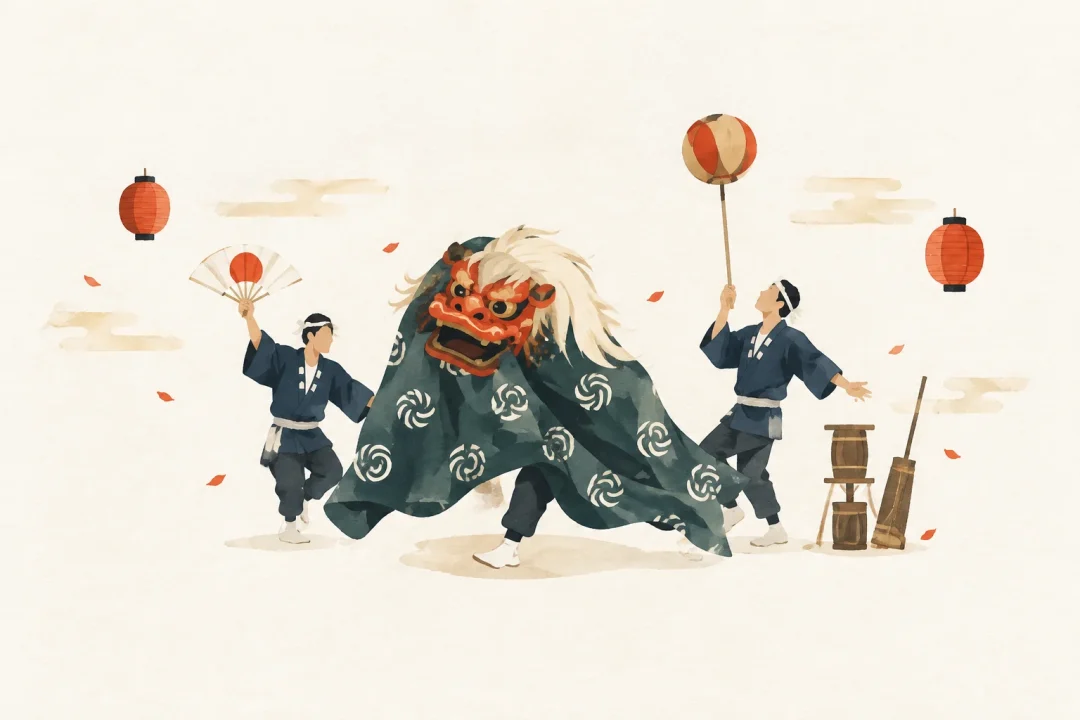
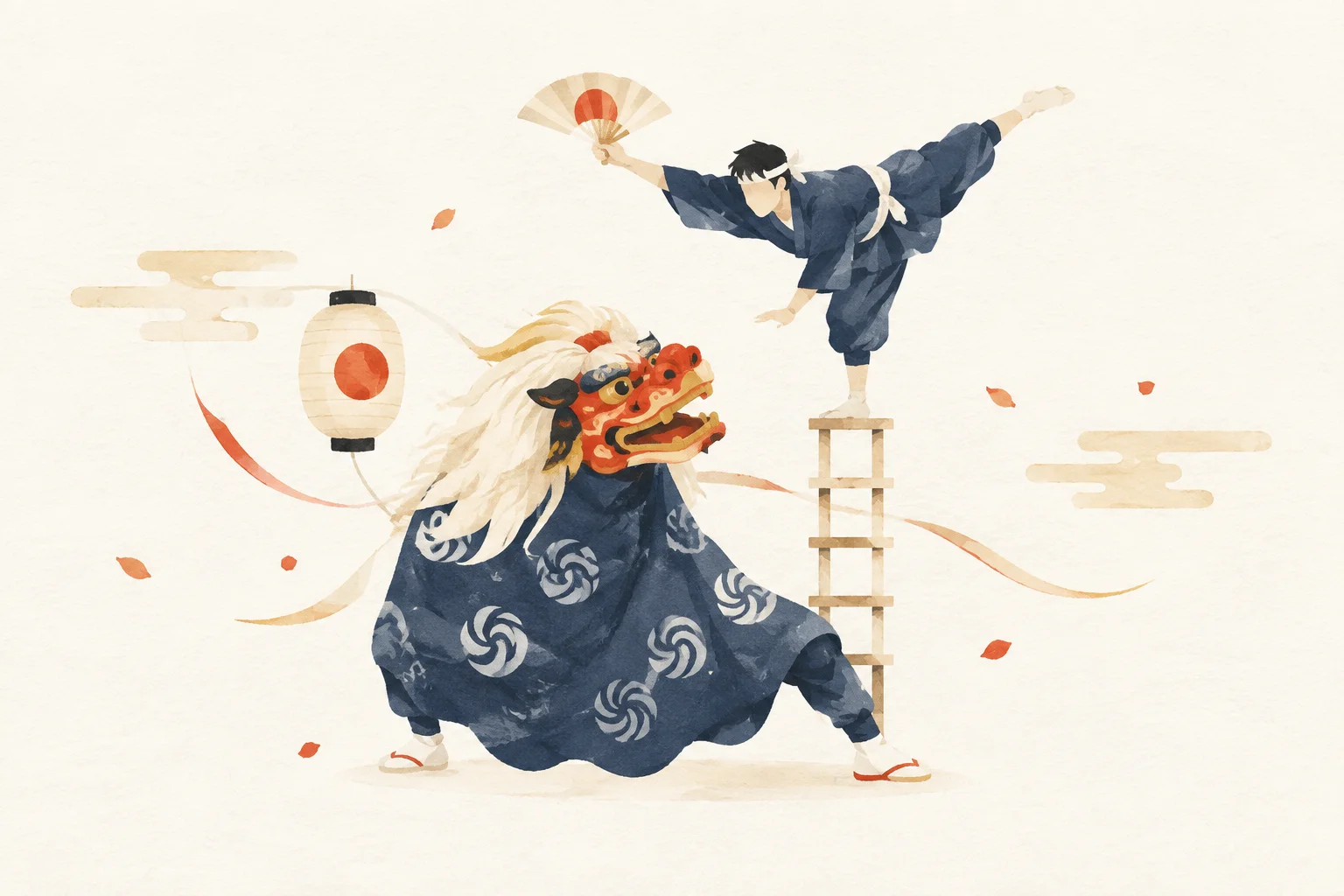
Ise Daikagura is a traditional form of with a distinctive style that incorporates acrobatics into lion dancing. In addition to being dedicated at Masuda Shrine in Tayu-cho, Kuwana City, it tours the Kinki and Hokuriku regions and preserves a diverse repertoire of sacred dances and hōka acrobatics.
About Ise Daikagura
Ise Daikagura is a type of lion kagura dedicated during festivals at Masuda Shrine in Tayu-cho, Kuwana City.
On days outside the festival, it tours the Kinki and Hokuriku regions and has been passed down across regional boundaries.
Its defining feature is a combination of lion dancing to ward off evil and acrobatics. It is designated an Important Intangible Folk Cultural Property.
Source: 国指定文化財等データベース
Festival highlights
A highlight is the performance that brings lion dancing together with acrobatics known as hōka.
The sacred dances include the Bell Dance, Four Directions Dance, and Fan Dance. Acrobatics include such performances as the Ball-Spinning Act, Sword Sanbaso, and Water Act.
The acrobatic style performed by the lion and the hōka tradition, valuable to the history of the performing arts, are also worth noting.
Kuwana’s traditional kagura, where lion dancing and acrobatics come together
What to expect
At dedications and during tours, performances feature kagura dances by the lion and acrobatics.
In addition to distinctive kagura dances such as Yoshino Dance and Sword Dance, newer hōka acts such as Tama-jishi no Kyoku and Kaikyoku have also been passed down.
The broad range of sacred dances, acrobatics, and distinctive kagura dances passed down through generations is central to the Ise Daikagura experience.
Location and access
- Address
Kuwana City
Host municipality Kuwana, Mie Prefecture
This map shows the surrounding area, not the exact venue location.
Accommodation and hotels PR
Showing nearby accommodation.
Prices and availability are current at the time of retrieval. For multi-night stays, only the first night’s price is shown. Confirm the final price and directions to the venue with the booking provider. Select your dates again when using the area search link. Search area: within 3 km of Central Mie Prefecture / Kuwana City (the search is not centered on the festival venue)
Nearby attractions

ナガシマスパーランド
三重県桑名市にある娯楽施設
写真:Hideyuki KAMON from Takarazuka / 宝塚市, Hyogo / 兵庫県, Japan / 日本 / CC BY-SA 2.0
Photo source ·
Tado Taisha Shrine
三重県桑名市にある神社
写真:Ohaguro / おはぐろ蜻蛉 at Japanese Wikipedia / CC BY-SA 3.0
Photo source ·
桑名宗社
三重県桑名市にある神社
Origins and History of Ise Daikagura
Ise Daikagura has been passed down through generations, centered on the Yamamoto family, regarded as pioneers in the area.
The lion head is believed to ward off evil and bring happiness, and this tradition has been enriched with the performing arts of hōka.
On January 21, 1981, it was designated an Important Intangible Folk Cultural Property.
Official information
You can check Ise Daikagura’s designation category, location, description, and traditional repertoire in the Agency for Cultural Affairs’ Database of National Cultural Properties.
Ise Daikagura at a Glance
Ise Daikagura is a lion kagura dedicated at Masuda Shrine in Tayu-cho, Kuwana City, and also tours the Kinki and Hokuriku regions.
It combines lion dancing with acrobatics and preserves a diverse repertoire, including sacred dances and hōka acts featuring balls, swords, and water.
It has been passed down through generations, centered on the Yamamoto family, and is designated an Important Intangible Folk Cultural Property.
Japanese Festivals.jp Editorial Team
Celebrating local culture and helping you discover a side of Japan you never knew.
Article updated: 2026/10/19
Submit information or a correction Submit photos of this festival