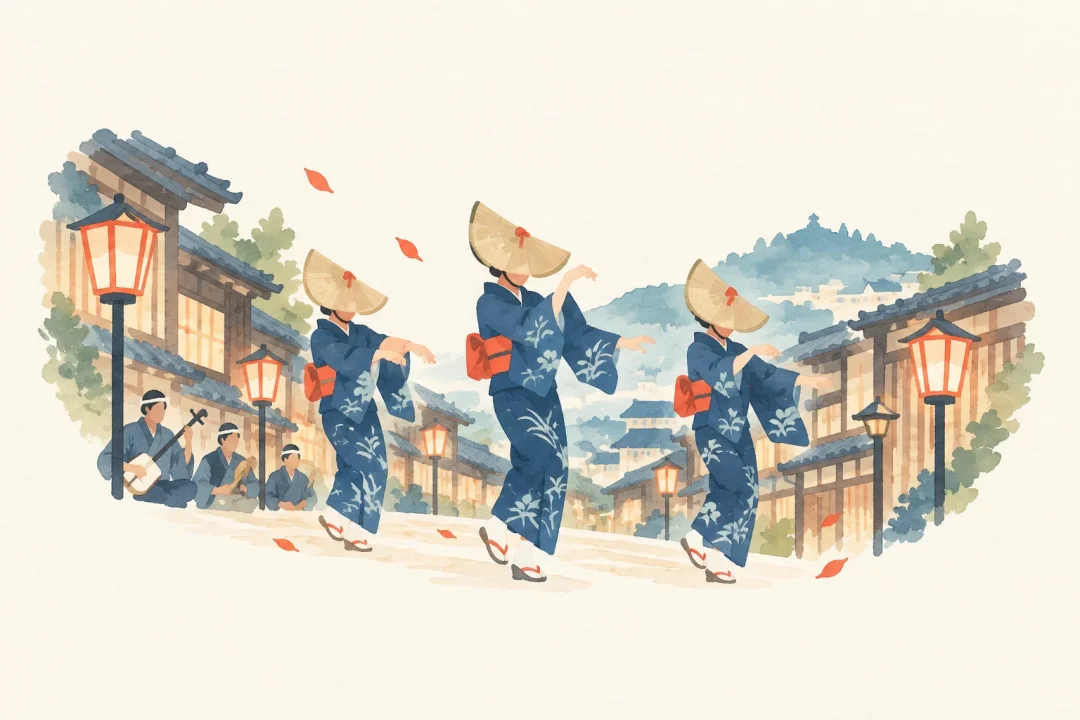
Three festivals carrying on Kohama Island’s songs, dances, and prayers
The performing arts of Kohama Island’s Obon, Kigan-sai, and Tanedori-sai
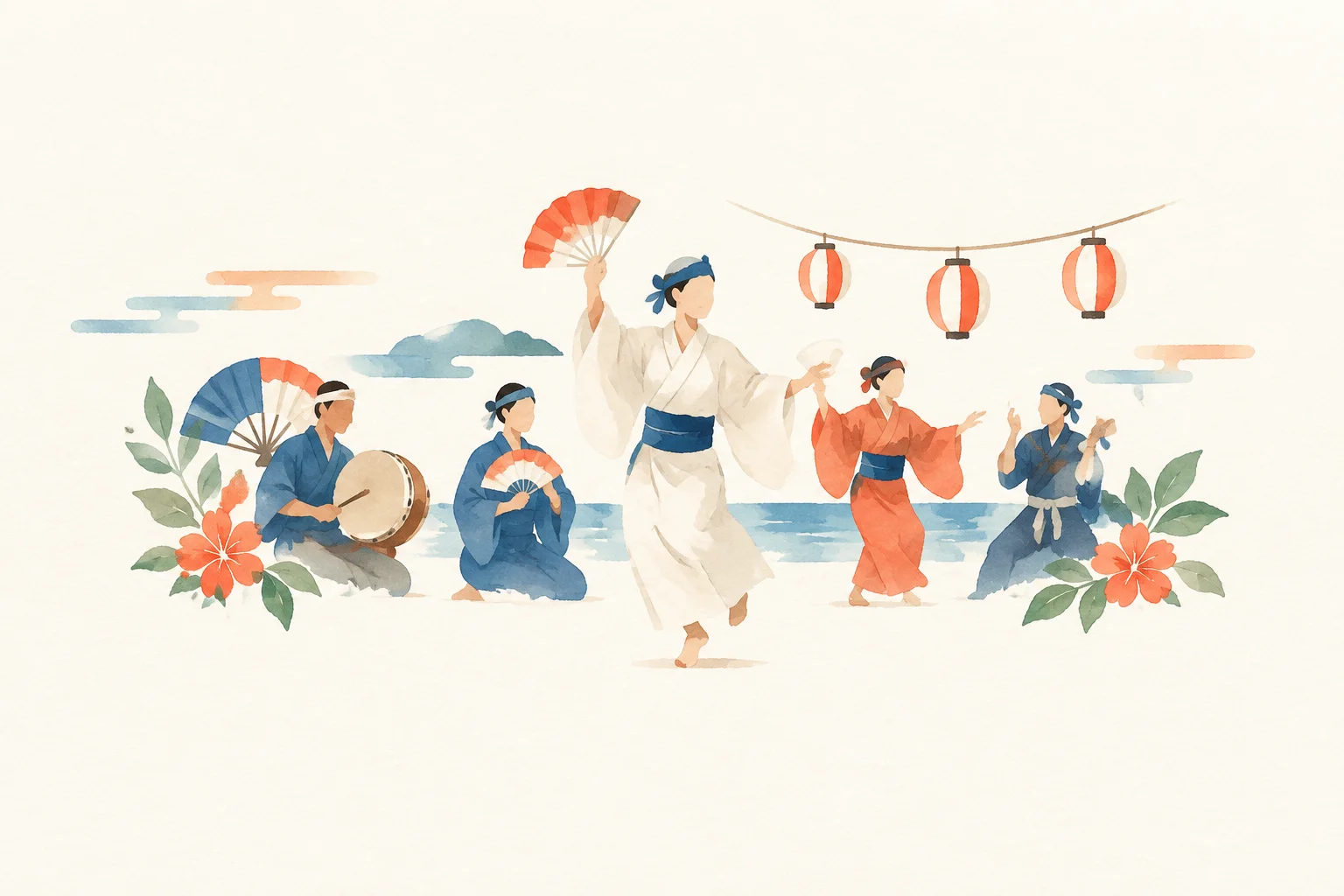
Festival information
EVENT INFORMATION- Season / frequency
- is held in lunar calendar: July, the Kigan-sai from the 8th to September of the lunar calendar, and the Tanedori-sai from the 9th to October of the lunar calendar. / Three annual festivals
- Location
- Kohama Island (the public performances on the second day of the Kigan-sai take place at Kabirone Utaki)
- Area
- Okinawa Prefecture・Taketomi Town(From Tokyo: approx. 2 h 30 min–3 h · flight time only)Prefecture-level estimate to a main station or airport, not the venue. Airport access, check-in and onward travel are extra; remote areas and islands can take much longer.
- Highlights and activities
- Wishes behind the festival
- Participation / viewing
- Spectators welcome
- Last updated
- 2026/10/19
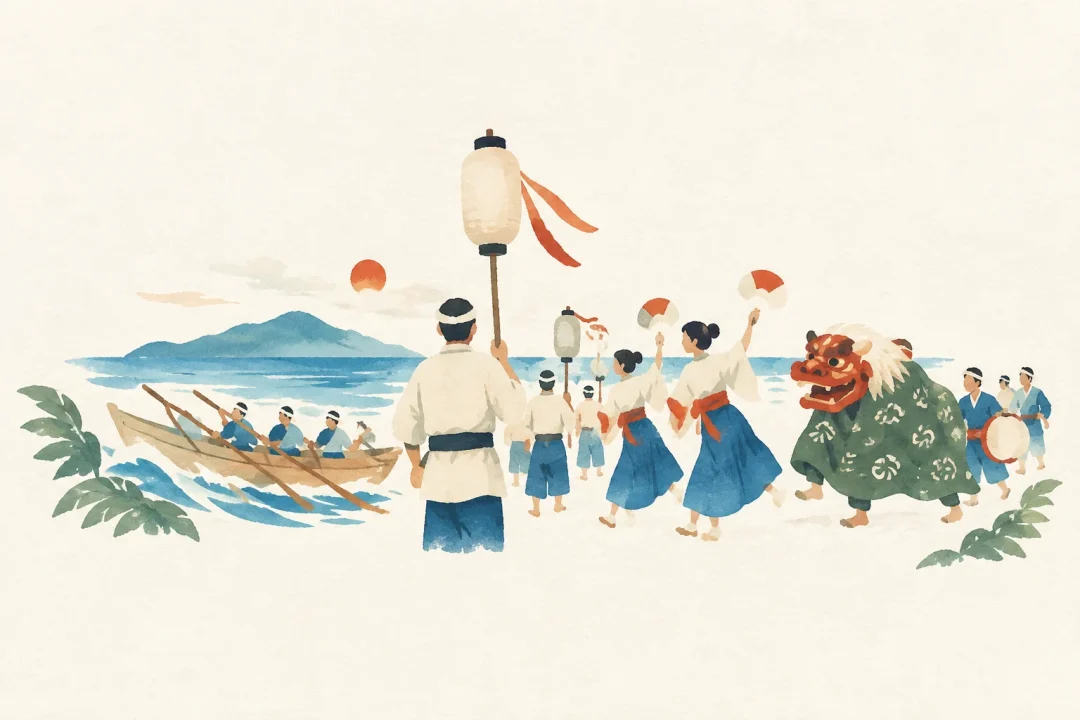
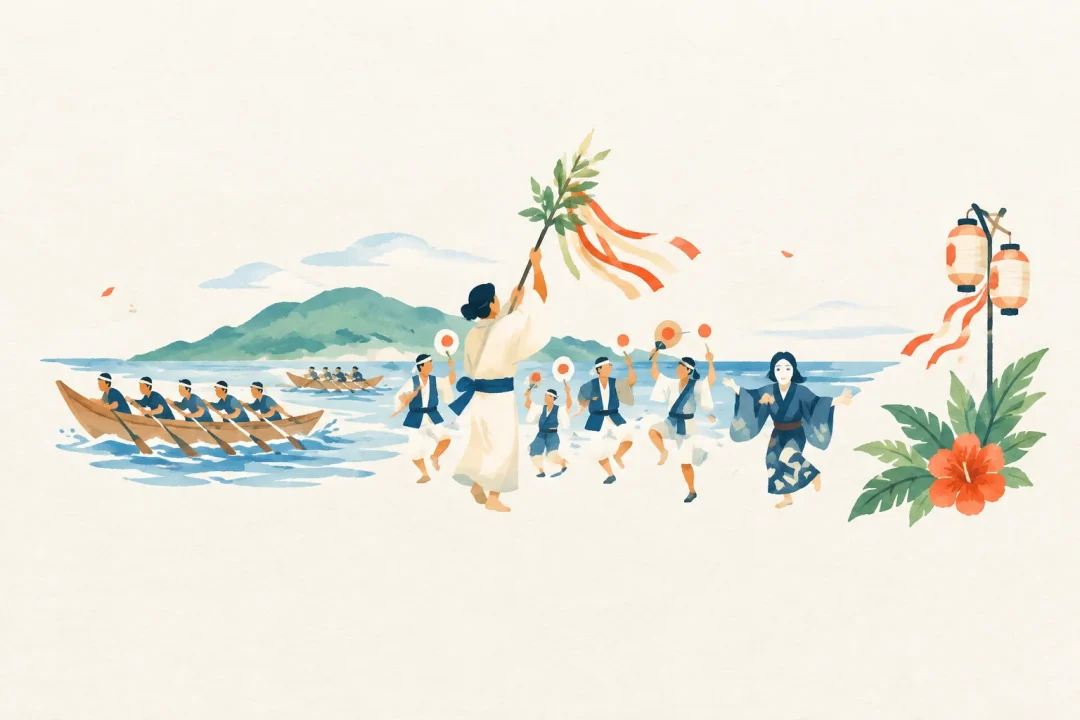
At Kohama Island’s Obon, Kigan-sai, and Tanedori-sai, songs, dances, and plays passed down on the island are offered as part of the rituals. Obon’s nenbutsu performances, the Kigan-sai’s varied stage program, and the Tanedori-sai’s songs praying for a good harvest convey the island’s way of life and beliefs.
About The performing arts of Kohama Island’s Obon, Kigan-sai, and Tanedori-sai
The performing arts of Kohama Island’s Obon, Kigan-sai, and Tanedori-sai is a collective term for the songs, dances, kyogen plays, and other performances presented at these three traditional festivals.
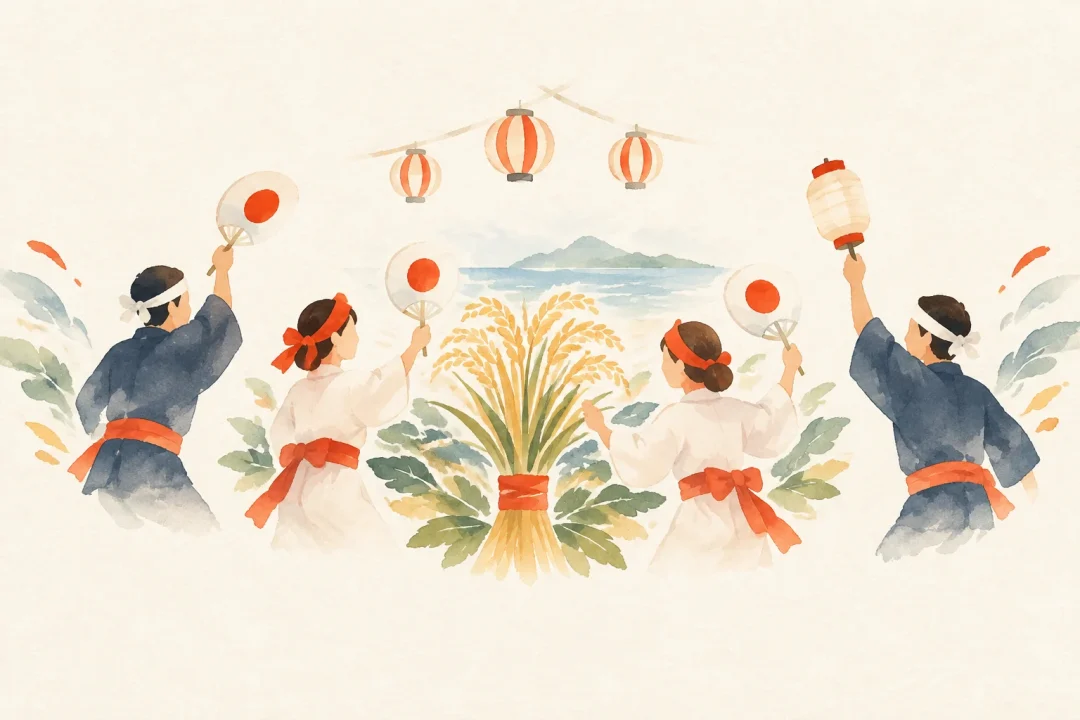
Obon features nenbutsu chanting and spirit dances, the Kigan-sai features offerings of performing arts, and the Tanedori-sai features songs praying for the growth of the rice crop.
Performances unique to Kohama Island have also been passed down, and are carefully preserved as a culture connecting local rituals and performing arts.
Source: 国指定文化財等データベース
Festival highlights
The main highlight is the offerings of performing arts held on Shonichi, the first day of the Kigan-sai.
The northern and southern villages each present their own performances. These are followed by rounds through the village, a , and a stick dance, then more than 20 dance and kyogen pieces.
Performances such as Shungin, Bupiki Odori, and Daatuuda are distinctive to Kohama Island.
Three festivals carrying on Kohama Island’s songs, dances, and prayers
What to expect
During Obon, the nenbutsu group visits every household in the village and performs spirit dances in the yards to the accompaniment of nenbutsu songs.
At the Kigan-sai, after the performers make their rounds, and after the lion dance and stick dance, a stage is set up, where the northern and southern villages take turns offering dances and kyogen plays.
At the Tanedori-sai, songs are sung at utaki, the homes of ritual officials, rice-farming households, and other places, praying for the healthy growth of rice seedlings in the nursery fields.
How to take part
Festival rites are acts of offering tied to religious beliefs, not events where general visitors take part as performers.
The main opportunity for people from outside the island to watch is the performance offered at Kahoné Utaki on Shōnichi, the second day of the Ketsugan Festival.
Some events during Obon, the Tanedori Festival, and the other days of the Ketsugan Festival are not open to the public, so you need to check in advance whether viewing is permitted.
Location and access
- Venue and address
Kohama Island.
The public performances on the second day of the Kigan-sai are offered at Kabirone Utaki.
The address is Kohama, Taketomi Town, Yaeyama District, Okinawa Prefecture.
- Train and bus
Travel from Ishigaki Airport to the Ishigaki Port Remote Island Terminal by bus, taxi, or rental car, then continue to Kohama Island.
The journey from the remote-island terminal to Kohama Island takes approximately 30 minutes.
Source: 竹富町へのアクセス | 竹富町ホームページ
Address Kohama, Taketomi Town, Yaeyama District, Okinawa Prefecture
Dates and season
- Season
Obon is held in lunar calendar: July, the Kigan-sai from the 8th to September of the lunar calendar, and the Tanedori-sai from the 9th to October of the lunar calendar.
- Frequency
Three annual festivals
Accommodation and hotels PR
Showing nearby accommodation.
Prices and availability are current at the time of retrieval. For multi-night stays, only the first night’s price is shown. Confirm the final price and directions to the venue with the booking provider. Select your dates again when using the area search link. Search area: within 3 km of Central Okinawa Prefecture / Taketomi Town (the search is not centered on the festival venue)
Tips for your visit
These events are not staged as tourist attractions; they are rituals connected to the faith of the local community.
Offerings at utaki (sacred sites) and private homes may not be open to the public, so please respect restricted areas and the limits on where visitors may watch.
If you plan to observe the Kigan-sai, it is important to check the schedule and whether it is open to visitors in advance, and to watch quietly without disrupting the island’s rituals or the performers.
Nearby attractions
On Kohama Island, you can experience the island’s natural environment and way of life along with its festivals.
Mt. Ufudaki has an observation deck with views of the Yaeyama Islands.
Other highlights include Sugar Road, a lane running through sugarcane fields; Kohagura-so, a traditional home with a red-tiled roof; and a museum displaying festival photographs and objects.

由布島
日本の沖縄県八重山諸島にある島

西表石垣国立公園
日本の沖縄県の西表島と石垣島を中心とする国立公園
Origins and History of The performing arts of Kohama Island’s Obon, Kigan-sai, and Tanedori-sai
The performing arts of Kohama Island have been passed down by island residents on ritual occasions: Obon, the Kigan-sai, and the Tanedori-sai.
It became a nationally selected intangible folk cultural property in 1995, and on March 7, 2007 it was designated an Important Intangible Folk Cultural Property under the name “Performing Arts of Kohama Island’s Obon, Kigan-sai, and Tanedori-sai.”
The Kohama Folk Performing Arts Preservation Association serves as the preservation group, and the arts continue to be passed down as performances that express the region’s distinctive character.
Official information
For official information, see “Kohama Island Kigan-sai” on the Taketomi Town website.
The Agency for Cultural Affairs’ Database of Nationally Designated Cultural Properties can also be consulted for information about the festival’s origins and an overview of the offerings.
Source: 小浜島 結願祭 | 竹富町ホームページ
The performing arts of Kohama Island’s Obon, Kigan-sai, and Tanedori-sai at a Glance
The performing arts of Kohama Island’s Obon, Kigan-sai, and Tanedori-sai are important folk arts that convey the island’s rituals and local culture through songs, dances, and kyogen plays.
At the Kigan-sai in particular, the northern and southern villages offer performances including rounds through the village, lion dances, stick dances, and more than 20 dance and kyogen pieces.
If you wish to attend, check when the event is open to visitors and its schedule, and visit with respect for this place of worship.
Japanese Festivals.jp Editorial Team
Celebrating local culture and helping you discover a side of Japan you never knew.
Article updated: 2026/10/19
Submit information or a correction Submit photos of this festival