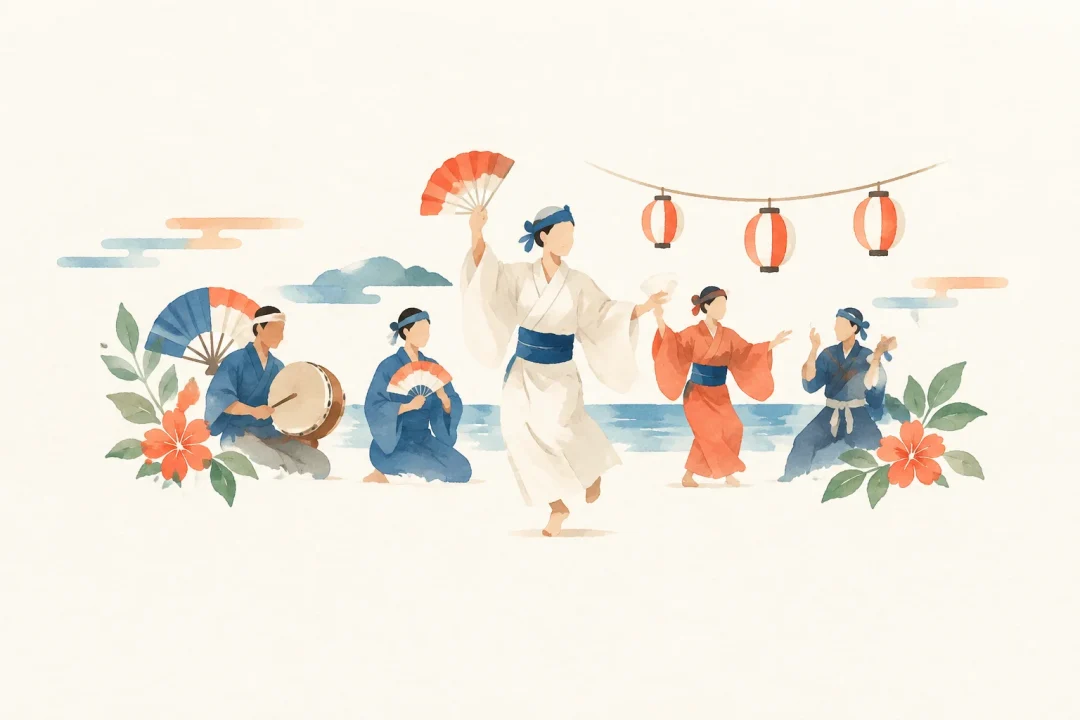
Iriomote Island’s festival marking a turning point in the year, welcoming a bountiful harvest from the sea and connecting prayers with performing arts
Iriomote Island’s Shichisai Festival
Festival information
EVENT INFORMATION- Season / frequency
- A 3-day period centered on the Tsuchinoi day around lunar calendar: October each year (around October to November on the Gregorian calendar) / Every year
- Location
- Sonai and Hoshitate districts (including Sonai Community Center and Maetomari Beach, and Hoshitate Community Center and Mae-no-hama Beach)
- Area
- Okinawa Prefecture・Taketomi Town(From Tokyo: approx. 2 h 30 min–3 h · flight time only)Prefecture-level estimate to a main station or airport, not the venue. Airport access, check-in and onward travel are extra; remote areas and islands can take much longer.
- Features
- Highlights and activities
- Wishes behind the festival
- Last updated
- 2026/10/19
A traditional event on Iriomote Island featuring Yoyoi, the welcoming of a bountiful harvest from across the sea, alongside processions, boat races, dances, and .
About Iriomote Island’s Shichisai Festival
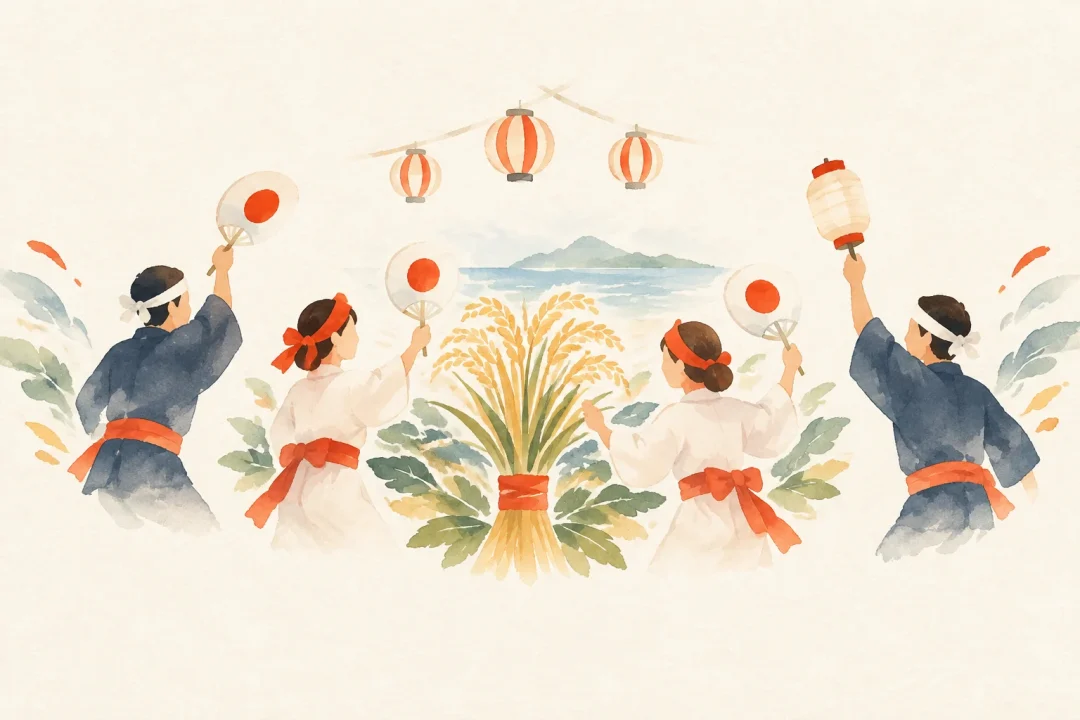
Iriomote Island’s Shichisai Festival is a Yaeyama tradition held at a seasonal turning point and the end of the year to give thanks for a good harvest and pray for abundance in the coming year and peace for the people.
It has been passed down in the Sonai and Hoshitate districts of Iriomote Island and is designated a national Important Intangible Folk Cultural Property.
Centered on the Tsuchinoi day around the 10th month of the lunar calendar, purification, prayers, performing arts, and expressions of gratitude for water take place over 3 days.
The festival links local life with beliefs surrounding the sea, land, and water.
Source: 国指定文化財等データベース
Festival highlights
The highlight is the rich range of performances centered on Yoyoi on the second day.
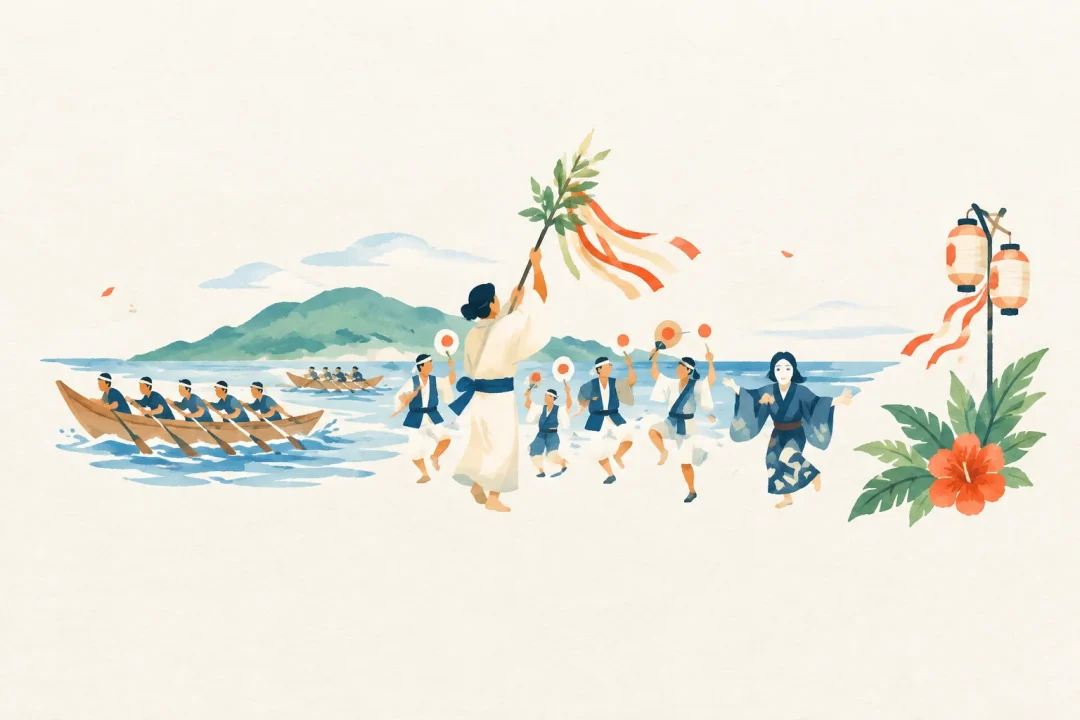
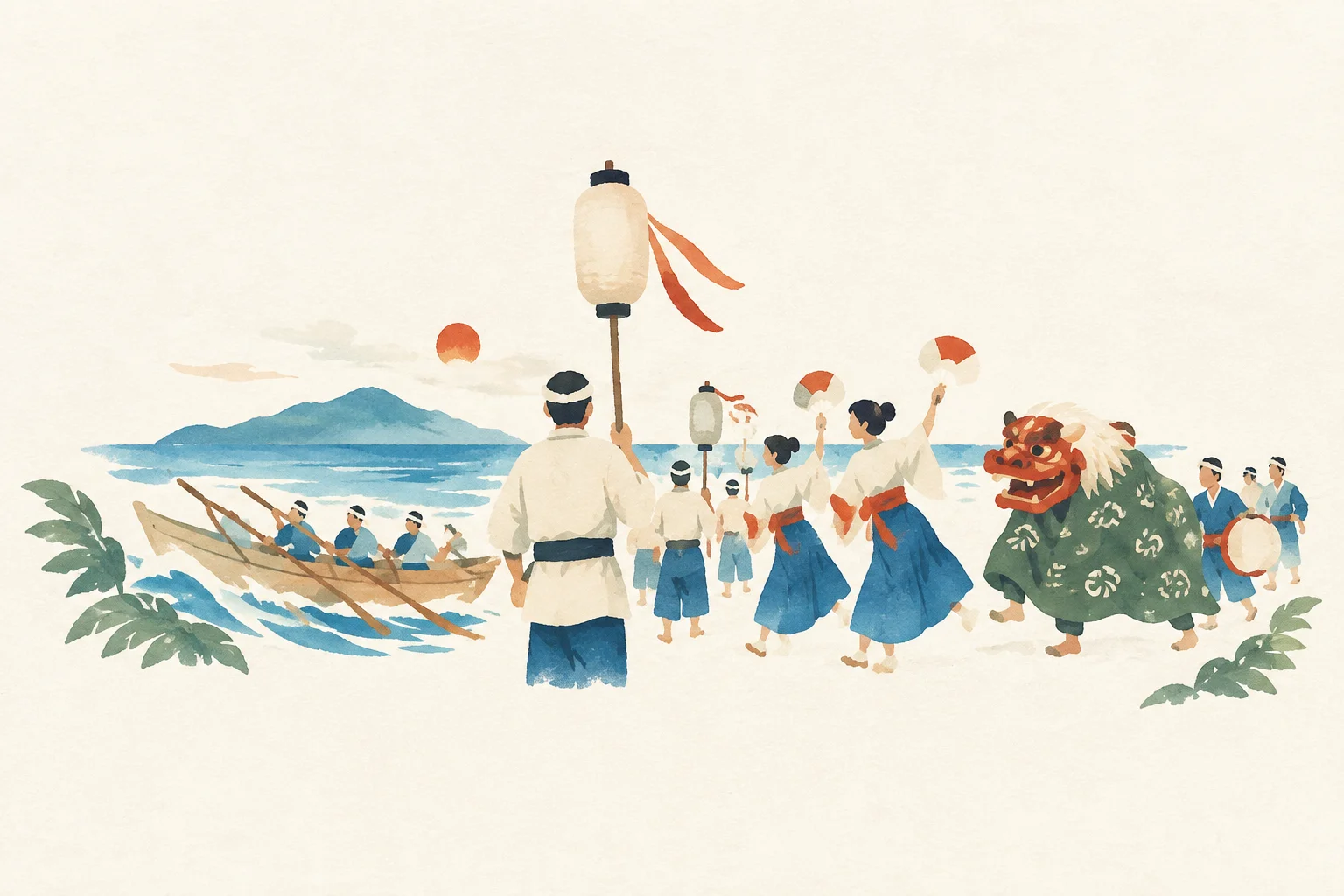
A procession led by a flag is followed by a Miriku procession, oar dances by boatmen, and boat races to welcome a bountiful harvest from across the sea.
Next come cheering to the beat of gongs and drums, recitations, ox and horse , Setsu Anga, stick performances, and lion dances.
Hoshitate also preserves the distinctive masked character “Ohoho.”
Source: 西表島祖内・星立の節祭 | 沖縄県 | 日本の文化遺産を探す|国宝・重要文化財データベース
Iriomote Island’s festival marking a turning point in the year, welcoming a bountiful harvest from the sea and connecting prayers with performing arts
What to expect
The first day is known as “Year’s Eve.” Each household cleans, performs an exorcism using climbing vines and small stones from the beach, and shares a festive meal to welcome the new year.
On the second day, a procession goes from the community center to the beach, followed by prayers, oar dances, a Miriku procession, boat races, kyogen, dances, stick performances, and lion dances.
During the third day’s Todome ceremony, wells are cleaned at sites such as Ohira Well in Sonai, and gratitude is offered for water.
Sonai and Hoshitate share a common sequence, but differ in their performances and venues.
How to take part
The heart of the festival is prayer and performing arts led by local people; it is not an event where general visitors take part as performers.
Visitors are advised that they can watch the public events held on the beach, such as Yuko’i, performing arts, and boat-racing contests.
At the same time, it is important not to enter sacred areas such as utaki, and to observe quietly while following local guidance.
Please check the information provided at the time of the festival for the areas open to visitors and the conditions for attendance in 2026.
Location and access
- Venue and address
The Sonai and Hoshitate districts.
The main sites are Sonai Community Center, Maetomari Beach, and Ohira Well in Sonai, and Hoshitate Community Center, Mae-no-hama Beach, and Ue-no-kawa in Hoshitate.
The location is Iriomote Island, Taketomi Town, Yaeyama District, Okinawa Prefecture.
- Train and bus
Travel from Ishigaki Airport to the Ishigaki Port Remote Island Terminal by bus, taxi, or other means, then take a high-speed ferry from Ishigaki Port to Uehara Port. The trip takes about 40–45 minutes.
- By car
The drive from Uehara Port to the Sonai and Hoshitate districts is listed as about 20 minutes, or around 8 kilometers.
Source: 竹富町へのアクセス | 竹富町ホームページ
Address Sonai and Hoshitate districts, Iriomote Island, Taketomi Town, Yaeyama District, Okinawa Prefecture
Dates and season
It is held over 3 days each year, centered on the day of Tsuchinoto-i (己亥) around the 10th lunar month.
On the Gregorian calendar, it falls around October to November, but because it follows the lunar calendar, the dates change every year.
The first day is Toshiban, the second is Yuko’i, and the third is Todome-shiki.
Source: 西表島 節祭 | 竹富町ホームページ
Accommodation and hotels PR
Showing nearby accommodation.
Prices and availability are current at the time of retrieval. For multi-night stays, only the first night’s price is shown. Confirm the final price and directions to the venue with the booking provider. Select your dates again when using the area search link. Search area: within 3 km of Central Okinawa Prefecture / Taketomi Town (the search is not centered on the festival venue)
Tips for your visit
The Shichisai Festival is a sacred event passed down in the villages of Sonai and Hoshitate.
Even when viewing areas open to visitors, such as the beach, do not enter sacred sites such as utaki, and follow local guidance.
Whether and how photography is permitted varies by year and situation, so follow instructions given at the site.
Accommodation is said to be busy during the festival, so it is advisable to prepare early once your travel dates are set.
Nearby attractions
Guided itineraries are available for exploring Iriomote Island’s natural attractions alongside the festival.
These include Hoshizuna Beach, a cruise on the Urauchi River and visits to its waterfalls, Pinaisara Falls, the mangrove forests of the Nakamagawa River, and Yubu Island.
All are described as places where you can experience Iriomote Island’s sea, rivers, and forests.
If combining festival viewing with sightseeing, plan your visit so it does not disrupt the festival or life in the village.

由布島
日本の沖縄県八重山諸島にある島

西表石垣国立公園
日本の沖縄県の西表島と石垣島を中心とする国立公園
Origins and History of Iriomote Island’s Shichisai Festival
Iriomote Island’s Shichisai Festival is said to have been passed down for about 500 years.
The exact origins on Iriomote are unclear, but a local story says that the daughter of a figure regarded as Iriomote’s founder around the 15th century played a part in the creation of the Setsu Anga dance.
In Showa 53, it was selected as an intangible folk cultural property for which measures such as record-making should be undertaken, and in Heisei 3 February 21 it was designated a national Important Intangible Folk Cultural Property.
It is recognized for conveying the rich structure and development of the performing arts.
Official information
One source for announcements is the “Iriomote Island Shichisai Festival” page on the Taketomi Town website.
Details of its cultural property designation and the event program are also available in the Agency for Cultural Affairs’ Database of Nationally Designated Cultural Properties.
For the latest visitor information, including viewing conditions and the dates for that year, check announcements from Taketomi Town or the Taketomi Town Tourism Association.
Iriomote Island’s Shichisai Festival at a Glance
Iriomote Island’s Shichisai Festival is a 3-day tradition passed down in Sonai and Hoshitate, giving thanks for a good harvest and praying for abundance and peace.
On Yoyoi Day, the program includes processions, Miriku, oar dances, boat races, kyogen, Setsu Anga, stick performances, and lion dances.
When viewing the festival, respect the distinction between areas open to visitors and sacred areas, and be considerate of local life.
Japanese Festivals.jp Editorial Team
Celebrating local culture and helping you discover a side of Japan you never knew.
Article updated: 2026/10/19
Submit information or a correction Submit photos of this festival