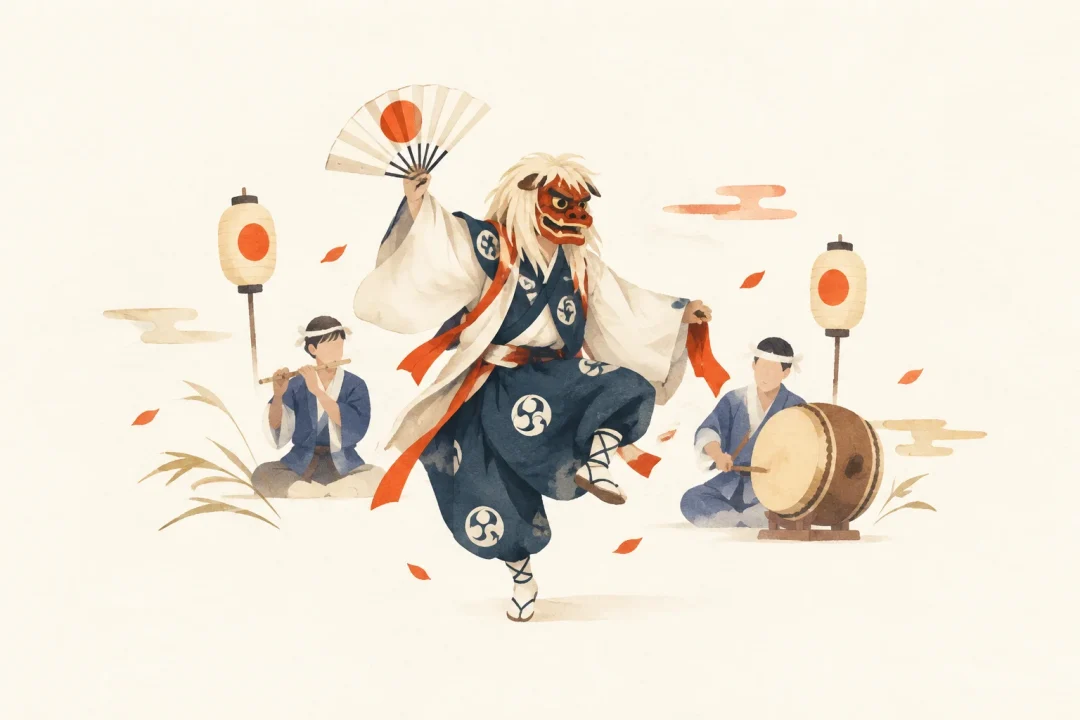
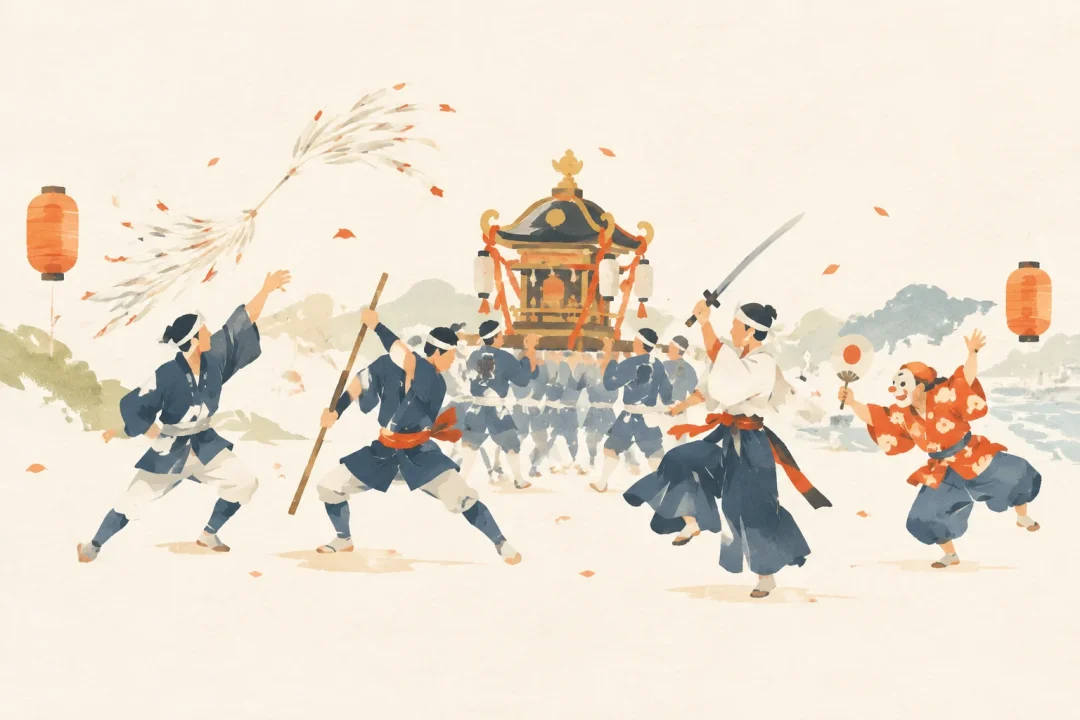
Traditional kagura, with its costumes and music, alive in Niyodogawa Town
Ikegawa Kagura
Festival information
EVENT INFORMATION- Season / frequency
- Every year
- Area
- Kochi Prefecture・Niyodogawa Town(From Tokyo: approx. 1 h 20 min–1 h 40 min · flight time only)Prefecture-level estimate to a main station or airport, not the venue. Airport access, check-in and onward travel are extra; remote areas and islands can take much longer.
- Highlights and activities
- Last updated
- 2026/10/19
Ikegawa is a traditional kagura of Tosa, passed down at Ikegawa Shrine in Niyodogawa Town.
About Ikegawa Kagura
Ikegawa Kagura is a kagura performance offered at Ikegawa Shrine in Niyodogawa Town, Kochi Prefecture.
One of the leading forms of torimono kagura handed down in Tosa, it preserves graceful costumes and a variety of dances.
A stage is set up inside the shrine’s using a large tree, , and cut-paper decorations. Performances are accompanied by drums, small hand drums, and handclaps.
A local preservation association protects the tradition and passes it on today.
Source: 国指定文化財等データベース / 池川神楽|各地のまつり|まつりと
Festival highlights
The highlight is the performance on a stage measuring two ken by two ken, set up inside the worship hall of Ikegawa Shrine—not in the kagura hall.
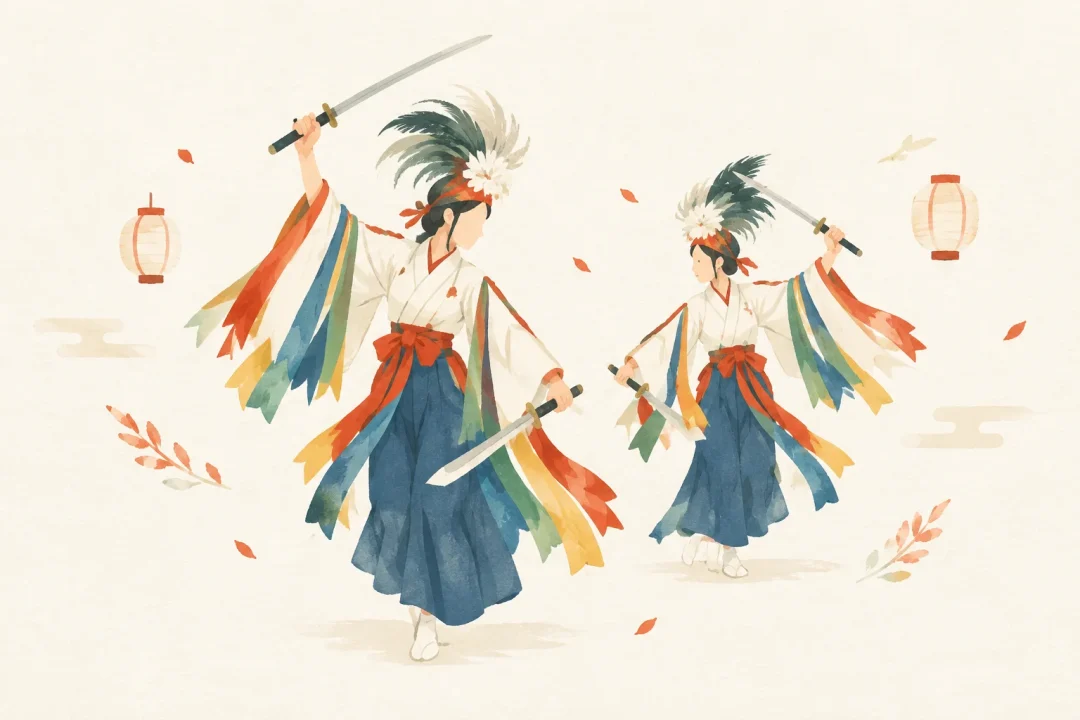
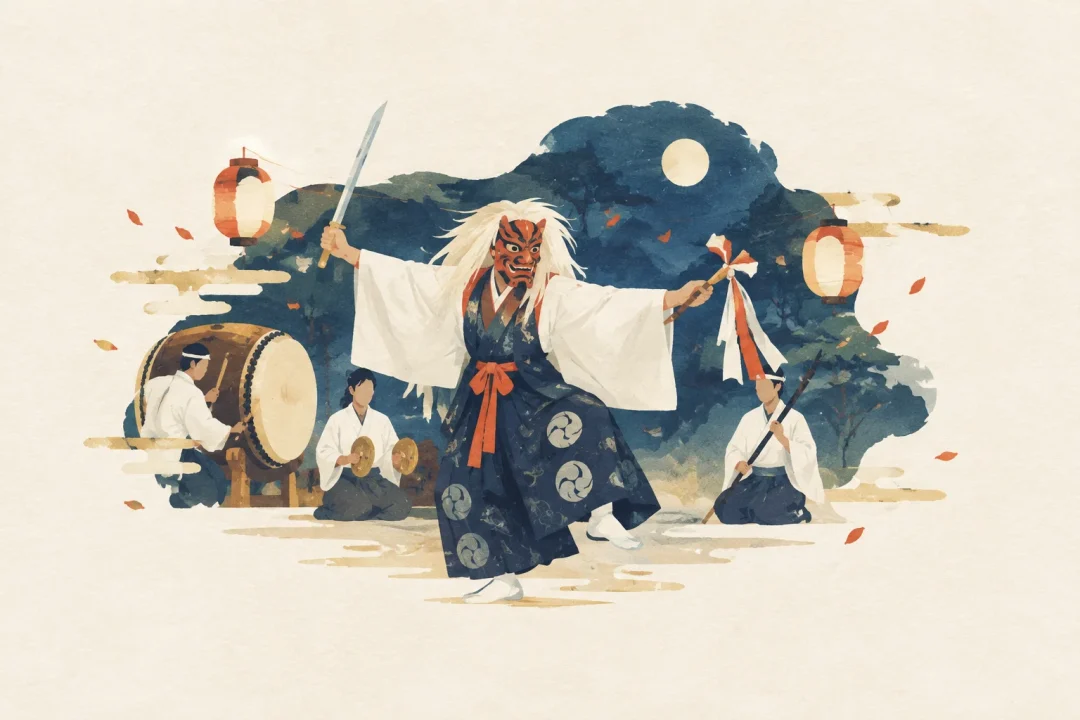
The Wataku and naginata dances feature acrobatic movements. In the Dance of the Four Heavens, four performers dance with swords, and exchanges with a demon deity unfold.
Toward the end, the five deities, standing beneath five-colored flags, also engage in a question-and-answer exchange.
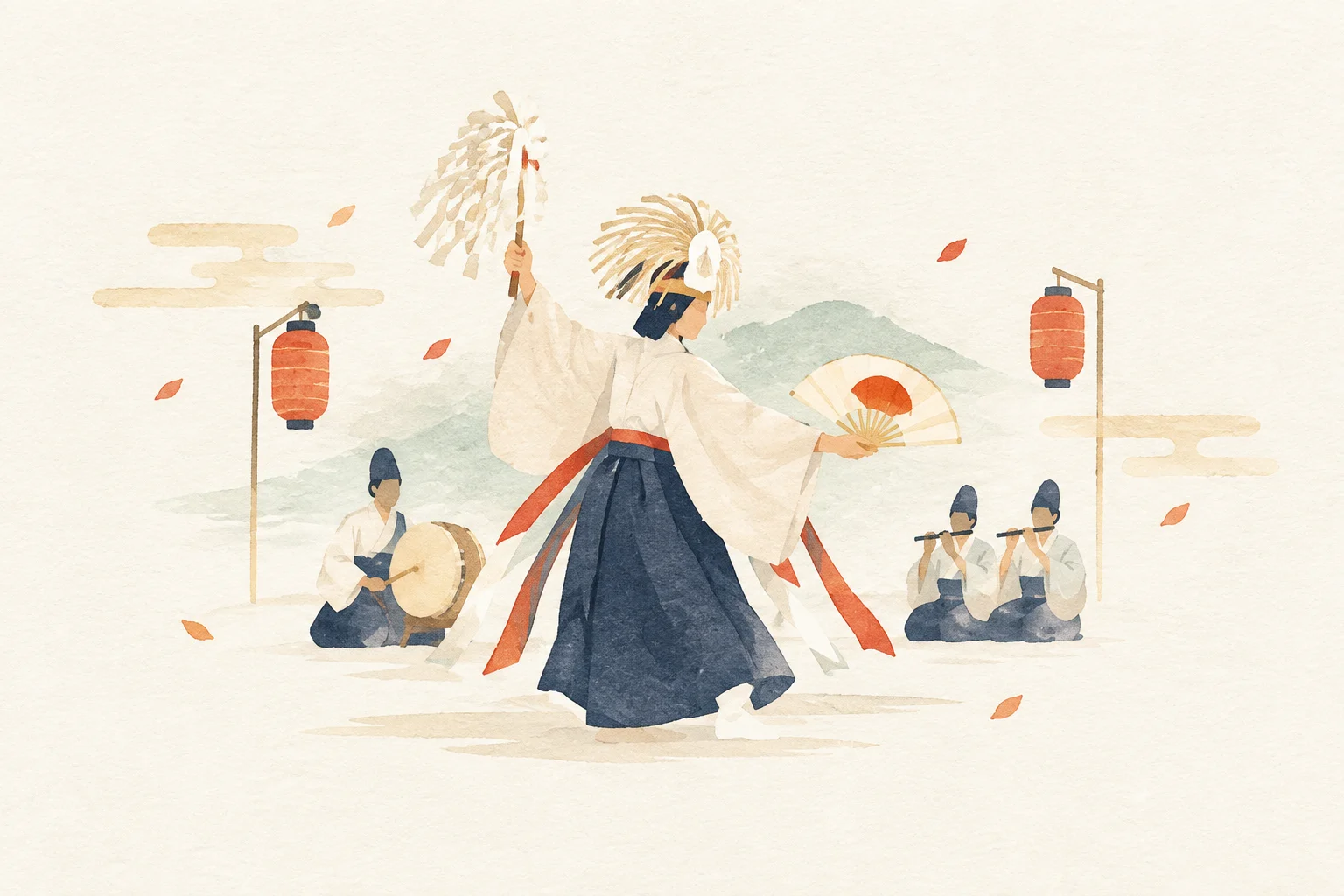
Traditional kagura, with its costumes and music, alive in Niyodogawa Town
What to expect
Kagura is performed in a sequence of dances, including shrine purification, demon banishing, welcoming the deities, and the Dance of the Four Heavens.
A large sakaki tree is placed on the stage, while shimenawa and cut-paper decorations create a sacred space. Drums, small hand drums, and handclaps accompany the dances.
Some dances involve swords or exchanges with a demon deity, and the final rite, called Ojin-tachi, features five deities.
Location and access
- Address
Niyodogawa Town
Host municipality 高知県仁淀川町
This map shows the surrounding area, not the exact venue location.
Dates and season
- Frequency
Every year
Accommodation and hotels PR
Showing nearby accommodation.
Prices and availability are current at the time of retrieval. For multi-night stays, only the first night’s price is shown. Confirm the final price and directions to the venue with the booking provider. Select your dates again when using the area search link. Search area: within 3 km of Central Kochi Prefecture / Niyodogawa Town (the search is not centered on the festival venue)
Nearby attractions
Alongside Ikegawa Kagura, you can enjoy the natural surroundings of the Niyodo River, which flows through Niyodogawa Town.
The Niyodo River is known as “Niyodo Blue” for its remarkable clarity, and there is an outdoor activity center along its banks.
Activities featured include SUP and crystal kayaking.
Nearby information lets you enjoy both kagura and the area’s natural surroundings.
Origins and History of Ikegawa Kagura
Ikegawa Kagura has a history of about 400 years and is considered the oldest kagura in Tosa.
It is considered one of the leading examples among similar forms of torimono kagura found across the Tosa region, and has been performed at festivals at Ikegawa Shrine.
In 1972, it was selected as an intangible folk cultural property for which measures such as record-making should be undertaken.
Today, the Ikegawa Kagura Preservation Association is responsible for passing it on.
Official information
An overview of its cultural-property status can be found in the Agency for Cultural Affairs’ Database of Nationally Designated Cultural Properties.
Tourism information and event details for the area are available on the official portal website of the Niyodogawa Town Tourism Association.
Source: 池川神楽 舞納め・舞初め | によどがわ.TV|高知県 仁淀川町観光ポータルサイト | 仁淀川町観光ポータルサイト
Ikegawa Kagura at a Glance
Ikegawa Kagura is a kagura tradition handed down at Ikegawa Shrine in Niyodogawa Town, with a history of about 400 years.
A variety of dances are offered to the accompaniment of drums and small hand drums, including the energetic movements of the Wataku and naginata dances and the exchanges with a demon deity in the Dance of the Four Heavens.
This cultural event offers a way to learn about both Tosa’s traditional performing arts and the area’s natural surroundings.
Japanese Festivals.jp Editorial Team
Celebrating local culture and helping you discover a side of Japan you never knew.
Article updated: 2026/10/19
Submit information or a correction Submit photos of this festival