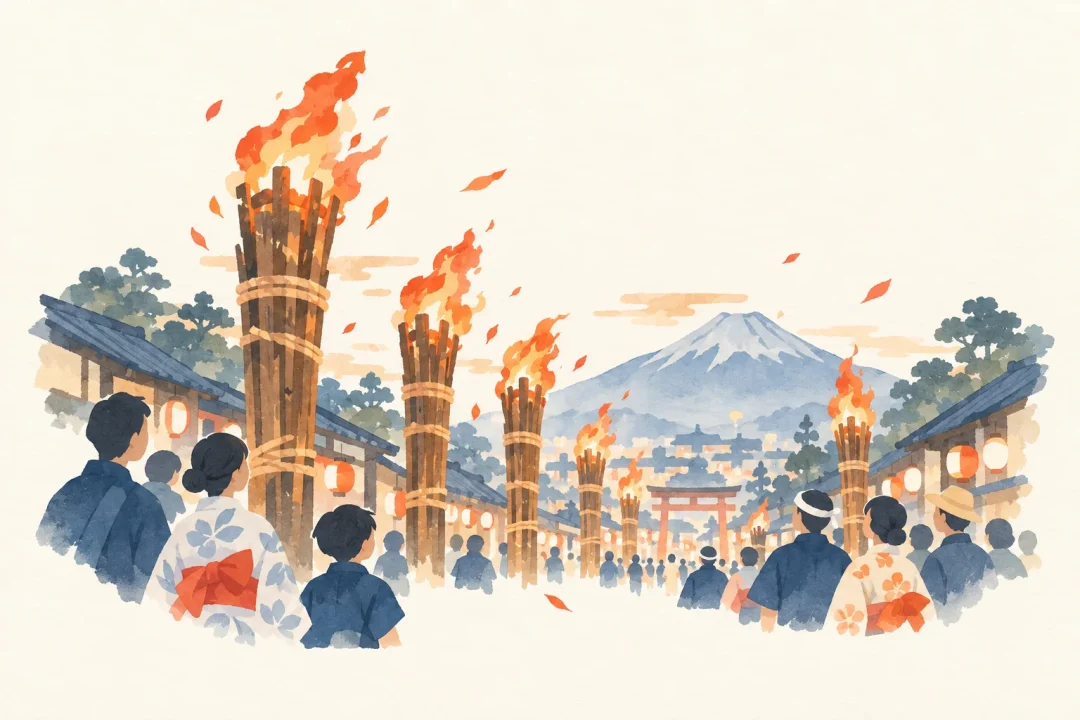
A South Yamashiro ritual that reflects New Year prayers in silence and the glow of great torches
Igomori Festival
Festival information
EVENT INFORMATION- Season / frequency
- At Hōsono Shrine, it is held for 3 days from the first Day of the Monkey of the new year; at Wakudeno Shrine, in mid-February / Every year
- Area
- Kyoto Prefecture・Seika Town and Kizugawa City(From Tokyo: approx. 2 h 10 min–2 h 40 min · bullet train)Prefecture-level estimate to a main station or airport, not the venue. Airport access, check-in and onward travel are extra; remote areas and islands can take much longer.
- Wishes behind the festival
- Last updated
- 2026/10/19
The Igomori Festival is a New Year ritual featuring a custom of observing silence, great torches, and agricultural rites. Traditions of the festival are found at both Hōsono Shrine and Wakudeno Shrine, and the rituals and timing vary by venue.
Photo credits and terms of use
Photographer: 板野洋八 File:Igomorimaturi.JPG / Wikimedia Commons / CC BY-SA 4.0 Own work by the contributorDisplay size only adjusted.May differ from the event currently featured.Photo credits and terms of use
Photographer: 板野洋八 File:Igomorimaturi hikitunanogi.JPG / Wikimedia Commons / CC BY-SA 4.0 Own work by the contributorDisplay size only adjusted.May differ from the event currently featured.Photo credits and terms of use
Photographer: Kochizufan File:祝園神社いごもり祭 大松明の火付け場.jpg / Wikimedia Commons / CC0 Own work by the contributorDisplay size only adjusted.May differ from the event currently featured.About Igomori Festival
The Igomori Festival is a New Year ritual observed at shrines in the South Yamashiro region of Kyoto Prefecture.
At Hōsono Shrine, it is also called the “Silent Festival” and is designated an Intangible Folk Cultural Property of Kyoto Prefecture.
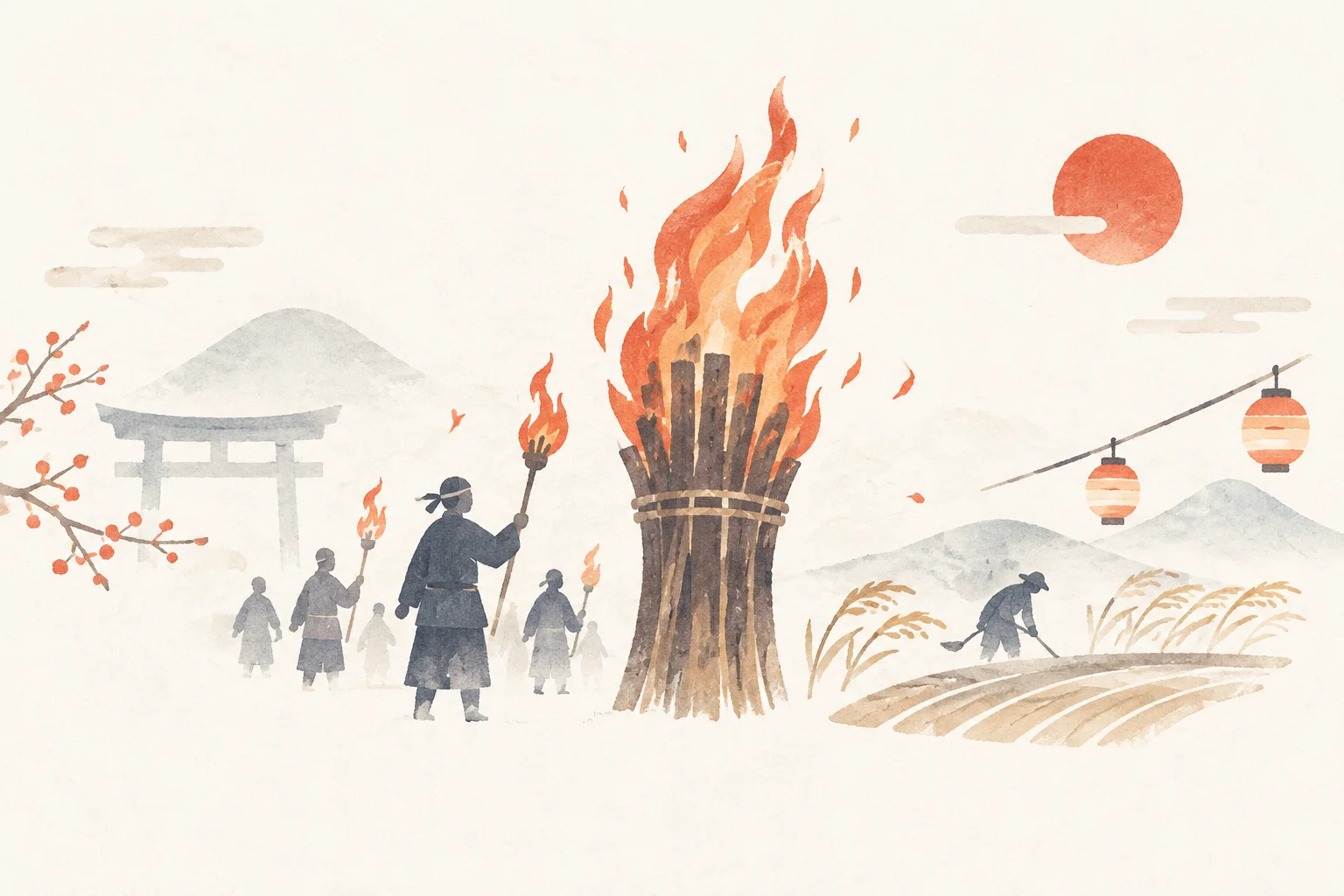
Wakudeno Shrine also carries on the Igomori Festival as an event associated with agricultural rites and prayers for a good harvest.
A distinctive feature is the custom of maintaining silence to welcome the gods.
Source: いごもり祭 - Wikipedia / 祝園神社の「いごもり祭」(令和7年) | せいか舎
Festival highlights
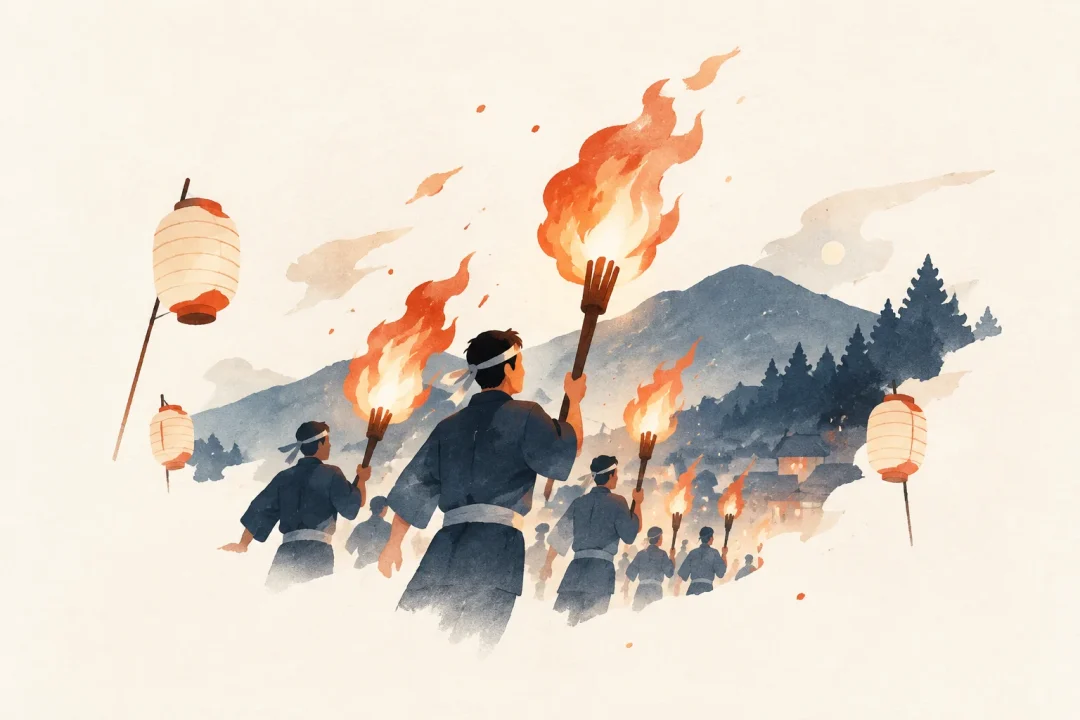
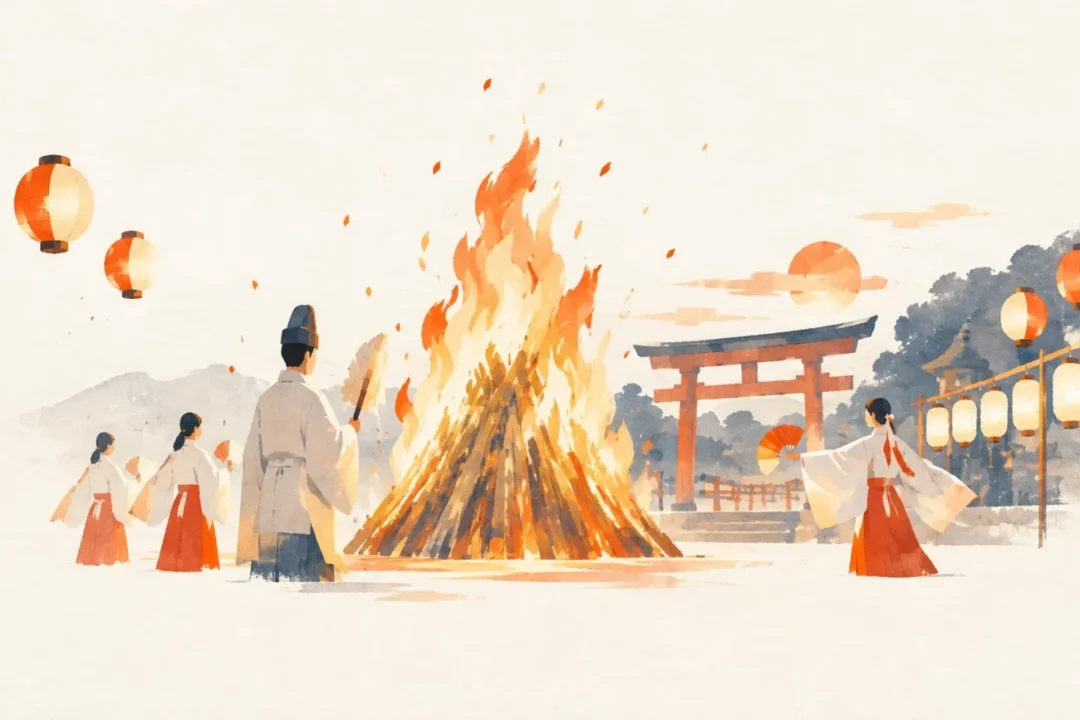
Highlights include great torches illuminating the at night and a ritual tug-of-war with a rope made of bamboo and shaped like an evil spirit.
At Hōsono Shrine, the Ota Ritual proceeds toward the sacred site with a great torch at the head of the procession; at Wakudeno Shrine, great torches are lit after the Gate Ceremony.
Scenes such as the offering of sacred sake, the offering of a meal, and rice planting also preserve agricultural rites from the Muromachi period.
Source: いごもり祭(居籠祭) | イベント一覧 | 京都府観光連盟公式サイト
A South Yamashiro ritual that reflects New Year prayers in silence and the glow of great torches
What to expect
The festival spans several days and includes rituals, a procession of great torches, agricultural rites, and tug-of-war.
At Hōsono Shrine, visitors can watch the procession of great torches, but the rituals in the sacred rice field, the site of the rites, are not open to the public.
At Wakudeno Shrine, the first day features the Gate Ceremony and great torches, while the second day includes the offering of sacred sake and rice planting.
The local custom of observing silence is also a distinctive feature of the festival.
Location and access
- Address
Seika Town and Kizugawa City
Host municipality 京都府精華町 · Kizugawa City
This map shows the surrounding area, not the exact venue location.
Dates and season
- Season
At Hōsono Shrine, it is held for 3 days from the first Day of the Monkey of the new year; at Wakudeno Shrine, in mid-February
- Frequency
Every year
Origins and History of Igomori Festival
The Igomori Festival at Hōsono Shrine is said to date back to the Nara period.
It is associated with a tradition that the shrine was founded after Kasuga Daimyōjin was invited there to calm the vengeful spirit of Takehaniyasuhiko.
In the past, residents are said to have stayed inside their homes during the festival to welcome the gods, living quietly without making a sound.
Although this custom is gradually fading, the festival and the tradition of honoring the gods at the start of the new year continue to be passed down.
Official information
For information about events at Hōsono Shrine, see Seika Sha’s “Hōsono Shrine’s ‘Igomori Festival.’”
Event information for Wakudeno Shrine is available on the Kyoto Prefecture Tourism Federation’s official website under “Igomori Festival (居籠祭).”
Details and dates vary by venue, so check the relevant shrine’s information before visiting.
Japanese Festivals.jp Editorial Team
Celebrating local culture and helping you discover a side of Japan you never knew.
Article updated: 2026/10/19
Submit information or a correction Submit photos of this festival