A dedication festival in Mitsu Town, entrusting wishes to drums and dances of the Seven Lucky Gods
Hikoma Shrine and Hachiman Shrine festival: Sasa Odori and Seven Lucky Gods dances
Festival information
EVENT INFORMATION- Location
- Hikoma Shrine, Hachiman Shrine
- Area
- Aichi Prefecture・Toyokawa City(From Tokyo: approx. 1 h 40 min–2 h · bullet train)Prefecture-level estimate to a main station or airport, not the venue. Airport access, check-in and onward travel are extra; remote areas and islands can take much longer.
- Highlights and activities
- Wishes behind the festival
- Participation / viewing
- Spectators welcome
- Required number of participants
- The Sasa Odori has 3 performers (1 large-drum player and 2 small-drum players).
- Last updated
- 2026/10/19
A festival of Hikoma Shrine and Hachiman Shrine, passed down in Umano, Mitsu Town, Toyokawa City, Aichi Prefecture. The Sasa Odori, performed with drums worn on the chest, and the Seven Lucky Gods dances, using a staff, bells, and a rope, are dedicated in prayer for a bountiful harvest and a good catch of seafood.
About Hikoma Shrine and Hachiman Shrine festival: Sasa Odori and Seven Lucky Gods dances
A dedication event featuring the Sasa Odori and Seven Lucky Gods dances, passed down as part of the festivals of Hikoma Shrine and Hachiman Shrine.
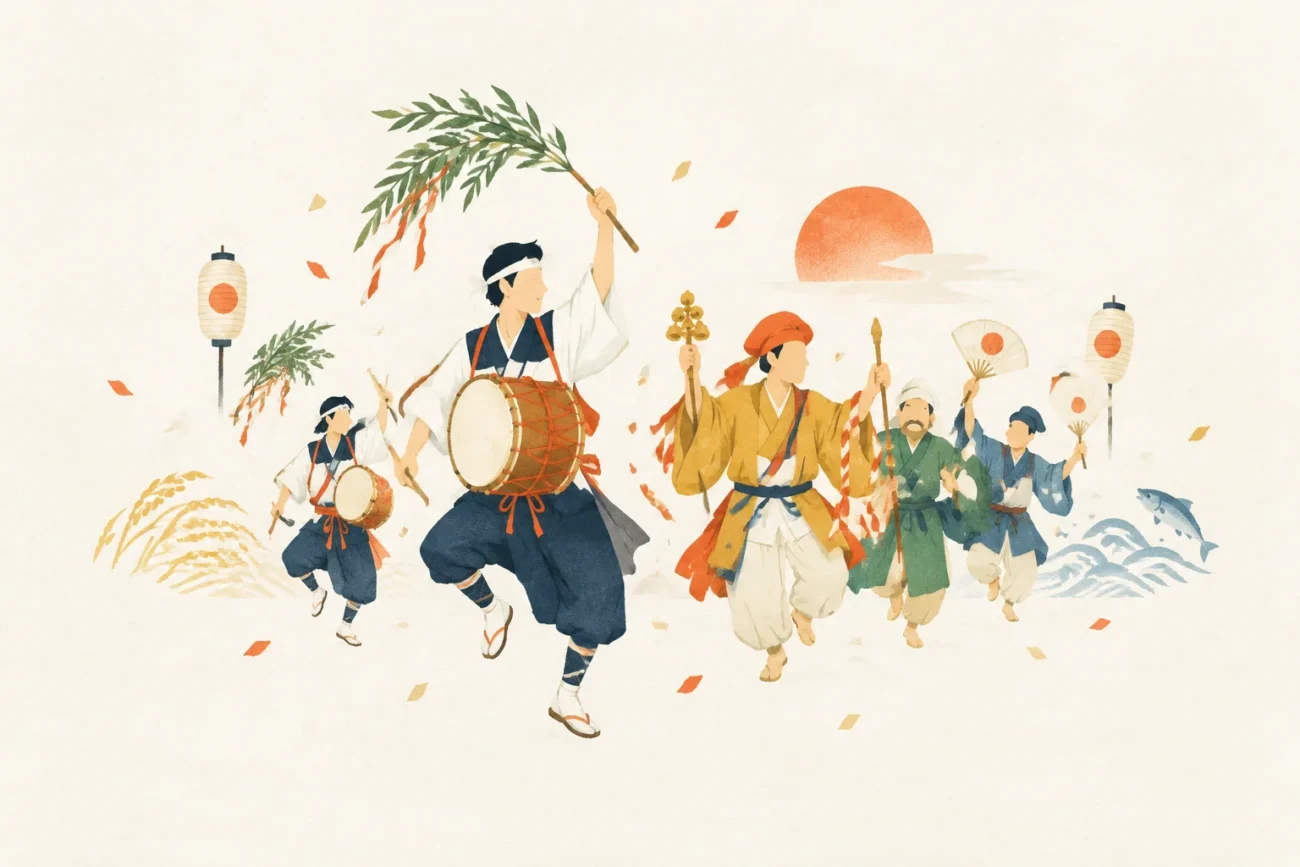
In the Sasa Odori, 3 young men wearing drums on their chests dance to songs. The Seven Lucky Gods dances feature 3 dances using a staff, bells, and a rope.
The festival is associated with the Umano area of Mitsu Town, where it is held in prayer for a bountiful harvest and a good catch of seafood.
Source: 笹踊り・七福神踊り | イベント検索 | 【公式】愛知県の観光サイトAichi Now / 豊川市 景観資源リスト - 愛知県
Festival highlights
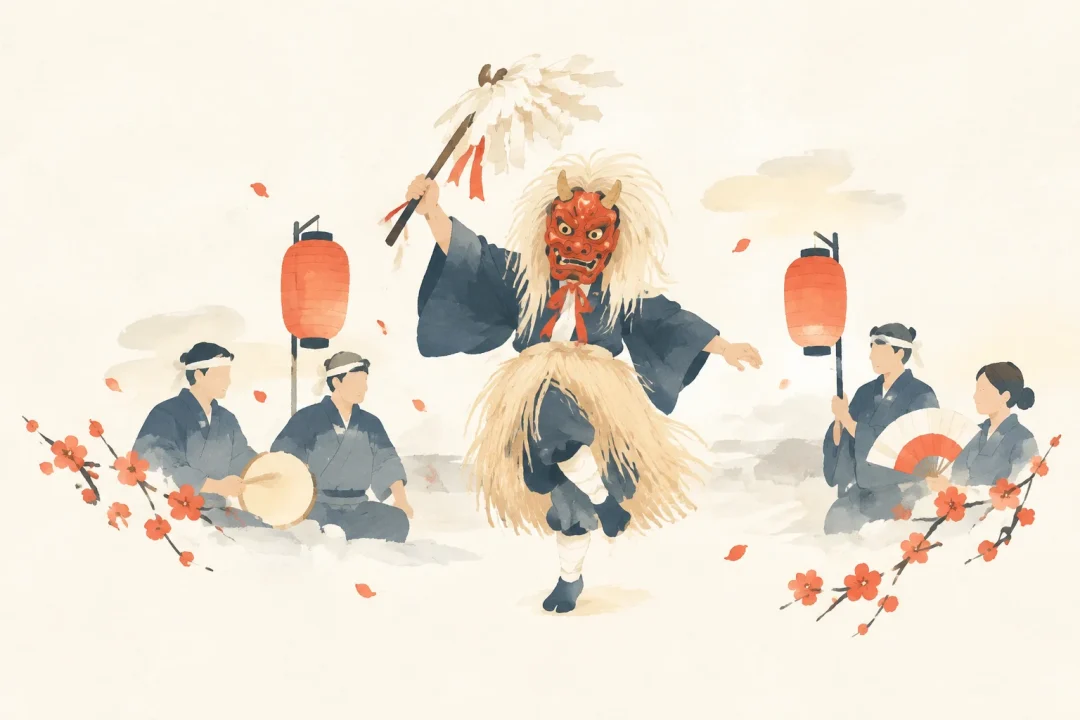
In the Sasa Odori, 3 performers called “Yanyō-gami” beat the drums on their chests, with 1 large-drum player and 2 small-drum players, and dance in a three-way formation.
The Seven Lucky Gods dances include a staff dance to drive away evil, a bell dance wishing for a bountiful harvest, and a rope dance wishing for a good catch.
Another distinctive feature is the appearance of a white fox in a role associated with being Benzaiten’s messenger.
A dedication festival in Mitsu Town, entrusting wishes to drums and dances of the Seven Lucky Gods
What to expect
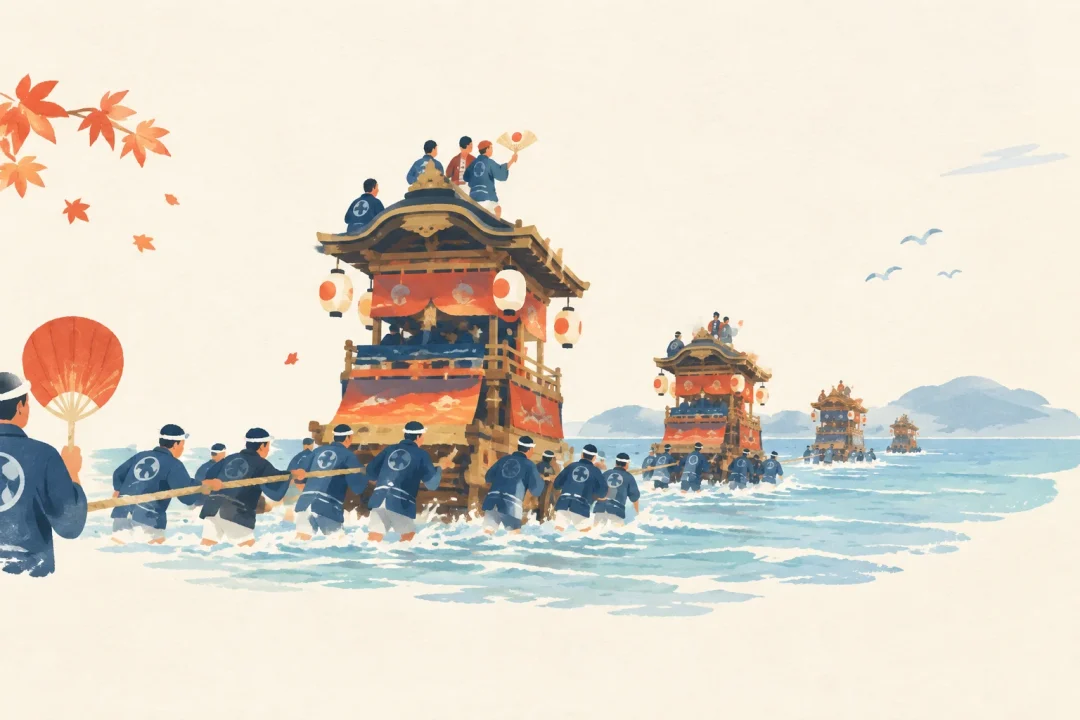
During the festival, a is carried in procession from Hikoma Shrine to Hachiman Shrine, accompanied by performances of the Sasa Odori and Seven Lucky Gods dances at designated locations.
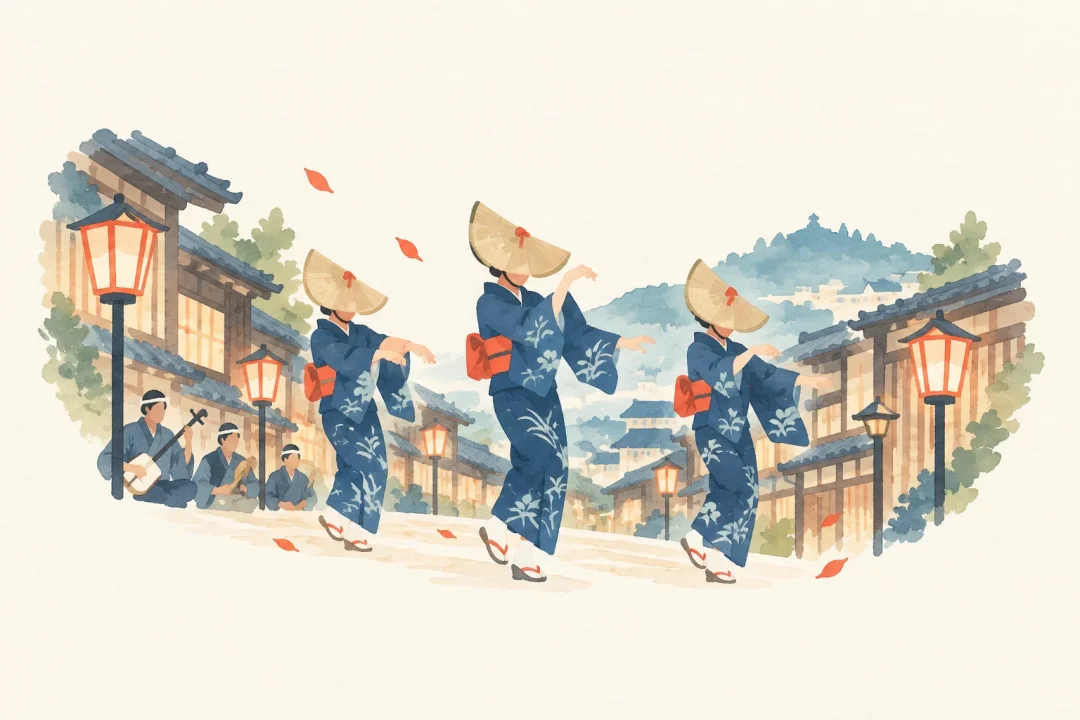
The Sasa Odori is performed by 3 people wearing costumes such as jinbaori jackets and tattsuke hakama trousers, dancing to songs by the musicians and flute interludes.
In the Seven Lucky Gods dances, performers wearing masks and costumes perform 3 dances, using a staff, bells, and a rope in turn.
Source: ① 引馬神社 (笹踊りと七福神踊り) | 御津町商工会
How to take part
Visitors can watch the event.
必要人数:笹踊りは3人(大太鼓1人、小太鼓2人)です。
Location and access
- Venue and address
Hikoma Shrine (1 Umano, Umeda, Mitsu Town, Toyokawa City, Aichi 441-0311) and Hachiman Shrine (Shiohama, Umano, Mitsu Town, Toyokawa City, Aichi 441-0311).
- Train and bus
It is about a 25-minute walk or about 5 minutes by taxi from Aichi-Mito Station on the JR line.
From Meitetsu, it is about 15 minutes by taxi from either Kō Station or Ina Station.
- By car
It is about 25 minutes from the Otowa-Gamagori Interchange on the Tomei Expressway.
Address 1 Umano, Umeda, Mitsu Town, Toyokawa City, Aichi 441-0311 (Hikoma Shrine); Shiohama, Umano, Mitsu Town, Toyokawa City, Aichi 441-0311 (Hachiman Shrine)
Tips for your visit
As the dedication locations span both Hikoma Shrine and Hachiman Shrine, it is best to check the venue before visiting.
An access map showing Hikoma Shrine and the location of Hachiman Shrine are provided.
The festival’s dedication events take place at designated locations, such as , so please follow local guidance and watch without obstructing the performers or the mikoshi procession.
Accommodation and hotels PR
Showing nearby accommodation.
Prices and availability are current at the time of retrieval. For multi-night stays, only the first night’s price is shown. Confirm the final price and directions to the venue with the booking provider. Select your dates again when using the area search link. Search area: within 3 km of Central Aichi Prefecture / Toyokawa City (the search is not centered on the festival venue)
Nearby attractions

御油の松並木資料館
愛知県豊川市の博物館・美術館のスポットです。

砥鹿神社
愛知県豊川市にある神社

豊川市桜ヶ丘ミュージアム
愛知県豊川市にある博物館と美術館の機能を持つ複合文化施設
Origins and History of Hikoma Shrine and Hachiman Shrine festival: Sasa Odori and Seven Lucky Gods dances
The Sasa Odori is said to be a passed down since the Kamakura period. The Seven Lucky Gods dances are said to have developed their own distinctive style by incorporating dances from the Miya and Katahara areas.
The Sasa Odori was originally passed down in the western village, which served Hachiman Shrine. After the war, the eastern and western villages joined together with the aim of fostering harmony, and began performing both dances.
A record remains that the costumes for the Seven Lucky Gods dances were renewed in Tenpō 7 (1836).
Official information
The Aichi Prefecture tourism website provides information about the venue and festival events.
The Toyokawa City Tourism Association is listed as the contact, with telephone number 0533-89-2206, and its official website is provided among the related links.
The same information also gives the locations of Hikoma Shrine and Hachiman Shrine.
Hikoma Shrine and Hachiman Shrine festival: Sasa Odori and Seven Lucky Gods dances at a Glance
The Sasa Odori and Seven Lucky Gods dances at the Hikoma Shrine and Hachiman Shrine festival are traditional events in Umano, Mitsu Town, featuring the Sasa Odori with drums and the Seven Lucky Gods dances using a staff, bells, and a rope.
This festival is held in prayer for a bountiful harvest and a good catch of seafood, and takes place at both shrines in conjunction with the mikoshi procession.
The dances said to have been passed down since the Kamakura period, and the history of how they have been preserved through the uniting of local communities, are also worth noting.
Japanese Festivals.jp Editorial Team
Celebrating local culture and helping you discover a side of Japan you never knew.
Article updated: 2026/10/19
Submit information or a correction Submit photos of this festival