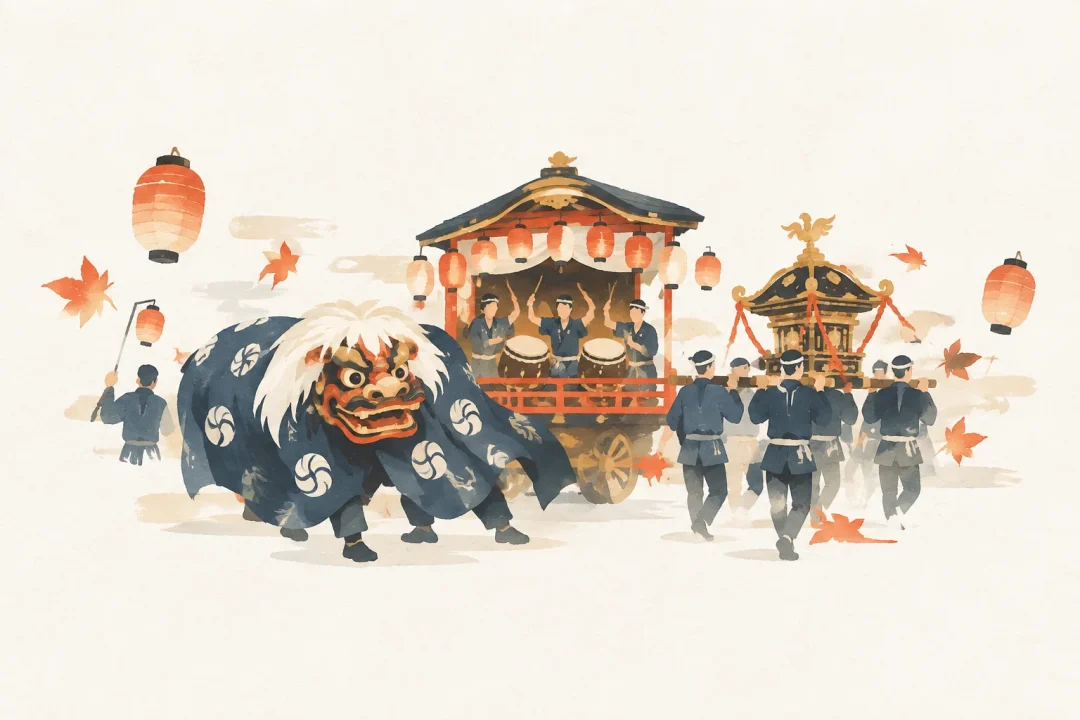
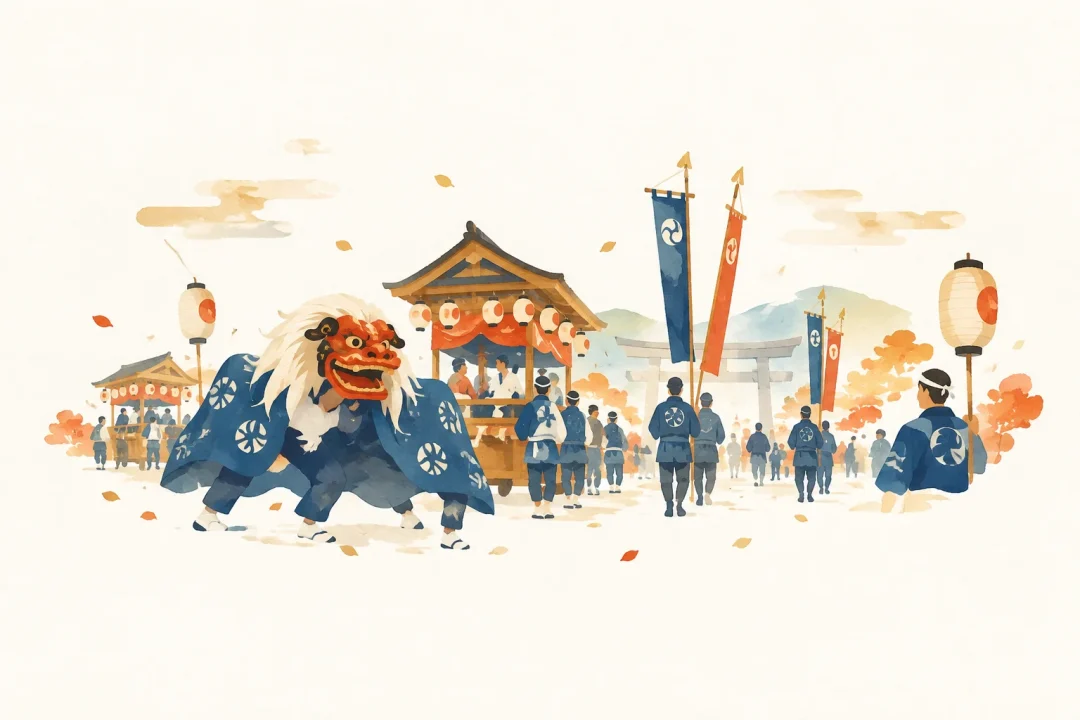
An ancient lion kagura conveyed through a double-headed mask and a quiet presence
The Kashira Ritual at Habu Hachiman Shrine
Festival information
EVENT INFORMATION- Location
- Habu Hachiman Shrine
- Area
- Wakayama Prefecture・Hidakagawa Town(From Tokyo: approx. 3 h 30 min–4 h · bullet train + connecting train)Prefecture-level estimate to a main station or airport, not the venue. Airport access, check-in and onward travel are extra; remote areas and islands can take much longer.
- Highlights and activities
- Last updated
- 2026/11/20
An old form of lion dedicated at the autumn festival of Habu Hachiman Shrine, distinguished by its double-headed lion mask and four dancers.
About The Kashira Ritual at Habu Hachiman Shrine
The Kashira Ritual at Habu Hachiman Shrine is a dedicated at the shrine’s autumn festival.
The lion dance is also called “O-Kashira” and is cherished by local residents.
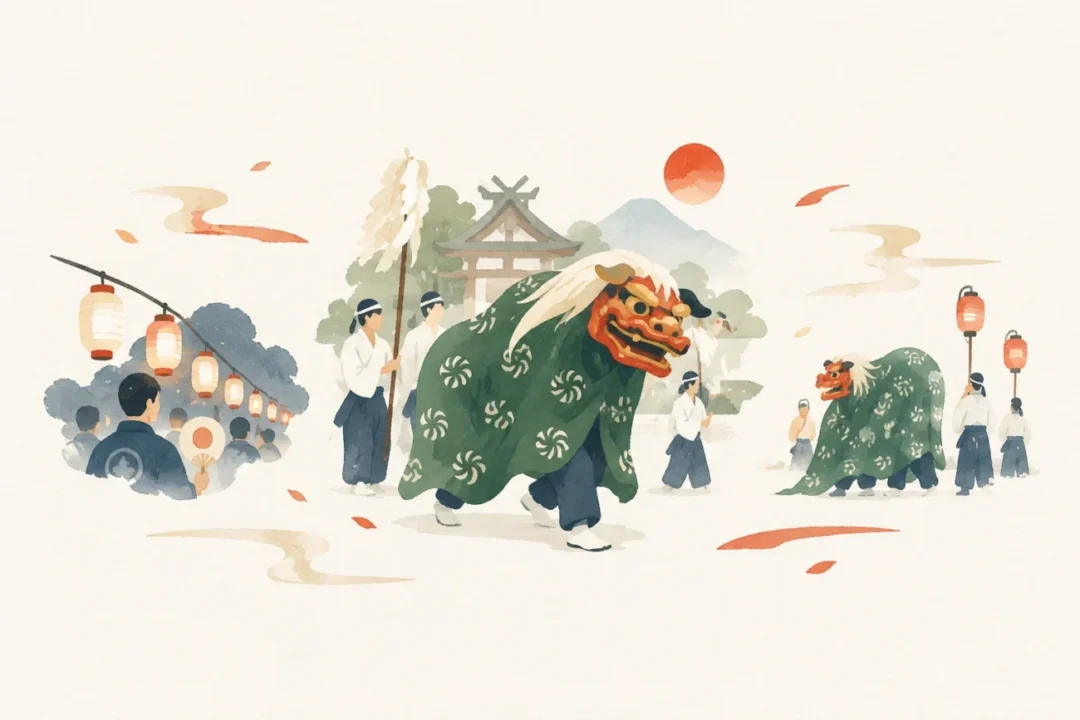
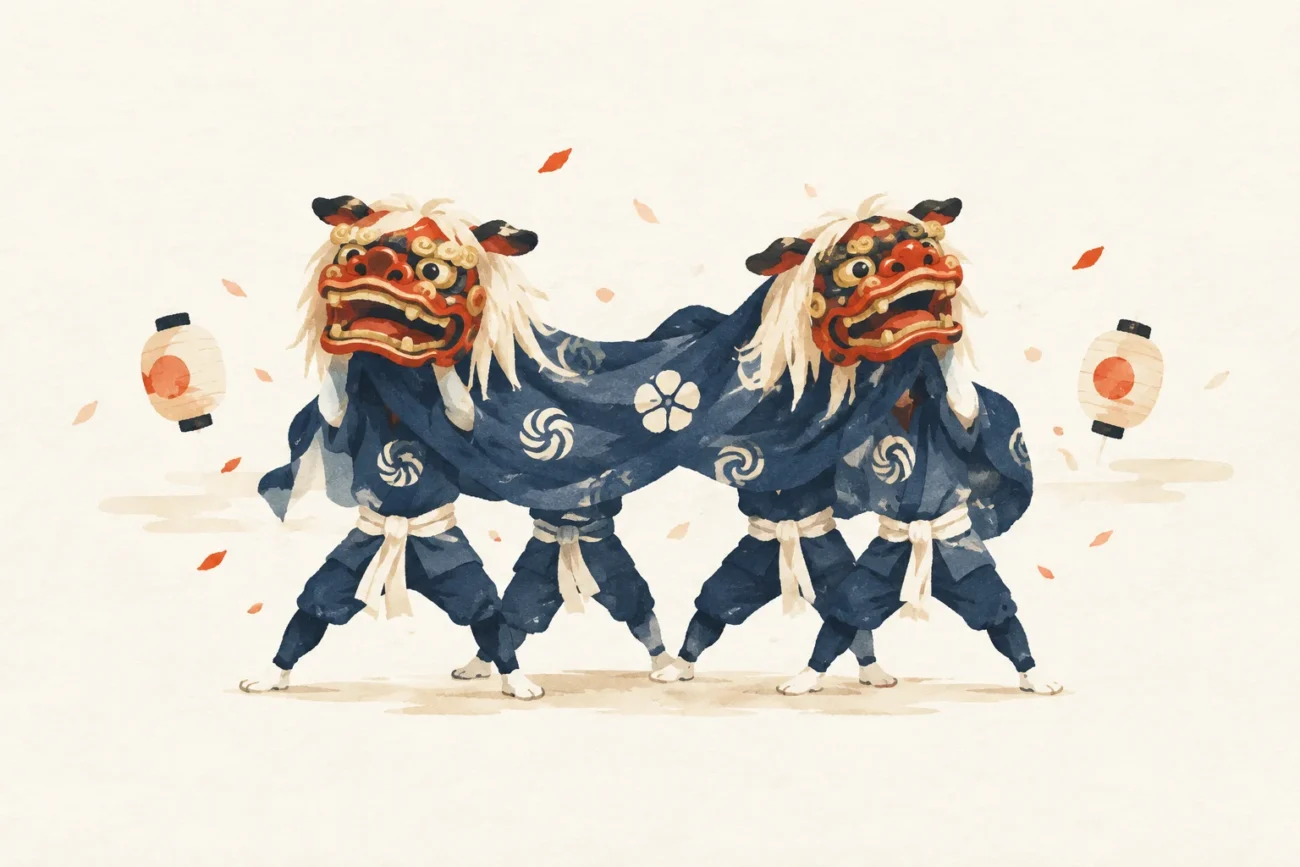
Among the forms of lion kagura passed down in the Hidaka region, this one is distinguished by its use of a double-headed lion mask and four dancers.
Festival highlights
The main highlight is the double-headed lion mask, made by joining two heads together.
Unlike the more common form performed by two dancers, this dance is performed by four, giving it a distinctive appearance compared with other lion dances passed down in the Hidaka region.
The dance is performed without music from flutes, drums, gongs, or other instruments. Another feature preserving its ancient form is that it is danced only to the sounds and presence of the halberds carried by male and female demons and the sasara.
An ancient lion kagura conveyed through a double-headed mask and a quiet presence
What to expect
At the ritual, a lion dance is dedicated as lion kagura.
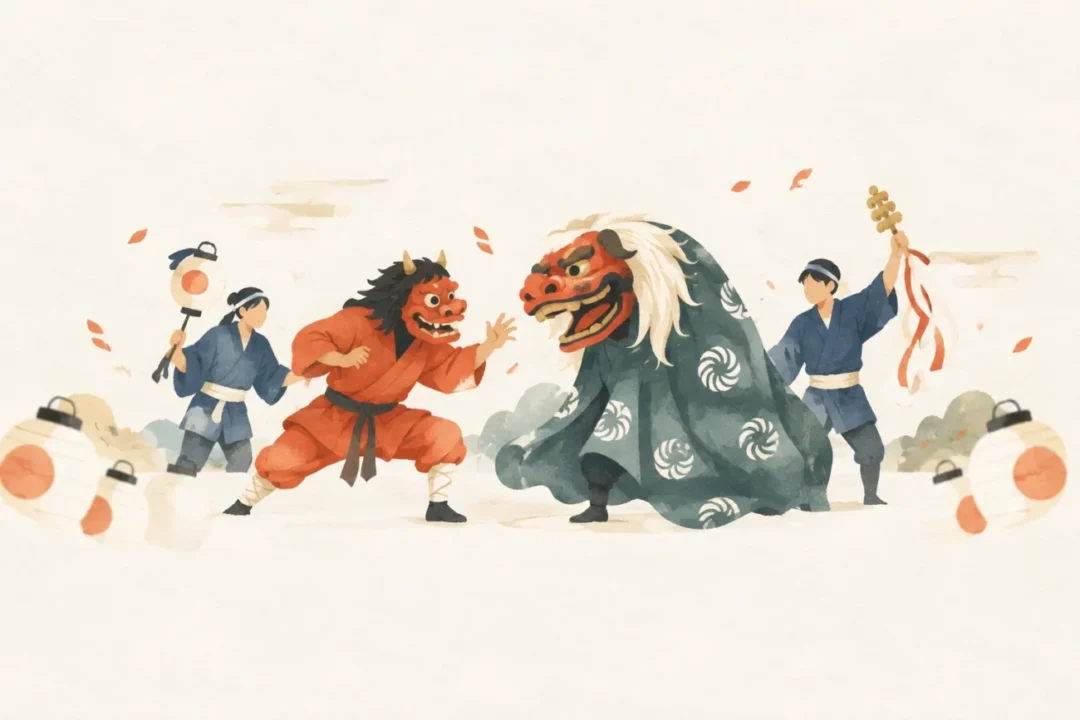
The lion dances accompanied by the sounds and presence of the sasara, while male and female demons carry halberds.
No music from flutes, drums, gongs, or other instruments is used. The roles and forms known as toya, dancers, demons, jubako, boxes, and kagura are linked to lion traditions that survive in the Hidaka region.
Location and access
- Venue and address
Habu Hachiman Shrine (Habu, Hidakagawa Town, Hidaka District)
Address Habu, Hidakagawa Town, Hidaka District, Wakayama Prefecture
Origins and History of The Kashira Ritual at Habu Hachiman Shrine
This lion kagura preserves an extremely ancient form: it is danced without music from flutes, drums, gongs, or other instruments, to the sounds and presence of halberds and sasara.
Said to evoke ancient gigaku performances, this form of lion kagura has been passed down as “Toya Shishi” at 8 or more locations in the Hidaka region.
The lion dance at Habu Hachiman Shrine preserves its distinctive form, featuring a double-headed lion mask and four dancers, and became a prefecture-designated intangible folk cultural property on April 20, 1994.
Official information
Wakayama Prefecture’s cultural property information lists the Kashira Ritual at Habu Hachiman Shrine as a prefecture-designated intangible folk cultural property.
The Kashira Ritual at Habu Hachiman Shrine at a Glance
The Kashira Ritual at Habu Hachiman Shrine is a lion kagura beloved by the local community and dedicated at the autumn festival.
It is performed by four dancers using a double-headed lion mask, without flutes, drums, gongs, or other instruments; instead, the dance is accompanied by the sounds and presence of the demons’ halberds and sasara.
It is a prefecture-designated intangible folk cultural property that preserves an old form of lion kagura found in the Hidaka region.
Sources and references
Accommodation and hotels PR
Showing nearby accommodation.
Prices and availability are current at the time of retrieval. For multi-night stays, only the first night’s price is shown. Confirm the final price and directions to the venue with the booking provider. Select your dates again when using the area search link. Search area: within 3 km of Central Wakayama Prefecture / Hidakagawa Town (the search is not centered on the festival venue)
Japanese Festivals.jp Editorial Team
Celebrating local culture and helping you discover a side of Japan you never knew.
Article updated: 2026/11/20