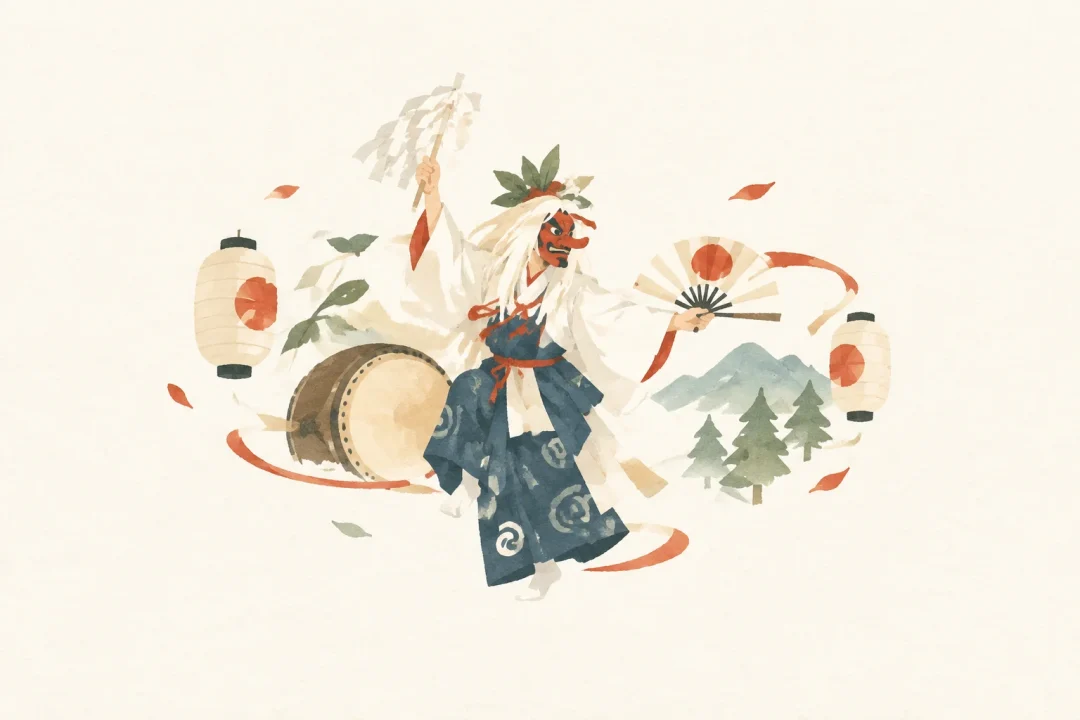
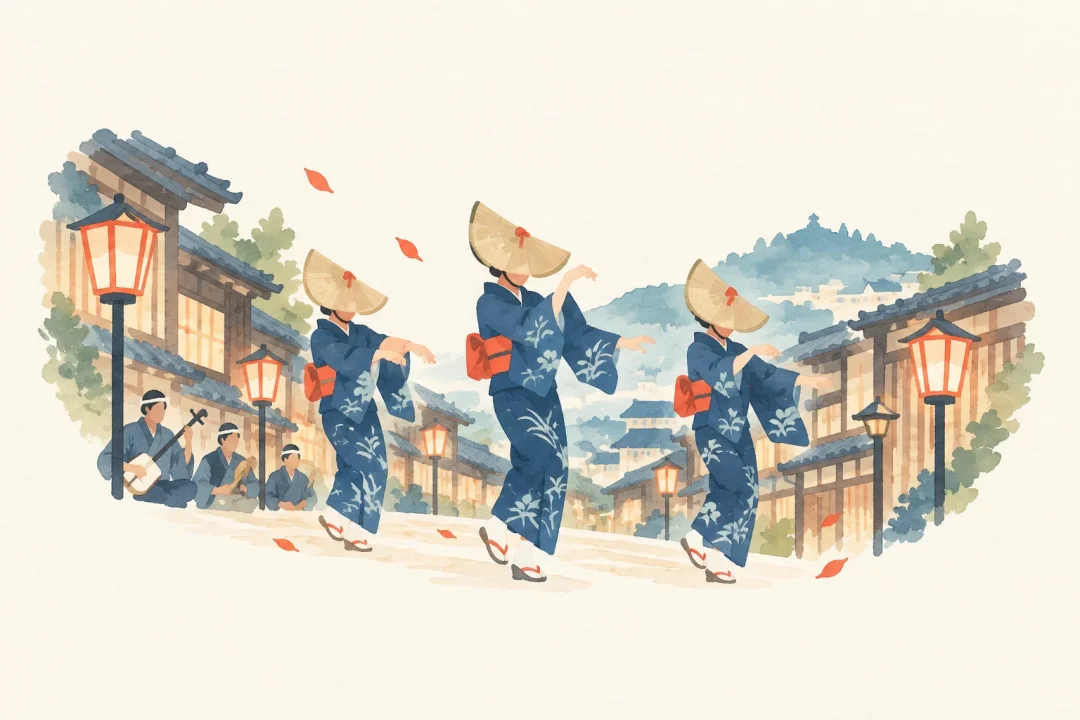
Gokase’s Furyu dance, brought to life by a procession of warriors and circle dances
Gokase no Arare Odori
The 2026 edition of Gokase no Arare Odori has ended.
Festival information
EVENT INFORMATION- Dates
- 2026/09/27Ended
- Season / frequency
- The Sunday closest to September 29 / Once a year
- Location
- Nakatou Shrine, Yamashiro Shrine (Arare Odori Hall)
- Area
- Miyazaki Prefecture・Gokase Town(From Tokyo: approx. 1 h 40 min–2 h · flight time only)Prefecture-level estimate to a main station or airport, not the venue. Airport access, check-in and onward travel are extra; remote areas and islands can take much longer.
- Highlights and activities
- Wishes behind the festival
- Participation / viewing
- Spectators welcome
- Participation fee
- Admission free
- Last updated
- 2026/10/19
This traditional performing art of Gokase Town brings together a procession of warriors, the sounds of drums and flutes, and dances performed in a circle.
About Gokase no Arare Odori
Gokase no Arare Odori is a folk performing art in the Furyu tradition, passed down in Gokase Town, Miyazaki Prefecture.
It is said to have taken its present form after beginning with the lord of Sakamoto Castle, who established the practice of dedicating it to the guardian deity of Sankasho Shrine.
The people of Sakamoto district, comprising about 250 households, share the various roles and pass down the tradition while maintaining the order of the procession and flags.
It is designated a National Important Intangible Folk Cultural Property and is also registered as one of the UNESCO Intangible Cultural Heritage entries in the “Furyu-odori” category.
Source: 国指定文化財等データベース
Festival highlights
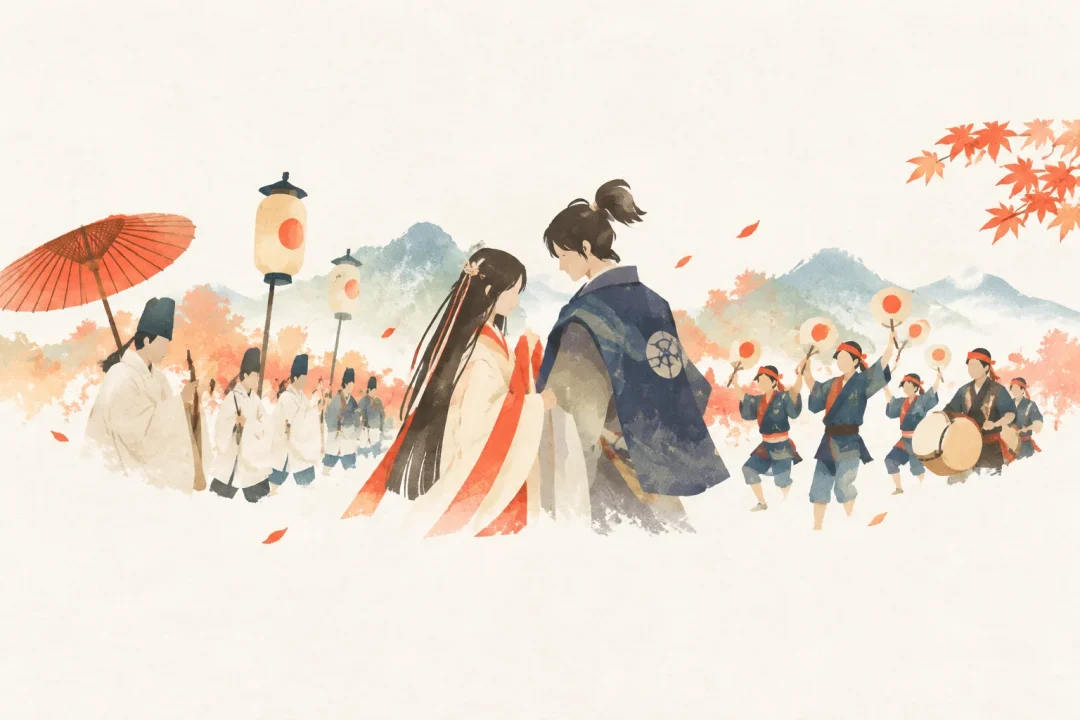
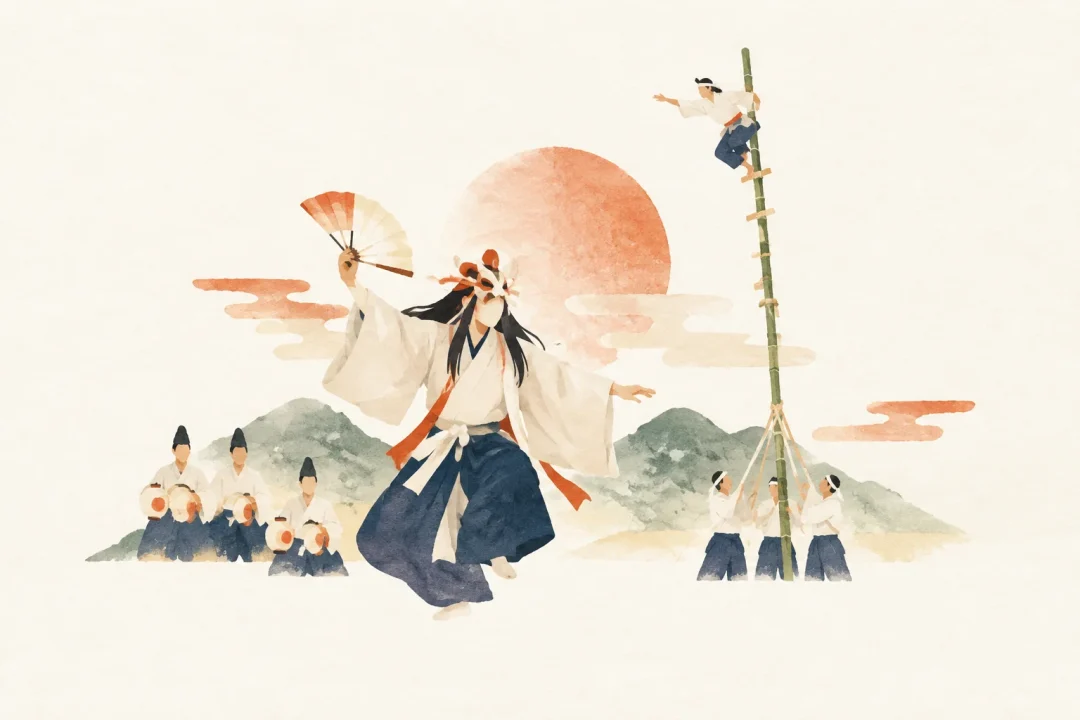
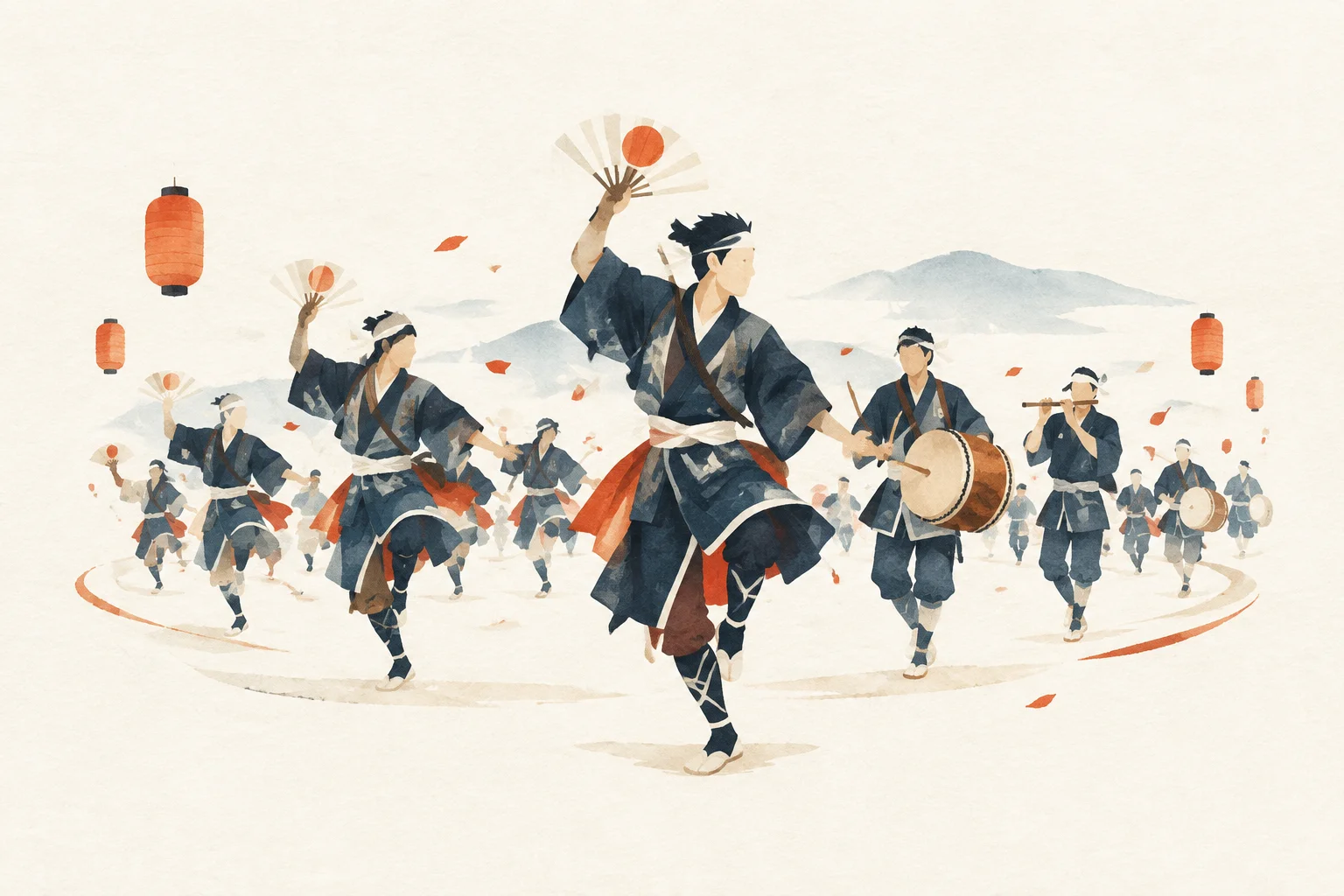
A highlight is the large procession led by more than 60 performers dressed as warriors.
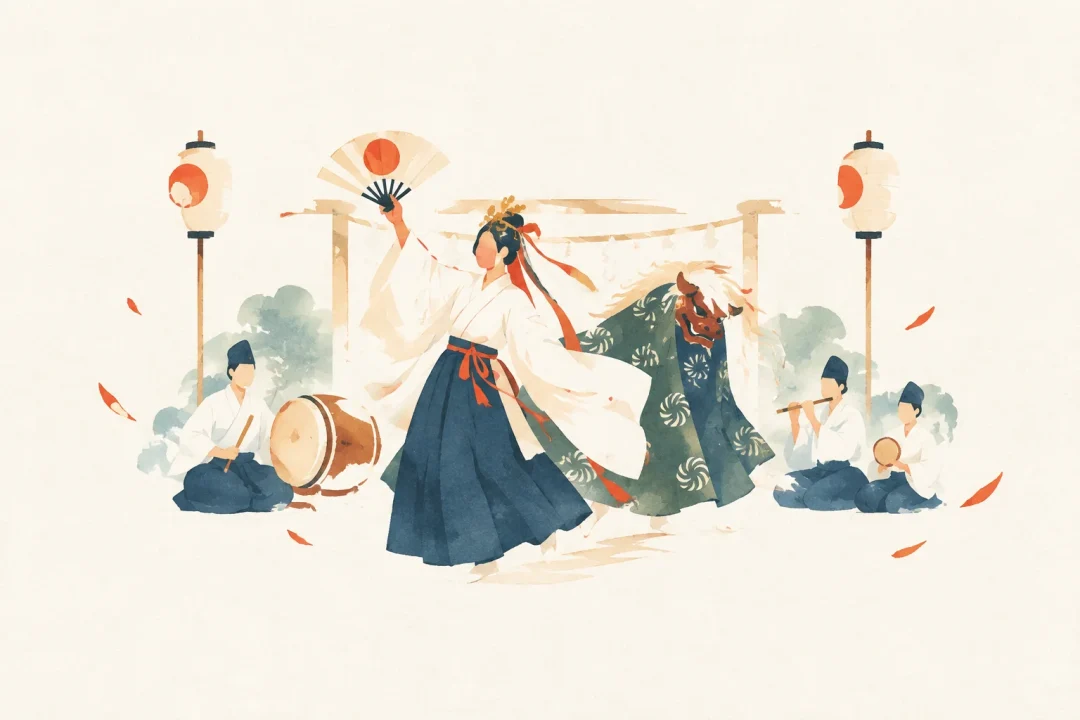
They are followed by participants carrying flags, spears, long swords, bows, and guns, then by musicians playing drums, small drums, bells, flutes, and conch shells.
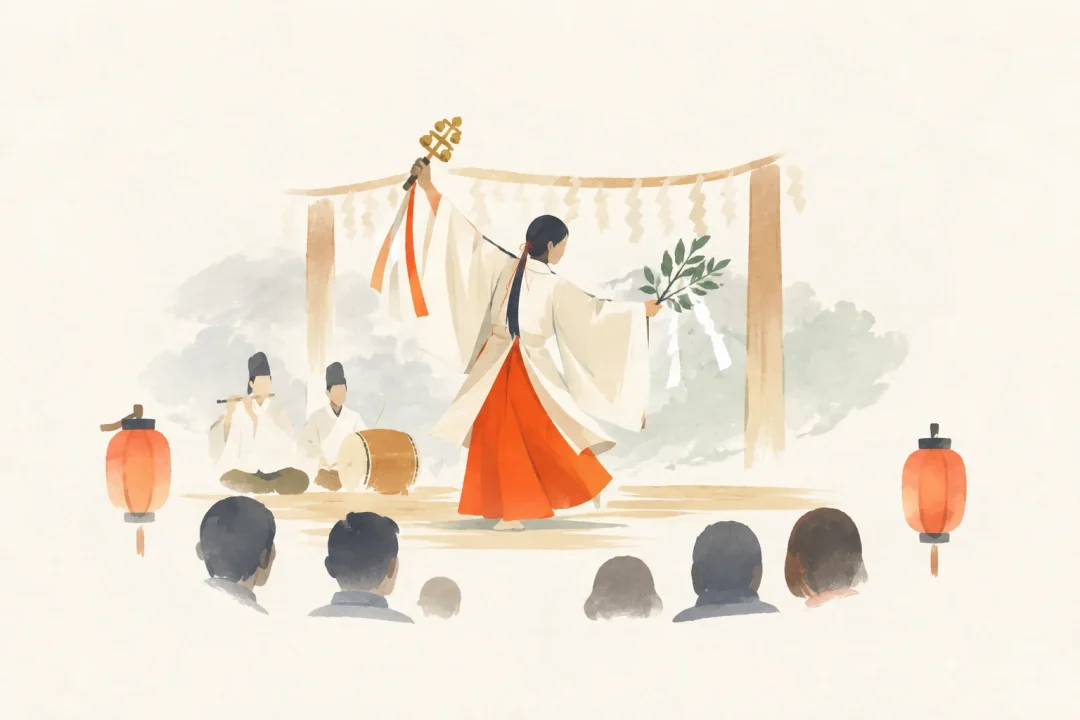
At the dance ground, the dancers circle the central drum and perform more than 10 pieces to story-like songs and Buddhist chants.
When guns are fired during the entrance or exit dances, the dancing becomes more vigorous and spirited.
Gokase’s Furyu dance, brought to life by a procession of warriors and circle dances
What to expect
On the day of the dedication, the dancers gather at the community center, put on their costumes, raise the flags, form a procession, and head to the shrine.
At the dance ground, they first perform the entrance piece, “Iriha,” then move on to “Naka-odori,” performed around a curtain and drums.
At the cue of a speech by the Shibōchi, they dance several pieces in sequence, with the final “Shingo-odori” also serving as the exit piece, “Deha.”
Each piece lasts about 30–40 minutes, and the entire program runs for about 6 hours.
How to take part
Visitors can watch the event.
参加費:入場無料
Location and access
- Venue and address
Nakatou Shrine, Yamashiro Shrine (Arare Odori Hall) / 3216 Sankasho, Gokase, Nishiusuki District, Miyazaki Prefecture
- By car
It takes about 60 minutes from Nobeoka Junction and about 40 minutes from Michi-no-Eki Tsujun Bridge.
- Parking
Available.
Source: 【終了】荒踊奉納 | イベント | 宮崎県公式観光サイト「みやざき観光ナビ」
Address 3216 Sankasho, Gokase, Nishiusuki District, Miyazaki Prefecture
Dates and season
2026 event information (the listed dates have passed)
In 2026, the event was scheduled for September 27 (Sunday), from 9 a.m. to 5 p.m. at Nakatou Shrine and Yamashiro Shrine (Arare Odori Hall).
It is usually held as the Sankasho Shrine Festival on the Sunday closest to September 29.
The traditional dedication dates are September 29 and September 30; accounts describe performances after Sankasho Shrine’s autumn festival, followed by dances at Nakatou Shrine and the Sakamoto Castle ruins.
Source: 荒踊り|文化デジタルライブラリー
Accommodation and hotels PR
Showing nearby accommodation.
Prices and availability are current at the time of retrieval. For multi-night stays, only the first night’s price is shown. Confirm the final price and directions to the venue with the booking provider. Select your dates again when using the area search link. Search area: within 3 km of Central Miyazaki Prefecture / Gokase Town (the search is not centered on the festival venue)
Nearby attractions
Nearby places in Gokase Town include Sankasho Shrine, Josennenji Temple, Gokase Town General Park G-Park, Gokase no Shirataki Waterfall, Mount Futagami, and Gokase Winery.
Sankasho Shrine, which is associated with Arare Odori, is said to be a place where the dance is dedicated.
Nearby places to visit include a variety of sites, such as shrines, parks, waterfalls, mountains, and a winery.
Origins and History of Gokase no Arare Odori
One tradition says that Sakamoto Iga-no-kami Masayuki, lord of Sakamoto Castle, founded the dance during the Tensho era, and that his grandson, Sakamoto Yamashiro-no-kami Nyudo Kyukaku, established the practice of dedicating it to Sankasho Shrine during the Keicho era.
Another theory holds that the dance was brought from Sakamoto in Omi Province.
Another account says it began to honor those who died in an epidemic in the late Sengoku period and to drive away the plague deity.
It was designated a National Important Intangible Folk Cultural Property in 1987 and registered as UNESCO Intangible Cultural Heritage in 2022.
Official information
Event information is available on the Miyazaki Prefecture official tourism website, “Miyazaki Kanko Navi.”
An explanation of its status as a cultural property is also available in the Agency for Cultural Affairs’ Database of Nationally Designated Cultural Properties.
These resources can serve as a starting point for learning more about the traditions and the history of its designation and registration.
Gokase no Arare Odori at a Glance
Gokase no Arare Odori is a large-scale Furyu dance featuring performers dressed as warriors, a procession of flags, the sounds of drums and flutes, and multiple dance pieces.
Centered on performances dedicated to Sankasho Shrine and other sites, the people of the Sakamoto district in Gokase have passed the tradition down, sharing the various roles among them.
There are several accounts of its origins, including one that connects it with honoring those who died in an epidemic and driving away the plague deity.
It is also recognized as a nationally designated cultural property and UNESCO Intangible Cultural Heritage.
Japanese Festivals.jp Editorial Team
Celebrating local culture and helping you discover a side of Japan you never knew.
Article updated: 2026/10/19
Submit information or a correction Submit photos of this festival