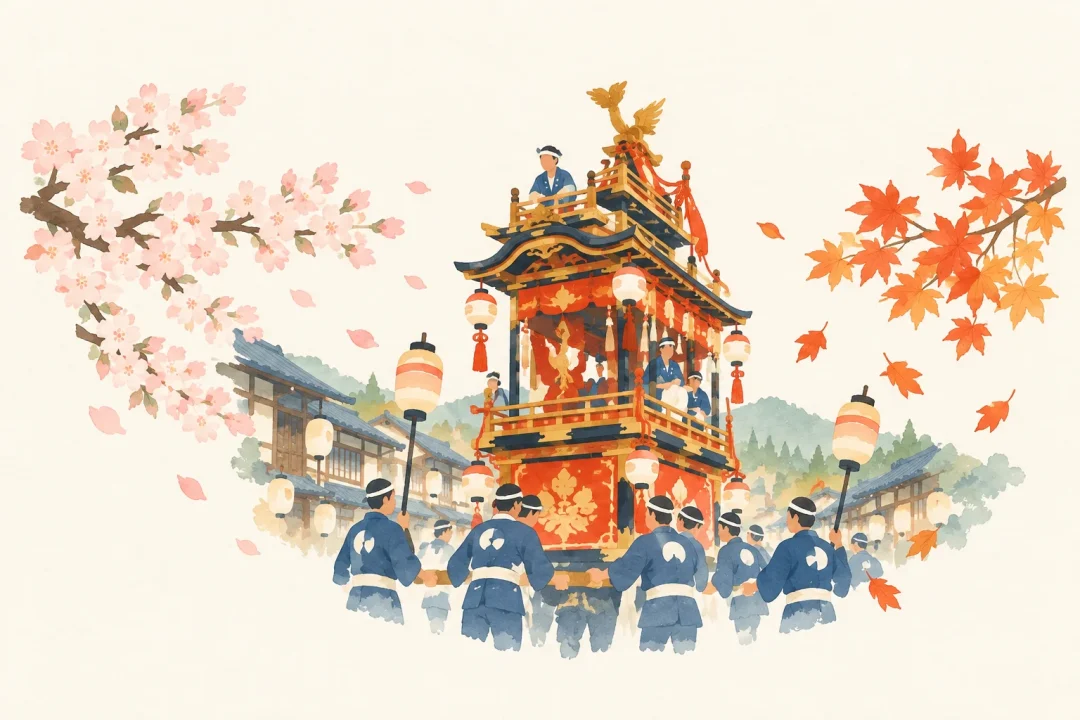
A traditional Gero festival entrusting prayers for a good harvest to hanagasa hats and rice-field performing arts
Gero’s Tanokami Festival
The 2026 edition of Gero’s Tanokami Festival has ended.
Festival information
EVENT INFORMATION- Dates
- 2026/02/07 〜 2026/02/14Ended
- Season / frequency
- Every year from February 7 through the 14th (the main events are on February 13 and the 14th) / Every year
- Location
- Gero Onsen Gassho Village–Mori Minashi Hachiman Shrine
- Area
- Gifu Prefecture・Gero City(From Tokyo: approx. 2 h–2 h 30 min · bullet train + connecting train)Prefecture-level estimate to a main station or airport, not the venue. Airport access, check-in and onward travel are extra; remote areas and islands can take much longer.
- Features
- Highlights and activities
- Wishes behind the festival
- Participation / viewing
- Spectators welcome
- Last updated
- 2026/10/19
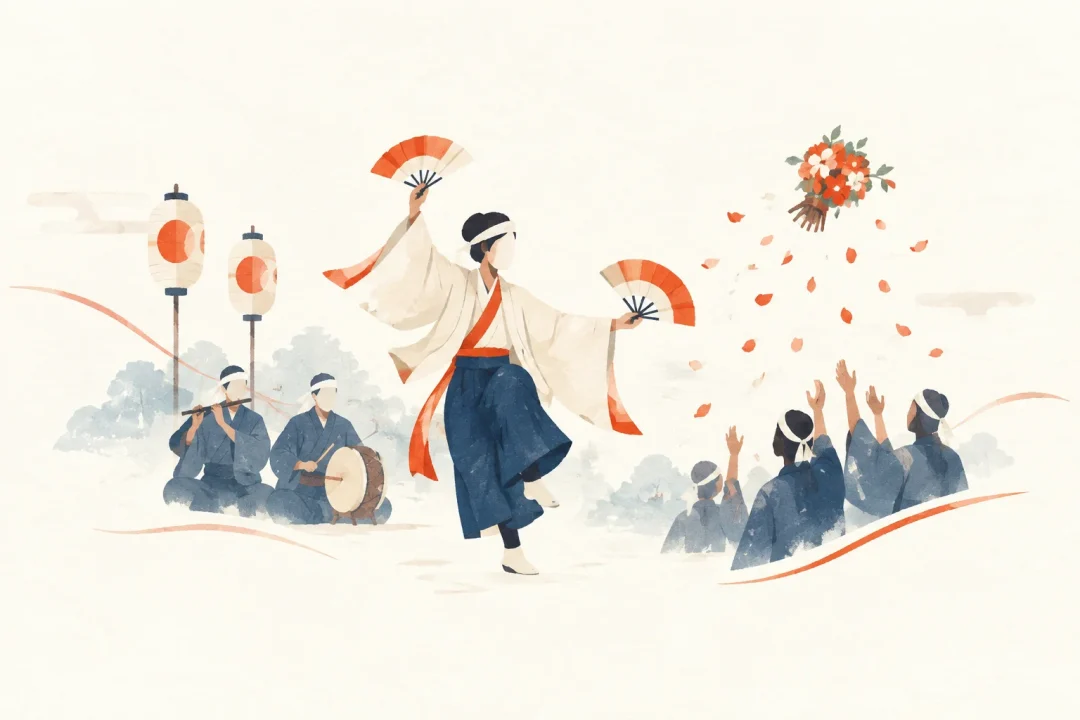
Gero’s Tanokami Festival preserves rice-field performing arts praying for a good harvest through dancers wearing hanagasa hats, a lion procession, and rice-field preparation gestures.
About Gero’s Tanokami Festival
Gero’s Tanokami Festival preserves ta-asobi and , performing arts that celebrate a good rice harvest in advance as a form of “pre-celebration.”
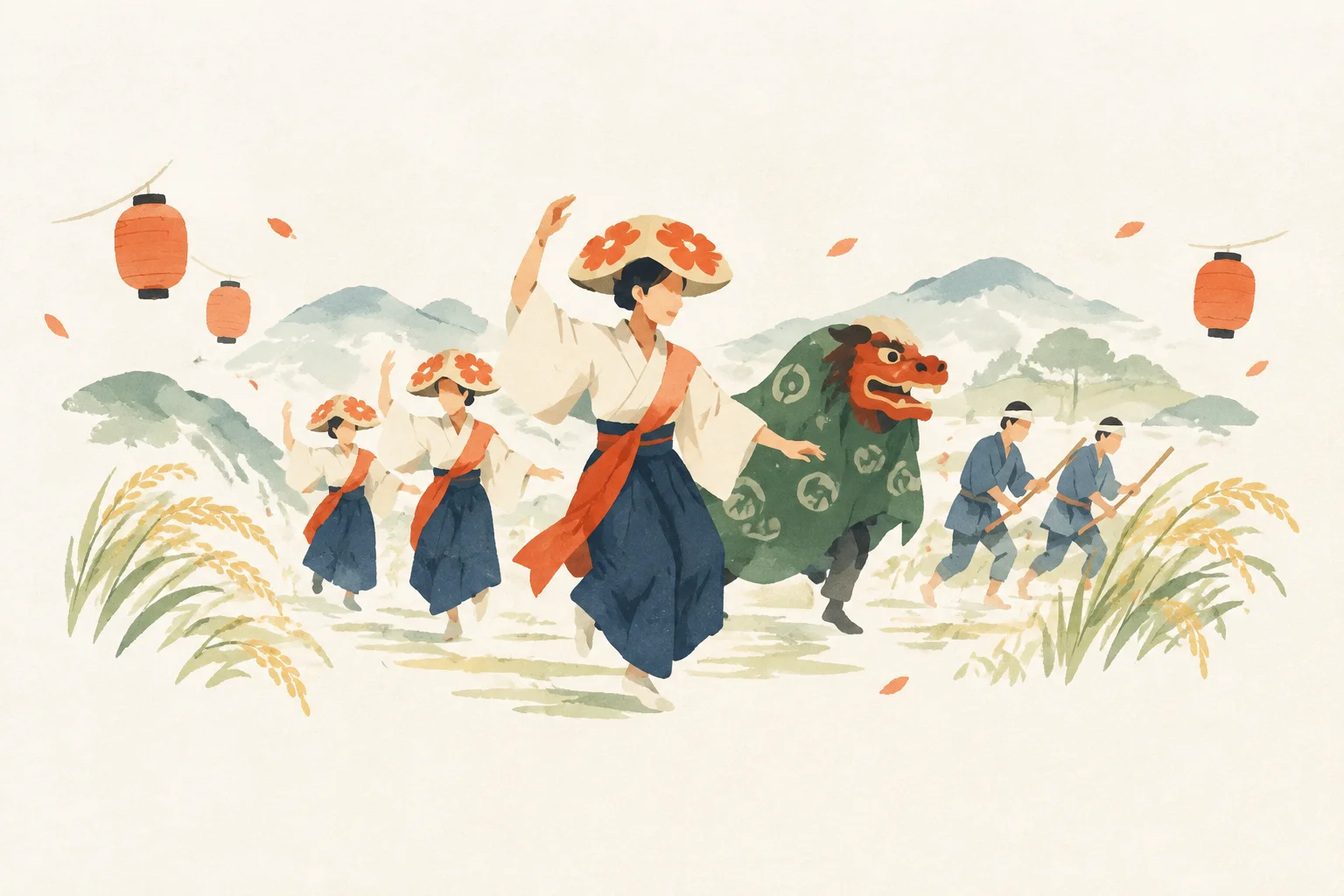
Passed down as the annual festival of Mori Minashi Hachiman Shrine, it is also called the “Hanagasa Festival” because dancers perform wearing hanagasa hats.
Through gestures representing farm work, such as preparing the fields, planting rice, and harvesting, it continues to convey a tradition in which local prayers and performing arts are intertwined.
It was designated a National Important Intangible Folk Cultural Property in 1981.
Source: 田の神祭り(花笠まつり) たのかみまつり(はながさまつり)| - 下呂|観る・あそぶ|下呂温泉観光協会 / 国指定文化財等データベース
Festival highlights
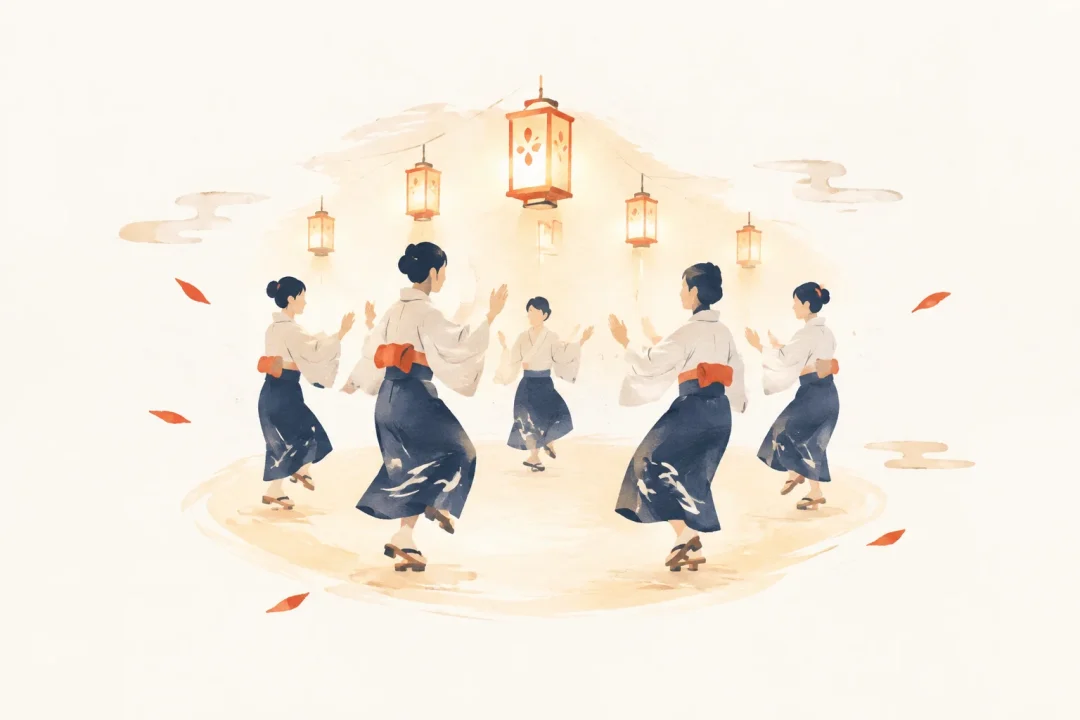
Highlights include an old-style dance performed by dancers wearing hanagasa hats and a series of gestures depicting farm work.
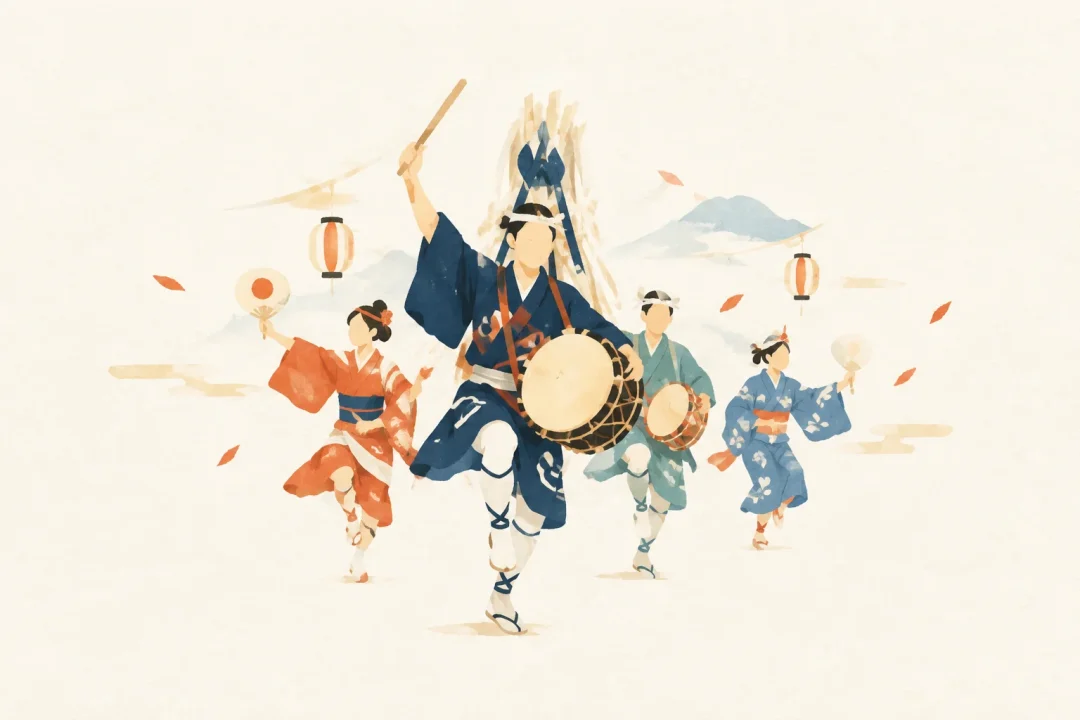
The performances proceed in sequence: rice-field preparation, striking a large drum with a hoe-shaped rice cake; singing “Winter Song,” “Spring Song,” and “Warbler Song”; and reenacting rice planting and harvesting.
During the main festival, a procession in colorful costumes makes its way along the route. At the end, hanagasa hats, dumplings, and small bamboo chopsticks are tossed to the spectators.
A traditional Gero festival entrusting prayers for a good harvest to hanagasa hats and rice-field performing arts
What to expect
The festival rites begin on February 7 with the Shushorai ceremony, then proceed to the main festival after preliminary events such as -making, selecting the dancers, and the eve festival.
On the night of February 13, a , , and dance songs are offered. On the 14th, processions gather at Gero Onsen Gassho Village from each kasayado.
The procession then heads to Mori Minashi Hachiman Shrine, where rice-field preparation, Hanagasa dances, lion dances, and other performances are dedicated.
How to take part
Visitors can watch the event.
Location and access
- Venue and address
From Gero Onsen Gassho Village to Mori Minashi Hachiman Shrine.
The festival’s main celebration takes place around Mori Minashi Hachiman Shrine in Mori, Gero City.
- Train and bus
It is about a 10-minute walk from JR Gero Station.
From Nagoya Station, it takes about 1 hour 30 minutes to Gero Station on the Takayama Main Line. From Osaka Station, it takes about 3 hours 30 minutes.
- By car
It is about 52 km from Nakatsugawa IC on the Chuo Expressway via National Routes 257 and 41.
Another route is via Tomika-Seki IC on the Tokai-Kanjo Expressway, Prefectural Route 58, and National Route 41.
- Parking
Municipal parking is available.
From near the Mori intersection on National Route 41, head toward the hot-spring district. It is about a 3-minute walk from the municipal parking lot.
Address Mori, Gero City, Gifu Prefecture
Dates and season
2026 event information (the listed dates have passed)
In 2026, the schedule is listed as including related rites from the Shushorai ceremony on February 7 through the main festival on February 14.
The city’s festival listings identify February 13 and the 14th in particular as the dates of the Tanokami Festival.
The eve festival on the night of the 13th and the procession, Hanagasa dance, rice-planting gestures, and other events on the 14th are the main events to check when planning a visit.
Source: まつり(例祭) - 下呂市ホームページ
Accommodation and hotels PR
Showing nearby accommodation.
Prices and availability are current at the time of retrieval. For multi-night stays, only the first night’s price is shown. Confirm the final price and directions to the venue with the booking provider. Select your dates again when using the area search link. Search area: within 3 km of Central Gifu Prefecture / Gero City (the search is not centered on the festival venue)
Tips for your visit
The outdoor event in February includes the Shigaku Festival, held at night on February 13, as well as misogi.
On the 14th, the procession moves from Gero Onsen Gassho Village to Mori Minashi Hachiman Shrine, so the schedule does not allow you to see every part of the event in one place.
When flower hats, dumplings, and other items are thrown to the crowd, pay attention to how the event is progressing and to the movement of people around you, and follow staff directions.
Nearby attractions
The festival procession travels from Gero Onsen Gassho Village to Mori Minashi Hachiman Shrine, making both places directly connected stops for the festival.
At Gero Onsen Gassho Village, the lion dance and misogi are performed during the main festival, after which the procession sets out for the shrine.
Hanagasa dances and rice-planting gestures are dedicated at Mori Minashi Hachiman Shrine, so you can visit both places as part of the festival route.

下呂温泉合掌村
岐阜県下呂市にある野外博物館

下呂発 温泉博物館
岐阜県下呂市にある博物館
Origins and History of Gero’s Tanokami Festival
The Tanokami Festival is said to originate in medieval ta-asobi and dengaku, performing arts that celebrate a good rice harvest in advance.
It is unclear when the festival began, but at Mori Minashi Hachiman Shrine, the Taguchi and Koike families have been central to it and have passed it down to the present day.
Until the early Meiji period, it was held on January 14; today, its rites are observed from February 7 through the 14th.
It was designated an Important Intangible Folk Cultural Property in 1981.
Official information
Check the Gero City official website under “Festivals (Annual Festivals)” for event information.
Details about the festival’s origins, the sequence of events, the venue, access, and parking are also available in the Tanokami Festival guide from the Gero Onsen Tourism Association.
For information on its cultural-property status and the performances, see the Agency for Cultural Affairs’ Database of Nationally Designated Cultural Properties.
Gero’s Tanokami Festival at a Glance
Gero’s Tanokami Festival is the annual festival of Mori Minashi Hachiman Shrine. It preserves rice-field performing arts praying for a good harvest through Hanagasa dances, lion dances, and processions.
In 2026, related events run from February 7 through the 14th, with the eve festival on the night of the 13th and the main festival on the 14th as the central events.
The procession from Gero Onsen Gassho Village to the shrine, rice-field preparation gestures, and the scene in which hanagasa hats and dumplings are tossed to spectators are characteristic of the festival.
Japanese Festivals.jp Editorial Team
Celebrating local culture and helping you discover a side of Japan you never knew.
Article updated: 2026/10/19
Submit information or a correction Submit photos of this festival