Hikawa's grand festival, carried on through bonfires and Tokaichi
Daitosai

Festival information
EVENT INFORMATION- Season / frequency
- Usually November 30–December 11 / Every year
- Location
- Musashi Ichinomiya Hikawa Shrine (Hikawa Shrine)
- Area
- Saitama Prefecture・Saitama City(From Tokyo: approx. 30 min–1 h · train)Prefecture-level estimate to a main station or airport, not the venue. Airport access, check-in and onward travel are extra; remote areas and islands can take much longer.
- Features
- Highlights and activities
- Last updated
- 2026/10/19
The Daitosai, held at Musashi Ichinomiya Hikawa Shrine, is a special religious rite known for its nighttime bonfires and the Tokaichi fair on December 10.
About Daitosai
The Daitosai is one of the special religious rites held at Musashi Ichinomiya Hikawa Shrine, and is also called Tokaichi.
It is said to take its name from the former practice of heating water for purification.
The long festival runs from November 30 to December 11, with pre-rites, a main festival, and post-rites.
A Tori no Ichi fair takes place during the main festival on December 10, bringing crowds to the and approach, where shops sell auspicious items.
Source: 祭典 | 武蔵一宮 氷川神社
Festival highlights
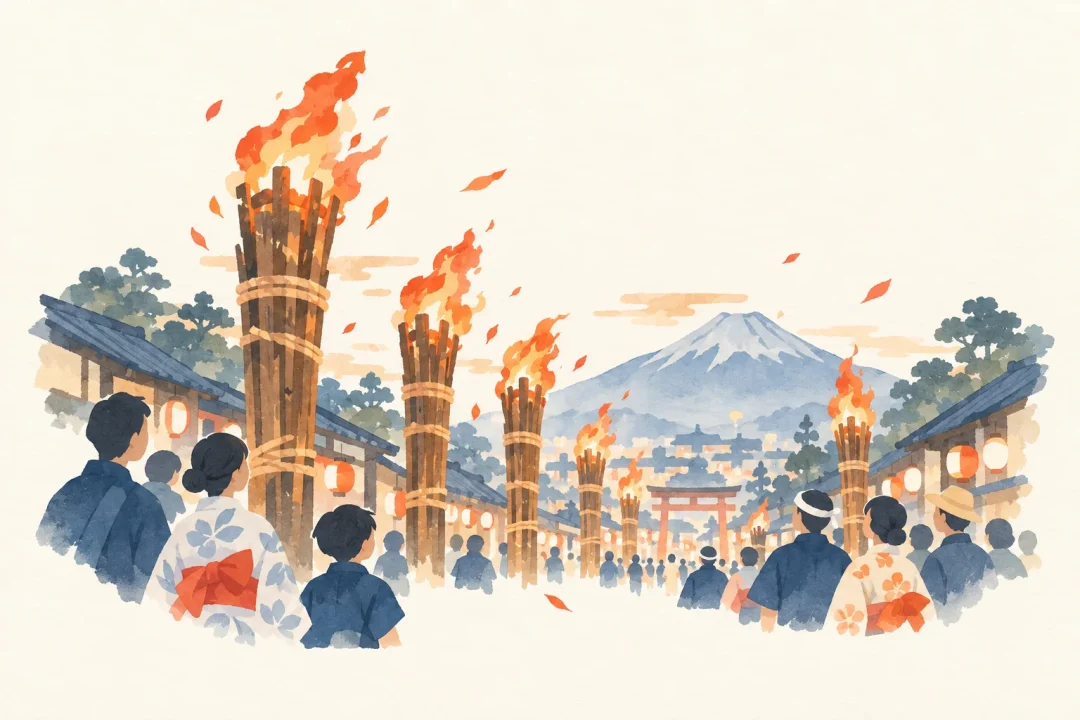
Highlights include the bonfires lit every night during the pre-rites and the varied offerings presented at the main festival on December 10.
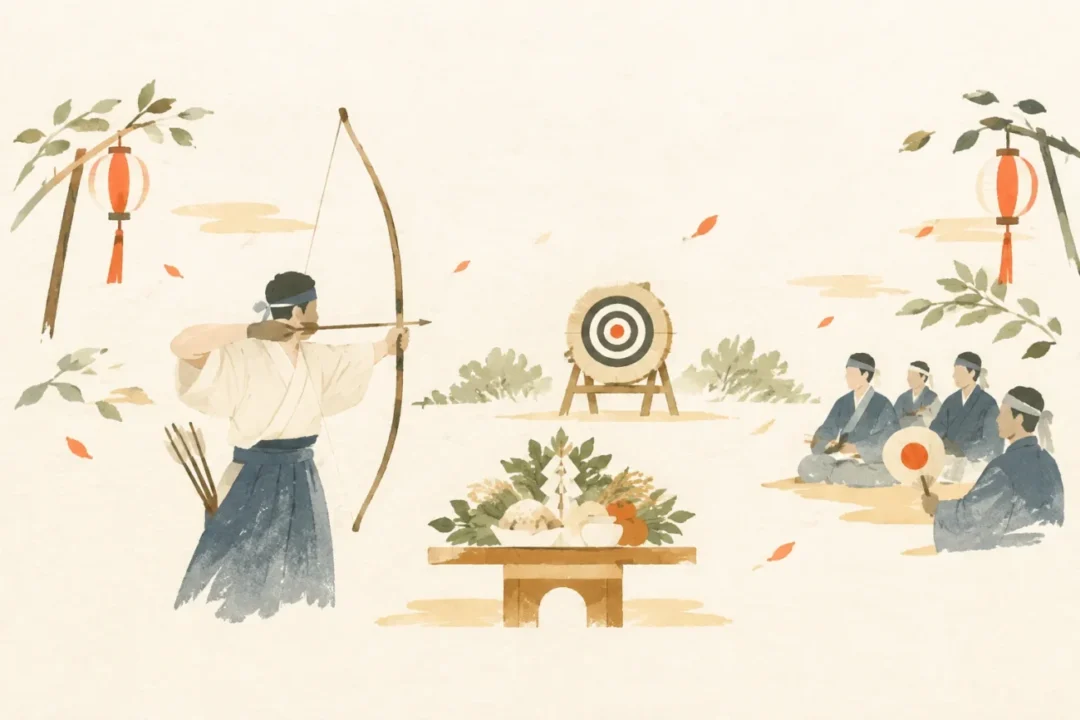
Offerings include rice, sake, diamond-shaped rice cakes, shrimp, Chinese yams, and large crucian carp skewered on sticks; a hundred-dish feast is also prepared.
On the day of the main festival, fukujin talismans, lucky rakes, lucky wallets, and lucky seed coins are also distributed.
Around 350 stalls, including shops selling lucky rakes and household Shinto altars, line the shrine grounds and approach, giving the event the lively feel of Tokaichi.
Hikawa's grand festival, carried on through bonfires and Tokaichi
What to expect
The festival proceeds from the pre-rites, held from November 30 to December 9, to the main festival on December 10, followed by the post-rites on December 11.
During the pre-rites, shrine priests undergo ritual purification, and bonfires are lit on the shrine grounds at night.
During the main festival, offerings are presented at the main shrine and auxiliary shrines, and items such as fukujin talismans are distributed at the amulet office.
After the main shrine ritual, the post-rites conclude the festival with the Kyozenshiki, a traditional sacred feast.
How to take part
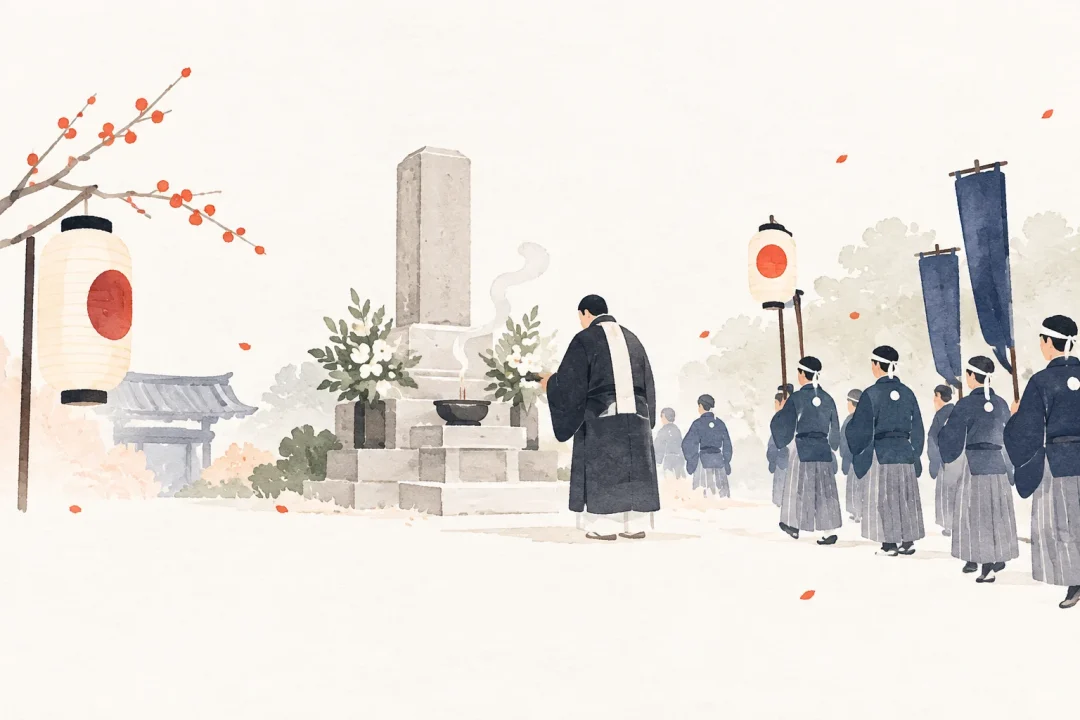
The Ōyu-sai religious ceremony itself is conducted by shrine priests.
The shrine’s information states that attendance at the ceremony is not permitted, so participation by attending the religious ceremony is not possible.
On the other hand, on the main festival day, kumade rakes, household altars, and other stalls line the shrine grounds and approach, and good-luck items such as fukujin charms and fukukumade rakes are also distributed.
Visitors can tour the public events on the shrine grounds while respecting the ceremonial area.
Location and access
- Venue and address
Musashi Ichinomiya Hikawa Shrine (Hikawa Shrine) · 1-407 Takahana-cho, Omiya-ku, Saitama-shi, Saitama 330-0803
- Train and bus
About a 15-minute walk from the east exit of JR Omiya Station.
About a 10-minute walk from Kita-Omiya Station on the Tobu Urban Park Line (Tobu Noda Line) to the West Parking Lot.
- By car
About 15 minutes from Saitama-Shintoshin West IC and about 20 minutes from Iwatsuki IC.
- Parking
There are First, Second, and West Parking Lots.
The parking lots are announced as being completely closed on December 10 for Ōyu-sai Tōka-ichi.
Source: アクセス | 武蔵一宮 氷川神社
Address 1-407 Takahana-cho, Omiya-ku, Saitama City, Saitama Prefecture
Dates and season
The annual festival is held from November 30 through December 11.
The pre-festival observance runs from November 30 through December 9, with bonfires lit every night at 7:30 p.m.
December 10 is the main festival day, and according to the shrine’s information, the ceremony is held at 8 a.m.
December 11 is the post-festival observance.
For the 2026 event, please check the dates and times for the relevant year separately.
Accommodation and hotels PR
Showing nearby accommodation.
Prices and availability are current at the time of retrieval. For multi-night stays, only the first night’s price is shown. Confirm the final price and directions to the venue with the booking provider. Select your dates again when using the area search link. Search area: within 3 km of Central Saitama Prefecture / Saitama City (the search is not centered on the festival venue)
Tips for your visit
The main festival day, December 10, coincides with Tōka-ichi, when many stalls line the shrine grounds and approach.
Crowds are expected around the venue, so it is best not to count on using a parking lot and to use public transportation whenever possible.
Attendance at the religious ceremony is not permitted, so please watch from the shrine grounds without disrupting the proceedings.
The parking lots will be completely closed on December 10, so visitors should avoid coming by car.
Nearby attractions
Nearby attractions include Omiya Park, the Saitama Prefectural Museum of History and Folklore, and the Saitama City Museum.
Omiya Park is a prefectural park established on the grounds of Hikawa Shrine, and has a baseball stadium and a small zoo.
The Saitama Prefectural Museum of History and Folklore presents the history of Saitama Prefecture in its permanent exhibition, while the Saitama City Museum introduces the history and culture of the city.
All are places where you can experience the culture of the Omiya area, which has strong ties to the festival.

さいたま市立博物館
埼玉県さいたま市大宮区にある博物館

さいたま市立浦和博物館
埼玉県さいたま市緑区にある博物館

久伊豆神社
さいたま市岩槻区宮町の神社(旧県社)

埼玉県立歴史と民俗の博物館
埼玉県さいたま市大宮区にある博物館
写真:Dddeco at Japanese Wikipedia / CC BY-SA 3.0
Photo source ·
埼玉県立近代美術館
埼玉県さいたま市浦和区にある美術館

大崎公園
埼玉県さいたま市緑区にある公園

Iwatsuki Doll Museum
埼玉県さいたま市岩槻区にある博物館

氷川神社
埼玉県さいたま市大宮区にある神社

秋ヶ瀬公園
埼玉県さいたま市桜区にある都市緑地

大宮公園
さいたま市にある公園

鉄道博物館
埼玉県さいたま市大宮区にある鉄道博物館
Origins and History of Daitosai
The Daitosai is said to have originated as a rite of Hioji-no-miya, one of the three shrines of Hikawa Shrine.
Records state that in 1385, dry branches and firewood were burned to create something like a hearth, and a Fire Sword Rite was performed in which participants stepped over it.
Shrine records from the Enpo era already mention the name Daitosai. In Enpo 4 (1676), a rite that had been performed as the Fire Sword Rite was changed into a purification festival at the request of Hikawa Naiki.
Traditions continue today in the bonfires of the pre-rites and the offerings of the main festival.
Official information
For official information, see the festival guide from Musashi Ichinomiya Hikawa Shrine.
The information covers the origins of the Daitosai, the sequence of pre-rites, the main festival, and post-rites, as well as bonfires, offerings, distributed items, and Tokaichi stalls.
The shrine's access guide provides the venue address, transportation information, and conditions for using the parking lot.
Daitosai at a Glance
The Daitosai is a special religious rite held at Musashi Ichinomiya Hikawa Shrine from November 30 to December 11.
The main highlights are the nighttime bonfires, the main festival with offerings such as rice and sake, and Tokaichi, where lucky rakes and household Shinto altars line the streets.
The festival is said to date back to the Fire Sword Rite of 1385, and records of the festival also survive from the Edo period.
The parking lot is completely closed on December 10, so visitors are advised to use public transportation.
Japanese Festivals.jp Editorial Team
Celebrating local culture and helping you discover a side of Japan you never knew.
Article updated: 2026/10/19
Submit information or a correction Submit photos of this festival