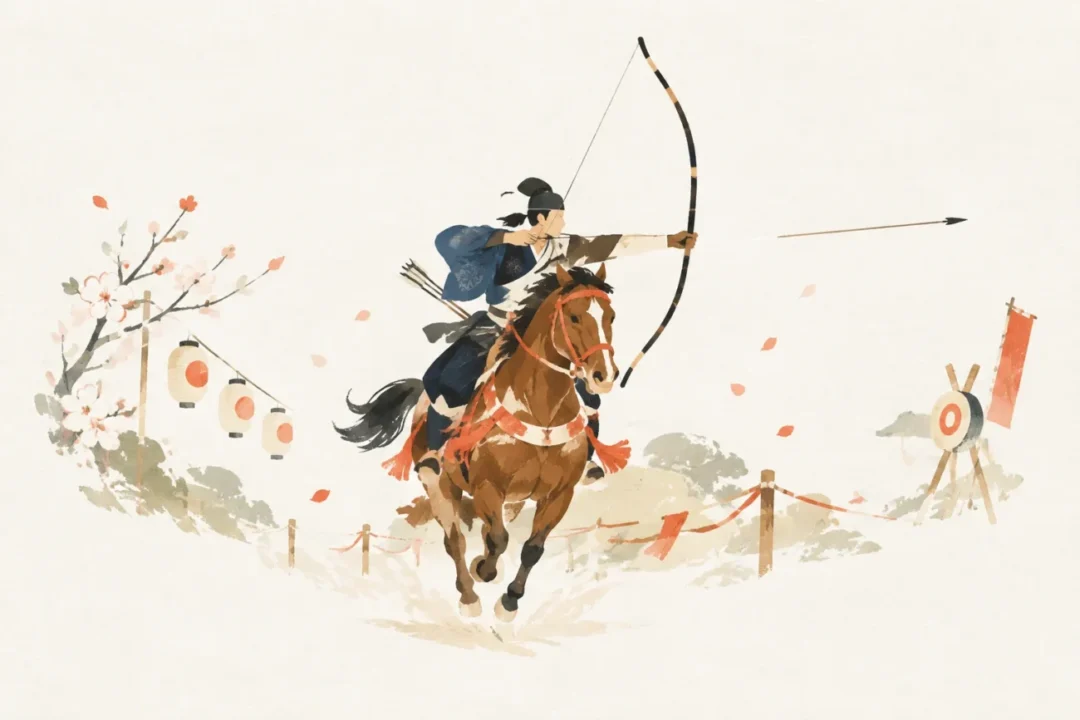
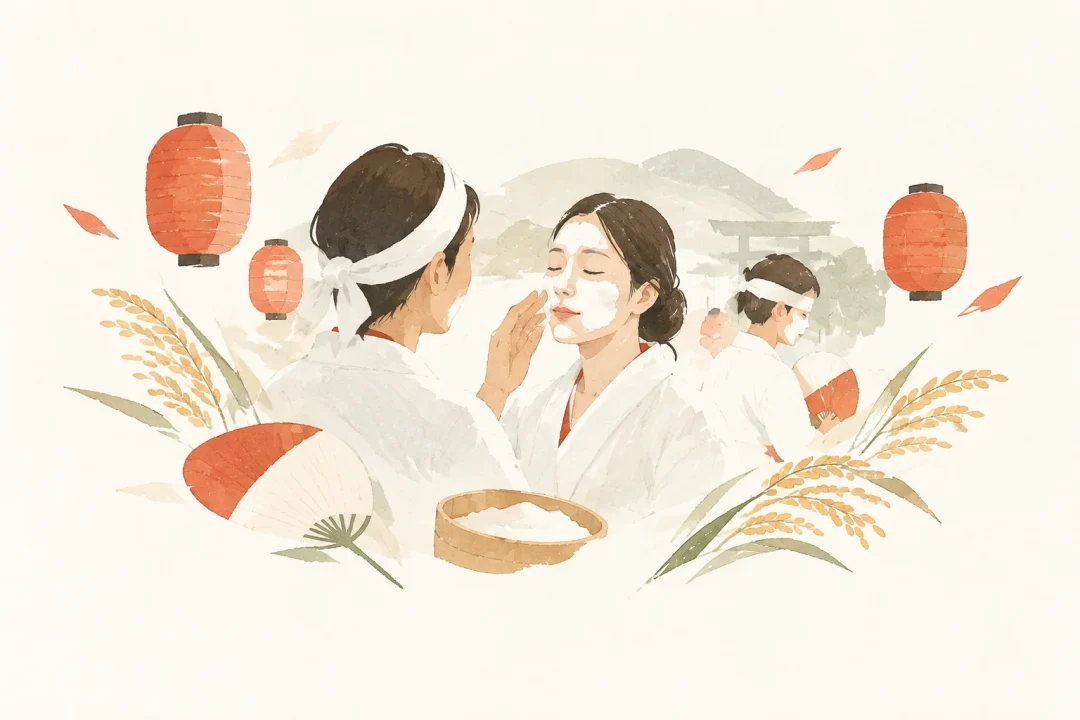
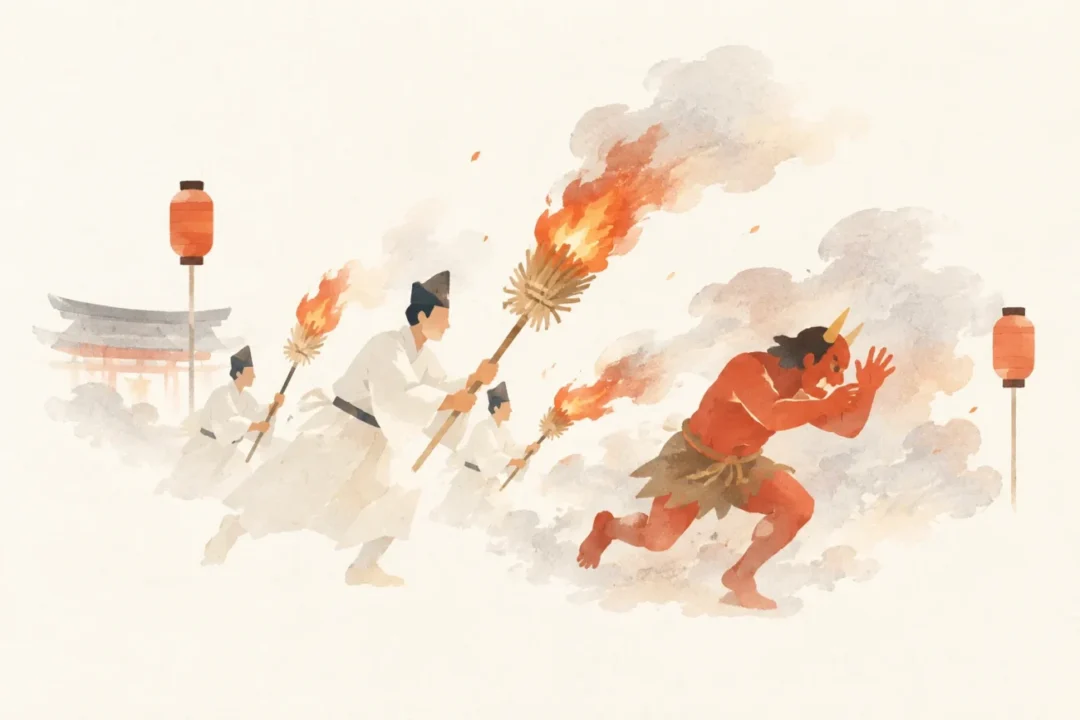
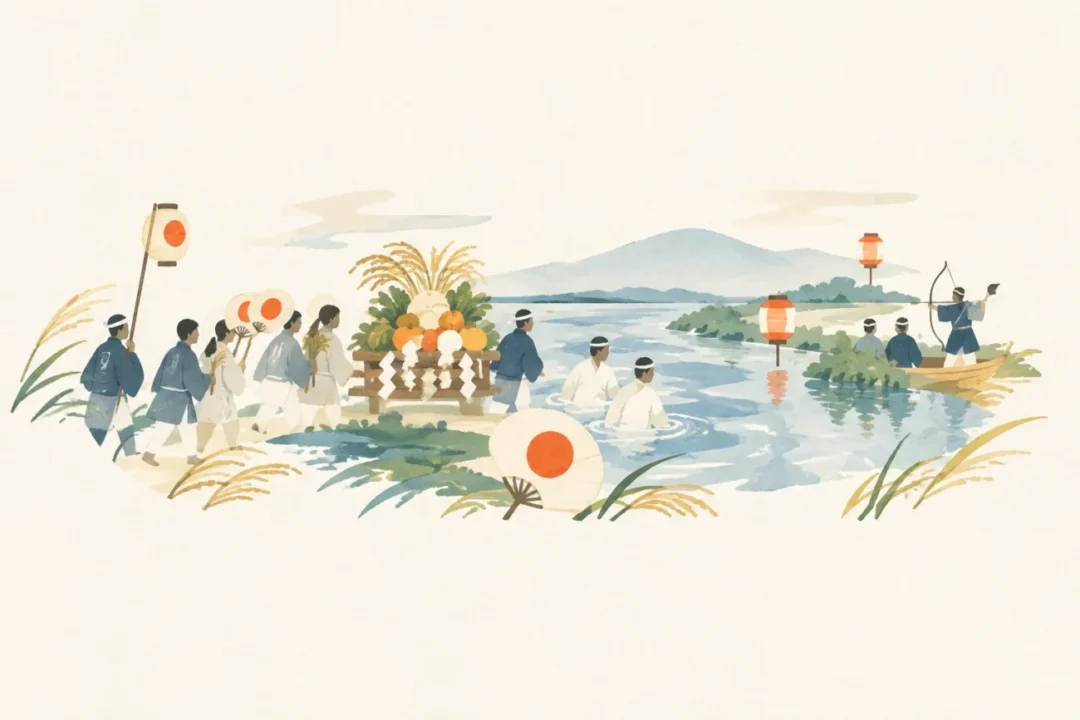
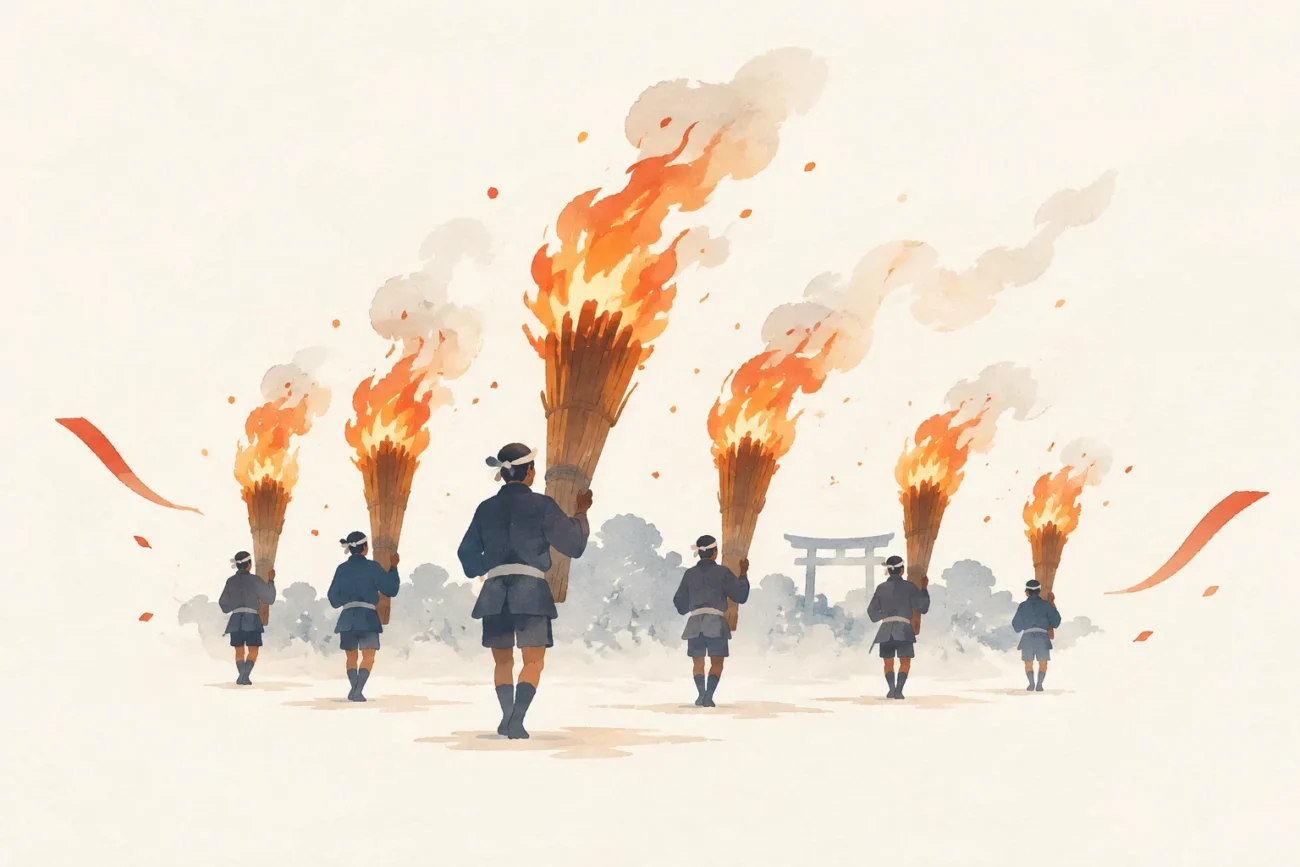
Kurume’s New Year fire festival, with six great torches circling the shrine grounds
The Oniyo at Daizenji Tamatare-gu
Festival information
EVENT INFORMATION- Season / frequency
- Every year on January 7 / Once a year
- Location
- Daizenji Tamatare-gu
- Area
- Fukuoka Prefecture・Kurume City(From Tokyo: approx. 1 h 50 min–2 h 10 min · flight time only)Prefecture-level estimate to a main station or airport, not the venue. Airport access, check-in and onward travel are extra; remote areas and islands can take much longer.
- Wishes behind the festival
- Last updated
- 2026/11/11
The Oniyo at Daizenji Tamatare-gu is a New Year fire festival passed down in Kurume, with six great torches circling the . It has a tradition spanning more than 1,600 years and is designated a National Important Intangible Folk Cultural Property.
About The Oniyo at Daizenji Tamatare-gu
The Oniyo at Daizenji Tamatare-gu is the final event of the Oni-e observances, which run from the night of New Year’s Eve through January 7.
With a tradition spanning more than 1,600 years, it is counted among Japan’s 3 great fire festivals and is designated a National Important Intangible Folk Cultural Property.
The sight of parishioners carrying the six great torches on karimata supports as they circle the shrine grounds captures how the festival has been passed down through the joint efforts of the local community and the shrine and temple.
Festival highlights
A highlight is the great-torch procession, in which six blazing torches circle the main shrine building, Amida Hall, and the bell tower.
Beneath the light of the great torches, the hoko-men ceremony is held, including a ritual in which two people wearing ogre masks have their halberds and masks taken from them.
Afterward, the ogre leaves the Amida Hall and circles it seven and a half times, performs the shioigaki ritual alongside the great torches, then rushes into the main shrine building as the bell is struck.
Kurume’s New Year fire festival, with six great torches circling the shrine grounds
What to expect
On the morning of January 4, the great torches are made and offered.
The day begins with the daytime Oni-men-son ceremony and seed-sowing ritual, and in the evening the Oni-men-son deity is returned to the main shrine building.
At dusk, parishioners perform water purification in the Arare River, followed by the gathering of torches, lighting them with ogre fire, the hoko-men ceremony, the great-torch procession, and the shioigaki ritual with the ogre and great torches.
At the end, the participants rush into the main shrine building, and the bell in the bell tower is struck to conclude the series of events.
Location and access
- Venue and address
Daizenji Tamatare-gu / 1463-1 Miyamoto, Daizenji-machi, Kurume City
- Train and bus
5 minutes on foot from Daizenji Station on the Nishitetsu Tenjin Omuta Line / From JR Kurume Station, take Nishitetsu Bus No. 15, get off at Miyamae, then walk 3 minutes
- By car
About 10 minutes by taxi from JR Araki Station / About 40 minutes from Kurume I.C. on the Kyushu Expressway
- Parking
Free.
About 150 spaces at Shin’en (Tamatare Park) and about 100 spaces at Daizenji Elementary School
Address 1463-1 Miyamoto, Daizenji-machi, Kurume City
Dates and season
- Season
Every year on January 7
- Frequency
Once a year
Accommodation and hotels PR
Showing nearby accommodation.
Prices and availability are current at the time of retrieval. For multi-night stays, only the first night’s price is shown. Confirm the final price and directions to the venue with the booking provider. Select your dates again when using the area search link. Search area: within 3 km of Central Fukuoka Prefecture / Kurume City (the search is not centered on the festival venue)
Tips for your visit
The event is scheduled to proceed in rainy weather.
Nearby attractions
Near the venue, tourist attractions include the Otzuka and Gongen-zuka Kofun burial mounds, as well as Daizenji Tamatare-gu.
Nearby dining spots include Little garden, Mizuho Nishiki Brewery, and Mizuho-an.
If you plan to visit other places while attending the festival, check each facility’s information and operating hours.

久留米市美術館
福岡県久留米市にある美術館

水天宮
福岡県久留米市にある神社

高良大社
福岡県久留米市の高良山にある神社
Origins and History of The Oniyo at Daizenji Tamatare-gu
Oniyo is a New Year fire festival handed down at Daizenji Tamatare-gu. It is described as a festival that combines a fire ritual held around the Little New Year with a tsuina exorcism ceremony.
The events begin with Onibitri on December 31 and continue through January 7.
The great torches used to be made on January 6, but are now made on January 4 due to factors such as labor availability.
It was designated a National Important Intangible Folk Cultural Property on December 13, 1994, and is carried out through the joint efforts of the local community and the shrine and temple.
Official information
For inquiries, contact Daizenji Tamatare-gu (phone: 0942-27-1887).
The festival venue information includes an external link to the Daizenji Tamatare-gu website.
The Oniyo at Daizenji Tamatare-gu at a Glance
The Oniyo at Daizenji Tamatare-gu is Kurume’s New Year fire festival, in which parishioners carry six enormous torches around the shrine grounds.
The events progress from the daytime Oni-men-son ceremony and seed-sowing ritual, through water purification and the gathering of torches in the evening, to the hoko-men ceremony, the great-torch procession, and the shioigaki ritual with the ogre and great torches.
This local event has a tradition spanning more than 1,600 years and is designated an Important Intangible Folk Cultural Property.
Sources and references
Japanese Festivals.jp Editorial Team
Celebrating local culture and helping you discover a side of Japan you never knew.
Article updated: 2026/11/11