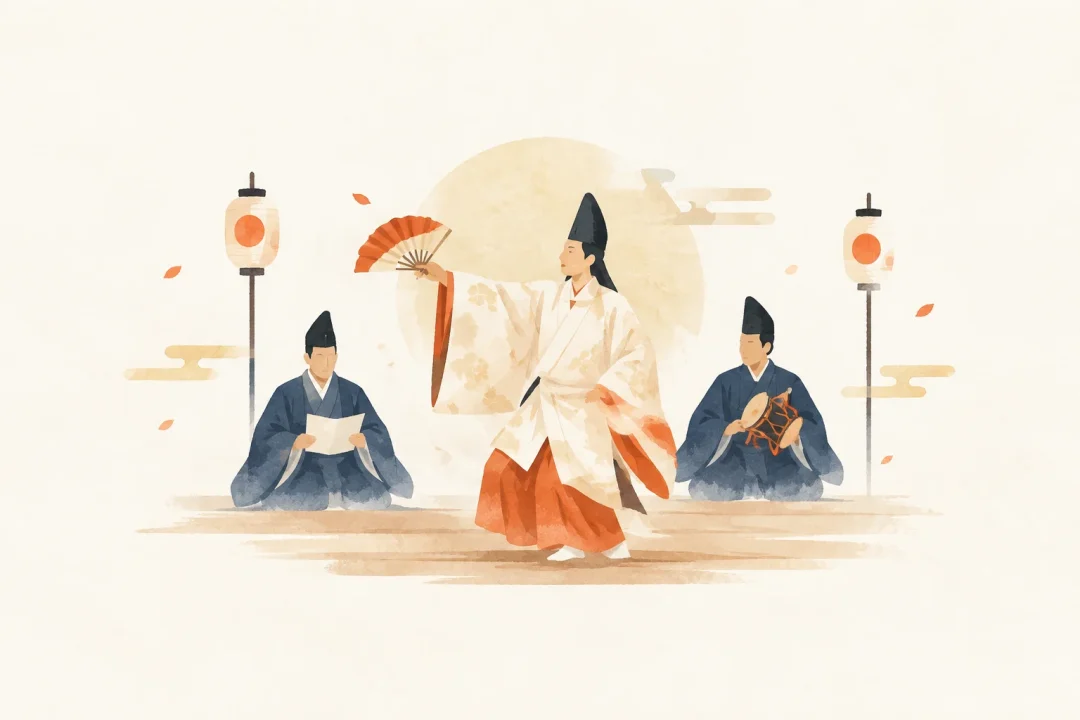
A traditional Miyaki Town observance that entrusts farmers’ hopes to the direction of the sacred flag in the wind
Ayabe Hachiman Shrine’s Flag-Raising and Flag-Lowering Observance
Festival information
EVENT INFORMATION- Season / frequency
- Each year, from July 15 until the day after the autumnal equinox / Every year
- Location
- Ayabe Hachiman Shrine
- Area
- Saga Prefecture・Miyaki Town(From Tokyo: approx. 1 h 50 min–2 h 10 min · flight time only)Prefecture-level estimate to a main station or airport, not the venue. Airport access, check-in and onward travel are extra; remote areas and islands can take much longer.
- Highlights and activities
- Wishes behind the festival
- Participation / viewing
- Spectators welcome
- Last updated
- 2026/10/19
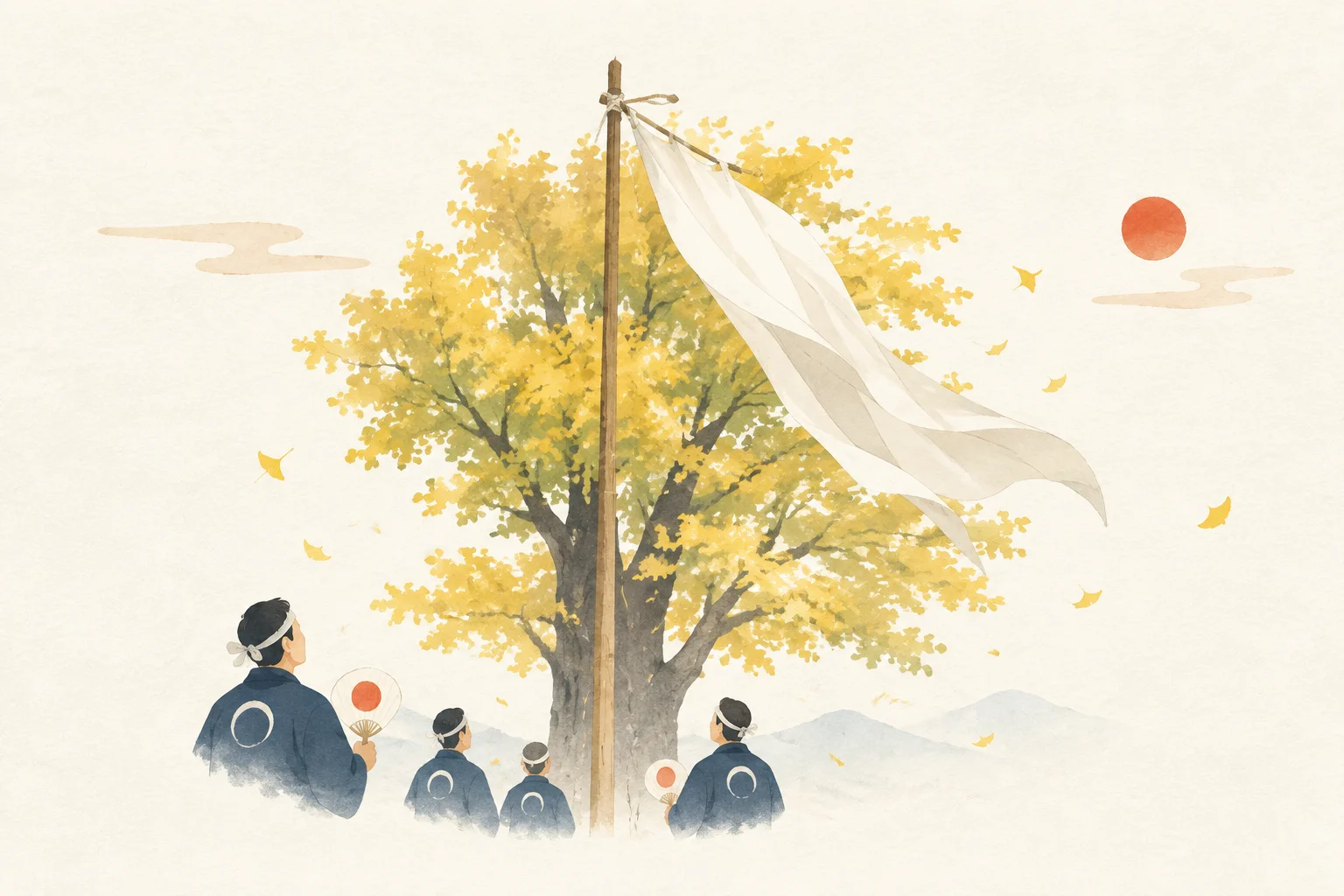
This traditional observance in Miyaki Town uses the movement of a hemp sacred flag raised on a large ginkgo tree to divine the weather and the prospects for the harvest.
About Ayabe Hachiman Shrine’s Flag-Raising and Flag-Lowering Observance
Ayabe Hachiman Shrine’s Flag-Raising and Flag-Lowering observance uses the way the sacred flag flutters and coils to divine the effects of wind and rain and the prospects for the harvest.
On July 15, a hemp sacred flag is raised on a sacred tree in the and lowered the day after the autumnal equinox.
This annual observance is passed down at Ayabe Hachiman Shrine in Miyaki Town, Saga Prefecture, and is closely connected with local agriculture and beliefs in protection from wind.
Source: 国指定文化財等データベース
Festival highlights
The main highlight is the scene of men known as Shinpito climbing the large ginkgo tree in the shrine grounds and raising a sacred flag tied to the end of a bamboo pole.
The raised flag is observed by the chief priest morning and evening for about 70 days.
A distinctive feature of this observance is that signs of weather and a good harvest are read from the flag’s approximately 30 reputed styles of coiling, including left- and right-wound and bale-shaped coils.
A traditional Miyaki Town observance that entrusts farmers’ hopes to the direction of the sacred flag in the wind
What to expect
On the day the flag is raised, it is tied to a bamboo pole, and prayers are offered for protection from wind and flood damage and for a bountiful harvest. The Shinpito then perform before climbing the large ginkgo tree.
After the flag is raised, the chief priest records its condition each morning and evening. During this period, local people, particularly farmers, make visits known as “Ayabe-san Mairi.”
On the day the flag is lowered, it is brought down after the dedication of sumo bouts. The chief priest considers the flag’s condition together with the forecast to judge the year’s weather and harvest prospects.
How to take part
The event is led by the chief priest, the parishioner representatives, and shinhata-nin selected from among the parishioners.
Meanwhile, while the flag is raised, people—mainly farmers—visit the shrine to pray for calm weather on the wind festival day and to receive ofuda for protection from the wind.
It is not stated whether members of the general public can take part as shinhata-nin (flag bearers).
Location and access
- Venue and address
Ayabe Hachiman Shrine (Harukoga, Miyaki Town, Miyaki District, Saga Prefecture)
Source: 綾部八幡神社-みやきsanpo みやき町観光協会 佐賀県みやき町 / 綾部八幡神社の旗上げ神事・旗下ろし神事 文化遺産オンライン
Event venue 佐賀県みやき町 綾部八幡神社
This map uses the venue name. Check the official guide for the event area and entrances.
Dates and season
The flag is raised each year on July 15 and lowered the day after the autumnal equinox.
The 2026 Flag-Lowering Rite is scheduled for September 24 (Thursday), from 2 p.m. to 5 p.m.
The condition of the sacred flag is observed between the raising and lowering ceremonies.
Source: 綾部八幡神社 旗下ろし神事(佐賀県)の情報|ウォーカープラス
Accommodation and hotels PR
Showing nearby accommodation.
Prices and availability are current at the time of retrieval. For multi-night stays, only the first night’s price is shown. Confirm the final price and directions to the venue with the booking provider. Select your dates again when using the area search link. Search area: within 3 km of Central Saga Prefecture / Miyaki Town (the search is not centered on the festival venue)
Tips for your visit
The sacred flag is raised on a tall sacred tree, and at the flag-lowering ceremony, the Shinpito, wearing a fundoshi loincloth, brings it down.
Please follow on-site guidance when viewing the ceremony so as not to interfere with its proceedings.
The lowered bamboo branches may be taken home as charms for warding off misfortune and ensuring household safety, but visitors should check local instructions to confirm whether and how they may take them.
Nearby attractions
Nearby points of interest at Ayabe Hachiman Shrine include Kaze no Yakata, the Himekata Site, and Yamada Waterside Park.
Both are facilities or historic sites featured among the attractions around Ayabe Hachiman Shrine.
When visiting, you can plan an itinerary that combines viewing the festival with experiencing Miyaki Town’s culture and nature.
Origins and History of Ayabe Hachiman Shrine’s Flag-Raising and Flag-Lowering Observance
The origin of the observance is said to lie in a legend that, in the mid-Heian period, the monk Ryushin prayed to save villagers suffering from epidemics and wind and flood damage, and that the villagers carried on his wishes by raising a flag.
An inscription on the stone gate, built in Genroku 14 (1701), suggests wind divination using a flag.
Until Meiji 43 (1910), the flag was raised on day 15 of lunar month 6; from the following year, the date changed to July 15 on the solar calendar.
Official information
The official Miyaki Town website introduces the traditional culture of Ayabe Hachiman Shrine and its Flag-Raising and Flag-Lowering rites.
An explanation of the cultural property is also available in the Agency for Cultural Affairs’ Database of Nationally Designated Cultural Properties.
Source: みやき町 伝統・文化
Ayabe Hachiman Shrine’s Flag-Raising and Flag-Lowering Observance at a Glance
The Flag-Raising and Flag-Lowering observance at Ayabe Hachiman Shrine is a traditional wind-divination event passed down in Miyaki Town. A hemp sacred flag is raised on a large ginkgo tree, and its movement is used to divine the weather and the prospects for the harvest.
The flag is raised on July 15 and lowered the day after the autumnal equinox.
Highlights include the Shinpito raising and lowering the flag, the chief priest observing it over an extended period, and the dedication of sumo bouts.
Japanese Festivals.jp Editorial Team
Celebrating local culture and helping you discover a side of Japan you never knew.
Article updated: 2026/10/19
Submit information or a correction Submit photos of this festival