A Koshu festival where Shugendo prayers live on around a wisteria serpent
Daizenji Temple’s Fujikiri Festival
The 2026 edition of Daizenji Temple’s Fujikiri Festival has ended.
Festival information
EVENT INFORMATION- Dates
- 2026/05/05Ended
- Season / frequency
- Every year on May 5 / Every year
- Location
- Kashiozan Daizenji Temple
- Area
- Yamanashi Prefecture・Koshu City(From Tokyo: approx. 1 h 30 min–2 h · limited express)Prefecture-level estimate to a main station or airport, not the venue. Airport access, check-in and onward travel are extra; remote areas and islands can take much longer.
- Highlights and activities
- Wishes behind the festival
- Participation / viewing
- Spectators welcome
- Last updated
- 2026/10/19
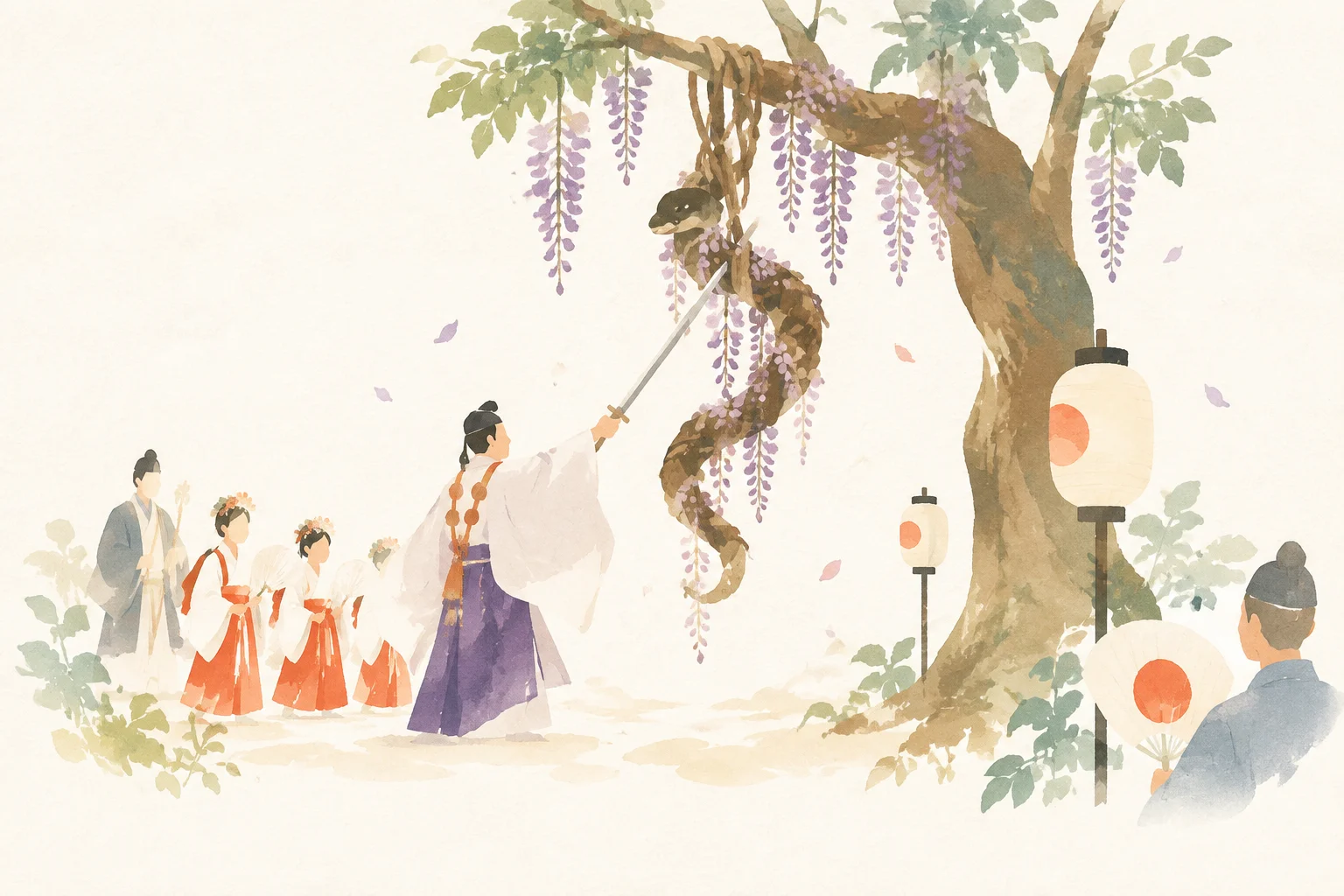
The Fujikiri Festival, based on the legend of En no Gyoja slaying a giant serpent, is held at Daizenji Temple in Katsunuma, Koshu City. Following prayers by Shugendo practitioners and a procession of children, the giant serpent made from wisteria roots and suspended from the sacred tree is cut down in this festival passed down through the local community.
About Daizenji Temple’s Fujikiri Festival
The Fujikiri Festival at Daizenji Temple is a Shugendo-related festival passed down at Daizenji Temple in Katsunuma, Koshu City, Yamanashi Prefecture.
Inspired by the legend of En no Gyoja slaying a giant serpent at Mount Kinpu, a serpent made from wisteria roots is cut down from the sacred tree.
Taking wisteria home has traditionally been believed to bring protection from misfortune, recovery from illness, and good luck.
It is an event rooted in both faith and everyday life, with local households and the temple’s monks responsible for its preparation and observance.
Source: 国指定文化財等データベース / 甲州市の無形民俗文化財について | 甲州市
Festival highlights
The main highlight is the cutting down by Shugendo practitioners of a giant serpent made from wisteria roots and suspended from the sacred tree.
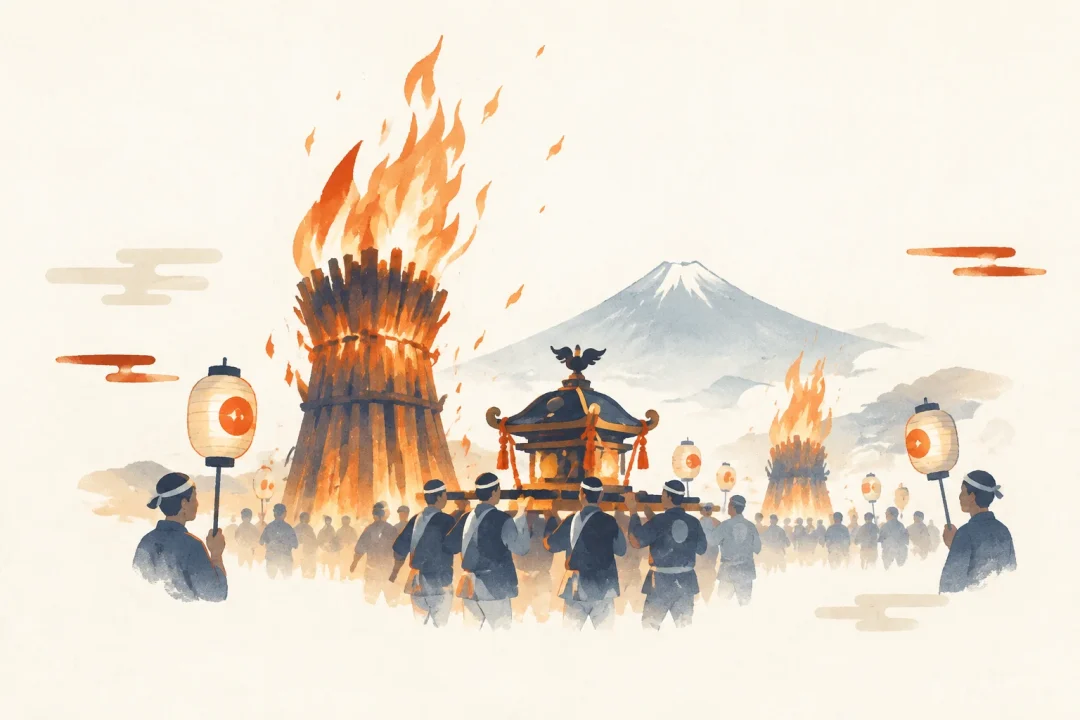
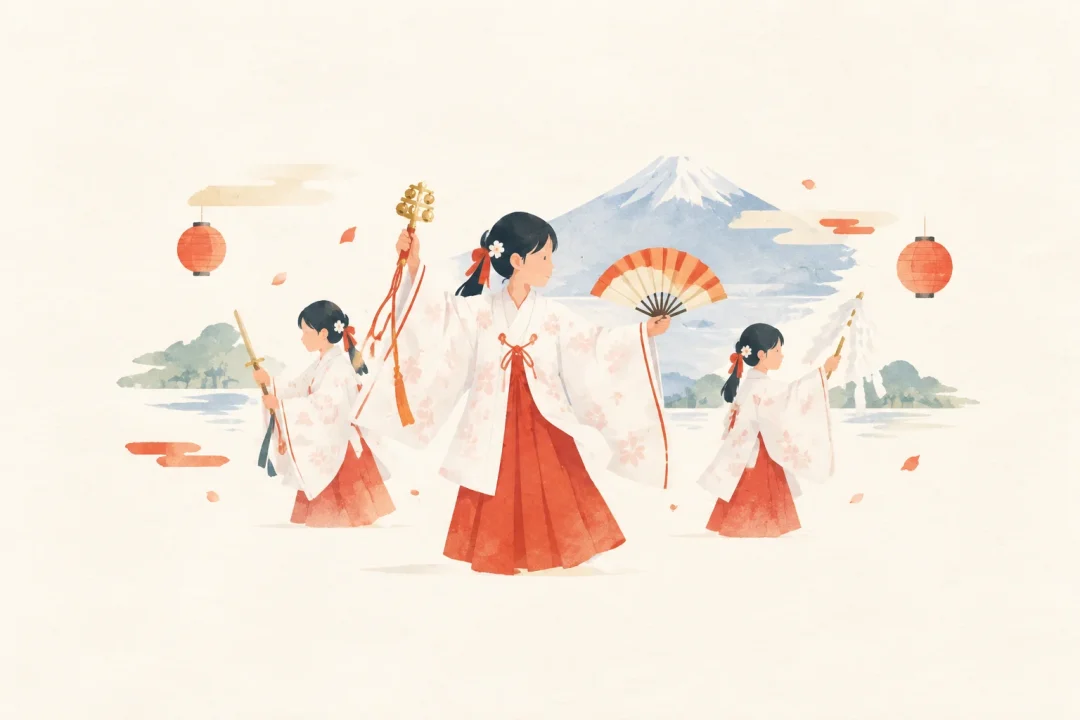
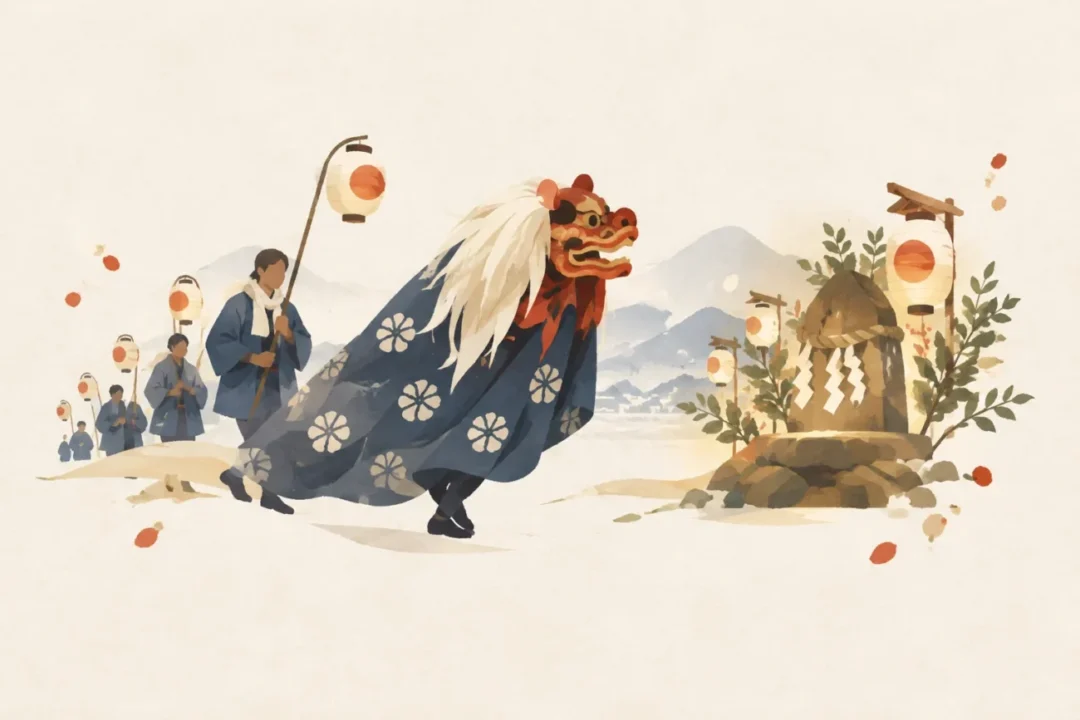
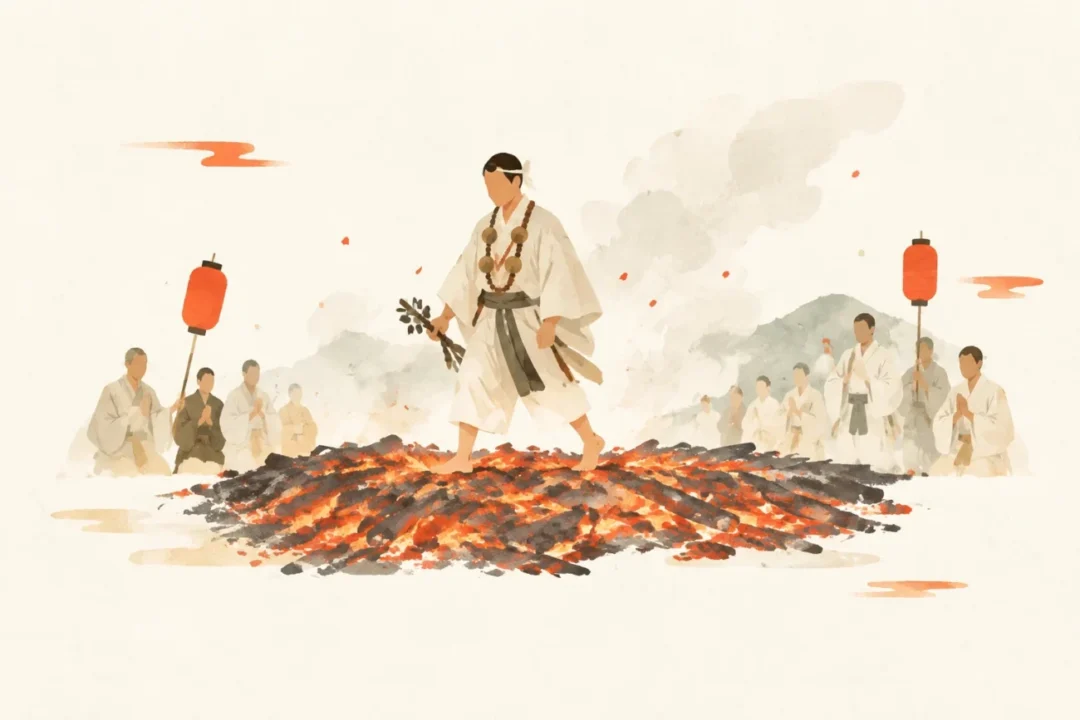
The festival features a series of events, including the Tengu Festival, a procession of children, a Buddhist service at Yakushido Hall, a children’s dance, a fire ritual, and a crossing of mountains and valleys, with Shugendo practices presented in stages.
In the past, worshippers competed to grab the wisteria cut down during the festival. Today, the festival’s representatives cut it into pieces and distribute it to those who request it.
Source: 山梨県/山梨の文化財ガイド(データベース)無形民俗文化財mkc00017
A Koshu festival where Shugendo prayers live on around a wisteria serpent
What to expect
In preparation for the festival, wisteria roots are gathered, the sacred tree is set up, and the serpent is made.
On the day, events begin with the Tengu Festival, which imbues the serpent with a spirit, followed by a procession of Shugendo practitioners, prayers at Yakushido Hall, a children’s dance, a crossing of mountains and valleys, and a contest of spiritual powers.
Finally, a practitioner representing En no Gyoja climbs the sacred tree and cuts down the wisteria serpent at the signal of a bow and arrow.
Since 2024, the festival’s representatives have distributed wisteria to those who request it.
How to take part
The festival’s central rites and Fujikiri are carried out by representatives and stewards from the Kashio district, Daizenji, and monks from nearby temples.
General visitors may watch the procession of yamabushi and the rituals, but no system is announced for members of the public to take part in the festival as yamabushi.
Since 2024, representatives have cut the wisteria roots into portions and given them to those who request them.
Location and access
- Venue and address
Kashiozan Daizenji Temple (3559 Katsunuma, Katsunuma-cho, Koshu City, Yamanashi Prefecture)
- Train and bus
A 5-minute taxi ride from Katsunuma Budokyo Station on the JR Chuo Main Line.
The nearest bus stop is Daizenji.
- By car
About 2 minutes from the Katsunuma IC on the Chuo Expressway.
- Parking
40 standard parking spaces.
Parking fees are usually included in the admission fee.
Source: 大善寺/山梨の歴史を旅するサイト / 大善寺「藤切り祭」【甲州市】/富士の国やまなし観光ネット 山梨県公式観光情報
Address 3559 Katsunuma, Katsunuma-cho, Koshu City, Yamanashi Prefecture
Dates and season
2026 event information (the listed dates have passed)
According to an announcement, the festival will be held on May 5 in 2026.
Preparations include gathering wisteria roots and setting up the sacred tree, followed on the day by the Tengu Festival, a procession, Buddhist services, Shugendo rituals, and the cutting of the wisteria serpent.
Cultural property information currently gives May 5 as the festival’s annual date.
However, an older description in the national cultural property database gives May 8, so please check the latest event information before visiting.
Accommodation and hotels PR
Showing nearby accommodation.
Prices and availability are current at the time of retrieval. For multi-night stays, only the first night’s price is shown. Confirm the final price and directions to the venue with the booking provider. Select your dates again when using the area search link. Search area: within 3 km of Central Yamanashi Prefecture / Koshu City (the search is not centered on the festival venue)
Tips for your visit
During Fujikiri, people gather around the sacred tree, and wisteria roots are distributed, so please watch while paying attention to the movement around you.
The festival includes a goma fire ritual and rites involving the sacred tree, so it is important to respect restricted areas and follow staff guidance.
Since 2024, rather than being taken in a scramble among worshippers, the wisteria roots have been cut into portions by the representatives and given to those who request them.
Origins and History of Daizenji Temple’s Fujikiri Festival
The festival is said to originate in the legend of En no Gyoja slaying a giant serpent at Mount Kinpu and saving people from calamity.
The Kai no Kuni-shi, compiled in 1814, describes a pillar wrapped in wisteria vines, with Shugendo practitioners climbing it.
The festival was formerly held on day 14 of lunar month 4, but is now held on May 5.
In 2013, it was selected as an intangible folk cultural property for which the national government should take measures to document it.
Official information
Information about the cultural property at the festival site is available on Koshu City’s “Intangible Folk Cultural Properties of Koshu City” page.
Information on the festival’s cultural property designation and the current method of distributing wisteria roots is also available in Yamanashi Prefecture’s cultural property guide.
Information about Daizenji Temple, the venue, including facilities and directions, is available in the Daizenji Temple guide on Yamanashi Prefecture’s official tourism website.
Daizenji Temple’s Fujikiri Festival at a Glance
Based on the legend of En no Gyoja slaying a giant serpent, Daizenji Temple’s Fujikiri Festival is a traditional festival in Koshu City featuring prayers and processions by Shugendo practitioners, a children’s dance, a crossing of mountains and valleys, and the cutting of the wisteria serpent.
The highlight is the cutting down of a giant serpent made from wisteria roots hanging from the sacred tree. Wisteria is believed to bring protection from misfortune, recovery from illness, and good luck.
An announcement has been made for May 5 in 2026, and wisteria roots are distributed to those who request them.
Japanese Festivals.jp Editorial Team
Celebrating local culture and helping you discover a side of Japan you never knew.
Article updated: 2026/10/19
Submit information or a correction Submit photos of this festival