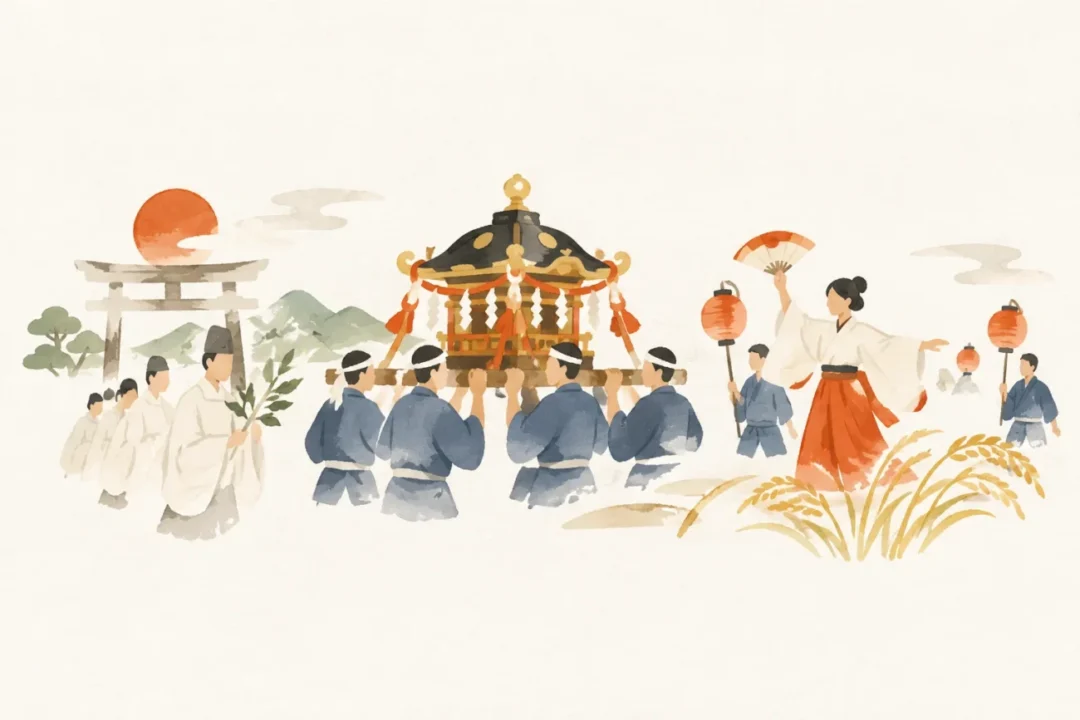
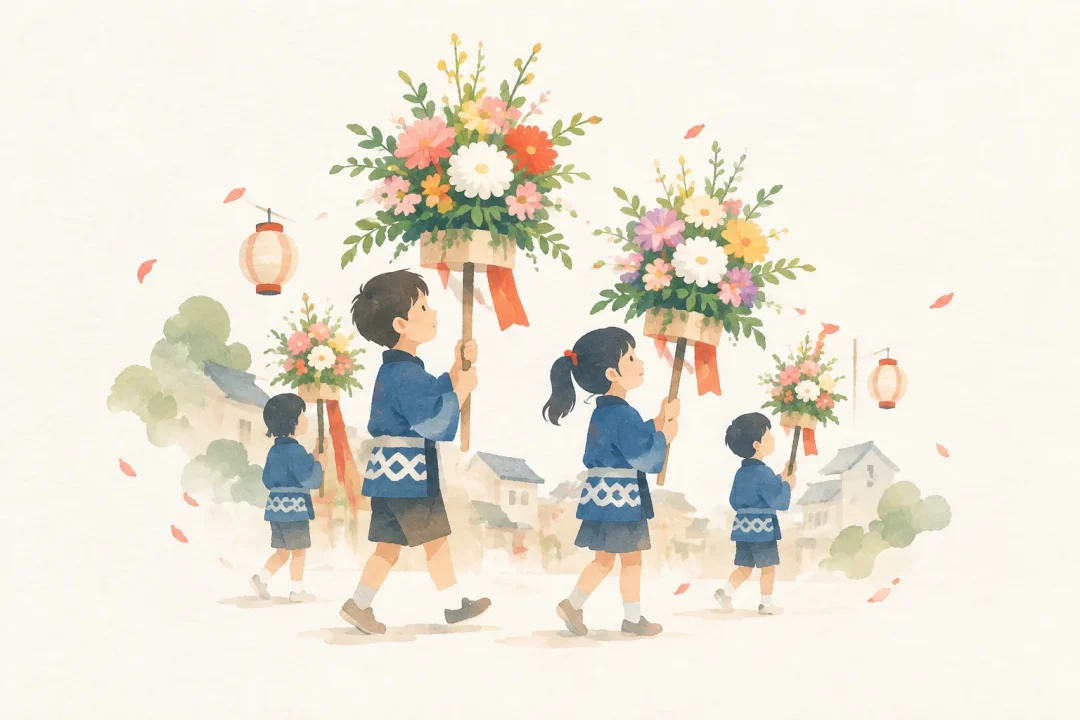
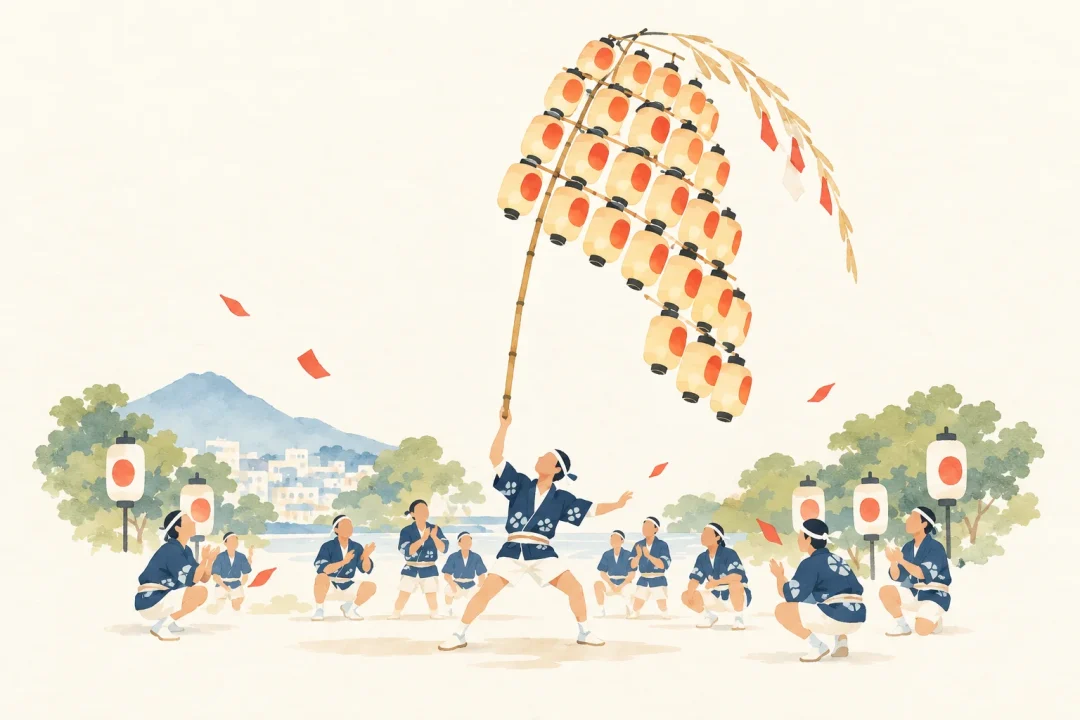
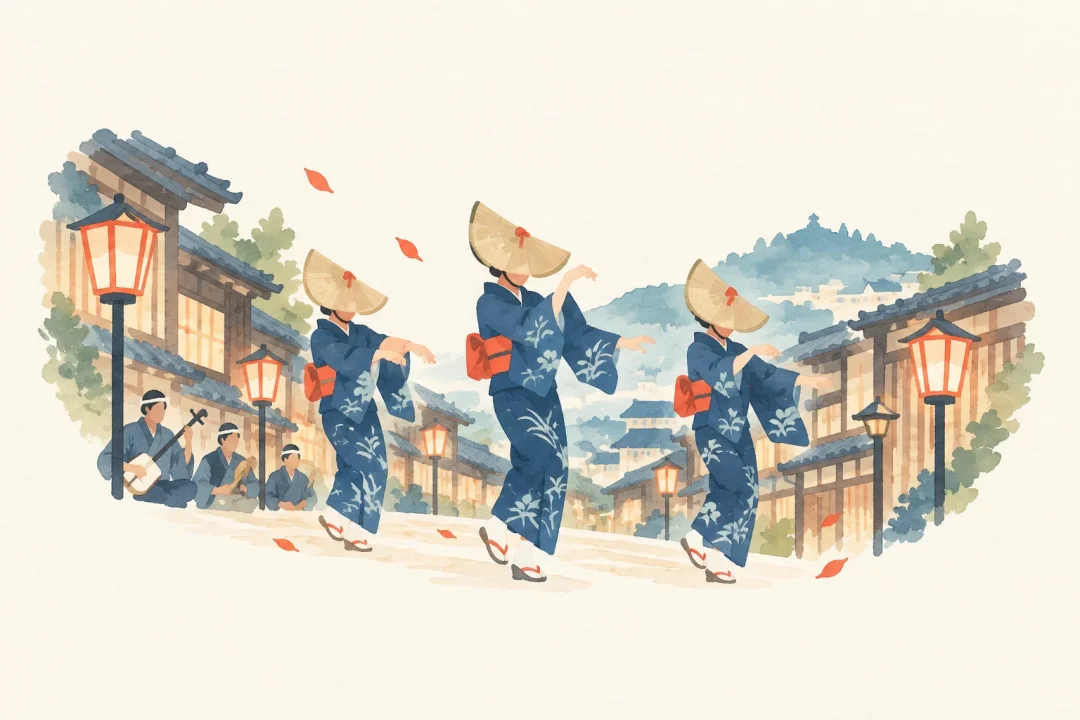
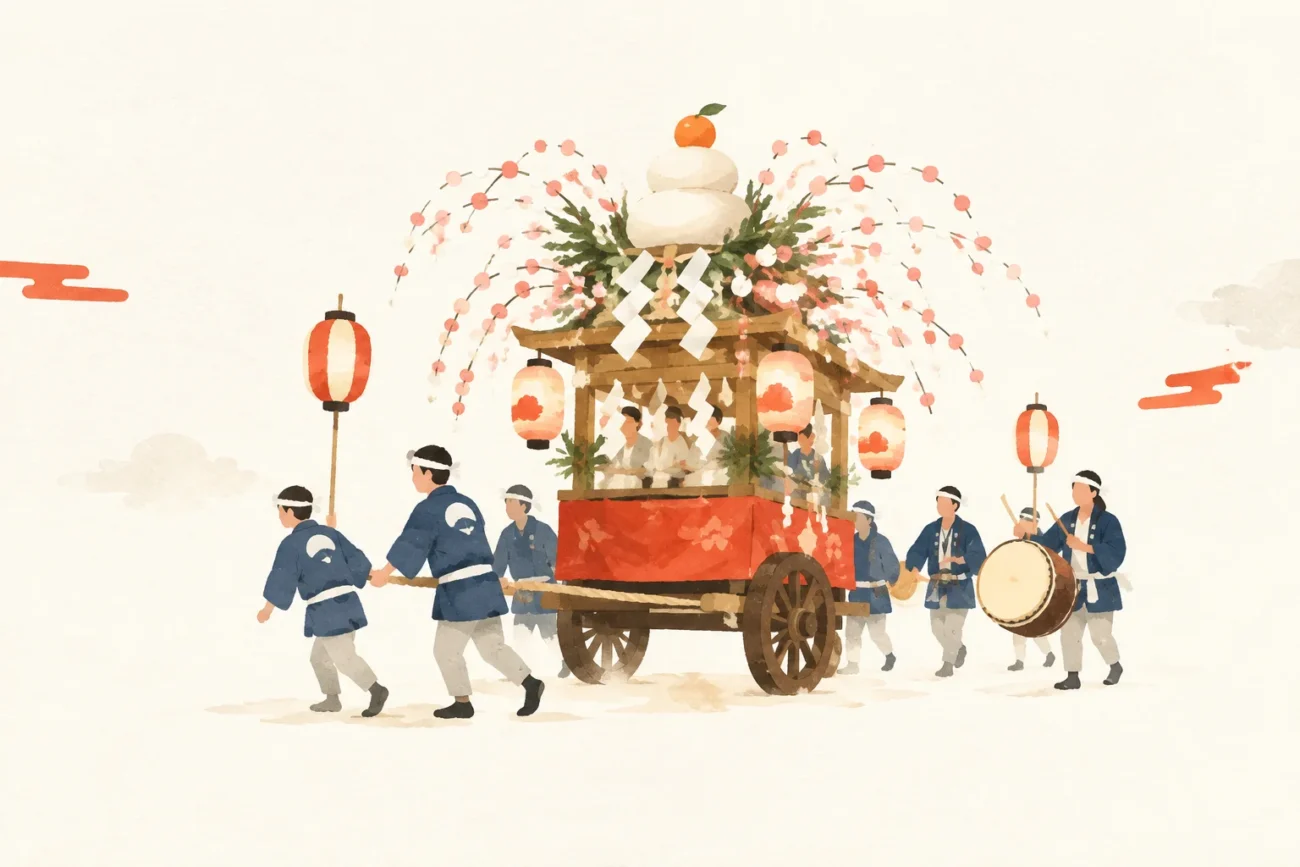
A New Year’s prayer in Awatabe, with a dashi adorned with mochi flowers and accompanied by taiko
Awatabe no Horai-shi
Festival information
EVENT INFORMATION- Season / frequency
- Every year on February 11 / Every year
- Location
- Okafuto Shrine
- Area
- Fukui Prefecture・Echizen City(From Tokyo: approx. 2 h 50 min–3 h 20 min · bullet train)Prefecture-level estimate to a main station or airport, not the venue. Airport access, check-in and onward travel are extra; remote areas and islands can take much longer.
- Features
- Highlights and activities
- Wishes behind the festival
- Last updated
- 2026/11/11
Horai-shi, a tradition passed down in Awatabe-cho, Echizen City, is a Little New Year’s event at Okafuto Shrine, featuring a decorated with mochi flowers, , and kagami mochi and pulled along with music.
About Awatabe no Horai-shi
Awatabe no Horai-shi is a Little New Year’s event passed down at Okafuto Shrine in Awatabe-cho, Echizen City.
It is now held every year on February 11. A dashi mounted on a base made from a bundle of straw about 3 m in diameter is pulled through the district, accompanied by a leader calling the rhythm and taiko hayashi music.
The festival is a local tradition passed down from children to older residents, with prayers for good harvests and peace throughout the land.
Festival highlights
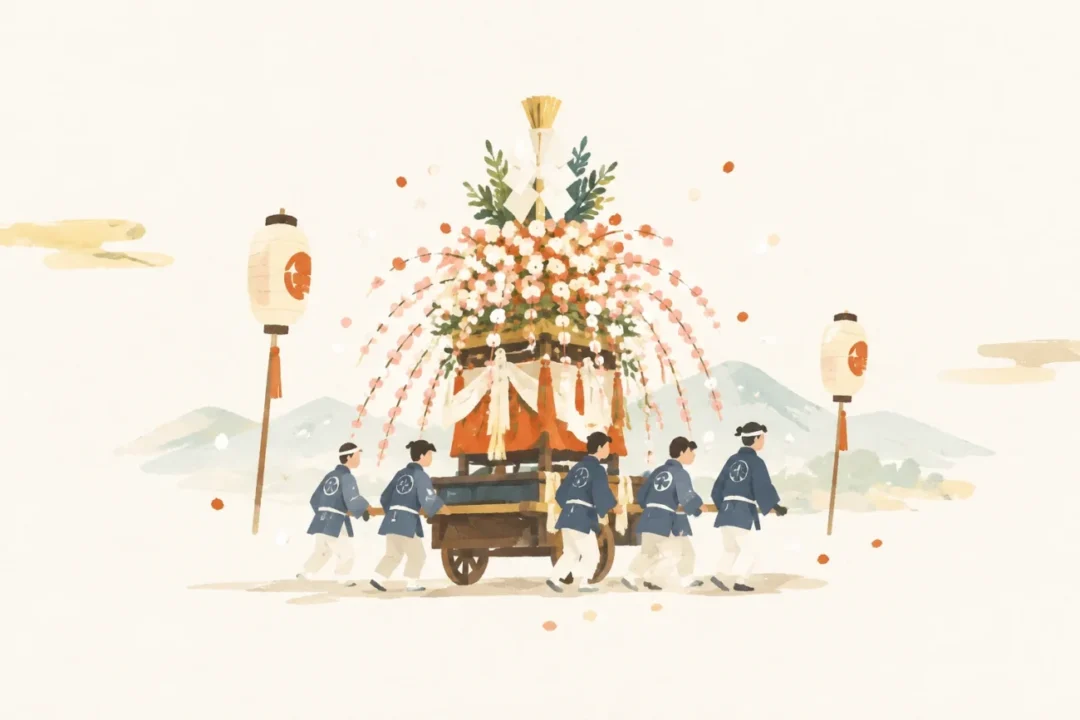
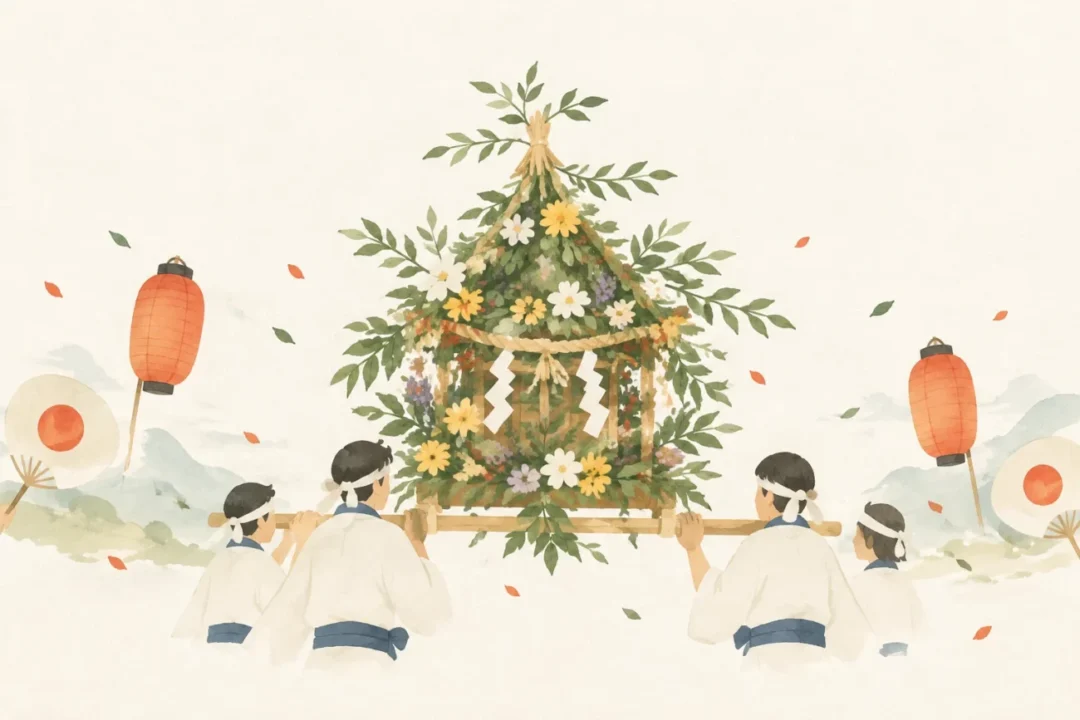
The highlight is a large dashi mounted on a base made from a bundle of straw about 3 m in diameter and decorated with a chestnut tree adorned with mochi flowers, gohei, and kagami mochi.
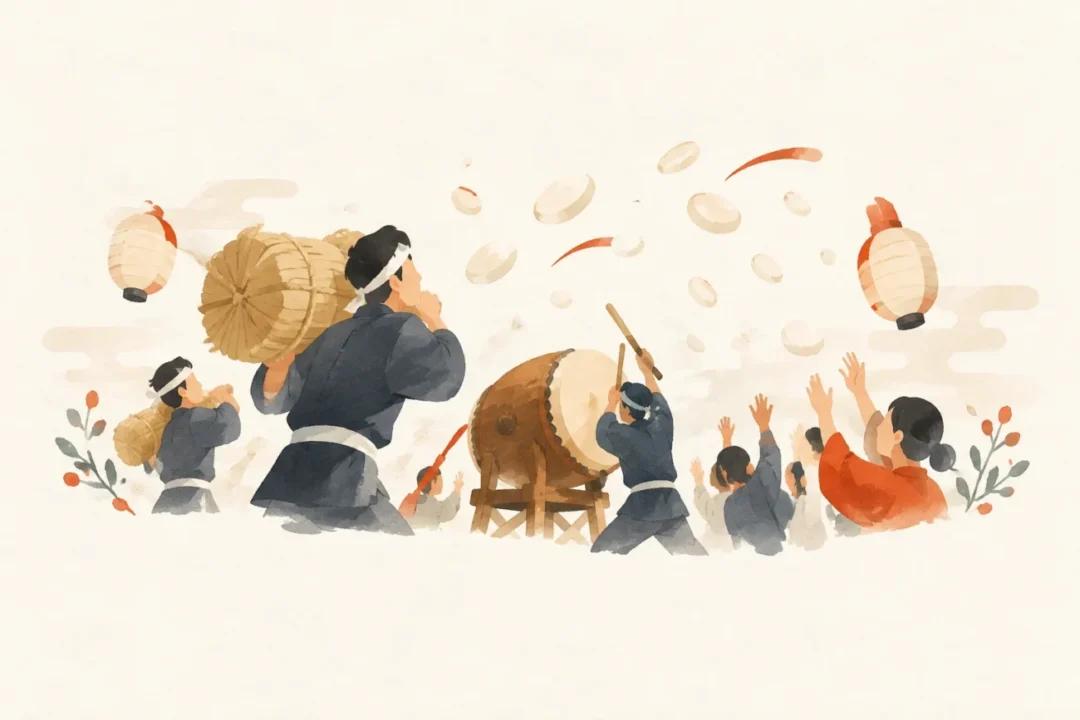
The dashi is pulled through the district, accompanied by calls from the leader and taiko hayashi music.
After the festival, the mochi flowers used for decoration are handed out to participants.
A New Year’s prayer in Awatabe, with a dashi adorned with mochi flowers and accompanied by taiko
What to expect
For the festival, a dashi is assembled on a base made from a bundle of straw and decorated with a chestnut tree adorned with mochi flowers, gohei, kagami mochi, and other items.
A leader calling the rhythm and taiko hayashi accompany the dashi as it is pulled through the district.
After the event, the mochi flowers that decorated the dashi are handed out to participants.
Location and access
- Venue and address
Okafuto Shrine (Awatabe-cho, Echizen City)
Address Awatabe-cho, Echizen City
Dates and season
Every year on February 11
Accommodation and hotels PR
Showing nearby accommodation.
Prices and availability are current at the time of retrieval. For multi-night stays, only the first night’s price is shown. Confirm the final price and directions to the venue with the booking provider. Select your dates again when using the area search link. Search area: within 3 km of Central Fukui Prefecture / Echizen City (the search is not centered on the festival venue)
Nearby attractions
Awatabe-cho has many temples and shrines in its townscape, including Okafuto Shrine.
Hanagata Park is noted for its cherry blossoms in spring and autumn leaves in fall.
Both are introduced as points of interest in Awatabe, where the festival is held.

「ちひろの生まれた家」記念館
福井県越前市の施設

かこさとし ふるさと絵本館「砳」
福井県越前市にある生涯学習施設

Okafuto Shrine
福井県越前市粟田部町にある神社。

武生中央公園
福井県越前市にある運動公園

紫式部公園
福井県越前市にある公園

越前和紙の里美術館
福井県の博物館・美術館のスポットです。
Origins and History of Awatabe no Horai-shi
There are several theories about the origins of Horai-shi. Today, it is associated with a tradition that it began to celebrate Emperor Keitai’s accession to the throne.
In the past, this New Year’s event was held on the 13th day of the first month at Hakusan Shrine, now Okafuto Shrine.
An illustration in the Edo-period work “Echizen no Kuni Meiseki-ko” shows villagers parading a large construction decorated with mochi flowers while playing music.
In Heisei 17, it was selected as an Important Intangible Folk Cultural Property by the national government, and a preservation society was established that same year.
Official information
越前粟田部蓬莱祀公式サイト:越前粟田部蓬莱祀
Awatabe no Horai-shi at a Glance
Awatabe no Horai-shi is a Little New Year’s event passed down at Okafuto Shrine, held every year on February 11.
A dashi mounted on a base made from a bundle of straw about 3 m in diameter is decorated with mochi flowers, gohei, and kagami mochi, then pulled through the district with a leader calling the rhythm and taiko hayashi music.
It is associated with traditions about Emperor Keitai and prayers and gratitude for good harvests, and has been selected as an Important Intangible Folk Cultural Property by the national government.
Sources and references
Japanese Festivals.jp Editorial Team
Celebrating local culture and helping you discover a side of Japan you never knew.
Article updated: 2026/11/11