A festival that entrusts prayers for the shrine's relocation and a good harvest to a mikoshi of branches, leaves, and flowers
Jijigure Festival
Festival information
EVENT INFORMATION- Season / frequency
- May 5
- Location
- Sumiyoshi Shrine
- Area
- Fukui Prefecture・Fukui City(From Tokyo: approx. 2 h 50 min–3 h 20 min · bullet train)Prefecture-level estimate to a main station or airport, not the venue. Airport access, check-in and onward travel are extra; remote areas and islands can take much longer.
- Highlights and activities
- Wishes behind the festival
- Last updated
- 2026/11/12
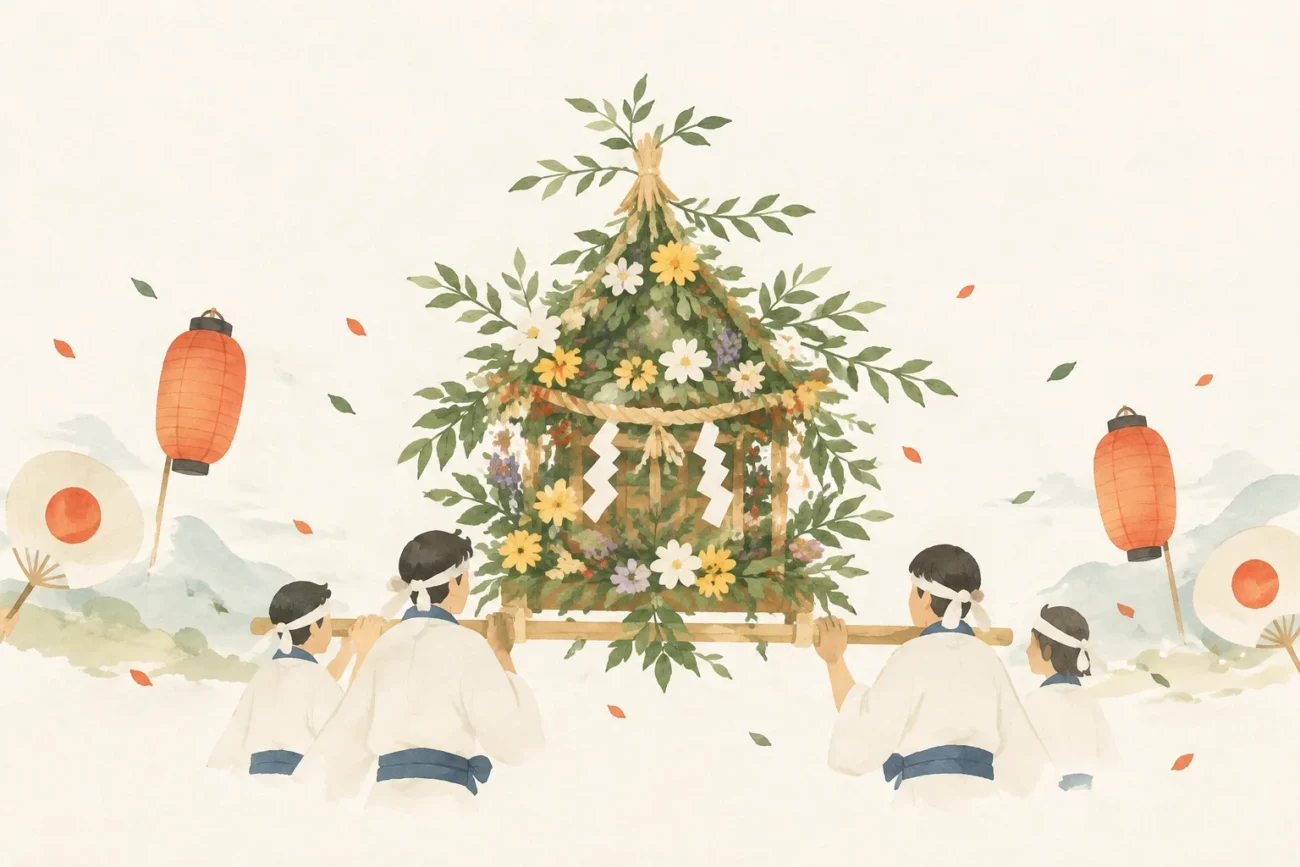
The Jijigure Festival, passed down in Ajimikocho, Fukui City, uses branches, leaves, and seasonal flowers to make and conveys the memory of the shrine's relocation and prayers for a good harvest.
About Jijigure Festival
The Jijigure Festival is an intangible folk cultural property designated by Fukui Prefecture, passed down at Sumiyoshi Shrine in Ajimikocho, Fukui City.
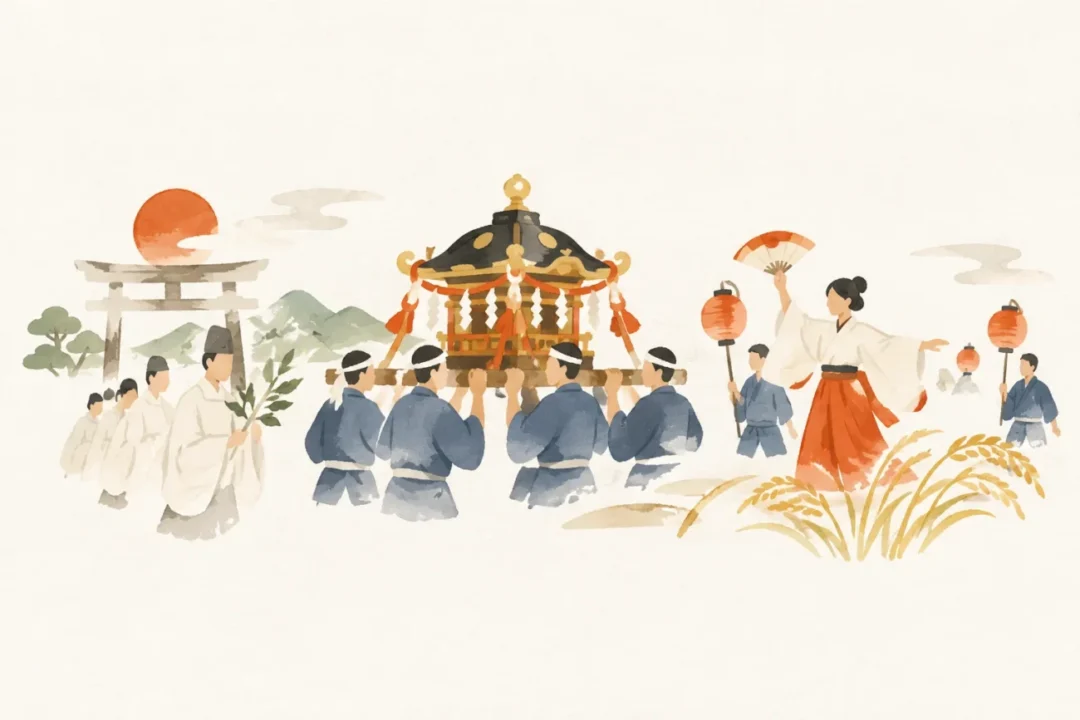
It is said to preserve the rite of transferring the deity from the Kamibikuni Forest to its current location, and is held to pray for a good harvest.
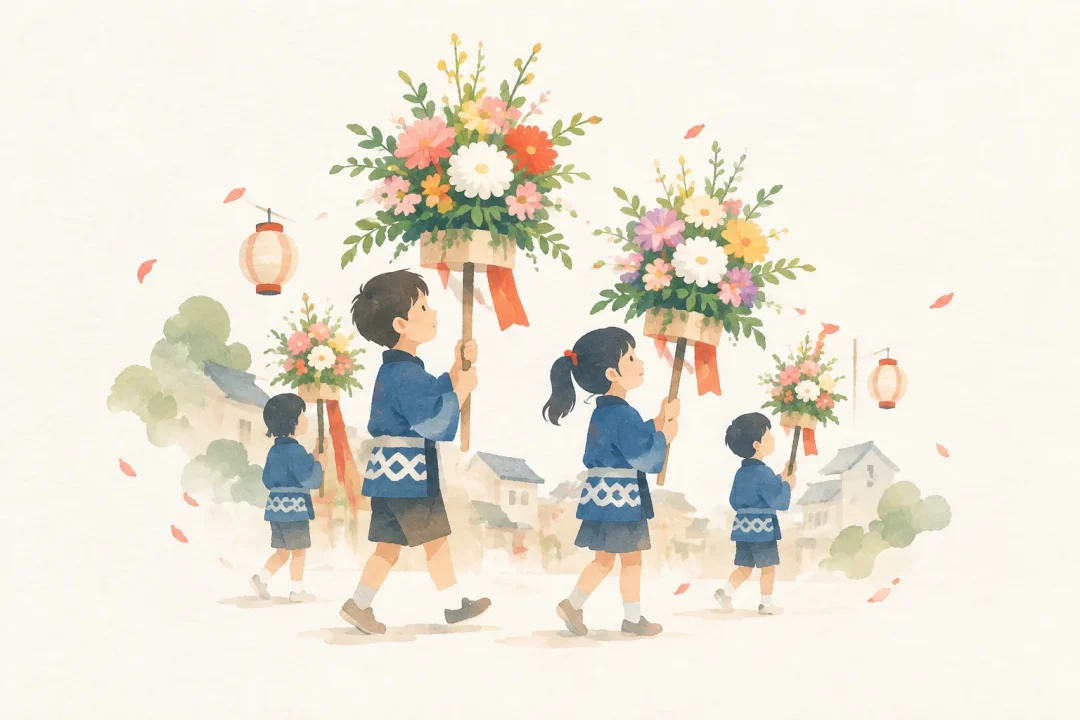
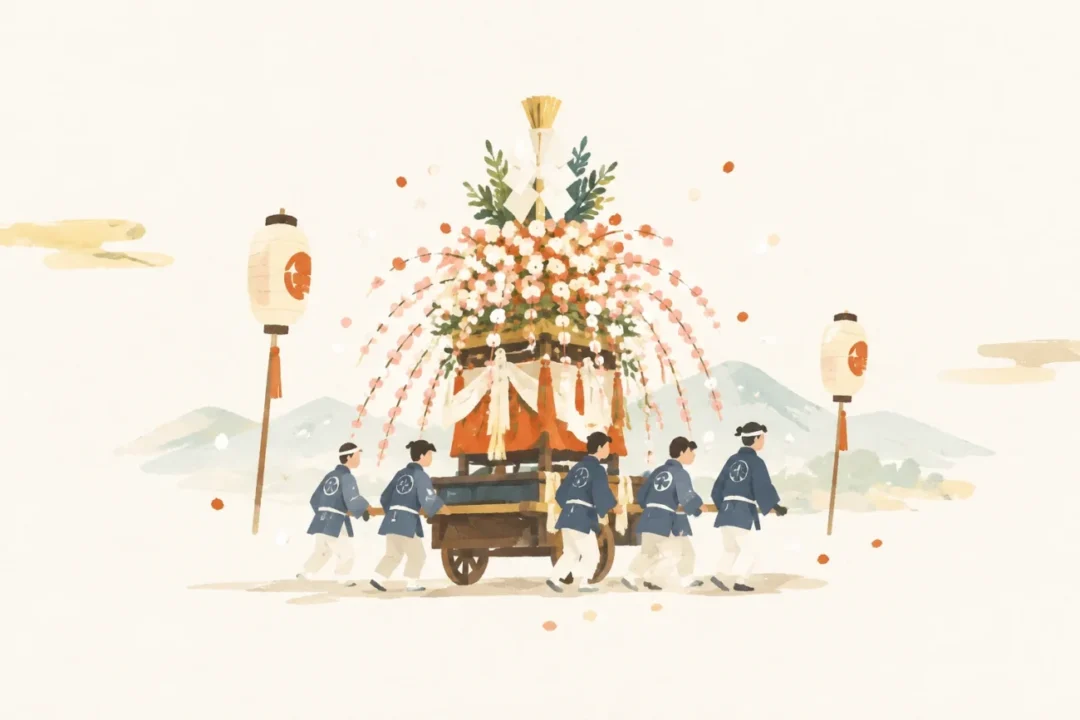
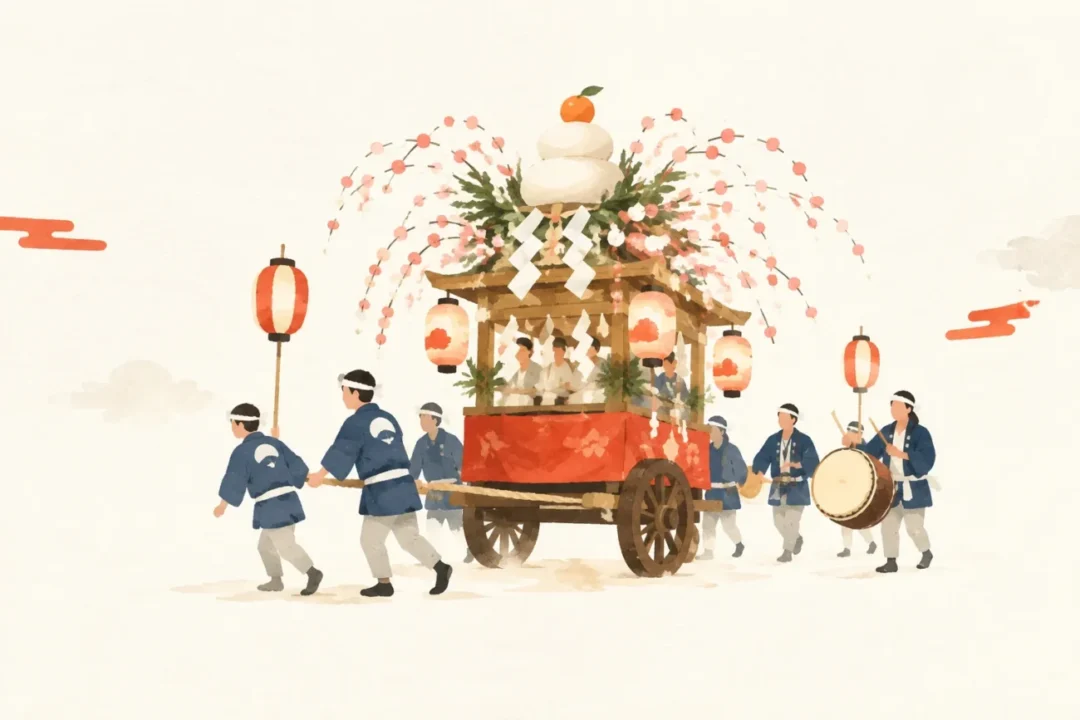
Mikoshi for adults and children are made from blue cedar leaves, flowers, beech branches, and other materials, creating a setting to welcome the divine spirit.
The cultural heritage guide notes that the festival has been suspended since Reiwa 5.
Festival highlights
A highlight is the brushwood mikoshi, made by binding blue cedar leaves into a square shape and decorating it with iris, magnolia, and Japanese kerria flowers, as well as beech branches.
Once the mikoshi is complete, sacred sake is sprinkled over it and are recited. People sing the sacred song “Chiyo Chiyo no” as they lift and raise the mikoshi.
According to tradition, the mikoshi pass between the and a massive zelkova tree, tour old roads and historic homes, and are then dismantled in a rite at the .
A festival that entrusts prayers for the shrine's relocation and a good harvest to a mikoshi of branches, leaves, and flowers
What to expect
According to the traditional account, people gather in front of the shrine in the morning and divide into groups to cut beech branches, make yorishiro, and build the mikoshi platforms.
Branches, leaves, and flower bundles are assembled on the platforms. After the priest recites norito and sprinkles sacred sake, the mikoshi set off.
They tour the neighborhood as people sing sacred songs and spin or vigorously raise and lower the mikoshi. Finally, they return to the shrine and perform a dismantling rite.
Location and access
- Venue and address
Sumiyoshi Shrine, Ajimikocho, Fukui City
Address 18-24 Ajimikocho, Fukui City
Dates and season
- Season
May 5
Accommodation and hotels PR
Showing nearby accommodation.
Prices and availability are current at the time of retrieval. For multi-night stays, only the first night’s price is shown. Confirm the final price and directions to the venue with the booking provider. Select your dates again when using the area search link. Search area: within 3 km of Central Fukui Prefecture / Fukui City (the search is not centered on the festival venue)
Nearby attractions

おさごえ民家園
福井県福井市にある博物館

一乗谷朝倉氏遺跡
福井県福井市にある遺跡

柴田神社
福井市にある神社
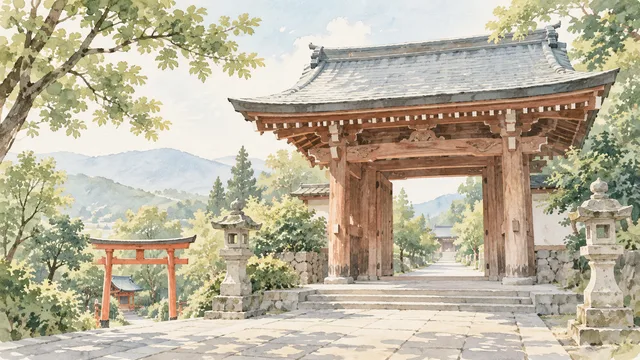

Shinmei Jinja
福井県福井市にある神社

福井市愛宕坂茶道美術館
福井県福井市にある美術館

福井市橘曙覧記念文学館
福井県福井市にある文学館

福井市水道記念館
福井県福井市にある博物館

福井市立郷土歴史博物館
福井県福井市にある博物館

福井市美術館
福井県福井市にある美術館
写真:藤谷良秀 (Yoshihide Fujitani) / CC BY-SA 4.0
Photo source ·
福井市自然史博物館
福井県福井市にある博物館

福井県立こども歴史文化館
福井県福井市城東にある博物館
Origins and History of Jijigure Festival
The Jijigure Festival is said to preserve the rite of moving the shrine buildings from the Kamibikuni Forest to their current location.
The crafting of mikoshi using brushwood and flowers, along with the binding techniques using nesō and gundo wisteria, has been passed down as valuable heritage. The festival was designated an intangible folk cultural property by Fukui Prefecture in Showa 42.
The cultural heritage guide notes that the festival has been suspended since Reiwa 5.
Official information
Fukui Prefecture Cultural Properties page, “Cultural Property Details”
Jijigure Festival at a Glance
The Jijigure Festival, passed down at Sumiyoshi Shrine in Ajimikocho, Fukui City, conveys the rite of shrine relocation and prayers for a good harvest.
The festival is distinctive for its mikoshi made from blue cedar leaves, beech branches, and seasonal flowers, which tour the neighborhood accompanied by norito and sacred songs.
Although it is an intangible folk cultural property designated by Fukui Prefecture, the cultural heritage guide notes that the festival has been suspended since Reiwa 5.
Sources and references
Japanese Festivals.jp Editorial Team
Celebrating local culture and helping you discover a side of Japan you never knew.
Article updated: 2026/11/12