Traditional kagura of Unnan, passed down through the seven-seat rites and sacred dances
Tsuki-no-ya Kagura
Festival information
EVENT INFORMATION- Season / frequency
- Annual festival on November 10 / Performed at the annual festival and other occasions
- Area
- Shimane Prefecture・Unnan City(From Tokyo: approx. 1 h 20 min–1 h 40 min · flight time only)Prefecture-level estimate to a main station or airport, not the venue. Airport access, check-in and onward travel are extra; remote areas and islands can take much longer.
- Features
- Highlights and activities
- Last updated
- 2026/10/19
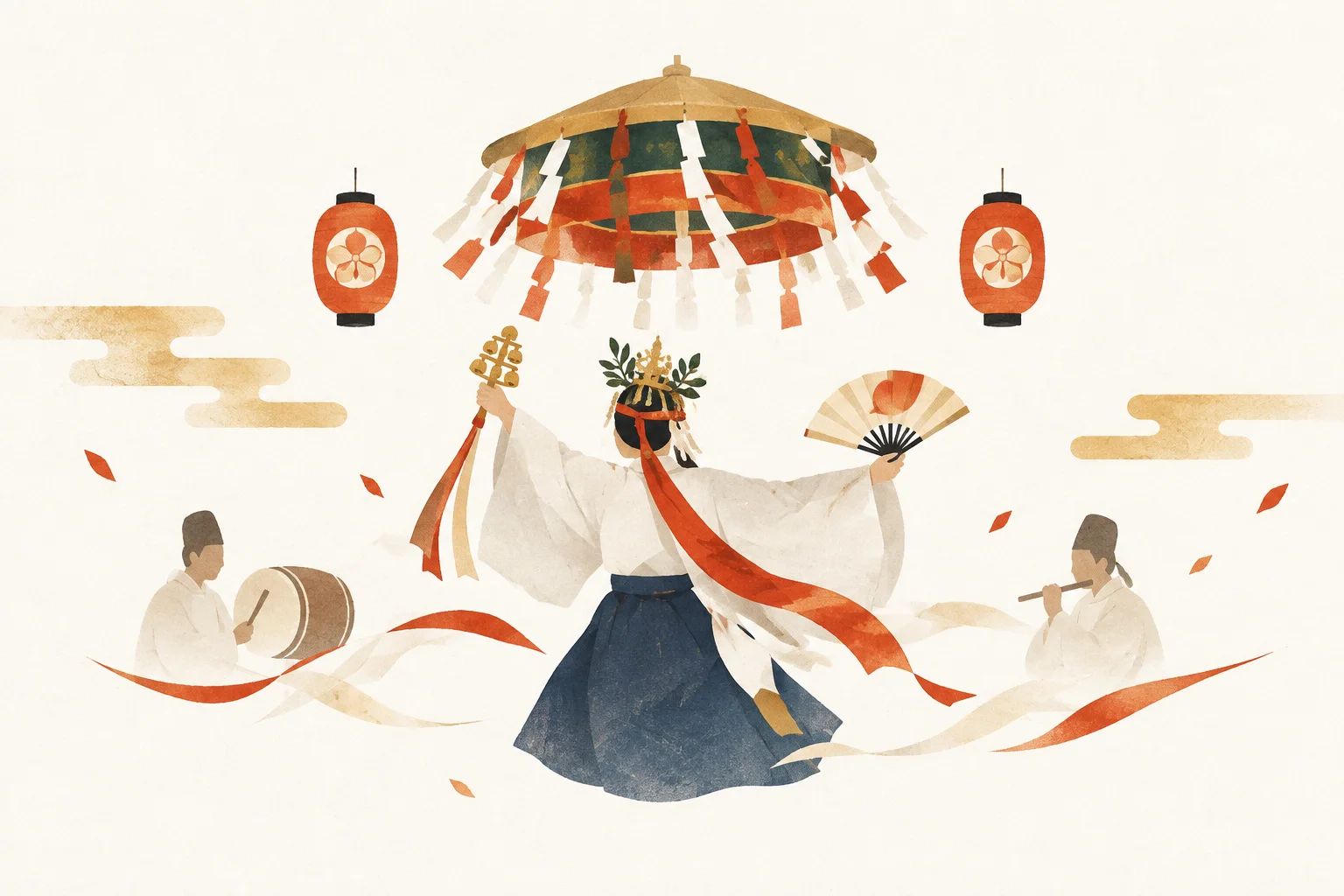
Tsuki-no-ya , passed down in Yumura, Kisuki-cho, Unnan City, is an Izumo-style kagura consisting of seven-seat Shinto rites and sacred dances. It is offered at the annual festival and other occasions, and also preserves the distinctive use of a tengai canopy.
About Tsuki-no-ya Kagura
Tsuki-no-ya Kagura is a kagura tradition passed down in Yumura, Kisuki-cho, Unnan City, Shimane Prefecture.
It follows the Sada Shinno style of Izumo kagura and is performed at the tutelary deity’s annual festival and festivals at shrines in nearby areas.
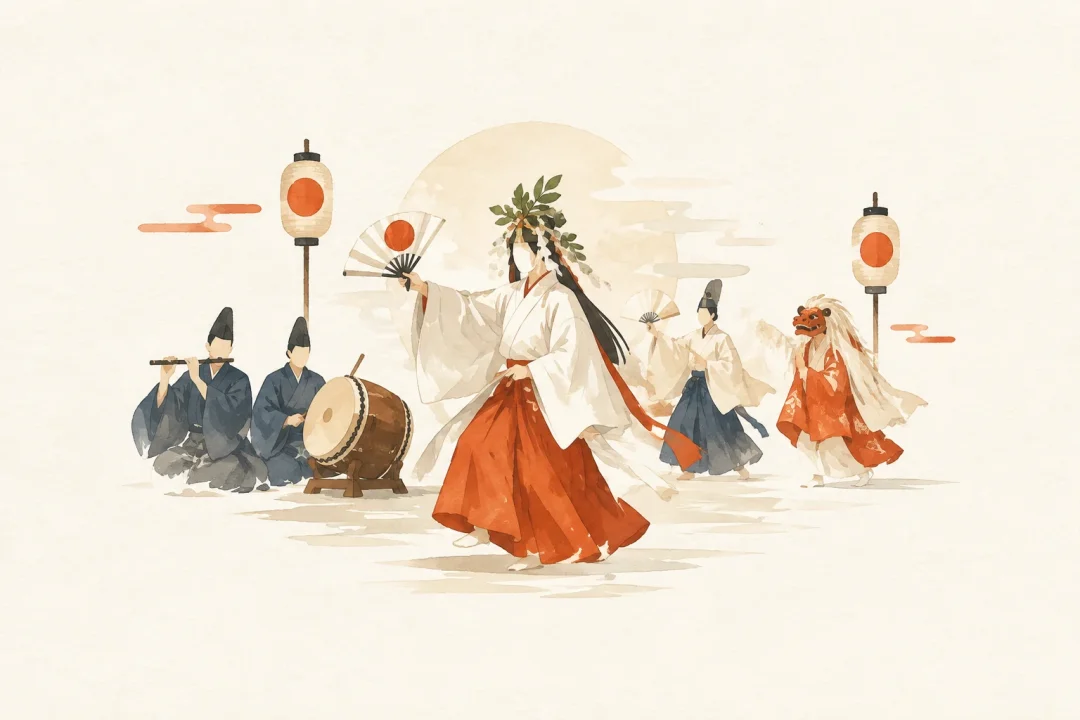
It consists of seven-seat Shinto rites, Shiki Sanban, and masked sacred dances, and is preserved as a traditional performing art connected to local festivals.
Source: 国指定文化財等データベース / 槻の屋神楽|島根県立古代出雲歴史博物館
Festival highlights
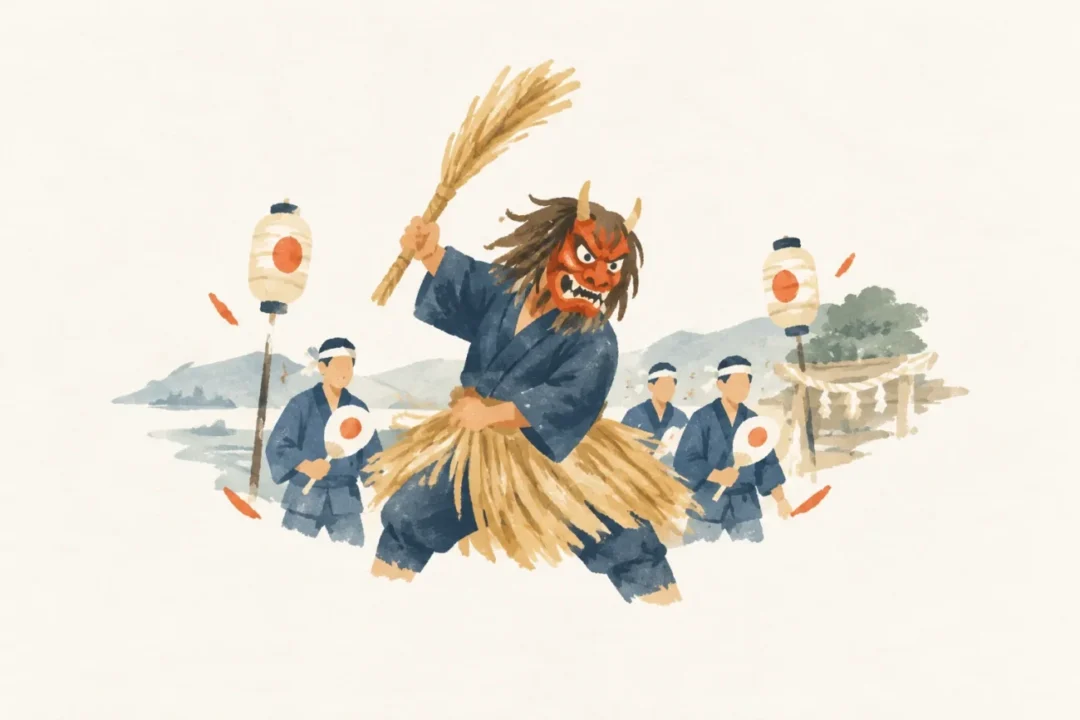
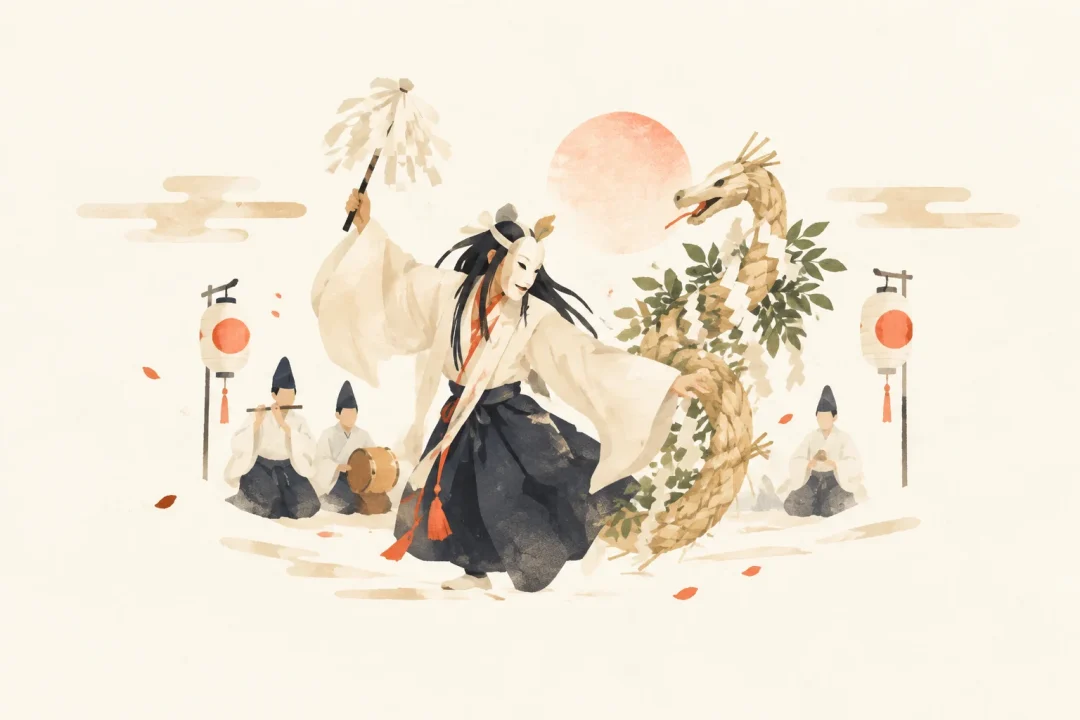
A highlight is that the performance combines the seven-seat Shinto rites danced bare-faced, Shiki Sanban, and dramatic masked sacred dances.
Distinctive elements include “Kansho,” in which a tengai canopy is suspended and raised and lowered, as well as stage decorations such as the tengai, sendo, hyakudo, and kirikazari.
Its appeal lies in preserving features unique to the mountainous areas of Izumo while building on the Sada Shinno style.
Traditional kagura of Unnan, passed down through the seven-seat rites and sacred dances
What to expect
The offering begins with the seven-seat Shinto rites, followed by Shiki Sanban performed by Senzai, Okina, and Sanbaso, and then masked sacred dances.
Performances include “Kiyome,” “Kansho,” “Shihoken,” and “Shiso,” as well as “Tenjin Michiyuki,” “Susa Sengu,” and “Hinomisaki.”
This kagura is offered in the shrine’s and passed down through performances at the annual festival and festivals in nearby areas.
Location and access
- Address
Unnan City
Host municipality 島根県雲南市
This map shows the surrounding area, not the exact venue location.
Dates and season
The annual offering is held in conjunction with the of Tsukinoya Kamo . The prefecture’s cultural property list identifies it as the reisai on November 10.
It may also be performed at festivals held by nearby shrines.
Accommodation and hotels PR
Showing nearby accommodation.
Prices and availability are current at the time of retrieval. For multi-night stays, only the first night’s price is shown. Confirm the final price and directions to the venue with the booking provider. Select your dates again when using the area search link. Search area: within 3 km of Central Shimane Prefecture / Unnan City (the search is not centered on the festival venue)
Nearby attractions

かけや酒蔵資料館
島根県の博物館・美術館のスポットです。

竹下登記念館
島根県雲南市にある博物館

須我神社
島根県雲南市大東町須賀にある神社
Origins and History of Tsuki-no-ya Kagura
Tsuki-no-ya Kagura is said to have originated when shrine-priest kagura, influenced by Sada Shinno—the style considered the source of Izumo-style kagura—was brought to this area around 1801.
During the Edo period, from Nita District continued the dances. From the Meiji period onward, responsibility passed from the priests to parishioners.
Today, it is preserved mainly by people from Tsukinoya and performed at the annual festival and festivals in nearby areas.
Official information
The Shimane Museum of Ancient Izumo History has released short and full-length videos introducing Tsuki-no-ya Kagura.
The list of cultural properties of Shimane Prefecture includes Tsuki-no-ya Kagura as a prefecturally designated intangible folk cultural property.
The Agency for Cultural Affairs’ database of nationally designated cultural properties also describes it as an intangible folk cultural property for which measures such as documentation should be undertaken.
Tsuki-no-ya Kagura at a Glance
Tsuki-no-ya Kagura is an Izumo-style kagura passed down in Yumura, Kisuki-cho, Unnan City, centered on seven-seat Shinto rites and sacred dances.
It is said to have been brought to this area around 1801, and has been passed down mainly by parishioners and people from the area since the Meiji period.
This traditional performing art is rooted in local festivals, with distinctive elements such as “Kansho,” which uses a tengai canopy, worth noting.
Japanese Festivals.jp Editorial Team
Celebrating local culture and helping you discover a side of Japan you never knew.
Article updated: 2026/10/19
Submit information or a correction Submit photos of this festival