Tosa Kagura: A tradition of stories and dance alive in the Shikoku Mountains
Tosa Kagura
Festival information
EVENT INFORMATION- Location
- The various tradition-bearing areas across the east–west region along the Shikoku Mountains in Kochi Prefecture
- Area
- Kochi Prefecture(From Tokyo: approx. 1 h 20 min–1 h 40 min · flight time only)Prefecture-level estimate to a main station or airport, not the venue. Airport access, check-in and onward travel are extra; remote areas and islands can take much longer.
- Features
- Highlights and activities
- Last updated
- 2026/10/19
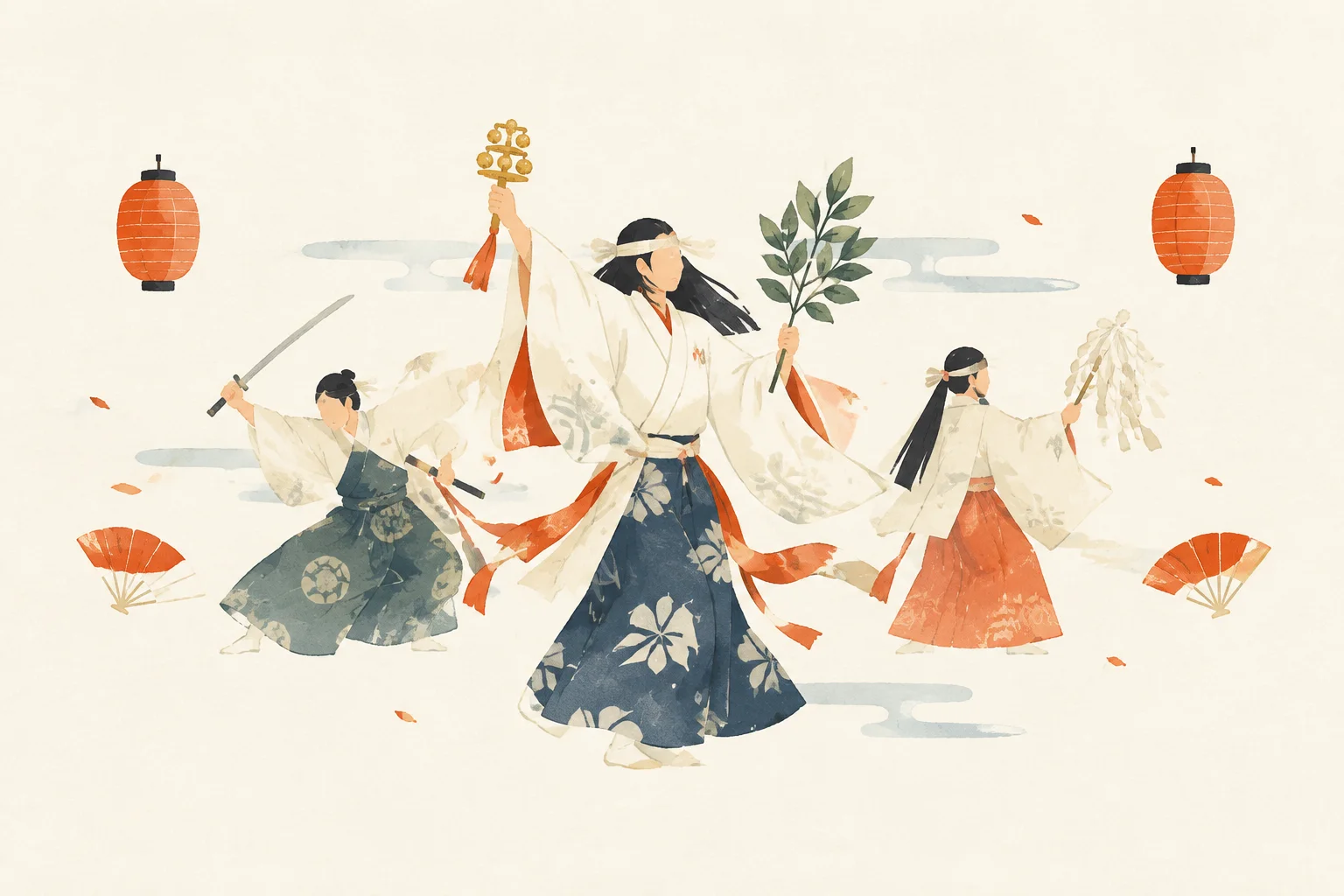
Tosa is a form of kagura passed down across the east–west region along the Shikoku Mountains in Kochi Prefecture. A diverse range of locally rooted expressions has been passed down, including dances with bells and branches, dramatic dances based on myths recorded in the Kojiki and Nihon Shoki, and pieces featuring swords and naginata.
About Tosa Kagura
Tosa Kagura is a collective name for forms of kagura passed down across the east–west region along the Shikoku Mountains in Kochi Prefecture.
It comprises dances performed with ritual objects such as bells and sakaki branches, as well as dramatic dances based on myths recorded in the Kojiki and Nihon Shoki, and displays distinctive local styles.
It is classified within the Izumo Kagura lineage and retains elements from a period earlier than those found in typical kagura.
Several preservation groups pass the tradition on in their respective areas.
Source: 国指定文化財等データベース
Festival highlights
Highlights include “Niten” and “Sanba no Mai,” dances performed with swords, “Bon (Zen) no Mai,” performed with a tray or meal tray, and “Naginata no Mai,” featuring a naginata.
Pieces featuring acrobatic movements and a sense of tension have been passed down.
“Shiten Kishin” and “Akuma-barai,” in which a demon-masked performer appears, commits mischief, is ultimately outargued, then leaves behind a treasure and flees, are also distinctive pieces.
Visitors can enjoy performances that weave dance together with storytelling.
Tosa Kagura: A tradition of stories and dance alive in the Shikoku Mountains
What to expect
In kagura, performers dance holding objects such as bells and sakaki branches, and present pieces featuring swords, trays, and naginata.
In dramatic dances based on myths recorded in the Kojiki and Nihon Shoki, the movements of the characters and the unfolding of the story are portrayed.
In pieces featuring performers wearing demon masks, a wrongdoer is outargued and leaves behind a treasure before departing.
In some areas, elements of narrative storytelling remain in the dance verses.
Location and access
- Venue and address
Tradition-bearing sites are spread across the east–west region along the Shikoku Mountains in Kochi Prefecture.
This kagura is performed in several areas rather than at a single venue.
Address The east–west region along the Shikoku Mountains in Kochi Prefecture
Origins and History of Tosa Kagura
Tosa Kagura is a form of kagura passed down across a wide area along the Shikoku Mountains in Kochi Prefecture.
Local forms of kagura retain elements considered to be from an earlier period than those found in typical kagura.
On January 28, 1980, it was designated a National Important Intangible Folk Cultural Property.
Today, several preservation groups, including the Izanagi-ryu Gokito Preservation Association, support its transmission.
Official information
The National Database of Cultural Properties introduces Tosa Kagura as an Important Intangible Folk Cultural Property.
In cultural-property classifications, it is categorized as a folk performing art, specifically kagura.
The database also lists its tradition-bearing areas, characteristics of its pieces, and the names of preservation groups.
Tosa Kagura at a Glance
Tosa Kagura is an Important Intangible Folk Cultural Property passed down across the east–west region along the Shikoku Mountains in Kochi Prefecture.
It is characterized by dances performed with bells and sakaki branches, dramatic dances based on mythology, pieces featuring swords and naginata, and narrative pieces featuring performers wearing demon masks.
It was designated by the national government in 1980, and several preservation groups are responsible for passing it on.
Japanese Festivals.jp Editorial Team
Celebrating local culture and helping you discover a side of Japan you never knew.
Article updated: 2026/10/19
Submit information or a correction Submit photos of this festival