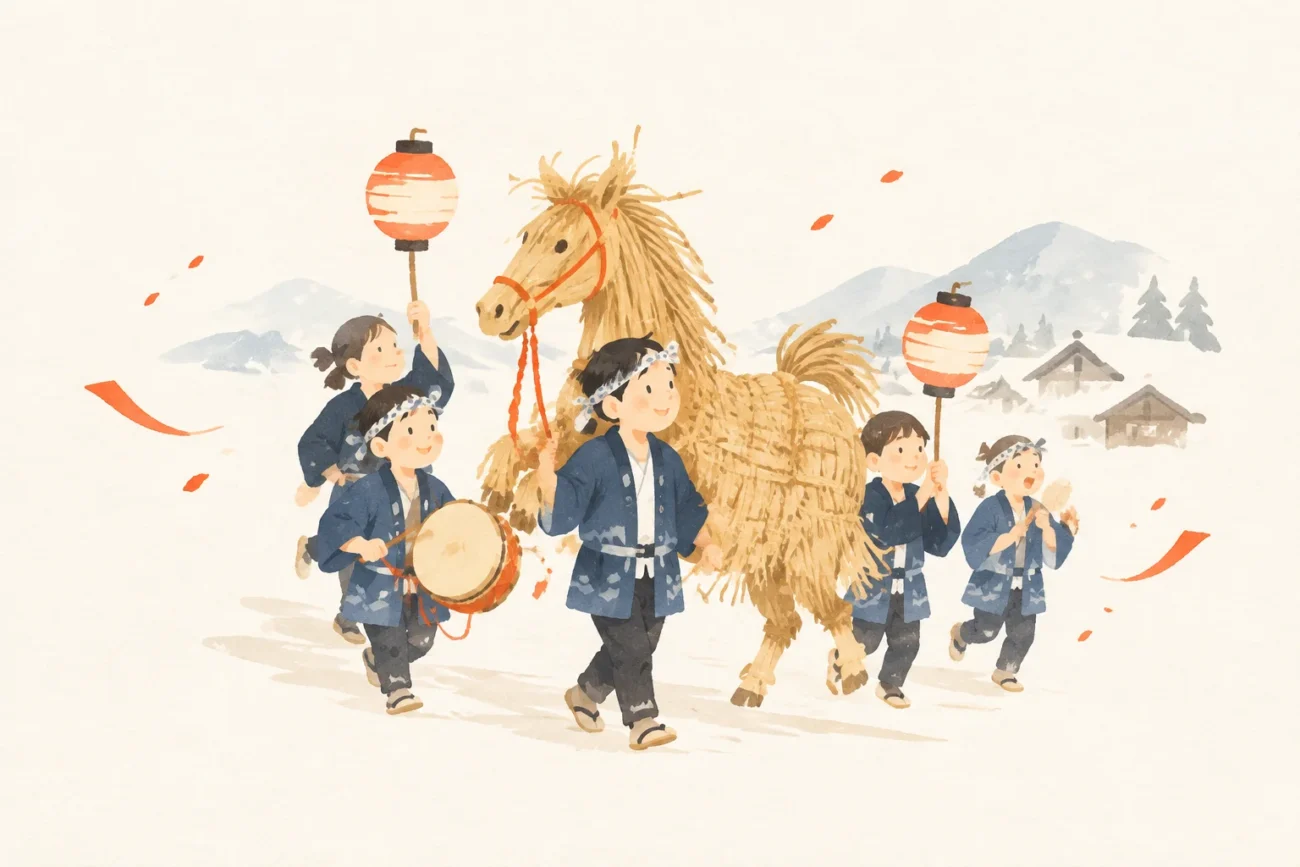
A New Year’s blessing in which children and straw horses make their way through snowy Toga
Toga’s Hatsu-uma event
Festival information
EVENT INFORMATION- Season / frequency
- Every year on January 15 / Every year
- Location
- Toga district
- Area
- Toyama Prefecture・Nanto City(From Tokyo: approx. 2 h 10 min–2 h 40 min · bullet train)Prefecture-level estimate to a main station or airport, not the venue. Airport access, check-in and onward travel are extra; remote areas and islands can take much longer.
- Features
- Highlights and activities
- Wishes behind the festival
- Last updated
- 2026/11/11
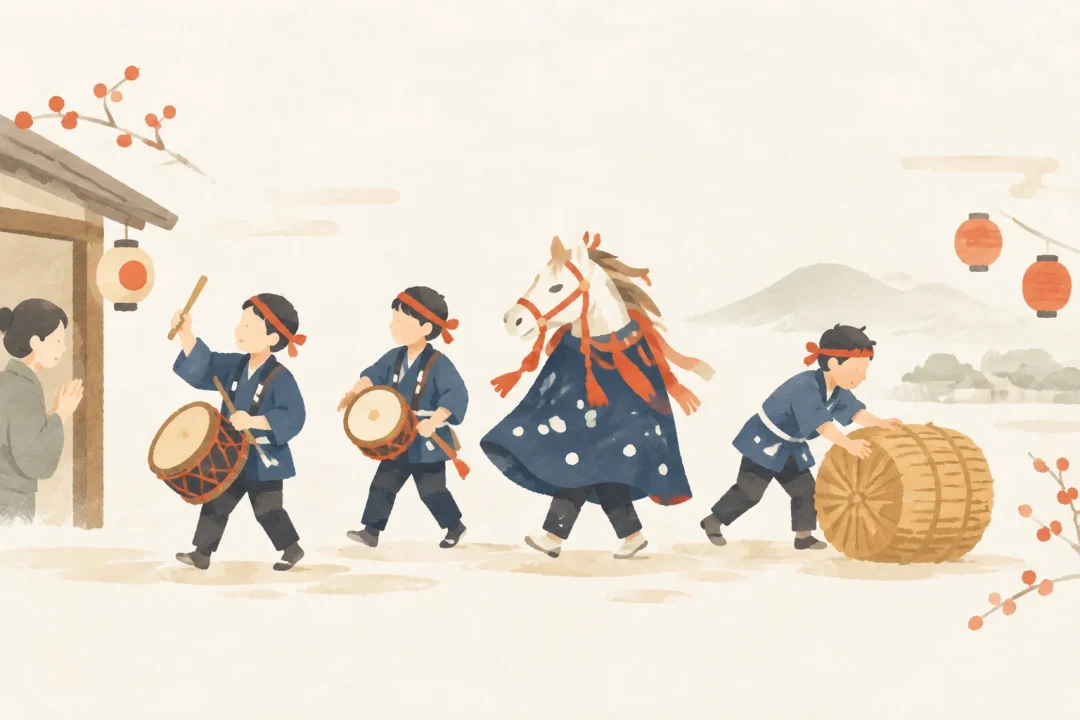
Toga’s Hatsu-uma event is a folk tradition in which children carrying straw horses visit homes to bring New Year blessings through songs, drumming, and a horse dance.
About Toga’s Hatsu-uma event
Toga’s Hatsu-uma event is a folk tradition passed down in the Toga district since around the Bunka era.
Every year on January 15, children prepare the heads of straw horses and visit homes, making their way through deep snow.
At each home, they perform blessings and pray for household safety, sericulture, and a good harvest.
It is designated a prefecturally designated Intangible Folk Cultural Property.
Festival highlights
A distinctive feature is that only children perform the ritual events, such as rolling straw bales and beating taiko drums.
Carrying the heads of straw horses, the children make their way through the snow to each home.
Participants were once limited to boys, but girls now take part as well.
The festival is notable for the way children carry on the local New Year tradition.
A New Year’s blessing in which children and straw horses make their way through snowy Toga
What to expect
Children from the district take on roles such as a , a horse, a straw-bale roller, a taiko drummer, and a singer.
At each home, prayers are recited in front of the main pillar, and a horse dances to the beat of taiko drums and a song praising silkworm raising.
Then the straw-bale roller tosses and draws in good fortune, throws in talismans inscribed with phrases such as “God of Good Fortune,” and moves on to the next home.
Location and access
- Venue and address
Toga Village, Nanto City
Address Toga Village, Nanto City
Dates and season
- Season
Every year on January 15
- Frequency
Every year
Accommodation and hotels PR
Showing nearby accommodation.
Prices and availability are current at the time of retrieval. For multi-night stays, only the first night’s price is shown. Confirm the final price and directions to the venue with the booking provider. Select your dates again when using the area search link. Search area: within 3 km of Central Toyama Prefecture / Nanto City (the search is not centered on the festival venue)
Nearby attractions

南砺市立福光美術館
日本の富山県南砺市にある公立美術館

福野文化創造センターヘリオス
富山県南砺市の博物館・美術館のスポットです。

高瀬神社
富山県南砺市高瀬にある神社
Origins and History of Toga’s Hatsu-uma event
Toga’s Hatsu-uma event has been passed down in the Toga district since around the Bunka era.
In Showa 57December, it was selected as an “Intangible Folk Cultural Property for which measures such as documentation should be undertaken.”
It became a prefecturally designated Intangible Folk Cultural Property in Heisei 16July 16 and is carried on by the Toga Hatsu-uma Preservation Society.
Participants, once limited to boys, now include girls as well.
Official information
The Nanto City Cultural Arts Archives provides an overview, designation category, location, and description of Toga’s Hatsu-uma event.
The event is owned by the Toga Hatsu-uma Preservation Society.
Toga’s Hatsu-uma event at a Glance
Toga’s Hatsu-uma event is a prefecturally designated Intangible Folk Cultural Property that has been passed down since around the Bunka era.
Every year on January 15, children visit homes carrying straw horses and perform blessings through norito prayers, songs, taiko drumming, a horse dance, and rolling straw bales.
This New Year event in the Toga district offers prayers for household safety, sericulture, and a good harvest.
Sources and references
Japanese Festivals.jp Editorial Team
Celebrating local culture and helping you discover a side of Japan you never knew.
Article updated: 2026/11/11