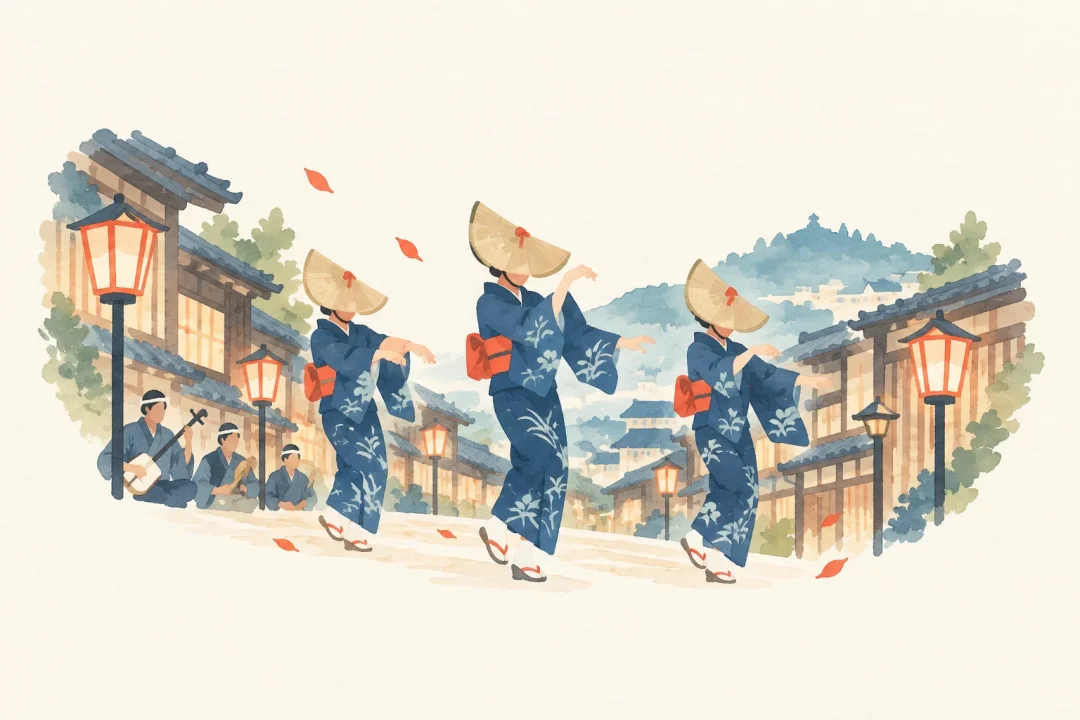
Sanbaso, a dedication dance imbued with prayers and passed down in Makinosato
Tenjinja Shrine’s Sanbaso
Festival information
EVENT INFORMATION- Season / frequency
- November 3 (Culture Day)
- Location
- Tenjinja Shrine
- Area
- Shizuoka Prefecture・Izu City(From Tokyo: approx. 1 h–1 h 30 min · bullet train)Prefecture-level estimate to a main station or airport, not the venue. Airport access, check-in and onward travel are extra; remote areas and islands can take much longer.
- Highlights and activities
- Wishes behind the festival
- Last updated
- 2026/11/11
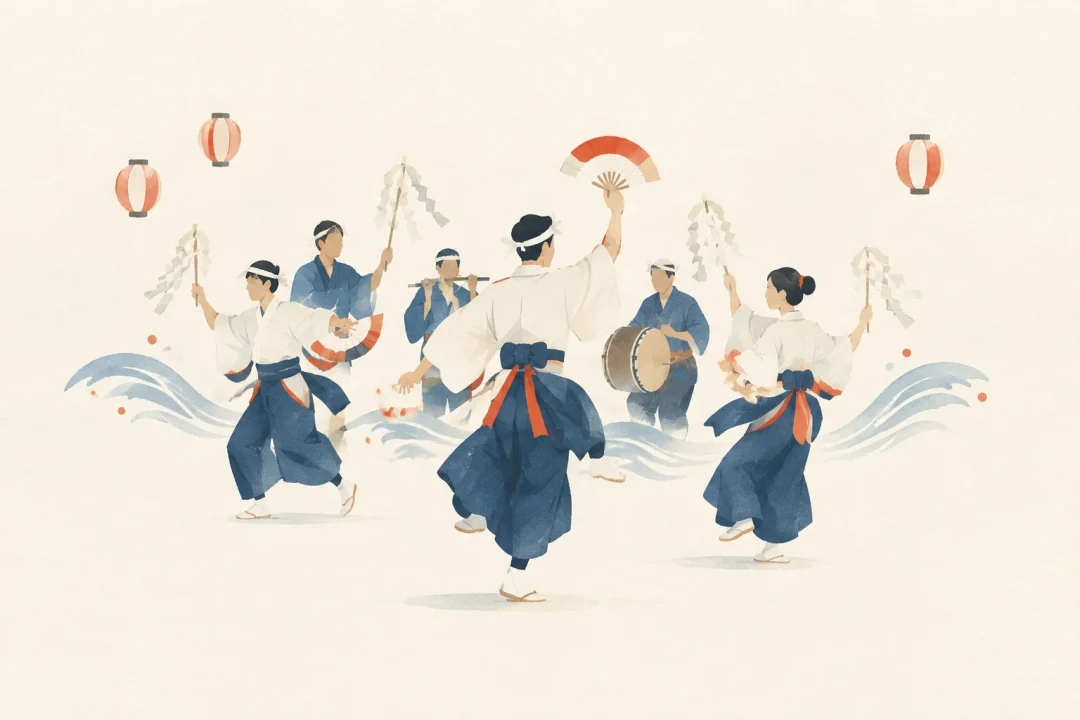
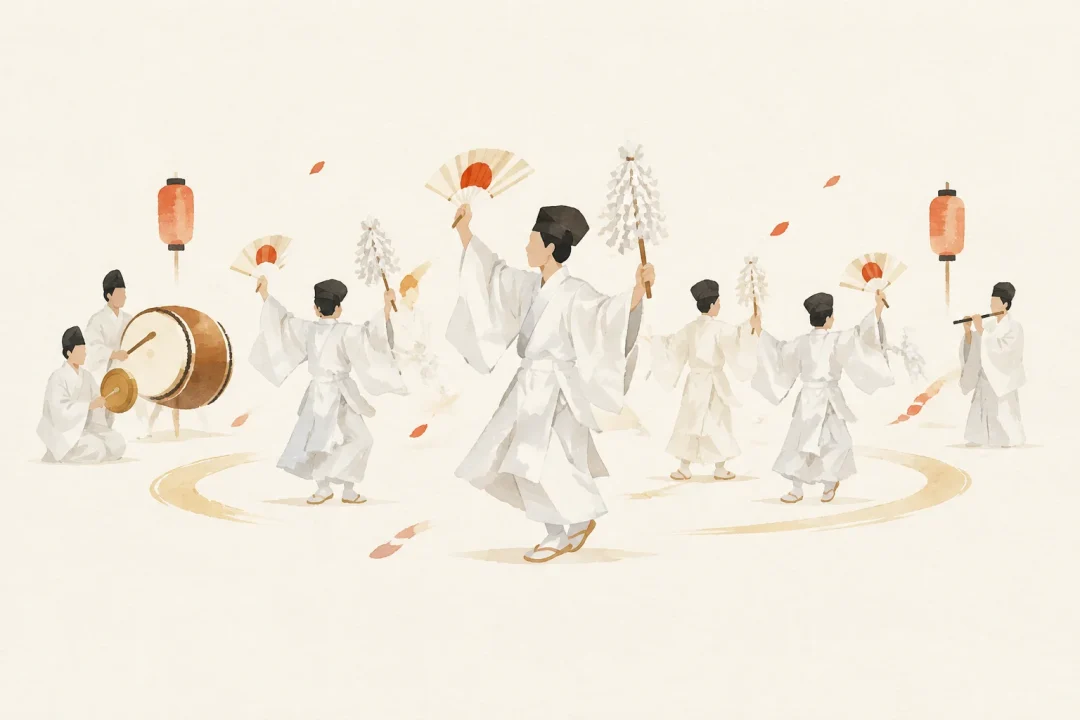
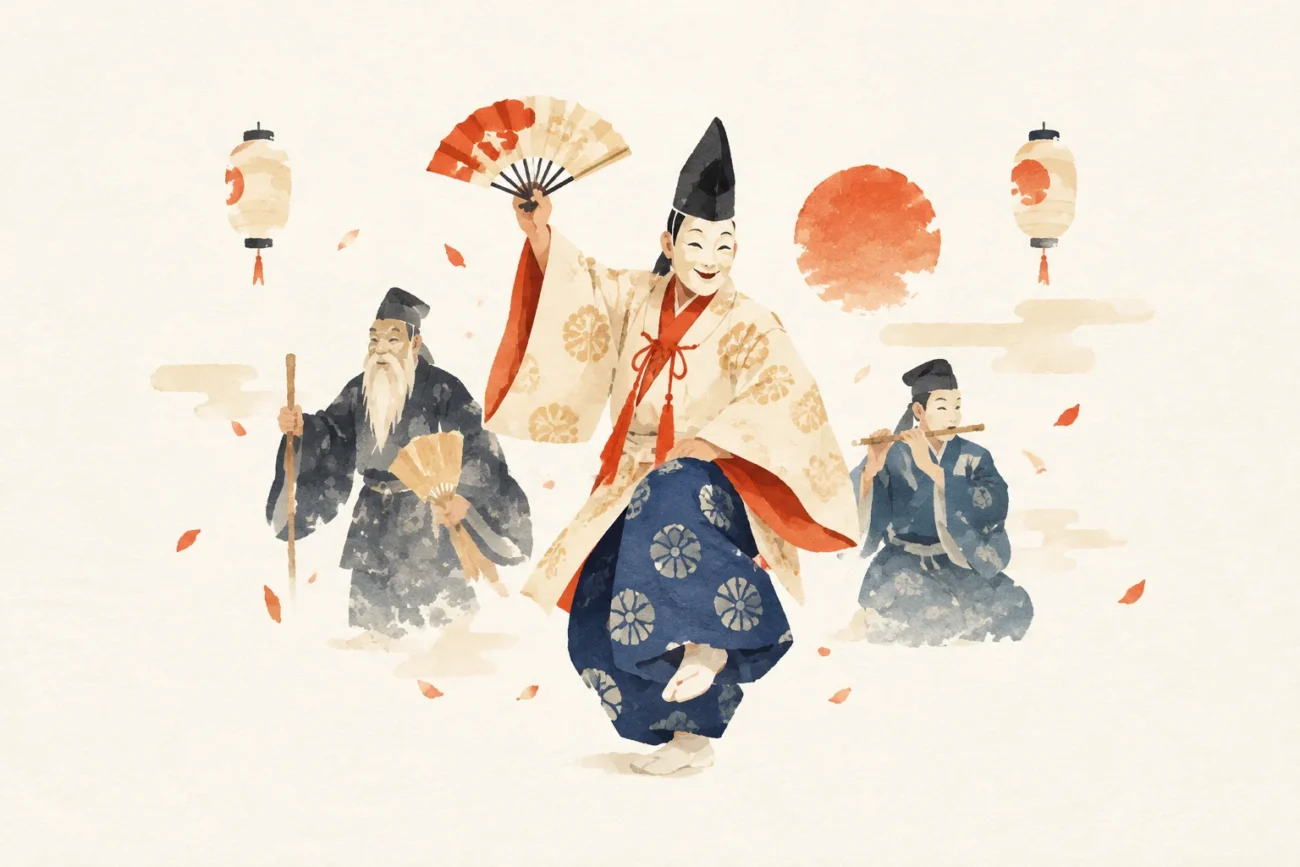
Sanbaso, passed down for generations at Tenjinja Shrine in Makinosato, Izu City. The roles of Okina, Chitose, Kurojo, and others, together with masks and instruments, create a dedication performance imbued with the hopes of the local community.
About Tenjinja Shrine’s Sanbaso
Tenjinja Shrine’s Sanbaso is a traditional performance dedicated during the annual festival of Tenjinja Shrine, the ujigami of Makinosato, Izu City.
Even among the many Sanbaso traditions in the Izu region, this one is considered especially old.
Also called Shiki Sanbaso or Tanemaki Sanbaso, it is dedicated with prayers for calm seas throughout the four directions, abundant harvests, and the prosperity of the local community.
Festival highlights
A highlight is the Sanbaso dance, featuring roles such as Okina, Chitose, Kurojo, and jiuta.
Masks, fans, and bells are used on stage, along with instruments such as drums and flutes.
Some performers take roles such as scattering salt or carrying sacred sake, so the range of roles that make up the dedication—not just the dance—is also a distinctive feature.
Sanbaso, a dedication dance imbued with prayers and passed down in Makinosato
What to expect
Sanbaso is dedicated at Tenjinja Shrine during its annual festival.
The roles include Okina, Chitose, Kurojo, and jiuta, as well as performers who scatter salt or carry sacred sake.
A dedication performance combines dance and roles, using props such as masks, fans, and bells, accompanied by the sounds of drums and flutes.
Location and access
- Venue and address
Tenjinja Shrine, 746-1 Makinosato, Izu City
Address 746-1 Makinosato, Izu City, Shizuoka Prefecture
Dates and season
- Season
November 3 (Culture Day)
Accommodation and hotels PR
Showing nearby accommodation.
Prices and availability are current at the time of retrieval. For multi-night stays, only the first night’s price is shown. Confirm the final price and directions to the venue with the booking provider. Select your dates again when using the area search link. Search area: within 3 km of Central Shizuoka Prefecture / Izu City (the search is not centered on the festival venue)
Nearby attractions

修善寺虹の郷
静岡県伊豆市にあるテーマパーク

土肥金山黄金館
静岡県伊豆市にある博物館
Origins and History of Tenjinja Shrine’s Sanbaso
Tenjinja Shrine’s Sanbaso is a dedication performance passed down for generations at the ujigami shrine of Makinosato.
It is considered one of the oldest Sanbaso traditions in the Izu region.
Sanbaso has been preserved in many places across the Izu Peninsula. It is said to have been passed down in many communities in the Shuzenji area north of Mount Amagi, and continues as a performance rooted in local life.
Official information
Izu City Official Portal: “City-Designated Folk Cultural Properties 1”
Tenjinja Shrine’s Sanbaso at a Glance
Tenjinja Shrine’s Sanbaso is a traditional performance dedicated during the shrine’s annual festival in Makinosato, Izu City.
The dance combines roles such as Okina, Chitose, Kurojo, and jiuta with masks, fans, bells, drums, and flutes.
The performance offers prayers for calm seas throughout the four directions, abundant harvests, and the prosperity of the local community, and is considered to have one of the oldest traditions in the Izu region.
Sources and references
Japanese Festivals.jp Editorial Team
Celebrating local culture and helping you discover a side of Japan you never knew.
Article updated: 2026/11/11