Reading the mountain ponds and signs of the rice crop: a traditional fortune-telling ritual at Mount Tashiro
Mount Tashiro Mountaineering Rice-Fortune-Telling Ritual
Festival information
EVENT INFORMATION- Season / frequency
- The day before Hangeshō (around July 1)
- Location
- Ponds near the summit of Mount Tashiro and around the ninth station; Tashiroyama Shrine
- Area
- Akita Prefecture・Odate City(From Tokyo: approx. 3 h 40 min–4 h 10 min · bullet train)Prefecture-level estimate to a main station or airport, not the venue. Airport access, check-in and onward travel are extra; remote areas and islands can take much longer.
- Features
- Highlights and activities
- Wishes behind the festival
- Last updated
- 2026/11/19
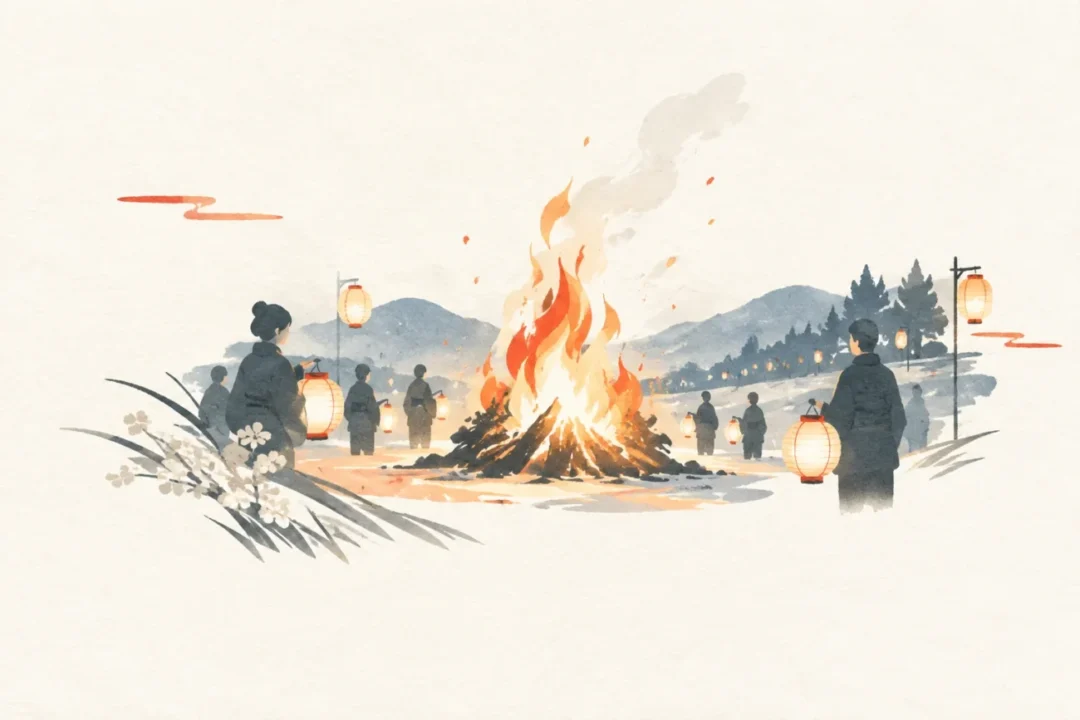
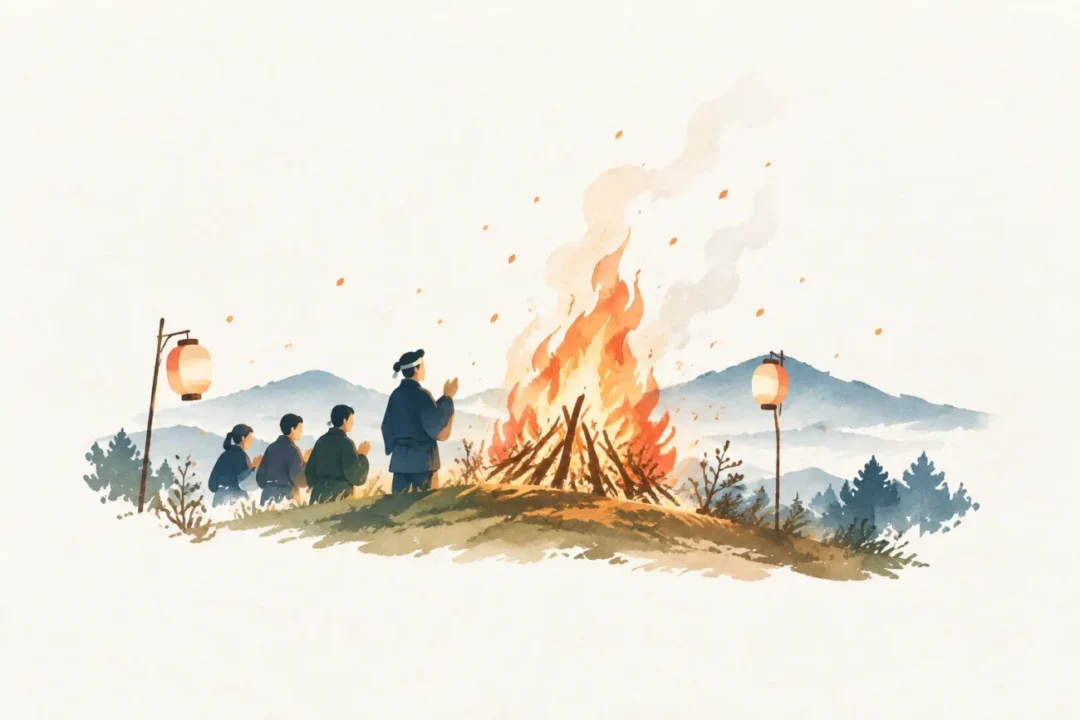
This ritual uses wild bogbean growing in ponds on Mount Tashiro as a stand-in for rice, and divines whether the rice harvest will be good or poor from the condition of the plants and water. It is an Akita Prefecture-designated Intangible Folk Cultural Property that combines mountain worship with rice-growing rites.
About Mount Tashiro Mountaineering Rice-Fortune-Telling Ritual
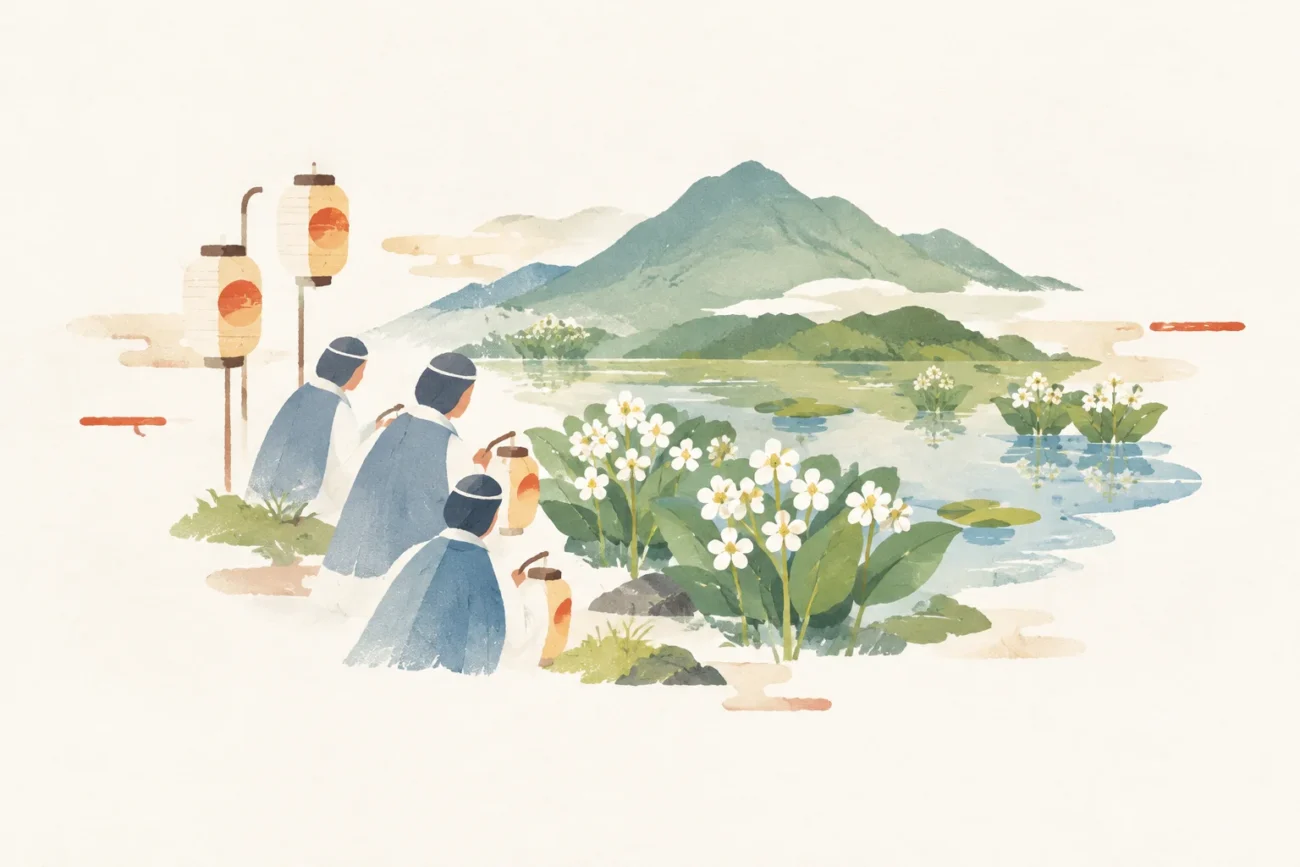
The Mount Tashiro Mountaineering Rice-Fortune-Telling Ritual is held on Mount Tashiro, in the northwestern part of Odate City, to divine whether the rice harvest will be good or poor.
Some of the ponds scattered around the ninth station are designated as “the gods’ rice paddies,” and the growth of wild bogbean is observed, with the plants regarded as rice.
The ritual combines mountaineering worship, in which the mountain itself is an object of faith, with rice-growing rites. At Tashiroyama Shrine on the summit, Shirahige Ōnaobi no Ōkami, regarded as a deity of rice fields and water, is enshrined.
It is a valuable intangible folk cultural property with no known parallel in the prefecture.
Festival highlights
A highlight is visiting several “gods’ rice paddies” and ponds near the summit in sequence, reading the prospects for rice cultivation from the natural conditions.
At the gods’ paddies for late- and mid-season rice, they observe the height, stems, flowers, fruit, and overall growth of the bogbean. At the paddy used to divine water levels, they check how much water is in the pond.
At the final pond, “Sango (Sanku) Pond,” they toss in an offering—a five-yen coin threaded with paper—five times, and divine the prospects for wind, water, early-season rice, mid-season rice, and late-season rice from how far the coins sink.
Reading the mountain ponds and signs of the rice crop: a traditional fortune-telling ritual at Mount Tashiro
What to expect
After reaching the summit, the chief priest and gather bamboo grass and boxwood for the rites nearby and offer them before the deity, along with sacred sake and other offerings.
They then visit the ponds around the ninth station in sequence, paying their respects at the paddies for late-season rice, mid-season rice, water levels, and early-season rice, as well as to the mountain deity, Dainichi-sama, and Yakushi-sama.
At each site, they offer , scatter rice mixed with salt and sacred sake, and finally create a sacred boundary at Sango Pond before purifying themselves and paying their respects.
The results of the rice divination are conveyed during the evening festival rites on the summit and the main festival rites on the day of Hangeshō.
Location and access
- Venue and address
Ponds near the summit of Mount Tashiro and around the ninth station; Tashiroyama Shrine / Tashiroyama, Hayaguchi, Odate City
Address Tashiroyama, Hayaguchi, Odate City
Dates and season
- Season
The day before Hangeshō (around July 1)
Accommodation and hotels PR
Showing nearby accommodation.
Prices and availability are current at the time of retrieval. For multi-night stays, only the first night’s price is shown. Confirm the final price and directions to the venue with the booking provider. Select your dates again when using the area search link. Search area: within 3 km of Central Akita Prefecture / Odate City (the search is not centered on the festival venue)
Nearby attractions
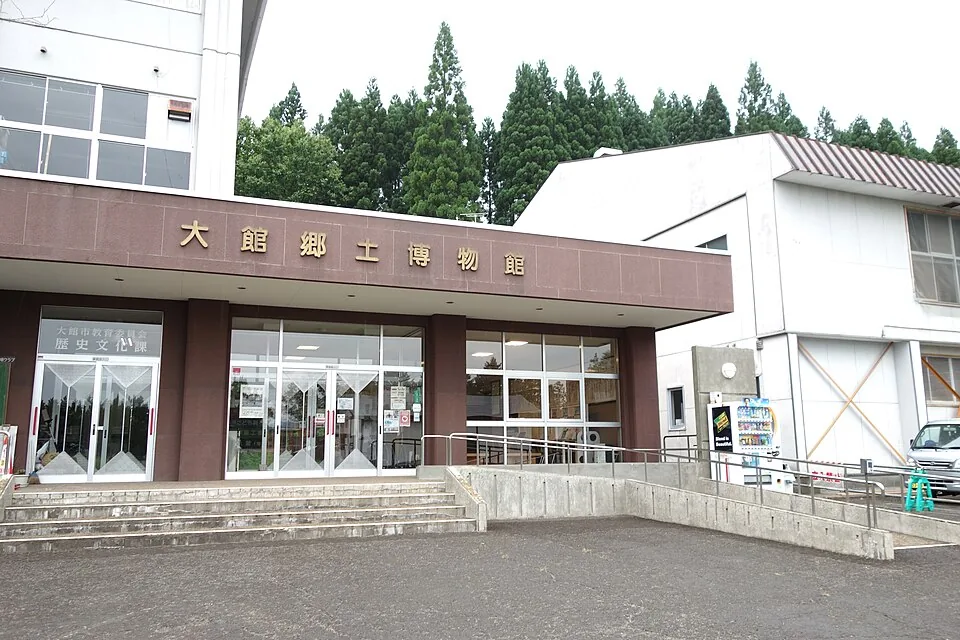
大館郷土博物館
秋田県大館市にある大館地方の歴史・文化・自然を展示する博物館
写真:らんで / CC BY-SA 4.0(resized and reformatted)
Photo source ·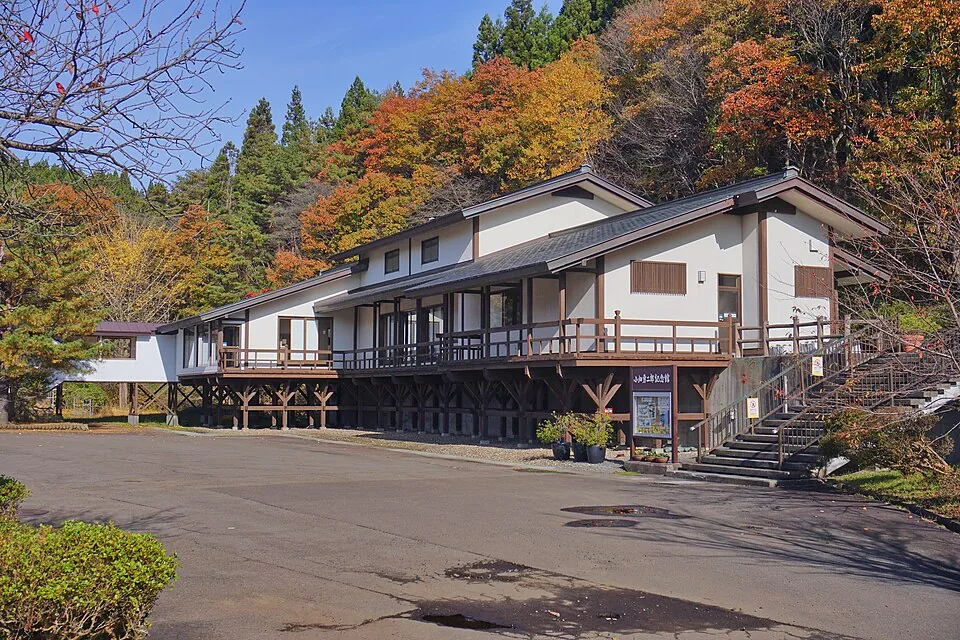
小畑勇二郎記念館
秋田県の博物館・美術館のスポットです。
写真:掬茶 / CC BY-SA 4.0(resized and reformatted)
Photo source ·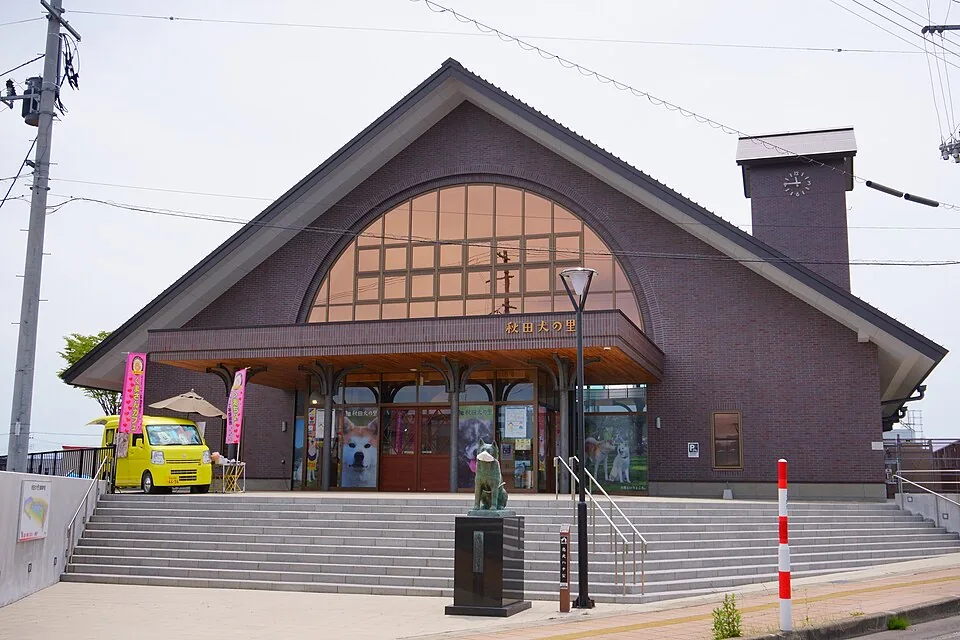
秋田犬の里
秋田犬の紹介や展示を行う秋田県大館市の観光施設
写真:掬茶 / CC BY-SA 4.0(resized and reformatted)
Photo source ·Origins and History of Mount Tashiro Mountaineering Rice-Fortune-Telling Ritual
The origins of the rice-fortune-telling ritual are unclear, but a record of it appears in Volume 3 of Izu-en Chawa, written by Ishii Tadayuki in Meiji 5 (1872).
Mount Tashiro, at an elevation of 1,178 meters, lies at the easternmost end of the Shirakami Mountains. The mountain itself has long been an object of faith, and people have climbed it to pray for a good harvest and peace.
According to shrine tradition, Tashiroyama Shrine on the summit was founded during the Tenshō era (1573–1592).
The ritual became an Akita Prefecture Selected Intangible Folk Cultural Property in Heisei 4 (1992), an Odate City-designated Intangible Folk Cultural Property in Heisei 7 (1995), and an Akita Prefecture-designated Intangible Folk Cultural Property in Reiwa 7 (2025).
Official information
Odate City provides an overview of the ritual and information about its cultural property designation.
The preservation group is the Tashirodake Mountaineering Rice-Fortune-Telling Ritual Preservation Council.
Mount Tashiro Mountaineering Rice-Fortune-Telling Ritual at a Glance
The Mount Tashiro Mountaineering Rice-Fortune-Telling Ritual uses wild bogbean growing in ponds around the ninth station as a stand-in for rice, and divines whether the rice harvest will be good or poor from the condition of the plants and water and from how offerings sink.
After performing rites at Tashiroyama Shrine on the summit, the chief priest and ujiko visit several of the gods’ rice paddies and ponds, paying their respects with gohei, rice, and sacred sake.
Recognized for its cultural value as a fusion of mountain worship and rice-growing rites, it is designated an Akita Prefecture Intangible Folk Cultural Property.
Sources and references
Japanese Festivals.jp Editorial Team
Celebrating local culture and helping you discover a side of Japan you never knew.
Article updated: 2026/11/19