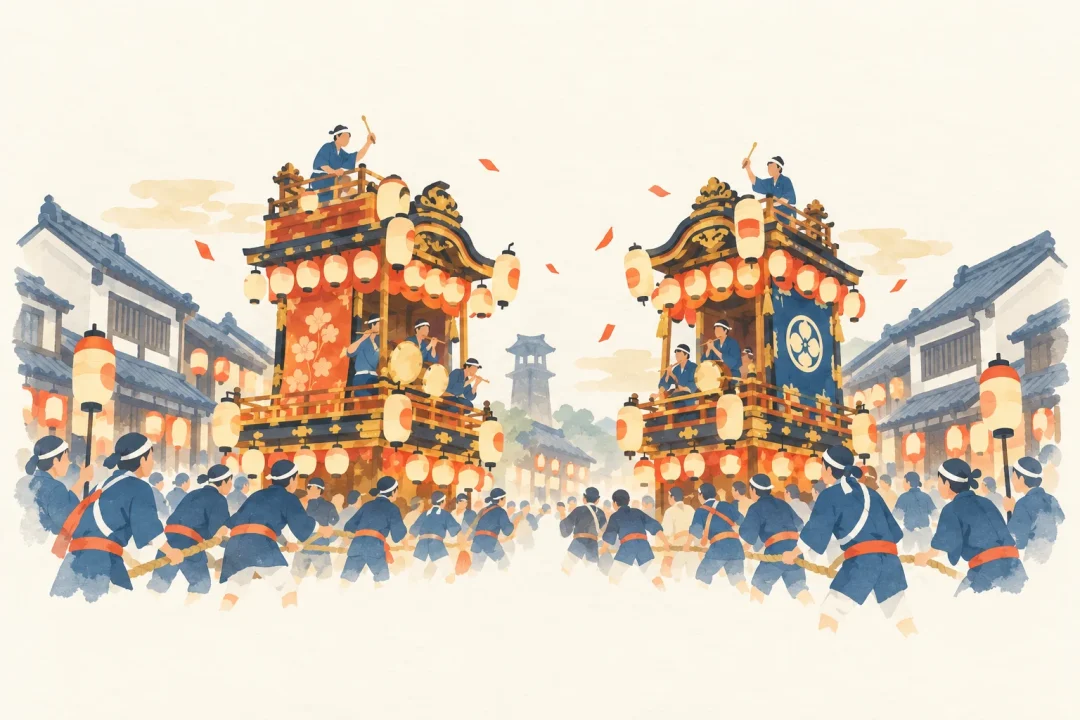
A Gion Festival alive in Komoro, with a hexagonal mikoshi racing through the castle town
Taketsu Shrine Gion Festival
The 2026 edition of Taketsu Shrine Gion Festival has ended.
Festival information
EVENT INFORMATION- Dates
- 2026/07/12Ended
- Season / frequency
- Held each year around the Sunday closest to July 13 / Every year
- Location
- Taketsu Shrine, Honmachi-dōri, Kashimachi-dōri, Ōtemon Park, Honmachi Machiyakan
- Area
- Nagano Prefecture・Komoro City(From Tokyo: approx. 1 h 20 min–1 h 50 min · bullet train)Prefecture-level estimate to a main station or airport, not the venue. Airport access, check-in and onward travel are extra; remote areas and islands can take much longer.
- Features
- Highlights and activities
- Wishes behind the festival
- Required number of participants
- 36 people ( attendants)
- Last updated
- 2026/11/16
The Taketsu Shrine Gion Festival is a summer passed down through the local community, during which a mikoshi bearing Susanoo-no-Mikoto makes its way through Komoro’s castle town. Events such as the water-splashing and the platform-transfer shinji are held to pray for bountiful harvests and good health.
About Taketsu Shrine Gion Festival
The Taketsu Shrine Gion Festival is the annual grand festival of Taketsu Shrine and one of Komoro’s signature summer festivals.
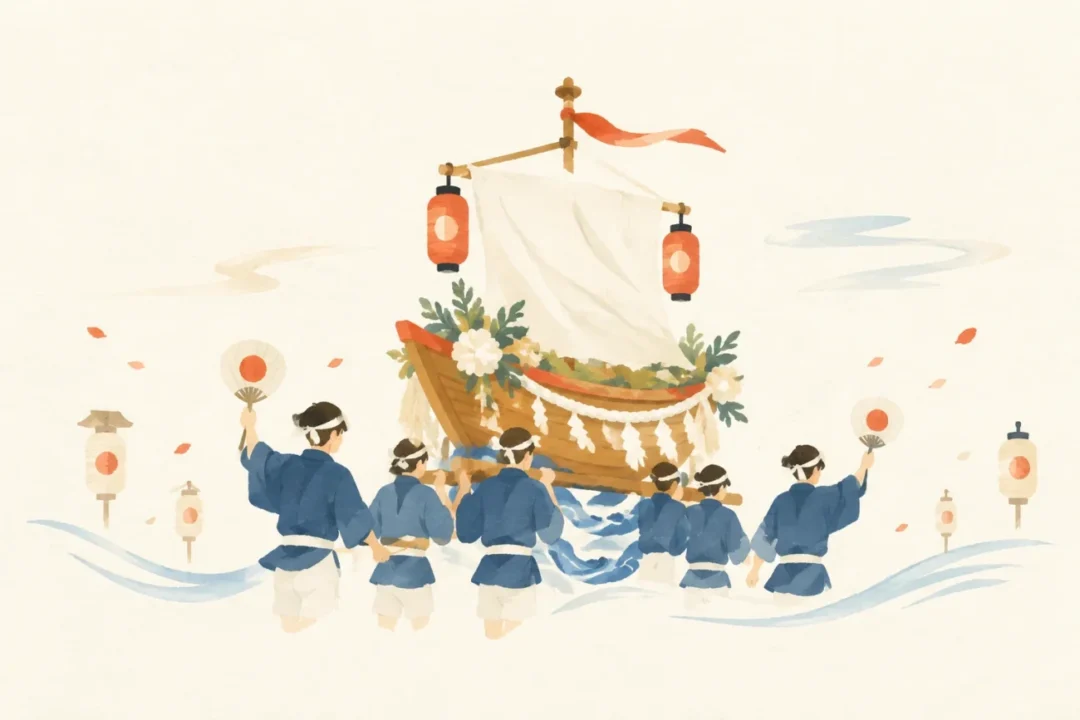
A mikoshi bearing the enshrined deity Susanoo-no-Mikoto makes its way through an area that was once the castle town of the Komoro Domain.
Events such as the Insect Festival, Wind Festival, setting up an eight-chō , the eve-of-festival celebration, and the mikoshi procession have been passed down, preserving the character of festivals in an early-modern castle town.
It is also designated an Important Intangible Folk Cultural Property by Komoro City.
Festival highlights
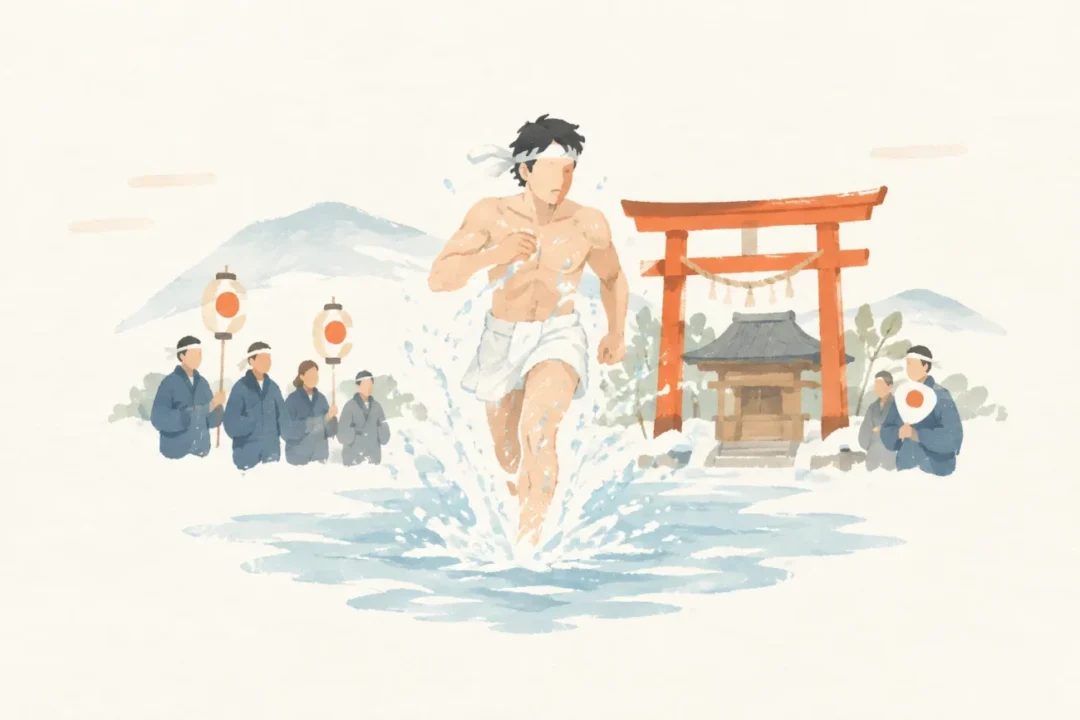
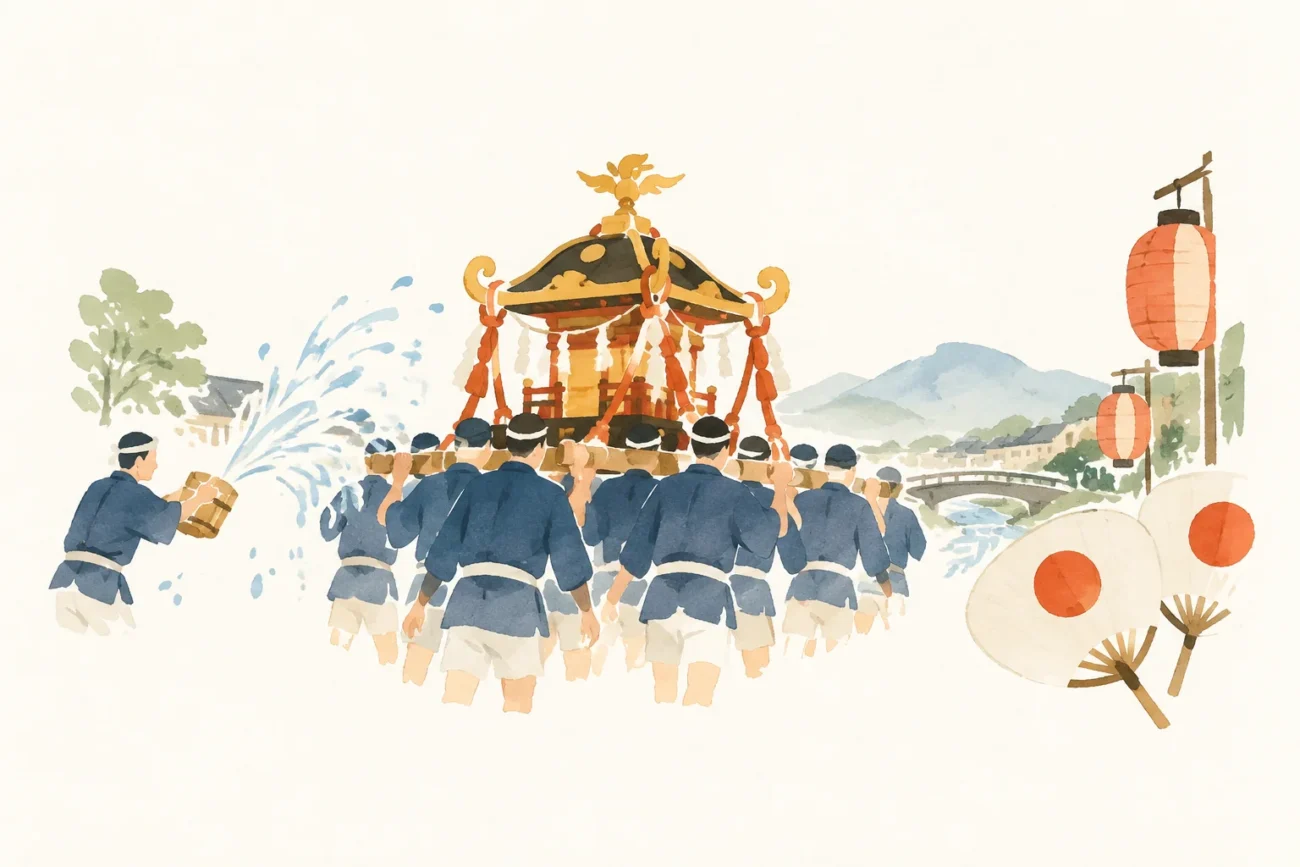
Highlights include the mikoshi’s departure from the shrine as it races down Taketsu Shrine’s stone steps, the water-splashing shinji, in which the mikoshi is turned while water is thrown over it, and the platform-transfer shinji that brings the festival to a close.
During the platform-transfer shinji, a kind of back-and-forth unfolds as the mikoshi advances toward the platform and then seems to retreat.
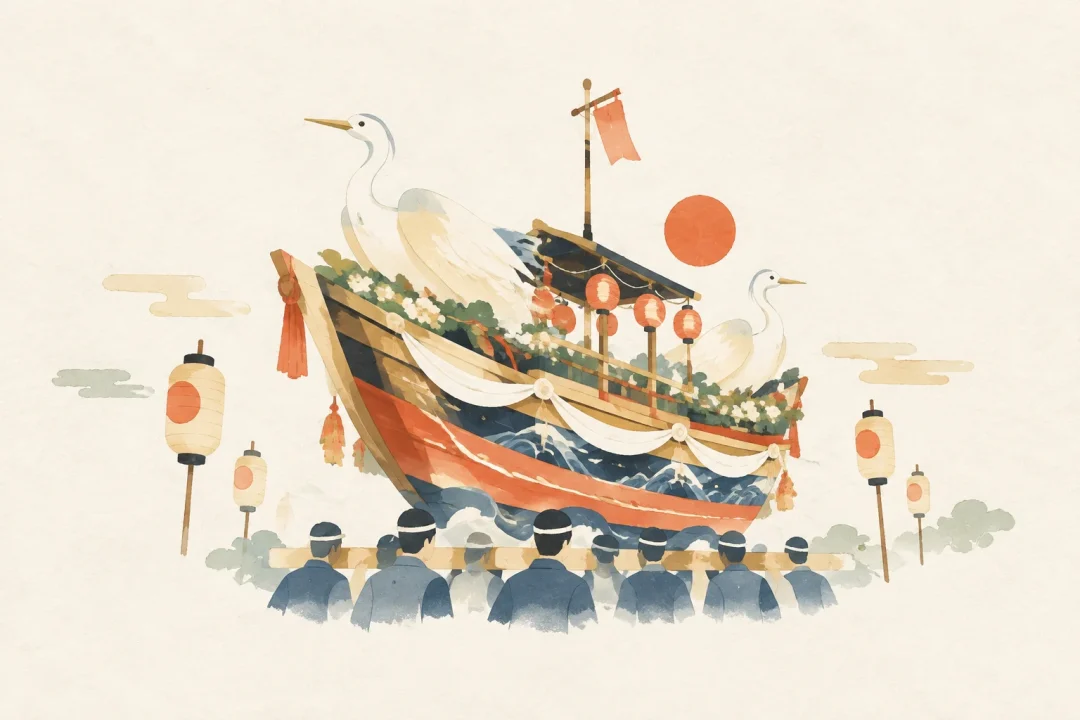
The hexagonal mikoshi itself is a major highlight: it is made entirely of zelkova and features carvings of dragons, a vermilion bird, komainu, and more.
A Gion Festival alive in Komoro, with a hexagonal mikoshi racing through the castle town
What to expect
The festival rites begin with events such as the Nagoshi purification, the setting up of an eight-chō shimenawa, the Insect Festival and Wind Festival, and the eve-of-festival celebration.
On the day of the reisai, the proceedings include the Urayasu dance, mikoshi shinji, departure from the shrine, descent of the stone steps, processions through the various districts and around Komoro Station and Ōte, the water-splashing shinji, and the platform-transfer shinji.
At the end, the mikoshi is carried to the temporary shrine while the rope connecting it to its carrying poles is cut. The mikoshi is then put away, bringing the day to a close.
How to take part
The festival is led by young people from Honmachi, Tamachi, and Rokkū, who are .
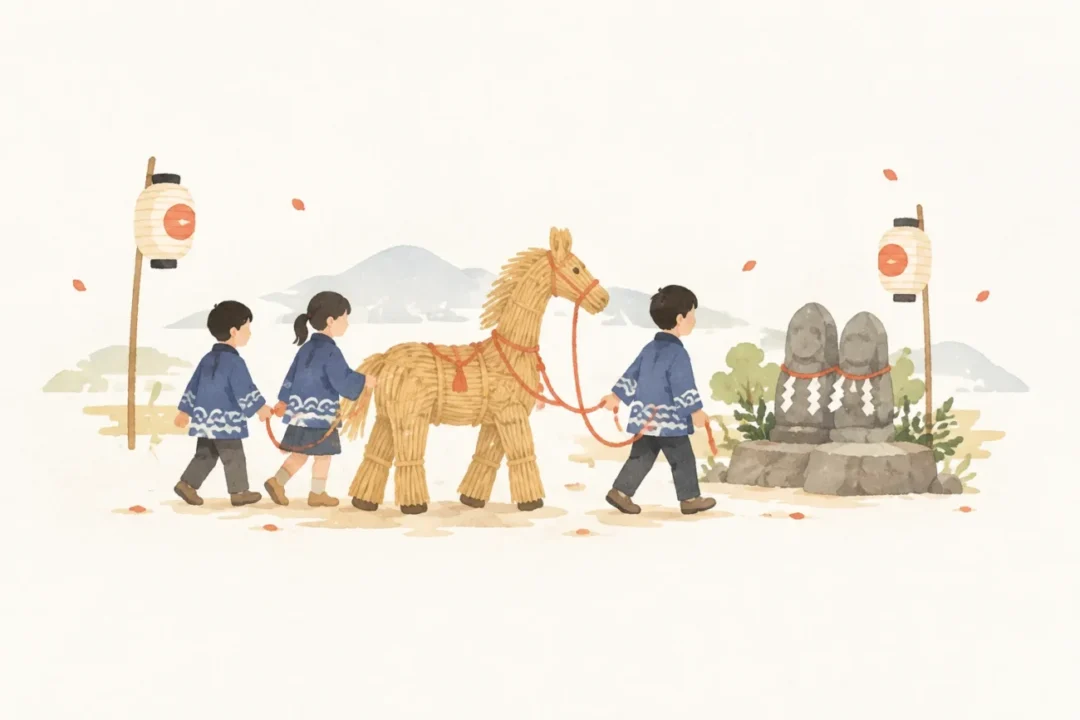
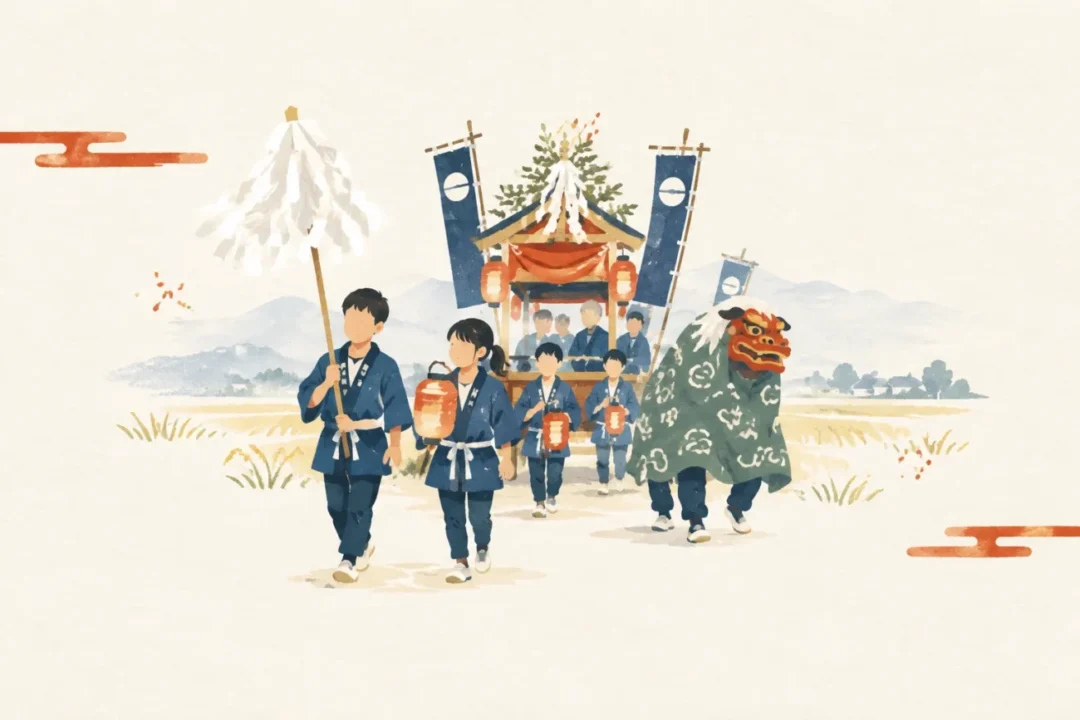
At Komoro Station and during the procession through Ōte, children who are not ujiko can also ride on the mikoshi.
Local elementary school students also perform and dedicate the Urayasu dance.
According to the 2026 event information, children from outside the ujiko districts had an opportunity to ride the mikoshi in Kashimachi.
However, the information states that places are limited.
Location and access
- Venue and address
Taketsu Shrine (1-7-1 Tamachi, Komoro, Nagano Prefecture), Honmachi-dōri, Kashimachi-dōri, Ōtemon Park, Honmachi Machiyakan
- By car
In 2026, Honmachi-dōri and Aioichō Shopping Street were designated pedestrian-only roads, with vehicle access prohibited.
Address 1-7-1 Tamachi, Komoro, Nagano Prefecture (Taketsu Shrine)
Dates and season
2026 event information (the published dates have passed)
The 2026 event was scheduled for July 12 (Sunday), according to the published information, and was planned to run from 11 a.m. to 9 p.m.
Key times are: departure from the shrine at around 11:50 a.m.; procession through Aioichō at around 12:40 p.m.; children riding the mikoshi at around 3:40 p.m.; the water-splashing shinji at around 6 p.m.; the platform-transfer shinji at around 7:40 p.m.; and cutting the rope followed by placing the mikoshi in the temporary shrine at around 8:40 p.m.
Accommodation and hotels PR
Showing nearby accommodation.
Prices and availability are current at the time of retrieval. For multi-night stays, only the first night’s price is shown. Confirm the final price and directions to the venue with the booking provider. Select your dates again when using the area search link. Search area: within 3 km of Central Nagano Prefecture / Komoro City (the search is not centered on the festival venue)
Tips for your visit
According to the 2026 event information, parts of Honmachi-dōri and Aioichō Shopping Street were designated pedestrian-only roads at certain times, and vehicles were not permitted to enter.
If traveling by car, check the restriction times and affected roads before setting out.
The mikoshi procession, water-splashing shinji, and other events begin at different times, so you’ll need to plan around the scenes you want to see.
Nearby attractions
The festival procession route includes central Komoro locations such as Komoro Station, Ōtemon Park, Honmachi-dōri, and Kashimachi-dōri.
The platform-transfer shinji is held at Ōtemon Park, and the water-splashing shinji takes place on Honmachi-dōri.
These places can be identified as the surrounding area confirmed to be associated with the festival.

小諸城
長野県小諸市にある城跡
Origins and History of Taketsu Shrine Gion Festival
There are various accounts of how the Gion Festival began, but old records indicate that it was celebrated on a grand scale by the Edo period.
In Enpō 3 (1675), the Gion shrine was moved to its present location, and the mikoshi was changed from a square, unpainted-wood design to a hexagonal one.
In Bunka 8 (1811), a new mikoshi was made with donations from the town, and it is said to have been carried into Komoro Castle along with sasara dancing.
After the decree separating Shinto and Buddhism in Meiji 1 (1868), the Gion shrine was renamed Taketsu Shrine.
Official information
The official Komoro City website introduces the Taketsu Shrine Gion Festival as an Important Intangible Folk Cultural Property designated by Komoro City.
For event information and the schedule, see the Taketsu Shrine Reisai guide from the Komoro Tourism Bureau.
Taketsu Shrine Gion Festival at a Glance
The Taketsu Shrine Gion Festival is the reisai of an Important Intangible Folk Cultural Property, during which a hexagonal mikoshi bearing Susanoo-no-Mikoto makes its way through Komoro’s castle town.
The mikoshi events—from descending the stone steps to the water-splashing shinji, the platform-transfer shinji, and placing the mikoshi in the temporary shrine—carry prayers for bountiful harvests and good health.
Records of the festival rites dating back to the Edo period have been passed down, as have accounts of changes to the mikoshi in 1675 and 1811.
The 2026 festival was held on July 12, and the published information indicates that it has ended.
Japanese Festivals.jp Editorial Team
Celebrating local culture and helping you discover a side of Japan you never knew.
Article updated: 2026/11/16