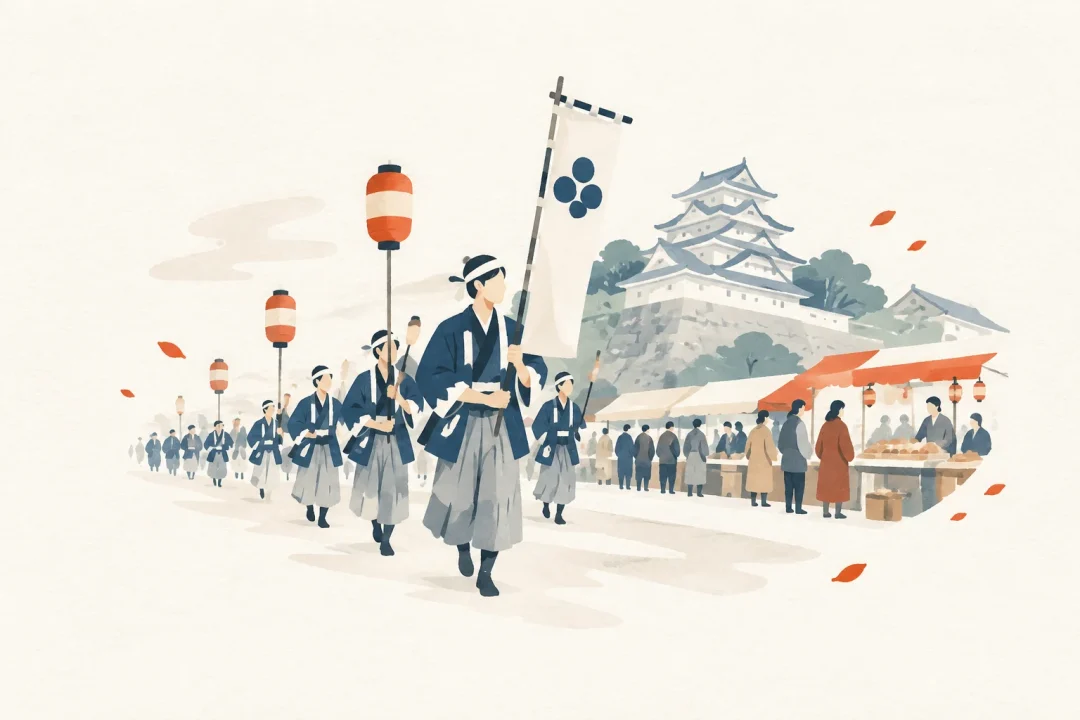
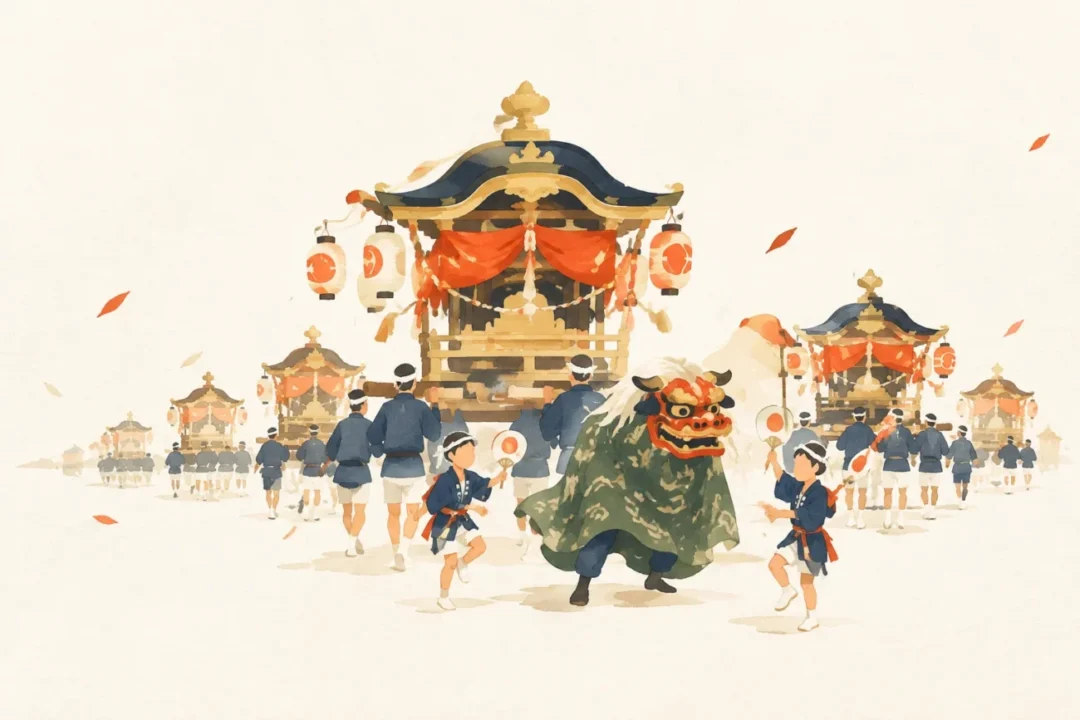
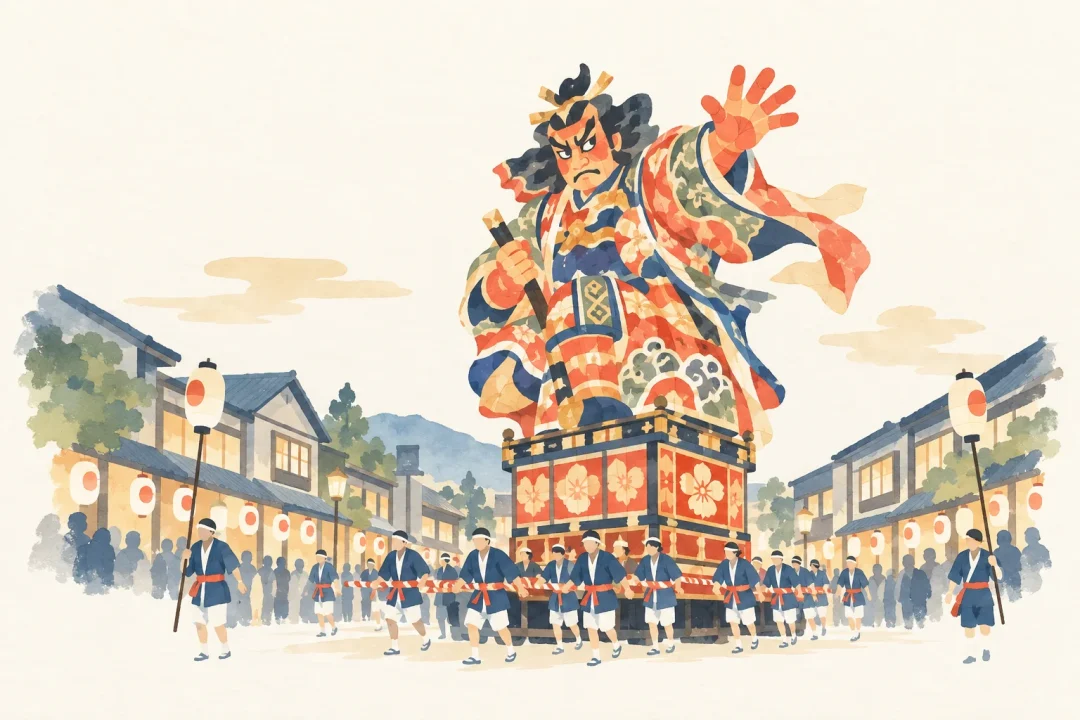
A traditional Ikeda procession led by naginata and a danjiri, to the accompaniment of neriiuta songs
Ōneri

The 2026 edition of Ōneri has ended.
Festival information
EVENT INFORMATION- Dates
- 2026/10/16Ended
- Season / frequency
- Every year October 16 / Every year
- Location
- Kameyama Hachiman Shrine and Baba
- Area
- Kagawa Prefecture・Shodoshima Town(From Tokyo: approx. 1 h 15 min–1 h 35 min · flight time only)Prefecture-level estimate to a main station or airport, not the venue. Airport access, check-in and onward travel are extra; remote areas and islands can take much longer.
- Highlights and activities
- Wishes behind the festival
- Participation / viewing
- Spectators welcome
- Last updated
- 2026/10/19
At the annual festival of Kameyama Hachiman Shrine in Ikeda, Shodoshima Town, a traditional procession of clappers, naginata, long-handled spears, scissor boxes, and a is presented.
About Ōneri
Ōneri is a local performing art with traces of an old tradition, presented at the annual festival of Kameyama Hachiman Shrine in Ikeda, Shodoshima Town.
Young people from the 5 districts of the former Ikeda township offer it in rotation, after the taikodai floats are presented at the shrine and Baba.
Its distinctive features are a procession of clappers, naginata, long-handled spears, scissor boxes, and a danjiri, as well as the neriiuta songs sung by the performers.
It has been passed down as a tradition through which local young people support the festival.
Source: 観光コンテンツ | 小豆島観光協会【公式】
Festival highlights
A highlight is the distinctive procession led by clappers.
12 performers brandish naginata, followed by 4 carrying long-handled spears and 4 carrying scissor boxes. At the rear, a single danjiri is pulled by a rope net.
The danjiri is decorated with items inspired by that year’s topics or made to pray for a good harvest.
A memorable feature of Ōneri is the moment when performers singing neriiuta songs lead the procession.
A traditional Ikeda procession led by naginata and a danjiri, to the accompaniment of neriiuta songs
What to expect
At the festival, the taikodai floats are first presented at Kameyama Hachiman Shrine and Baba, after which Ōneri is performed.
The procession moves in this order: clappers, naginata, long-handled spears, scissor boxes, and danjiri.
The performers proceed while singing neriiuta songs; in recent years, a set repertoire of 5 songs has been repeated with the same melody.
You can enjoy Ōneri by watching the festival offerings and procession.
How to take part
Ōneri is a local performing art offered in rotation by young people from the 5 districts of the former Ikeda township.
No information is available on whether general visitors can participate as performers.
Visitors watch from a place that does not obstruct the procession or the offerings.
Location and access
- Venue and address
Kameyama Hachiman Shrine and Baba, Ikeda, Shodoshima Town, Shozu District, Kagawa Prefecture.
Address Ikeda, Shodoshima Town, Shozu District, Kagawa Prefecture
Dates and season
2026 Festival Information (the listed dates have passed)
For 2026, the Kameyama Hachimangu Shrine Annual Festival and the Ikeda District Autumn Festival taikodai offering are listed for October 16.
The grand procession is presented after the taikodai is offered at the annual festival.
Source: イベントカレンダー | 小豆島観光協会【公式】
Accommodation and hotels PR
Showing nearby accommodation.
Prices and availability are current at the time of retrieval. For multi-night stays, only the first night’s price is shown. Confirm the final price and directions to the venue with the booking provider. Select your dates again when using the area search link. Search area: within 3 km of Central Kagawa Prefecture / Shodoshima Town (the search is not centered on the festival venue)
Nearby attractions
Around the venue is Ikeda Sajiki, a tiered viewing area that has long been used to watch the autumn festival.
This open-air viewing area was built on stone retaining walls set into a steep slope, with several levels of flat ground. It is 18 meters high and 80 meters long overall.
Ikeda Sajiki is located in Ikeda, Shodoshima Town, and can still be visited at any time.
As a cultural property that conveys the festival and community gatherings, this is a place to experience the area’s history alongside Ōneri.
Source: 池田の桟敷【国指定重要有形民俗文化財】/小豆島町

二十四の瞳映画村
香川県小豆島にあるテーマパーク
Origins and History of Ōneri
The origins and founding year of Ōneri are unknown, but accounts say that people had gathered for the Kameyama Hachiman Shrine festival since the Edo period.
A votive picture plaque from Bunka 9 (1812) depicts people watching the festival from Ikeda Sajiki, alongside a taikodai float and a sumo wrestling offering.
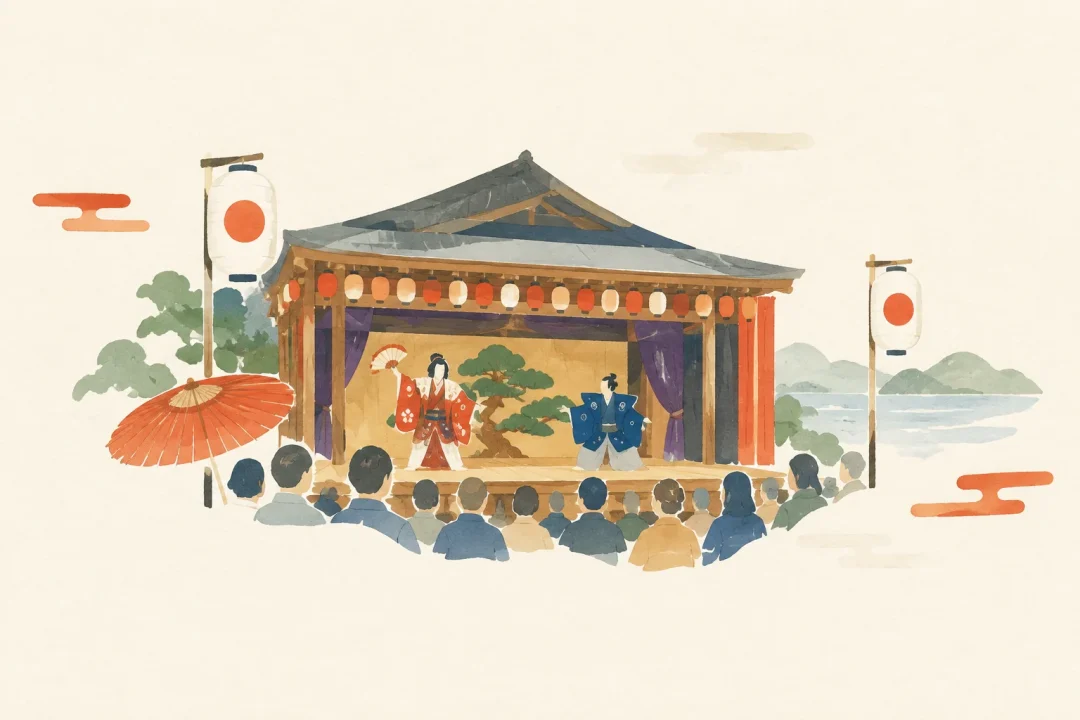
Kabuki was also once performed at the festival, and today’s festival remains connected to these traditional community gathering places.
In the past, the neriiuta songs told of events in the district responsible for that year’s festival, but in recent years a set repertoire of 5 songs has been sung.
Official information
The official Shodoshima Tourism Association guide introduces Ōneri’s content, the structure of the offerings, the time of year it is held, and the venue address.
The official page gives its name as “Ōneri (おおねり).”
Ōneri at a Glance
Ōneri is a local performing art passed down through the annual festival of Kameyama Hachiman Shrine in Ikeda, Shodoshima Town.
A procession featuring clappers, naginata, long-handled spears, scissor boxes, and a danjiri is presented to the accompaniment of neriiuta songs.
Young people from the 5 districts of the former Ikeda township offer it in rotation, and the danjiri is decorated with displays depicting current topics and wishes for a good harvest.
The 2026 event is scheduled for October 16.
Japanese Festivals.jp Editorial Team
Celebrating local culture and helping you discover a side of Japan you never knew.
Article updated: 2026/10/19
Submit information or a correction Submit photos of this festival