A spirited festival where dashi collide in a town by the sea
Tachibana Kenka Danjiri Festival

Festival information
EVENT INFORMATION- Season / frequency
- Oct / Every year
- Location
- Tachibana Kaisho Hachiman Shrine, the , and the area around the old road in Tachibana-cho, Anan City
- Area
- Tokushima Prefecture・Anan City(From Tokyo: approx. 1 h 15 min–1 h 35 min · flight time only)Prefecture-level estimate to a main station or airport, not the venue. Airport access, check-in and onward travel are extra; remote areas and islands can take much longer.
- Highlights and activities
- Wishes behind the festival
- Participation / viewing
- Spectators welcome
- Last updated
- 2026/10/19
A festival in Tachibana-cho, Anan City, Tokushima Prefecture, where resembling boats travel along the town’s old road and engage in fierce collisions.
About Tachibana Kenka Danjiri Festival
Photo credits and terms of use
Photographer: GJ77A File:20221002東組だんじり.jpg / Wikimedia Commons / CC BY-SA 4.0 Own work by the contributorDisplay size only adjusted.May differ from the event currently featured.The Tachibana Kenka Festival is an event held as part of the autumn festival of Tachibana Kaisho Hachiman Shrine in Tachibana-cho, Anan City, Tokushima Prefecture.
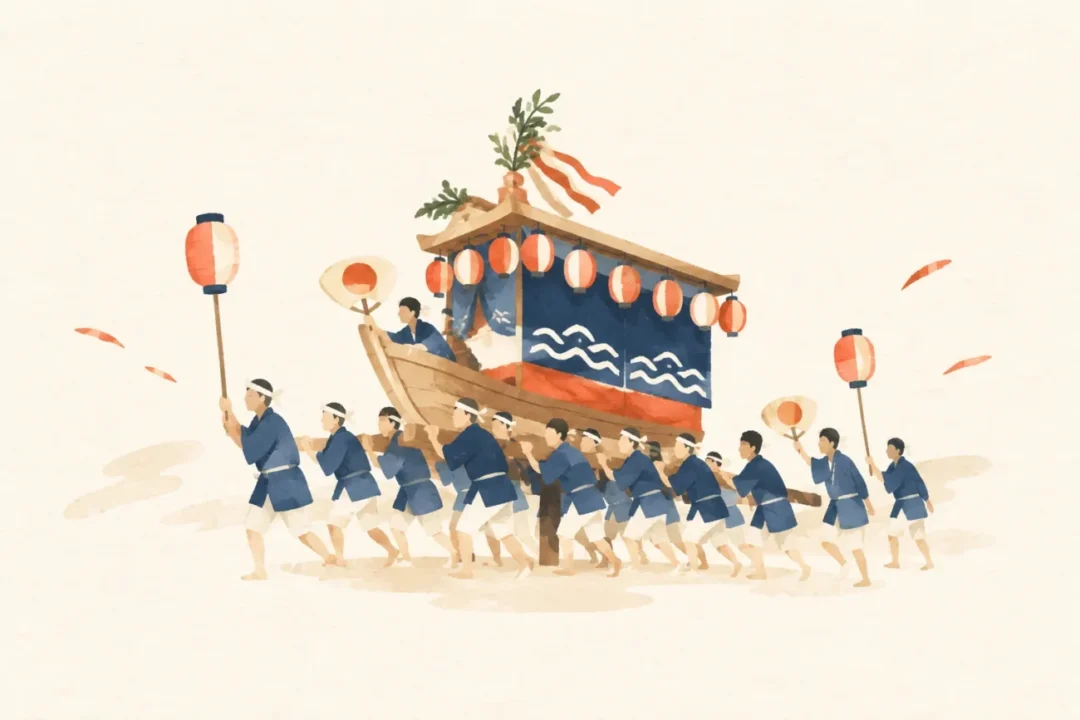
Local young people pull dashi weighing about 4 tons and crash them into one another with great force.
The area around the old road is also the setting for traditions including kadotsuke, Tatara Ondo, boat songs, miko dances, , and a procession, as well as dashi processions.
The character of Tachibana-cho as a fishing town is reflected in the boat-shaped dashi and songs and events connected with the sea.
Festival highlights
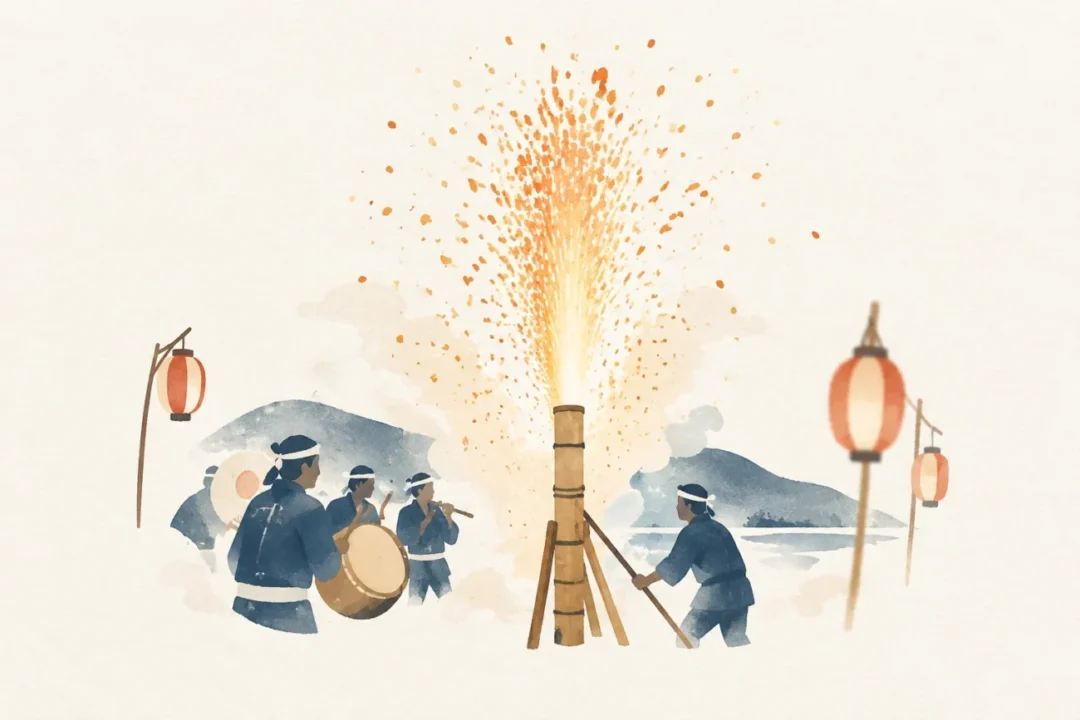
The main highlight is when 4 dashi advance from the eastern and western ends of the old road and collide with great force in the town center.
Dashi gather on a straight road about 200 meters long and compete by pushing against one another from the front and back.
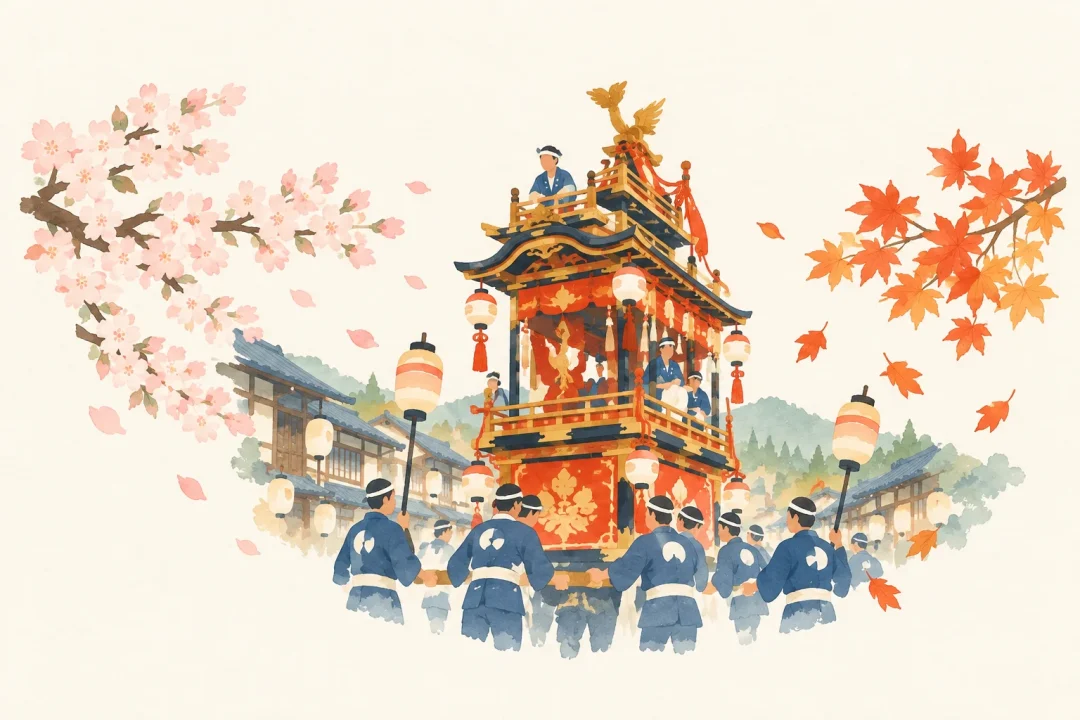
The dashi are decorated with lacquered roofs and railings, carvings, and ornamental details; distinctive features also include the “yandashi,” which resembles a ship’s bow, and lanterns.
After the collisions, the dashi continue with a forceful turning maneuver as they enter the otabisho.
A spirited festival where dashi collide in a town by the sea
What to expect
During the festival, dashi are pulled through the neighborhood, with each of the 4 groups—Higashi, Naka, Saki, and Nishi—operating its own dashi.
At night, the dashi collide and push against one another, after which they head to the otabisho.
At the otabisho, performers demonstrate a maneuver in which the dashi makes a sharp turn, sliding its wheels between 2 stone pillars as it enters.
The overall festival also features a mikoshi procession, kadotsuke, boat songs, yadofuri, miko dances, and lion dances.
How to take part
People responsible for their local groups play the central roles in pulling the danjiri and steering them.
During the reisai, elementary school students serve as drummers, while high school students and young adults perform yadoshime, shishimai, and pull the danjiri. Girls take part in the women’s danjiri and miko dances.
However, the information does not say whether general visitors from outside the area may pull the danjiri or join the head-to-head clashes.
Visitors should be mindful that they are spectators, not participants, and avoid disrupting the proceedings.
Location and access
- Venue and address
Tachibana Kaisho Hachiman Shrine, the otabisho, and the area around the old road in Tachibana-cho, Anan City.
The address is 7 Nishiura, Tachibana-cho, Anan City.
- Train and bus
Take a bus from JR Awa-Tachibana Station, get off at the Tachibana Nishi bus stop, and walk about 2 minutes.
- By car
About 60 minutes from the Tokushima-Tsuda IC on the Tokushima Nambu Expressway.
- Parking
There is no parking.
Source: 橘喧嘩だんじり祭(徳島県)の詳細データ|ウォーカープラス
Address 7 Nishiura, Tachibana-cho, Anan City
Dates and season
- Season
Oct
- Frequency
Every year
Accommodation and hotels PR
Showing nearby accommodation.
Prices and availability are current at the time of retrieval. For multi-night stays, only the first night’s price is shown. Confirm the final price and directions to the venue with the booking provider. Select your dates again when using the area search link. Search area: within 3 km of Central Tokushima Prefecture / Anan City (the search is not centered on the festival venue)
Tips for your visit
Dashi collisions and turning maneuvers involve heavy dashi crashing into one another and making forceful turns.
The venue information states that spectators attend at their own risk and that the organizers and related parties accept no responsibility for accidents or injuries.
Stay away from dangerous areas, follow instructions from the police and others, and prioritize local safety guidance while watching.
Nearby attractions

阿南市立阿波公方・民俗資料館
徳島県阿南市那賀川町にある博物館
Origins and History of Tachibana Kenka Danjiri Festival
Tachibana Kaisho Hachiman Shrine is said to have been founded in the early 11th century in what is now Kuwano, Anan City, and rebuilt at its present location in 1269.
Old documents belonging to the Orihara family, whose head serves as the chief priest, confirm that a festival in a form similar to today’s had begun by the late Edo period at the latest.
Accounts also say that the practice of crashing dashi into one another began around the latter half of the Showa 20s, with dashi collisions taking the place of fights between people.
In 2016, the autumn festival rites of Kaisho Hachiman Shrine were designated an Intangible Folk Cultural Property by Tokushima Prefecture.
Source: 橘のケンカだんじり|NPO 日本の祭りネットワーク
Official information
公式サイトは、橘喧嘩だんじり祭の案内ページから紹介されている「tachibana-danjiri.netlify.app」です。
Check the latest information on dates, venues, and precautions for spectators before visiting.
Tachibana Kenka Danjiri Festival at a Glance
The Tachibana Kenka Danjiri Festival is held amid the old streets of Tachibana-cho, Anan City, where dashi resembling boats crash into one another with great force.
In addition to these collisions, traditions that evoke the ties between the sea and the community include dashi processions, turning maneuvers, boat songs, lion dances, miko dances, and a mikoshi procession.
The announced dates for 2026 differ, so check the schedule before visiting, and prioritize safety and follow local instructions while watching.
Japanese Festivals.jp Editorial Team
Celebrating local culture and helping you discover a side of Japan you never knew.
Article updated: 2026/10/19
Submit information or a correction Submit photos of this festival