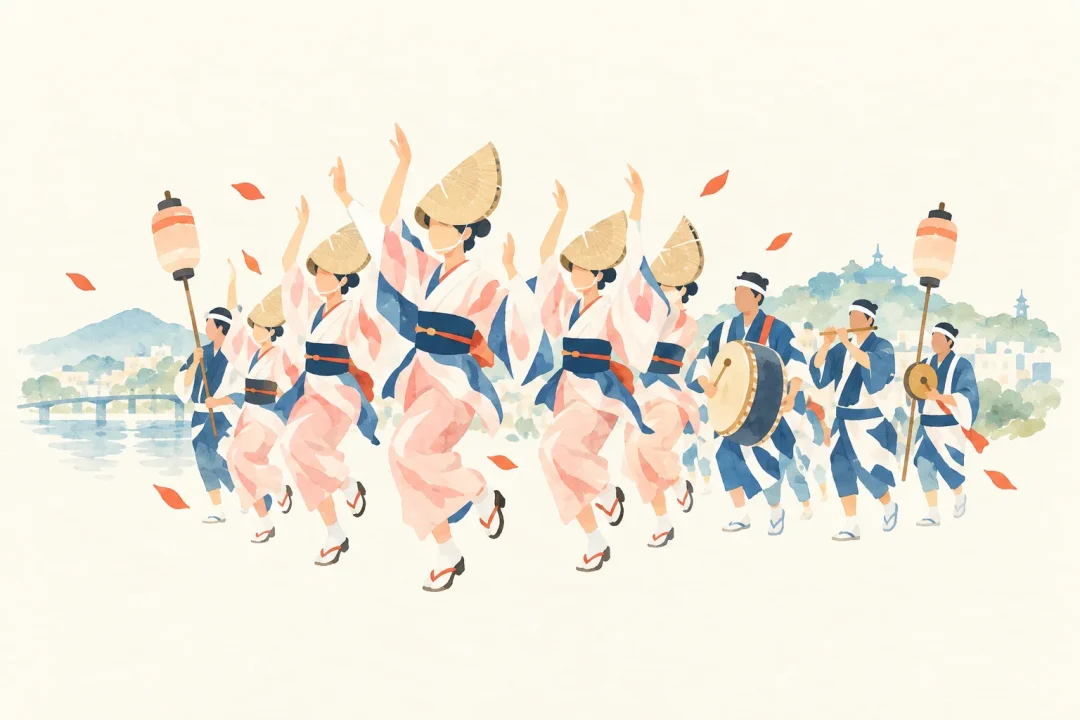
A prayer dance with flower hats and sasara clappers passed down in Shirama-tsu
Shirama-tsu Sasara Odori
Festival information
EVENT INFORMATION- Season / frequency
- Every 5 years, July 14–16 / Every 5 years
- Location
- The festival at Hie Shrine and the procession down to the seaside otabi-sho
- Area
- Chiba Prefecture(From Tokyo: approx. 40 min–1 h · train)Prefecture-level estimate to a main station or airport, not the venue. Airport access, check-in and onward travel are extra; remote areas and islands can take much longer.
- Features
- Highlights and activities
- Last updated
- 2026/10/19
Shirama-tsu Sasara Odori is a folk performing art passed down through the festival at Hie Shrine. The procession down to the seaside otabi-sho, known as Ohama-kudari, and the Sasara Odori, in which girls dance around the nakadachi, come together to shape the local festival.
About Shirama-tsu Sasara Odori
Shirama-tsu Sasara Odori is a folk performing art held at the festival at Hie Shrine in Shirama-tsu, Chiba Prefecture.
As part of the festival held every 5 years from July 14 to 16, a procession to the seaside otabi-sho takes place, known as Ohama-kudari.
Its distinctive features include the roles passed down by each local group and the makeup of the performers, including boys and girls.
Source: 国指定文化財等データベース
Festival highlights
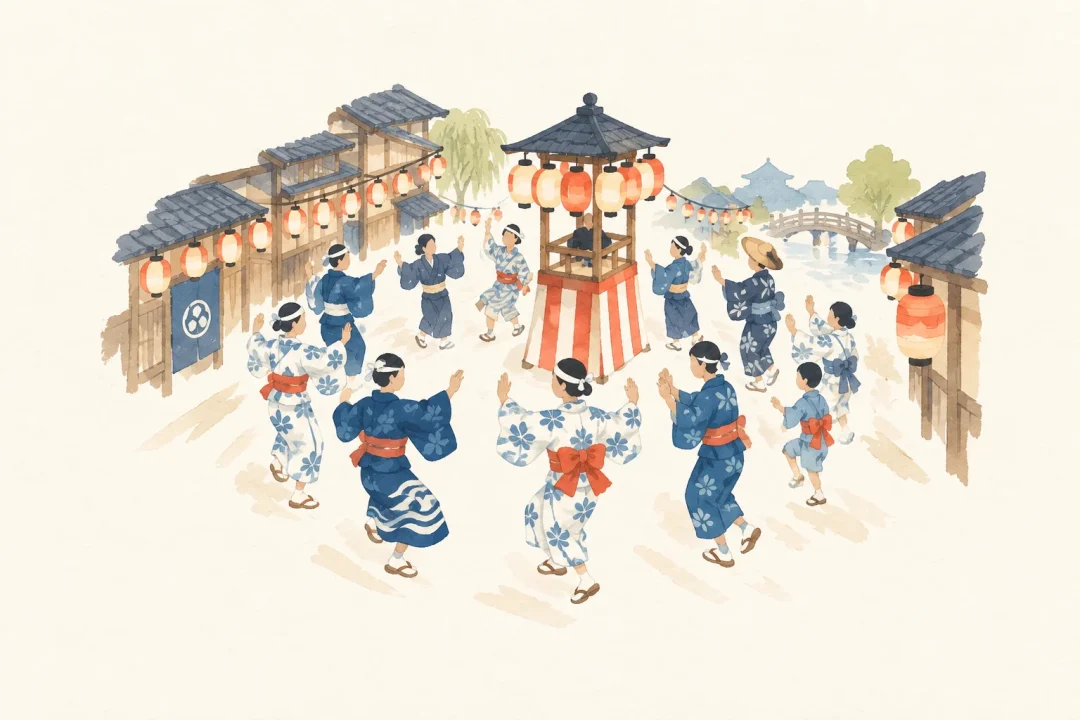
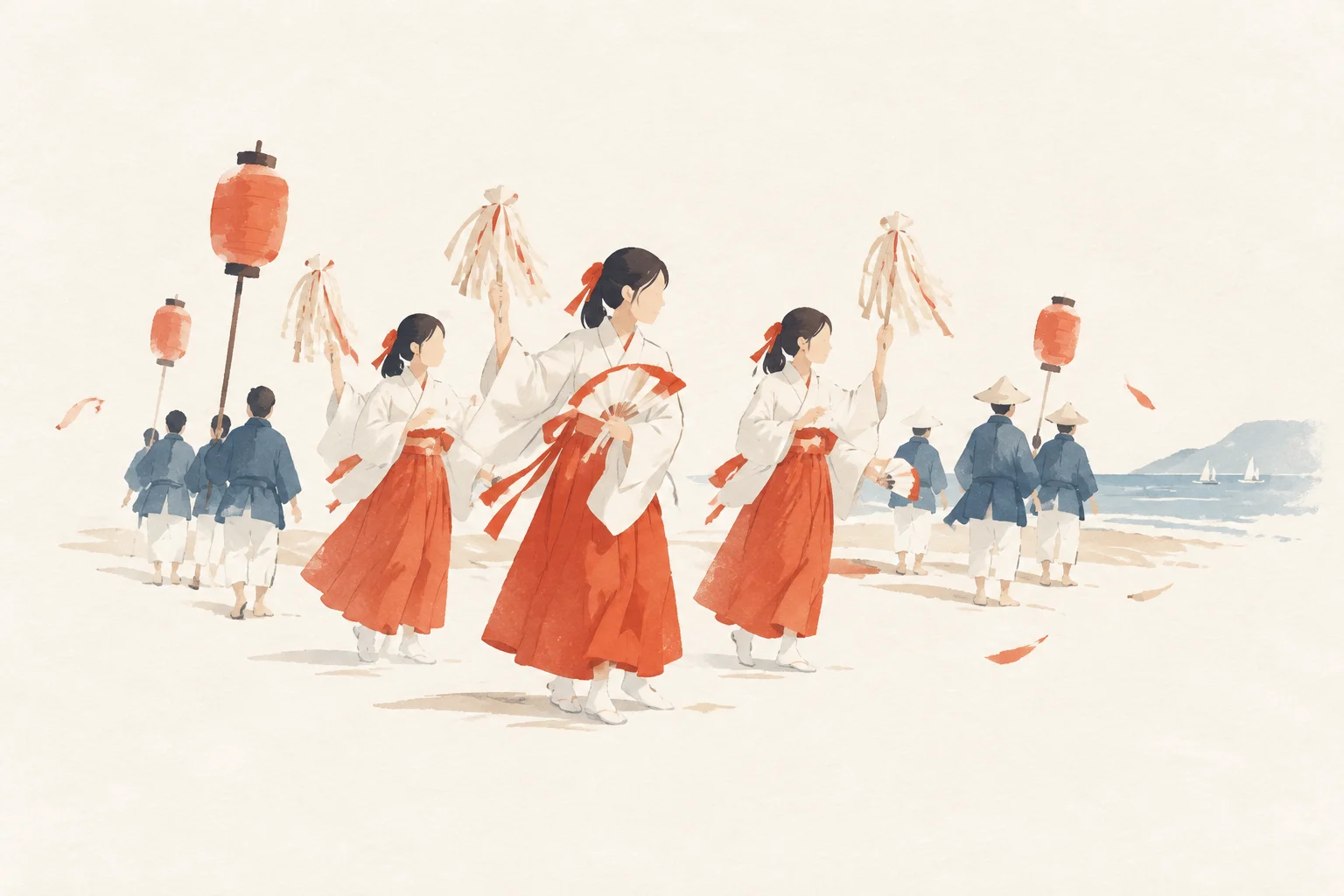
A highlight is the scene in which two boys dressed as Nitten and Gatten stand in the center of a circle while girls wearing flower hats dance with sasara clappers or fans.
More than nine dances have been passed down, including “Otera Odori,” “Shirama-tsu Odori,” and “Ogi Odori.”
In addition to performances with the character of kouta songs and nenbutsu dancing, Enyahou by boys and Tohira by girls add to the festivities.
A prayer dance with flower hats and sasara clappers passed down in Shirama-tsu
What to expect
During the festival, groups such as the taima, Sarutahiko, Tohira, Enyahou, and Sasara form a procession and proceed to the seaside otabi-sho in a procession known as Ohama-kudari.
At its center, girls dance to the accompanying music around two boys performing as the nakadachi.
Other performances are assigned by age group, including Enyahou by boys, Tohira by girls, and sake-barrel lanterns and a large-rope crossing by young men.
Location and access
- Venue and address
Held as a festival at Hie Shrine, it includes a procession down to the seaside otabi-sho.
Event venue 千葉県 日枝神社および海浜の御旅所までのお浜下り
This map uses the venue name. Check the official guide for the event area and entrances.
Dates and season
It is usually held every five years, from July 14 to 16.
To check the dates, please refer to the information about the Shirama-tsu Sasara Odori, held as a festival of Hie Shrine.
Source: 白間津ささら踊 文化遺産オンライン
Origins and History of Shirama-tsu Sasara Odori
Shirama-tsu Sasara Odori was selected on April 21, 1971 as an “intangible folk cultural property for which measures such as documentation should be undertaken.”
The performance has been passed down as a large-scale, flamboyant procession accompanying the festival at Hie Shrine, with the Shirama-tsu Sasara Odori Preservation Society serving as its preservation organization.
Its kouta and nenbutsu-dance character, the roles of each group, and the division of performers by age are distinctive local features.
Official information
The Agency for Cultural Affairs’ “Database of Nationally Designated Cultural Properties” and “Cultural Heritage Online” provide information about Shirama-tsu Sasara Odori and its preservation organization.
The Chiba Prefectural Board of Education’s list of cultural properties also includes related festivals passed down in the Shirama-tsu area as Important Intangible Folk Cultural Properties.
Shirama-tsu Sasara Odori at a Glance
Shirama-tsu Sasara Odori is a folk performing art of Shirama-tsu centered on dance and processional performances, held as part of the festival at Hie Shrine.
The main highlights are the dance by the nakadachi and girls in Nitten and Gatten costumes, and the procession down to the seaside otabi-sho.
Japanese Festivals.jp Editorial Team
Celebrating local culture and helping you discover a side of Japan you never knew.
Article updated: 2026/10/19
Submit information or a correction Submit photos of this festival