Shimoichi’s Miyaza Observances: Traditions of the Temporary Shrine and Shide-Waving
Miyaza Observances at Shinju Hachiman Shrine
Festival information
EVENT INFORMATION- Season / frequency
- Autumn Festival
- Location
- Shinju Hachiman Shrine
- Area
- Nara Prefecture・Shimoichi Town(From Tokyo: approx. 3 h–3 h 30 min · bullet train + connecting train)Prefecture-level estimate to a main station or airport, not the venue. Airport access, check-in and onward travel are extra; remote areas and islands can take much longer.
- Highlights and activities
- Last updated
- 2026/11/11
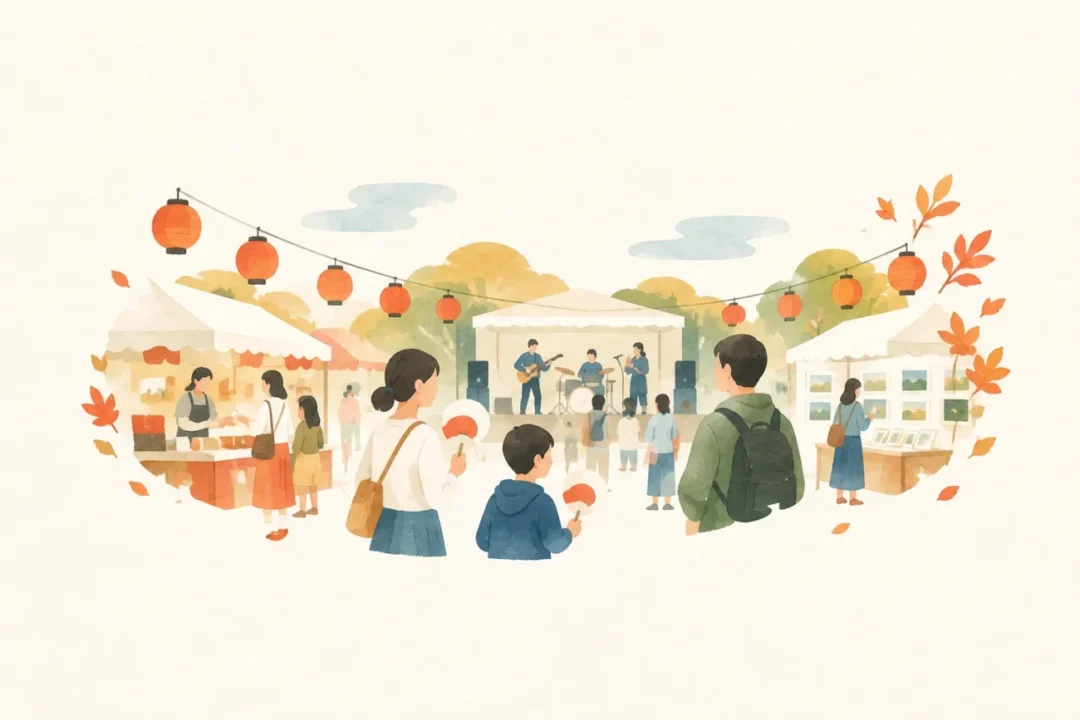
The Miyaza observances at Shinju Hachiman Shrine are an intangible folk cultural property of Shimoichi Town. Centered on the temporary shrine, they preserve the head family’s duties and the children’s shide-waving ritual.
About Miyaza Observances at Shinju Hachiman Shrine
The Miyaza observances at Shinju Hachiman Shrine are traditions passed down since ancient times by the Miyaza, a community organization responsible for shrine rites.
The observances begin with the handover to the head family, which serves the shrine for 1 year.
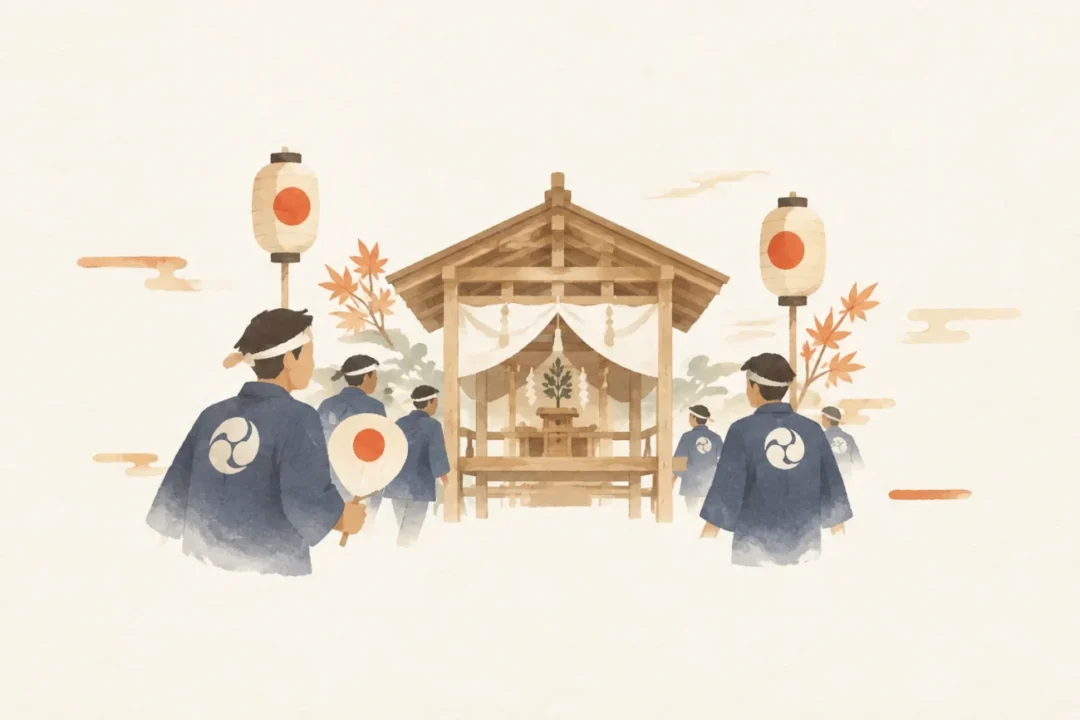
At the autumn festival, a temporary shrine is built from bamboo and hinoki branches, and the head family hosts a seated gathering for all members of the kōchū group.
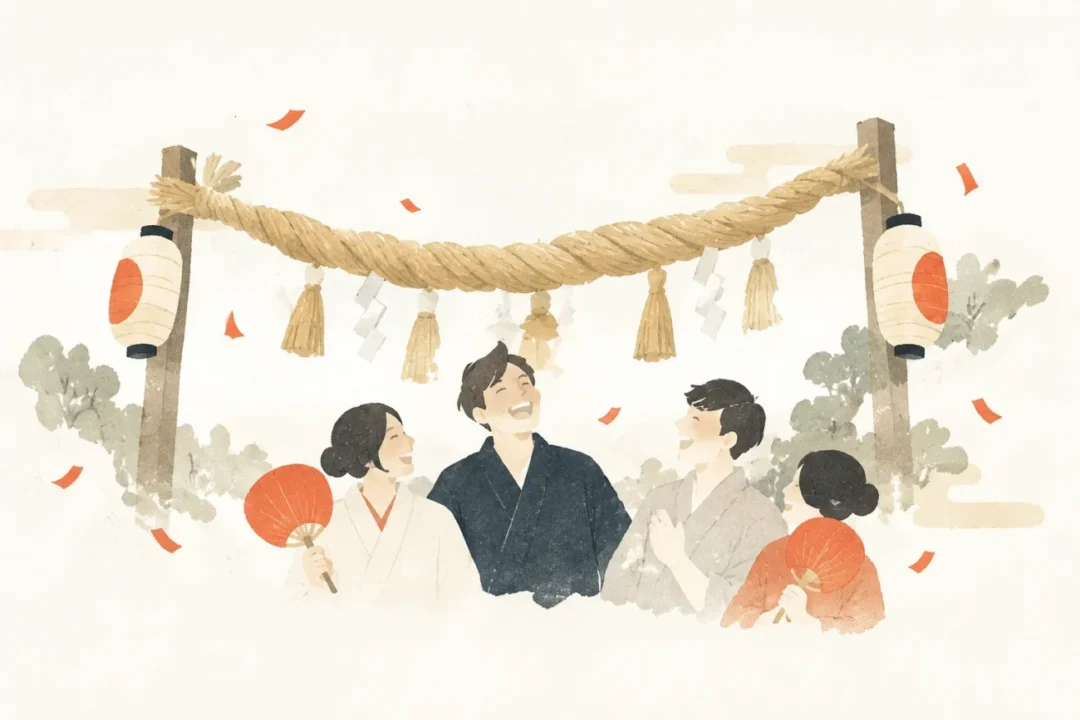
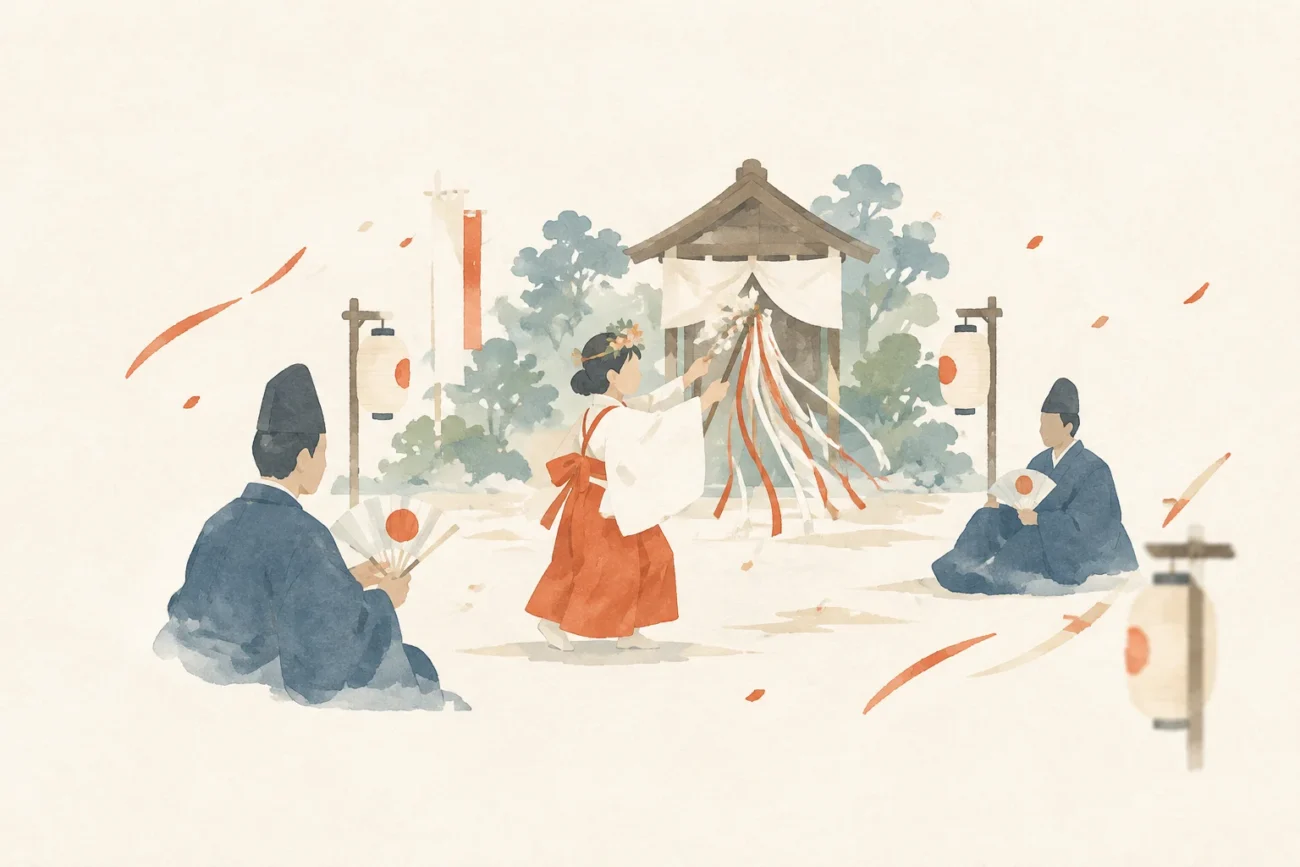
On the festival eve and the main festival day, children perform the shide-waving ritual, among other observances, and the festival concludes with the handover to the next head family.
Festival highlights
The main highlight is the temporary shrine built from bamboo and hinoki branches for the autumn festival.
A custom of inviting the deity into the head family’s home and holding a festival there for a month has been passed down. It is considered a rare form that preserves old folk practices to this day.
Children perform the shide-waving ritual in the . Shimoichi Town’s temporary shrine is the largest of its kind in Nara Prefecture and is regarded as a leading example of this tradition in the prefecture’s south.
Shimoichi’s Miyaza Observances: Traditions of the Temporary Shrine and Shide-Waving
What to expect
The observances begin with the handover to the head family, which serves the shrine for a year.
At the autumn festival, a temporary shrine is built from bamboo and hinoki branches, and a seated gathering is held for all members of the kōchū group.
On the festival eve and the main festival day, children perform the shide-waving ritual, among other observances. The festival then concludes with the handover of duties to the next head family.
Location and access
- Venue and address
Shinju Hachiman Shrine / Shimoichi Town, Yoshino District, Nara Prefecture
Address Shimoichi Town, Yoshino District, Nara Prefecture
Dates and season
- Season
Autumn Festival
Accommodation and hotels PR
Showing nearby accommodation.
Prices and availability are current at the time of retrieval. For multi-night stays, only the first night’s price is shown. Confirm the final price and directions to the venue with the booking provider. Select your dates again when using the area search link. Search area: within 3 km of Central Nara Prefecture / Shimoichi Town (the search is not centered on the festival venue)
Nearby attractions
Nearby historical and cultural sites include the garden at Gankōji Temple and the Okamine Kofun burial mound.
Origins and History of Miyaza Observances at Shinju Hachiman Shrine
The Miyaza has been organized since ancient times, preserving the custom in which the head family serves the shrine.
The custom of inviting the deity to a temporary shrine and holding a festival there for a month is recorded as a tradition that preserves old folk practices.
In the past, the festival was held by two groups, but today the entire community celebrates as one group.
It is a town-designated intangible folk cultural property and is considered a leading example of the temporary-shrine tradition in southern Nara Prefecture.
Official information
Contact: Shimoichi Town Board of Education (0747-52-1711)
Miyaza Observances at Shinju Hachiman Shrine at a Glance
The Miyaza observances at Shinju Hachiman Shrine are a traditional festival in which the head family serves the shrine for a year and builds a temporary shrine from bamboo and hinoki branches for the autumn festival.
Children perform the shide-waving ritual on the festival eve and the main festival day, and duties are handed over to the next head family.
This town-designated intangible folk cultural property preserves the customs of the temporary shrine and Miyaza, which have evolved from two groups into one encompassing the entire community.
Sources and references
Japanese Festivals.jp Editorial Team
Celebrating local culture and helping you discover a side of Japan you never knew.
Article updated: 2026/11/11